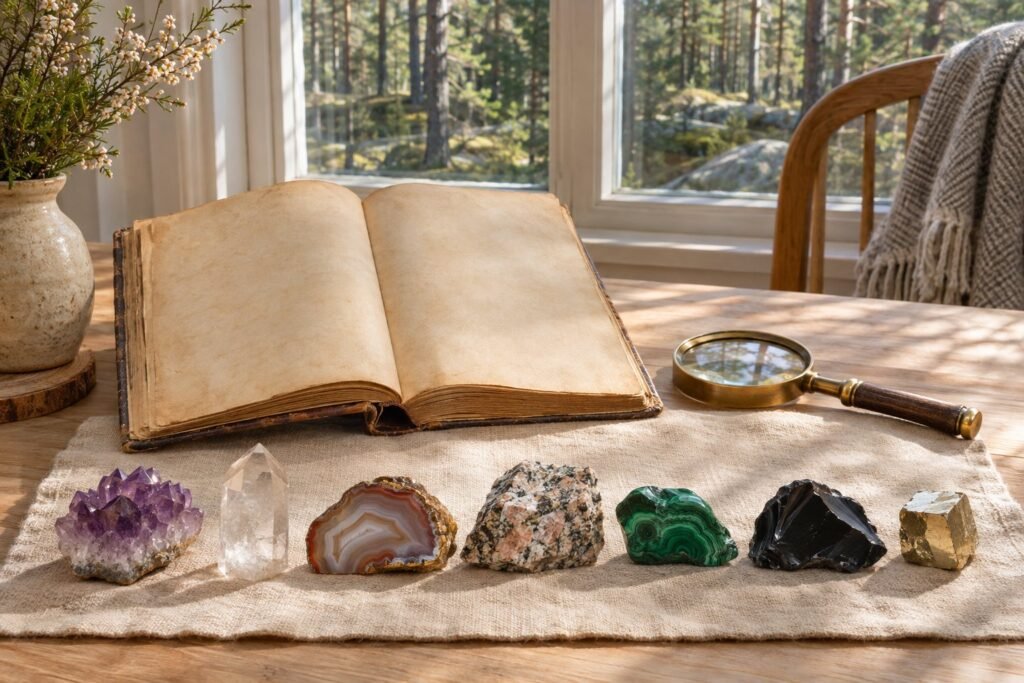
In November 2026 the International Mineralogical Association (IMA) list of minerals contained 6,252 mineral species, but amethyst, labradorite and jasper are not among them [1]. Amethyst is a variety of quartz, labradorite is a compositional range within the plagioclase series, and jasper is usually regarded as a rock [2, 3, 4]. Where a stone has a page in our stone encyclopedia, its name links to that page.
Agate to Beryl
Agate is banded chalcedony, a variety of quartz. It takes its name from the River Achates in Sicily [6, 7].
Aggregate, in mineralogy, is a mass of minerals that makes up a rock or part of one. It can be monomineralic, such as marble, or polymineralic, such as granite [5].
Almandine is a mineral of the garnet group, an iron aluminium silicate, Fe3Al2(SiO4)3, usually violet-red in colour [1, 8]. In Latvia its crystals can often be seen in field boulders [9].
Amazonite is bluish-green or green microcline, and so a variety of potassium feldspar [10, 11].
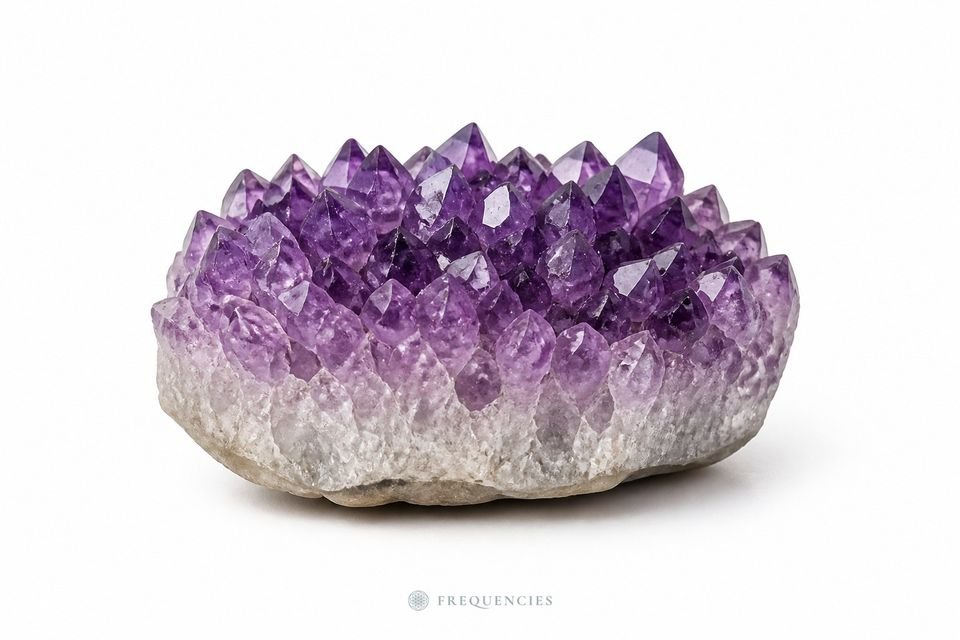
Amethyst is a violet variety of quartz, not a separate mineral species [2, 12].
Ammonite is the fossil of an extinct marine cephalopod. Its shell may have been preserved as calcite or aragonite, while in pyritised ammonites it has been replaced by pyrite [13].
Amorphous substance is not crystalline: its atoms or molecules are arranged at random [14]. Natural glasses, sometimes called mineraloids, are also amorphous [15].
Anhydrite is anhydrous calcium sulfate, CaSO4, which in Latvia occurs in gypsum rock [16]. Pale bluish-grey anhydrite from Peru is sold under the name angelite [13].
Apatite is a group of calcium phosphate minerals with fluorine, chlorine or a hydroxyl group [13].
Aragonite is calcium carbonate, CaCO3, like calcite, but with a different crystal lattice. Pearls and the mother-of-pearl layer of mollusc shells consist largely of aragonite [15, 17].
Asterism is a star-shaped effect of light rays seen in some minerals, especially when they are cut as cabochons, for example in ruby, sapphire and rose quartz [18].
Aventurine is quartz or quartzite with tiny platy inclusions; in green aventurine they are fuchsite [13]. Their glittering reflection is called aventurescence [19].
Azurite is a blue copper carbonate, Cu3(CO3)2(OH)2, a copper ore and a pigment [1, 20].
Basalt is a dark, fine-grained or glassy rock made of plagioclases and pyroxenes, and the most common extrusive rock [21].
Beryl is a beryllium aluminium silicate, Be3Al2Si6O18 [1]. Its varieties are green emerald, blue or bluish-green aquamarine and pink morganite [13, 22].
Amber to Smoky Quartz
Amber is the fossilised resin of conifers [33]. It is not on the IMA list of minerals, and its hardness is only 2 to 2.5 [1, 34].
Celestine is strontium sulfate, SrSO4 [1]. In Latvia it occurs in the gypsum rock of the Salaspils Formation [23].
Citrine is a yellow variety of quartz [24]. Natural citrine is rare, and most citrine on the market is heat-treated amethyst [13].
Diamond is pure carbon, C, and the hardest mineral on the Mohs scale, with a hardness of 10 [1, 28].
Dolomite is calcium magnesium carbonate, CaMg(CO3)2, and the name is also used for the sedimentary rock made up mainly of this mineral [1, 29].
Druse is a group of intergrown crystals attached at one end to the rock, usually in a cavity in the rock [30, 31]. You will find druses of amethyst and other varieties of quartz in the Clusters and Geodes category.
Gemstones are rare minerals with outstanding colour, clarity and hardness; the most valuable are diamond, ruby, sapphire and emerald [25]. The line between gemstones and semi-precious stones was drawn by tradition and the market [26], and in a broader sense pearls and amber also count as gemstones [27].
Smoky quartz is quartz whose colour comes from natural radiation from the surrounding rocks. The dark, almost opaque variety is called morion [13, 32].
Chalcedony to Howlite
Chalcedony is a dense, cryptocrystalline, finely fibrous variety of quartz [45]. In a broader sense the name covers all microcrystalline varieties of quartz, such as agate, jasper, chrysoprase and onyx [7].
Chrysocolla is a copper silicate of variable composition [1]. It is often stabilised or dyed to make it look like turquoise [13].
Epidote is a green or yellow calcium aluminium iron silicate typical of metamorphic rocks [1, 35].
Fluorescence is luminescence with a very short afterglow [36]. The phenomenon is named after fluorite, as explained in the article Stones That Glow Under UV Light [37].
Fluorite is calcium fluoride, CaF2, which occurs in many colours [38].
Fossil is the term for any remains, traces or imprints of life preserved in the Earth’s crust from a past geological age [39]. What has been found in Latvia is described in the article Fossils in Latvia.
Gabbro is a dark, coarse-grained intrusive rock [40]. Indigo gabbro from Madagascar is also sold under the trade name merlinite [13].
Garnets are a group of silicate minerals with the general formula X3Y2(SiO4)3 [13]. The best-known species are almandine, pyrope, spessartine, grossular, andradite and uvarovite [1].
Geode is a usually hollow, rounded mineral body whose inside is most often lined with quartz or one of its varieties, such as amethyst. A geode can be separated from the surrounding rock because it has a tough outer shell [43].
Gneiss is a banded metamorphic rock whose main components are quartz, feldspar and mica [41]. Gneisses and granite gneisses make up most of Latvia’s field boulders [9].
Granite is an intrusive igneous rock whose main components are quartz, feldspars and dark minerals [42].
Gypsum is calcium sulfate dihydrate, CaSO4·2H2O, and the main component of gypsum rock [44].
Hematite is iron oxide, Fe2O3, also known as red iron ore [46]. Hematite can be black, red, brown or silvery, but its streak is always reddish [47].
Howlite is a calcium borosilicate, naturally white or greyish white with dark veins, and dyed howlite is sold as imitation turquoise [1, 13].
Cabochon to Rock Crystal
Cabochon is a stone that has not been cut with facets but rounded on one or both sides [53]. Stones with asterism and chatoyancy, for example, are cut this way [18, 54]. You will find rounded stones in the Polished Stones category.
Calcite is calcium carbonate, CaCO3, and the main component of limestone [55].
Cameo is a carved, usually layered stone with an image in relief [57]. The Romans carved cameos mainly in sardonyx and onyx, while in carnelian they more often cut intaglios for signet rings (see the article Cameo and Intaglio) [58].
Carnelian is an orange-red variety of chalcedony coloured by iron oxides [13, 59].
Concretion is a usually rounded mass of minerals that forms in sedimentary rocks [61]. Concretions include septarian nodules, whose cracks are usually filled with calcite [13].
Corundum is aluminium oxide, Al2O3 [62]. Red corundum is ruby, while the blue, yellow, green and violet varieties are called sapphires [63, 64].
Crystal is a single piece of a crystalline substance [65] whose particles form a crystal lattice: a regular spatial arrangement that repeats in three dimensions [66]. The word crystal is also used for especially clear glass, while you will find natural crystals in the Raw Stones category.
Impact glass is natural glass that forms when a meteorite strikes the Earth and melts the rock. One example is Libyan desert glass, which formed about 29 million years ago [13].
Inclusion is anything enclosed within a mineral or rock [49], for example the rutile needles in rutilated quartz [13].
Intaglio is an engraved gem with a sunken image cut into it, and in antiquity engraved gems were also used as seals [50, 51].
Iolite is cordierite, a mineral of metamorphic rocks whose clear blue varieties are gemstones [13, 52].
Jasper is opaque, usually red or brown microcrystalline quartz rich in impurities. Lapidaries also use the word for other opaque materials [4]: Dalmatian jasper, for example, is an igneous rock [13].
Kunzite is a pink to lilac variety of spodumene [13], and the IMA guidelines list it as a variety name, not a species name [15].
Kyanite, also called disthene, is an aluminium silicate, Al2SiO5 [1, 60]. Its hardness is 4.5 to 5 along the length of the crystal but 6.5 to 7 across it [13].
Quartz is silicon dioxide, SiO2, one of the most common rock-forming minerals, with many varieties, including amethyst, citrine and rock crystal [68].
Quartzite is a metamorphic rock made up mainly of quartz that has formed from sands and sandstones [67].
Rock is an aggregate of minerals of definite composition and structure that has formed through geological processes and makes up an independent body. By origin, rocks are divided into igneous, sedimentary and metamorphic rocks [48]. You can read more in the articles Types of Rocks and Mineral, Rock or Crystal.
Rock crystal is the name for colourless, transparent quartz, especially its large, clear crystals [13, 56].
Feldspars to Moonstone
Feldspars are one of the main groups of rock-forming minerals: aluminium silicates containing potassium, sodium or calcium [74]. They include moonstone, amazonite, labradorite and sunstone [13].
Field boulder is a rounded piece broken off solid rock, more than 10 cm across [72]. The largest ones, with an above-ground volume of at least 10 cubic metres, are called giant boulders (dižakmeņi), and in Latvia they are protected natural monuments [73].
Ice is water in its solid state [75], and on the IMA list it is a mineral with the formula H2O [1]. Ice crystals also form snowflakes [76].
Did you know? Under the IMA guidelines, a mineral is a naturally occurring solid, so ice is a mineral but liquid water is not [15]. The list does, however, include the liquid metal mercury, which was recognised as a mineral even before the IMA was founded [1, 77].
Igneous rocks form when a natural silicate melt, or magma, crystallises [48]. For example, the intrusive rock gabbro is coarse-grained, while the extrusive rock basalt is fine-grained or glassy [21, 40].
Labradorescence is a bluish or greenish play of colour caused by the interference of light in microscopically thin layers inside labradorite [70, 71].
Labradorite is a plagioclase feldspar in which the ratio of albite to anorthite ranges from 30:70 to 50:50, and it is not a separate IMA species [1, 3]. In Latvian dictionaries the word labradorīts is also used for a variety of gabbro made up mainly of labradorite [69].
Larimar is a blue variety of pectolite [13]. Pectolite itself, NaCa2Si3O8(OH), is an IMA mineral species [1].
Lazurite is a blue sulfur-bearing silicate mineral and a separate IMA species [1]. The stone sold as lazurite, or lapis lazuli, is a rock in which lazurite is often accompanied by calcite and pyrite [13].
Malachite is a bright green copper carbonate, Cu2CO3(OH)2, with concentric bands in different shades of green [78].
Marble is a metamorphic rock that forms when limestone or dolomite recrystallises [79].
Metamorphic rocks form when rocks in the Earth’s crust recrystallise as they adjust to changes in physical and chemical conditions [48]. Examples are gneiss, marble and quartzite [41, 67, 79].
Meteorite is a body that has fallen from interplanetary space without completely breaking up in the atmosphere [81]. By composition, meteorites are divided into iron, stony and stony-iron meteorites [13].
Mineral is a naturally occurring solid formed by geological processes on Earth or on other celestial bodies. A mineral species is a mineral with a specific chemical composition and crystallographic properties [15], and new species are approved by the IMA [1].
Mineraloid is a natural, mineral-like geological material that lacks a crystalline structure or a sufficiently definite composition, such as volcanic glass [82]. Our encyclopedia also calls shungite a mineraloid [13].
Mohs scale is a relative hardness scale from 1 to 10 on which each mineral can scratch all those with a lower number: talc 1, gypsum 2, calcite 3, fluorite 4, apatite 5, orthoclase 6, quartz 7, topaz 8, corundum 9 and diamond 10. The steps between the numbers on the scale are not equal [28]. The hardness of each stone is also given in our care table.
Moldavite is a green natural glass that formed about 15 million years ago in a meteorite impact at the site of today’s Ries crater in southern Germany. The impact hurled the molten rock into the atmosphere, and it came down hundreds of kilometres away, mainly in what is now the Czech Republic, which is why moldavite is classed as a tektite [13, 83].
Moonstone is a feldspar made up of thin layers of orthoclase and albite [13]. These layers produce a soft white or bluish sheen that seems to float, called adularescence [80].
Nephrite to Variety
Nephrite is a rock made of densely interwoven fibres of amphiboles of the actinolite-tremolite series. Together with jadeite it is called jade, but the two are different materials [13, 84].
Obsidian is volcanic glass that forms when lava cools so quickly that its atoms have no time to arrange themselves into a crystal lattice [13], which is why it is classed as a mineraloid [82].
Onyx is a variety of agate, and so of chalcedony, with straight, parallel bands, usually black and white [7, 87, 109]. Black onyx as sold on the market is usually dyed chalcedony, while onyx marble is a much softer banded calcite [13, 109].
Opal is hydrous silicon dioxide, SiO2·nH2O, which can contain up to 20% water [13]. It is amorphous or only poorly crystalline, so it is often called a mineraloid, but opal is on the IMA list for historical reasons: it was recognised before the IMA was founded [1, 110].
Pegmatite is a coarse-grained igneous rock that forms veins, lenses and pockets [88]. Its crystals can be tens of centimetres in size [9].
Peridot is the yellowish-green gem variety of olivine, consisting mainly of forsterite [13, 89].
Polymorphs are minerals with the same chemical composition but different crystal structures [90]. Calcite and aragonite are both CaCO3, diamond and graphite are carbon, and kyanite, andalusite and sillimanite are Al2SiO5 [1].
Pseudomorph is a crystal whose shape has been inherited from another mineral that was replaced or dissolved [91]. For example, when pyrite oxidises, goethite can form in the shape of its cubes [92].
Pyrite is iron disulfide, FeS2, the most common sulfide mineral, with a brass-yellow colour and a metallic lustre [1, 13]. Its streak is black [47].
Sedimentary rocks form under surface conditions from the breakdown products of other rocks [48] and include, for example, sandstone, limestone and dolomite [29, 85, 86].
Variety is a mineral that differs from the typical one in colour, crystal form or small differences in composition: ruby is a variety of corundum, and amethyst a variety of quartz [2]. The IMA does not regulate variety names [15].
Chatoyancy to Streak
Chatoyancy, or the cat’s eye effect, is a narrow, silky band of light that moves as the stone is turned. It is caused by light reflecting off fine parallel fibres or needle-like inclusions [54], for example in tiger’s eye [13].
Cleavage is the ability of a mineral to split along certain directions [98]. Feldspars, for example, cleave along two planes, which in orthoclase meet at a right angle [9].
Lustre is the way the surface of a mineral reflects light. Metallic, adamantine, vitreous, resinous, pearly and silky lustre are distinguished, and a mineral without lustre is called dull [99].
Rapakivi is granite with large, round feldspar crystals [9, 93]. In Latvia, rapakivi field boulders were brought by the glacier: the red ones from the Åland Islands and the brownish ones from the Wiborg rapakivi area in south-eastern Finland [9].
Rhodochrosite is a pink manganese carbonate, MnCO3 [1, 94].
Rhodonite is a pinkish manganese silicate [95]. The black veins in it are formed by manganese oxides [13].
Rose quartz is quartz; the colour of its massive form is attributed to microscopic pink fibres. The same fibres sometimes produce a star effect, or asterism [13, 18].
Sandstone is a clastic rock made of cemented sand grains [85].
Selenite, in mineralogy, has historically meant clear, transparent gypsum, while fibrous gypsum is called satin spar [111]. In the Latvian dictionary, selenite is a fibrous variety of gypsum with a silky lustre [96], and in the trade the word usually means satin spar [13].
Serpentine is a group of magnesium silicate minerals, including antigorite and lizardite [1, 13]. A rock made up mainly of serpentine is called serpentinite, in Latvian also čūskakmens (“snake stone”) [97].
Shungite is a black, carbon-rich rock or mineraloid from Karelia, about 2 billion years old and named after the village of Shunga [13, 101].
Sodalite is a blue, sodium-bearing mineral of the feldspathoid group, often with white veins [13].
Staurolite is a reddish-brown to brownish-black, iron-bearing aluminium silicate whose crystals are often twinned in the shape of a cross [1, 13].
Streak is the colour of a mineral’s powder, obtained by drawing the mineral across unglazed porcelain. It is a more reliable clue to identification than the colour of the mineral itself [100].
Jadeite to Zoisite
Jadeite is a sodium aluminium pyroxene, NaAlSi2O6, that looks similar to nephrite [1, 108]. Together, the two are called jade [13].
Micas are a group of silicate minerals with a platy structure, found in igneous, metamorphic and sedimentary rocks [104]. Light-coloured mica is muscovite and dark mica is biotite [105, 106], while pink or violet lithium-bearing micas are called lepidolite [107].
Tektite is natural glass that a meteorite impact has thrown into the air and that solidified in flight [13]. The best-known example is moldavite [83].
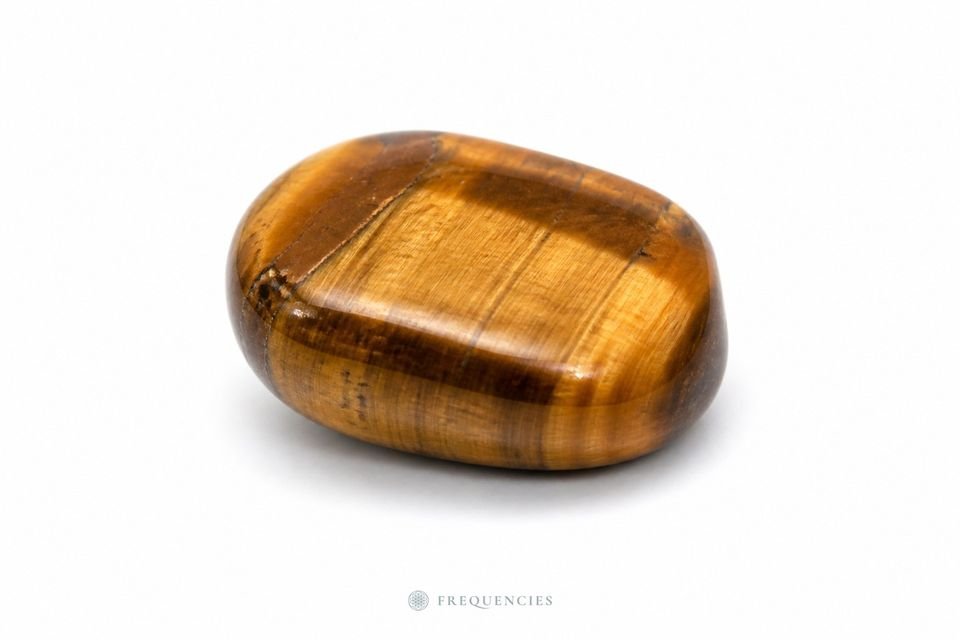
Tiger’s eye is golden-brown quartz with parallel fibres that produce chatoyancy, and its colour comes from iron oxides [13].
Topaz is an aluminium silicate containing fluorine, Al2SiO4F2 [1].
Tourmalines are a group of borosilicate minerals of complex composition with piezoelectric properties [103]. The group includes, for example, elbaite, dravite and schorl, or black tourmaline [1, 13].
Turquoise is an opaque light blue, greenish or greenish-grey copper aluminium phosphate [1, 102].
Zoisite is a calcium aluminium silicate, and its blue-violet variety is called tanzanite [1, 13].
For the hardness, care and signs of authenticity of each stone, see the stone encyclopedia.
Frequently Asked Questions
Is ice a mineral?
Yes. A mineral is a naturally occurring solid, and on the IMA list of minerals ice is a mineral with the formula H2O. Liquid water is not a mineral, but the liquid metal mercury is on the IMA list.
Is amethyst a mineral?
Amethyst is the violet variety of quartz, not a separate mineral species. Citrine and rose quartz are also varieties.
What is a metamorphic rock?
A metamorphic rock forms when rocks in the Earth’s crust recrystallise as conditions change. Examples are gneiss, marble and quartzite.
What is a gemstone carved with an image in relief called?
A stone carved with an image in relief is called a cameo, while a stone with a sunken image cut into it is called an intaglio. Together they are known as engraved gems.
What are the minerals of the garnet group?
The best known are almandine, pyrope, spessartine, grossular, andradite and uvarovite. Almandine crystals can often be seen in Latvia’s field boulders.
Is amber a mineral?
No. Amber is the fossilised resin of conifers and is not on the IMA list of minerals, but in a broader sense it is considered a gemstone.
Sources
- IMA Commission on New Minerals, Nomenclature and Classification (CNMNC), “The New IMA List of Minerals”, updated November 2026 (6,252 species): cnmnc.units.it/files/editor/IMA_Master_List_(2026-11).pdf
- Mindat.org, glossary “variety”: www.mindat.org/glossary/variety
- Mindat.org, “Labradorite”: www.mindat.org/min-2308.html
- Mindat.org, “Jasper”: www.mindat.org/min-2082.html
- Tēzaurs.lv, entry “agregāts”: tezaurs.lv/agreg%C4%81ts
- Tēzaurs.lv, entry “ahāts”: tezaurs.lv/ah%C4%81ts
- Mindat.org, “Chalcedony”: www.mindat.org/min-960.html
- Tēzaurs.lv, entry “almandīns”: tezaurs.lv/almand%C4%ABns
- D. Ozols, “Minerals and Rocks of Latvia”, Latvian Petroglyph Centre, 2008 (on the Nature Conservation Agency website): www.daba.gov.lv/lv/media/1745/download
- Tēzaurs.lv, entry “amazonīts”: tezaurs.lv/amazon%C4%ABts
- Tēzaurs.lv, entry “mikroklīns”: tezaurs.lv/mikrokl%C4%ABns
- Tēzaurs.lv, entry “ametists”: tezaurs.lv/ametists
- FREQUENCIES Stone Encyclopedia, 111 stone pages (mineral group, composition, origin; data from GIA, Mindat, geology.com): frequencies.lv/enciklopedija/
- Tēzaurs.lv, entry “amorfs”: tezaurs.lv/amorfs
- E. H. Nickel, J. D. Grice, “The IMA Commission on New Minerals and Mineral Names: procedures and guidelines on mineral nomenclature”, The Canadian Mineralogist, vol. 36, 1998 (mineral definition, varieties, amorphous and biogenic substances): cnmnc.units.it/files/cnmmn98.pdf
- Tēzaurs.lv, entry “anhidrīts”: tezaurs.lv/anhidr%C4%ABts
- Tēzaurs.lv, entry “aragonīts”: tezaurs.lv/aragon%C4%ABts
- Mindat.org, glossary “asterism”: www.mindat.org/glossary/asterism
- Mindat.org, glossary “aventurescence”: www.mindat.org/glossary/aventurescence
- Tēzaurs.lv, entry “azurīts”: tezaurs.lv/azur%C4%ABts
- Tēzaurs.lv, entry “bazalts”: tezaurs.lv/bazalts
- Tēzaurs.lv, entry “akvamarīns”: tezaurs.lv/akvamar%C4%ABns
- Tēzaurs.lv, entry “celestīns”: tezaurs.lv/celest%C4%ABns
- Tēzaurs.lv, entry “citrīns”: tezaurs.lv/citr%C4%ABns
- Tēzaurs.lv, entry “dārgakmeņi”: tezaurs.lv/d%C4%81rgakme%C5%86i
- frequencies.lv article “Gemstones and Semi-Precious Stones: Where Is the Line and Is Amber a Gemstone”: frequencies.lv/dargakmeni-un-pusdargakmeni/
- Mindat.org, glossary “gemstone”: www.mindat.org/glossary/gemstone
- Mindat.org, glossary “Mohs scale”: www.mindat.org/glossary/mohs_scale
- Tēzaurs.lv, entry “dolomīts”: tezaurs.lv/dolom%C4%ABts
- Tēzaurs.lv, entry “drūza”: tezaurs.lv/dr%C5%ABza
- Mindat.org, glossary “druse”: www.mindat.org/glossary/druse
- Tēzaurs.lv, entry “morions”: tezaurs.lv/morions
- Tēzaurs.lv, entry “dzintars”: tezaurs.lv/dzintars
- Mindat.org, “Amber”: www.mindat.org/min-188.html
- Tēzaurs.lv, entry “epidots”: tezaurs.lv/epidots
- Tēzaurs.lv, entry “fluorescence”: tezaurs.lv/fluorescence
- frequencies.lv article “Stones That Glow Under UV Light: Fluorite, Calcite and Why Fluorescence Is Named After a Mineral”: frequencies.lv/akmeni-kas-spid-uv-gaisma/
- Tēzaurs.lv, entry “fluorīts”: tezaurs.lv/fluor%C4%ABts
- Mindat.org, glossary “fossil”: www.mindat.org/glossary/fossil
- Tēzaurs.lv, entry “gabro”: tezaurs.lv/gabro
- Tēzaurs.lv, entry “gneiss”: tezaurs.lv/gneiss
- Tēzaurs.lv, entry “granīts”: tezaurs.lv/gran%C4%ABts
- Mindat.org, glossary “geode”: www.mindat.org/glossary/geode
- Tēzaurs.lv, entry “ģipsis”: tezaurs.lv/%C4%A3ipsis
- Tēzaurs.lv, entry “halcedons”: tezaurs.lv/halcedons
- Tēzaurs.lv, entry “hematīts”: tezaurs.lv/hemat%C4%ABts
- geology.com, H. King, “Streak Test”: geology.com/minerals/streak-test.shtml
- A. Zabele, “Petrology”, National Encyclopedia (updated 30.12.2024): enciklopedija.lv/skirklis/5089
- Tēzaurs.lv, entry “ieslēgums”: tezaurs.lv/iesl%C4%93gums
- Tēzaurs.lv, entry “intalja”: tezaurs.lv/intalja
- Tēzaurs.lv, entry “gemma”: tezaurs.lv/gemma
- Tēzaurs.lv, entry “kordierīts”: tezaurs.lv/kordier%C4%ABts
- Tēzaurs.lv, entry “kabošons”: tezaurs.lv/kabo%C5%A1ons
- Mindat.org, glossary “chatoyancy”: www.mindat.org/glossary/chatoyancy
- Tēzaurs.lv, entry “kalcīts”: tezaurs.lv/kalc%C4%ABts
- Tēzaurs.lv, entry “kalnu kristāls”: tezaurs.lv/kalnu%20krist%C4%81ls
- Tēzaurs.lv, entry “kameja”: tezaurs.lv/kameja
- frequencies.lv article “Cameo and Intaglio: How the Ancient Romans Carved Portraits in Sardonyx, Onyx and Carnelian”: frequencies.lv/kameja-un-intalja/
- Tēzaurs.lv, entry “karneols”: tezaurs.lv/karneols
- Tēzaurs.lv, entry “kianīts”: tezaurs.lv/kian%C4%ABts
- Tēzaurs.lv, entry “konkrēcija”: tezaurs.lv/konkr%C4%93cija
- Tēzaurs.lv, entry “korunds”: tezaurs.lv/korunds
- Tēzaurs.lv, entry “rubīns”: tezaurs.lv/rub%C4%ABns
- Tēzaurs.lv, entry “safīrs”: tezaurs.lv/saf%C4%ABrs
- Tēzaurs.lv, entry “kristāls”: tezaurs.lv/krist%C4%81ls
- Tēzaurs.lv, entry “kristālrežģis”: tezaurs.lv/krist%C4%81lre%C5%BE%C4%A3is
- Tēzaurs.lv, entry “kvarcīts”: tezaurs.lv/kvarc%C4%ABts
- Tēzaurs.lv, entry “kvarcs”: tezaurs.lv/kvarcs
- Tēzaurs.lv, entry “labradorīts”: tezaurs.lv/labrador%C4%ABts
- Mindat.org, glossary “labradorescence”: www.mindat.org/glossary/labradorescence
- Tēzaurs.lv, entry “labradors”: tezaurs.lv/labradors
- Tēzaurs.lv, entry “laukakmens”: tezaurs.lv/laukakmens
- Cabinet of Ministers Regulation No. 461 (14.07.2022) “Regulations on Protected Geological and Geomorphological Natural Monuments”, point 1 (in force): likumi.lv/ta/id/334009
- Tēzaurs.lv, entry “laukšpats”: tezaurs.lv/lauk%C5%A1pats
- “Ice”, National Encyclopedia: enciklopedija.lv/skirklis/125501
- Tēzaurs.lv, entry “sniegpārsla”: tezaurs.lv/sniegp%C4%81rsla
- Tēzaurs.lv, entry “dzīvsudrabs”: tezaurs.lv/dz%C4%ABvsudrabs
- Tēzaurs.lv, entry “malahīts”: tezaurs.lv/malah%C4%ABts
- Tēzaurs.lv, entry “marmors”: tezaurs.lv/marmors
- Mindat.org, glossary “adularescence”: www.mindat.org/glossary/adularescence
- Tēzaurs.lv, entry “meteorīts”: tezaurs.lv/meteor%C4%ABts
- Mindat.org, glossary “mineraloid”: www.mindat.org/glossary/mineraloid
- Mindat.org, “Moldavite”: www.mindat.org/min-10860.html
- Mindat.org, “Nephrite”: www.mindat.org/min-2881.html
- Tēzaurs.lv, entry “smilšakmens”: tezaurs.lv/smil%C5%A1akmens
- Tēzaurs.lv, entry “kaļķakmens”: tezaurs.lv/ka%C4%BC%C4%B7akmens
- Tēzaurs.lv, entry “onikss”: tezaurs.lv/onikss
- Tēzaurs.lv, entry “pegmatīts”: tezaurs.lv/pegmat%C4%ABts
- Tēzaurs.lv, entry “peridots”: tezaurs.lv/peridots
- Tēzaurs.lv, entry “polimorfisms”: tezaurs.lv/polimorfisms
- Tēzaurs.lv, entry “pseidomorfoze”: tezaurs.lv/pseidomorfoze
- Mindat.org, glossary “pseudomorph”: www.mindat.org/glossary/pseudomorph
- Tēzaurs.lv, entry “rapakivi”: tezaurs.lv/rapakivi
- Tēzaurs.lv, entry “rodohrozīts”: tezaurs.lv/rodohroz%C4%ABts
- Tēzaurs.lv, entry “rodonīts”: tezaurs.lv/rodon%C4%ABts
- Tēzaurs.lv, entry “selenīts”: tezaurs.lv/selen%C4%ABts
- Tēzaurs.lv, entry “serpentinīts”: tezaurs.lv/serpentin%C4%ABts
- Tēzaurs.lv, entry “skaldnība”: tezaurs.lv/skaldn%C4%ABba
- Mindat.org, glossary “lustre”: www.mindat.org/glossary/lustre
- Mindat.org, glossary “streak”: www.mindat.org/glossary/streak
- Tēzaurs.lv, entry “šungīts”: tezaurs.lv/%C5%A1ung%C4%ABts
- Tēzaurs.lv, entry “tirkīzs”: tezaurs.lv/tirk%C4%ABzs
- Tēzaurs.lv, entry “turmalīns”: tezaurs.lv/turmal%C4%ABns
- Tēzaurs.lv, entry “vizla”: tezaurs.lv/vizla
- Tēzaurs.lv, entry “muskovīts”: tezaurs.lv/muskov%C4%ABts
- Tēzaurs.lv, entry “biotīts”: tezaurs.lv/biot%C4%ABts
- Mindat.org, “Lepidolite”: www.mindat.org/min-2380.html
- Tēzaurs.lv, entry “žadeīts”: tezaurs.lv/%C5%BEade%C4%ABts
- Mindat.org, “Onyx”: www.mindat.org/min-2999.html
- Mindat.org, “Opal”: www.mindat.org/min-3004.html
- Mindat.org, “Selenite”: www.mindat.org/min-5527.html