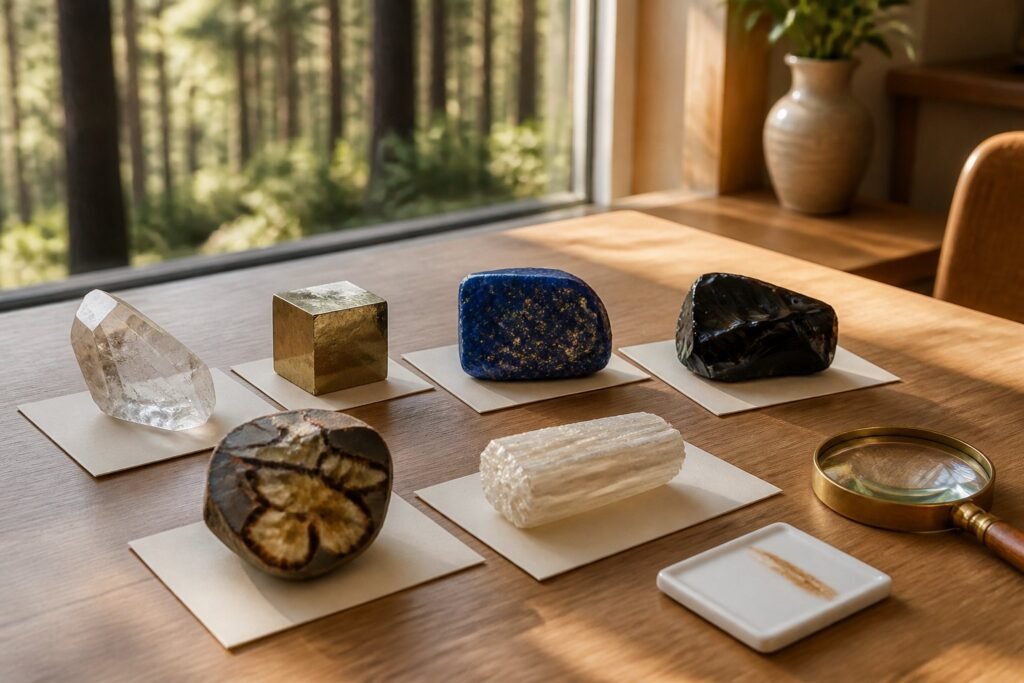
In September 2026, the International Mineralogical Association (IMA) listed 6,239 recognized mineral species, including ice and even liquid mercury [1]. However, lapis lazuli, obsidian, and amber are not on the list, even though all three are commonly called stones. You can learn to distinguish a mineral from a rock, glass, and crystal using stones that may already be on your shelf.
What is a mineral
The IMA definition, published by Ernest H. Nickel in 1995, is concise: a mineral is a chemical element or compound that is usually crystalline and formed as a result of geological processes [2]. Britannica adds that a mineral has a specific chemical composition and a strictly ordered atomic structure [3]. In Dainis Ozols’ book “Minerals and Rocks of Latvia,” minerals in geology are compared to the alphabet in writing [4].
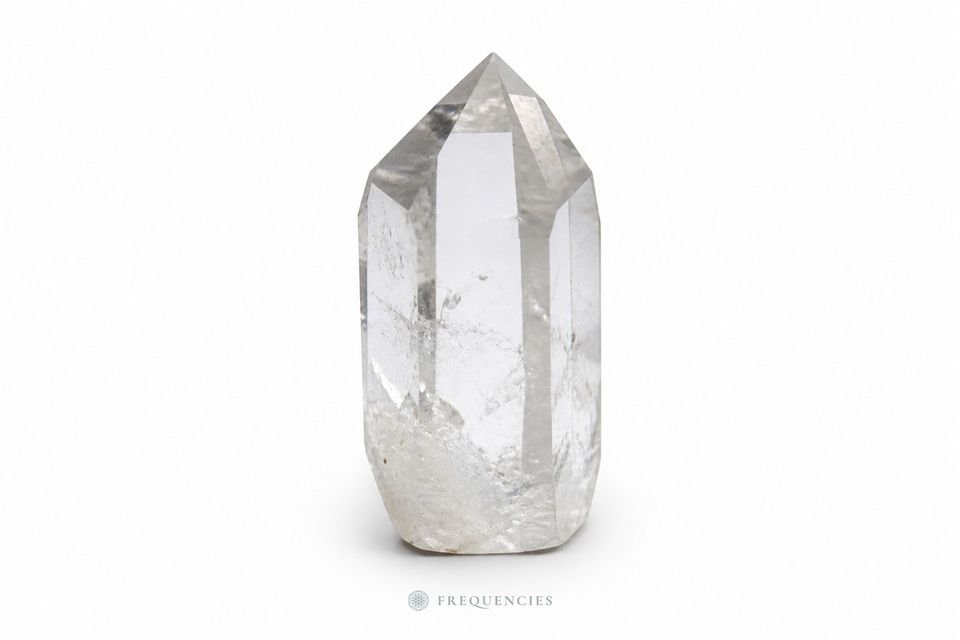
Good examples are rock crystal, which is pure quartz (SiO2), and pyrite, iron disulfide (FeS2) [5]. Each has a specific formula and its own crystal lattice. Of the thousands of minerals, about a hundred make up the main mass of rocks and are called rock-forming minerals [3]. In Latvia, Ozols lists about 15 of the most common minerals [4].
Did you know? Mercury is listed as a mineral by the IMA, even though it is liquid at room temperature [1]. Mindat explains that it is included for historical reasons and because of its unique chemical and physical properties, but it only forms crystals at around minus 40 °C [6]. Ice is also a recognized mineral, and its hardness on the Mohs scale is only 1.5 [7].
What is a crystal and why amethyst and citrine are the same mineral
A crystal is any solid substance whose atoms are arranged in a specific pattern, and its regular surface reflects this internal symmetry [8]. Ozols writes that 99% of minerals are crystalline substances [4]. Thus, the word “crystal” describes structure, not a separate group of stones: every snowflake is also a crystal, as it is a single ice crystal [9]. In crystal shops, including ours, all natural stones are usually called crystals, including rocks and natural glass. To learn how spheres, points, and polished stones are made from them, read the article on crystal shapes.
One mineral can appear in different colors. GIA writes that amethyst is the purple variety of quartz, while citrine is the light yellow to brownish-orange variety, and some amethyst can be turned into citrine by heating [10, 11]. Pure quartz is colorless, and its color comes from impurities, natural radiation, and inclusions [5]. That is why the encyclopedia pages for amethyst, citrine, and rose quartz all state the same mineral group: quartz group (SiO2). Quartz also has a microcrystalline family, chalcedony, which includes agate, carnelian, and onyx, and its crystals can only be seen under a microscope [5].
What is a rock: lapis lazuli, unakite, and meteorites
A rock is a naturally occurring, consolidated aggregate of one or more minerals [12]. Ozols emphasizes the main difference: each mineral is a specific chemical substance, but a rock can be made up of one or several minerals. Rocks are classified by origin as igneous, metamorphic, or sedimentary [4].
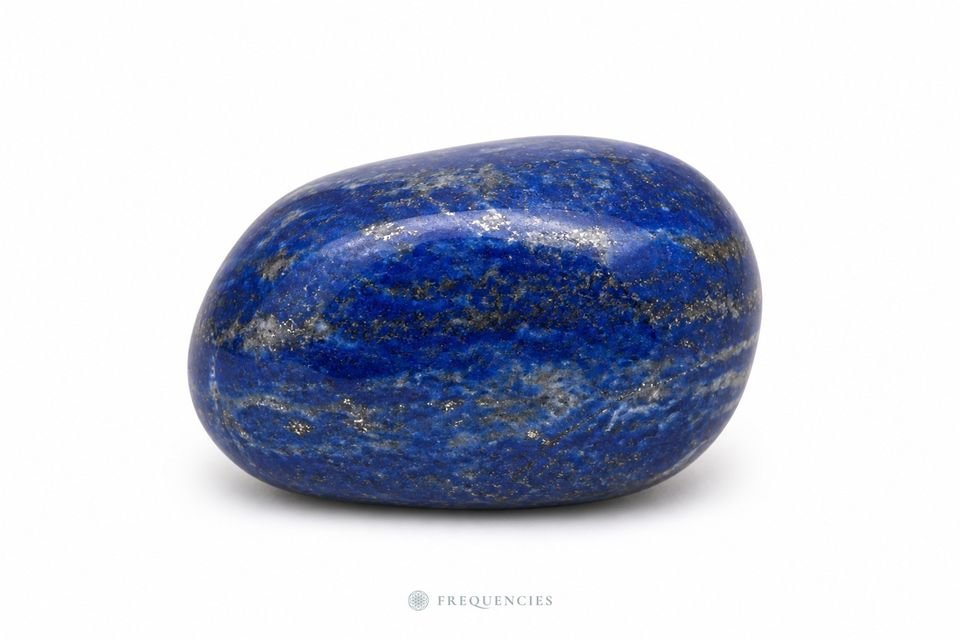
Lapis lazuli, which is called lazurite in shops and in our encyclopedia, is a rock. GIA describes it as an aggregate of several minerals, mainly lazurite, calcite, and pyrite, and Britannica emphasizes that it is not a mineral but a rock, colored blue by lazurite [13, 14]. So the word has two meanings: mineralogists use “lazurite” for the blue mineral, but in trade it refers to the whole rock. The same applies to dolomite, which underlies much of Latvia beneath Quaternary sediments: the mineral dolomite is the only mineral in the rock dolomite [4]. The definition of the blue mineral lazurite was revised by the IMA in 2021 [1, 15].
Natural lapis lazuli contains randomly scattered golden pyrite specks and white calcite patches [5]. Britannica warns that much of the material sold as lapis is artificially dyed jasper from Germany with colorless quartz grains and no pyrite [14]. The lazurite category in our shop includes lazurite spheres, polished stones, and a chip bracelet.
Unakite is also a rock: Mindat describes it as a rock formed by the alteration of granitic rocks, consisting mainly of epidote, potassium feldspar, and quartz [16]. Meteorites are extraterrestrial rocks made of iron and nickel alloy, silicate minerals, or a mixture of both [5]. In Latvian fieldstones, reddish-violet almandine garnet crystals are often visible, and Ozols shows them, for example, in a gneiss boulder from the stony seashore of Vidzeme [4].
Mineraloids and natural glass: opal, obsidian, moldavite, and shungite
If a substance does not have an ordered crystal lattice, it is often called a mineraloid. An example is opal: Mindat writes that it is usually considered a mineraloid because it is amorphous, although it is still listed by the IMA for historical reasons [17, 1]. More precisely, opal can be weakly crystalline, close to cristobalite or tridymite, or amorphous [17]. Its formula in the IMA list is SiO2·nH2O, as opal contains water [1], and Britannica warns that opal can crack or lose color when it dries out [18].
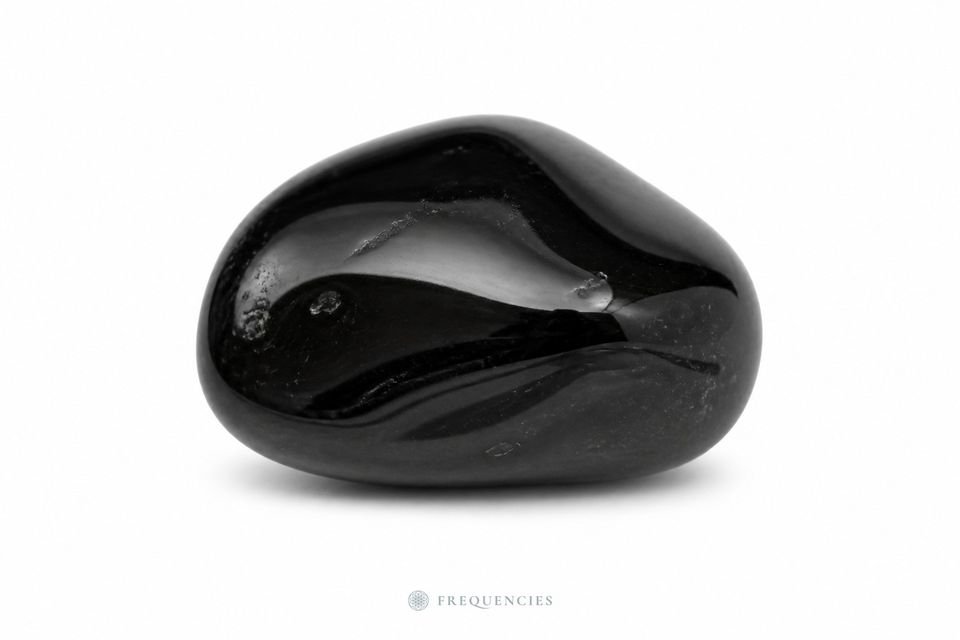
Obsidian is volcanic glass. Britannica calls it an igneous rock in the form of natural glass, formed when viscous lava cools rapidly; it contains about 65 to 80% silicon dioxide and is slightly harder than window glass [19]. Ozols explains why this happens: if lava cools very quickly, mineral crystals grow very small or do not form at all, and the lava solidifies as volcanic glass [4]. Thus, obsidian is both glass and a rock, but not a mineral. Mindat also reminds us that the first man-made mirrors were pieces of polished obsidian [20]. Bright blue, green, or red transparent “obsidian” is often artificial glass [5]; to learn how to distinguish a natural stone from an imitation, read the article how to recognize a real crystal.
Moldavite is also natural glass, but formed differently. Mindat writes that it formed 15 million years ago when a meteorite struck what is now the Ries crater in Bavaria. The impact ejected molten rock into the atmosphere up to 300 km away, and moldavites are found mainly in southern Bohemia and Moravia in the Czech Republic [21]. Such impact glasses are called tektites, from the Greek word tēktos (“melted”) [22].
Shungite is a more complex case. Mindat explains that this word refers both to a shiny mineraloid that is almost pure carbon (about 98%) and to a rock found in Karelia, a metamorphosed Precambrian oil shale with lower carbon content [23, 24]. Our encyclopedia notes that the material on the market varies greatly in carbon content: the matte rock is common, but the shiny varieties with high carbon content are rarer [5].
Concretions and organic materials: septarian, amber, and pearls
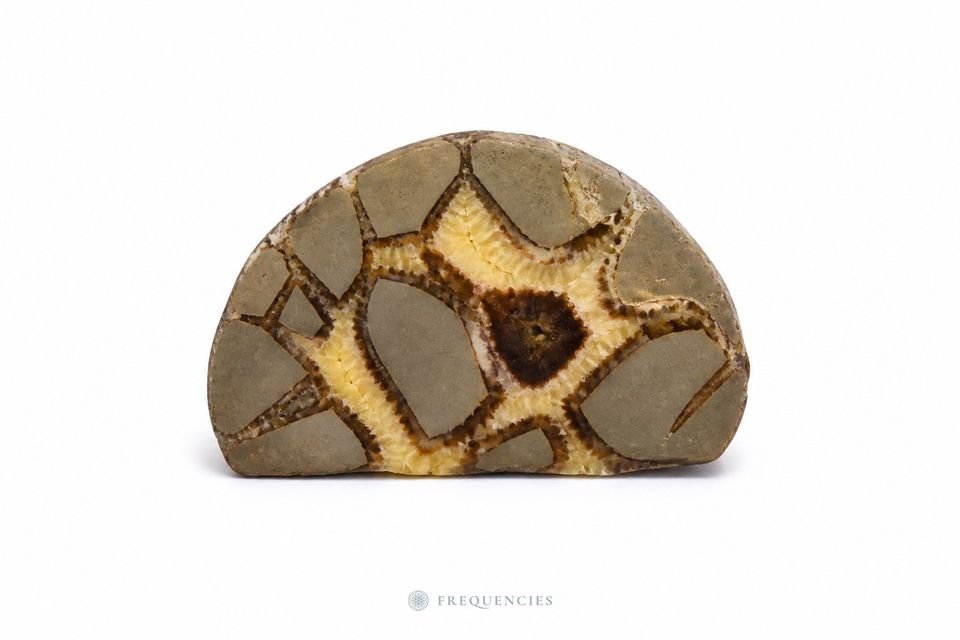
A concretion is a mineral aggregate that forms in sedimentary rocks and usually has a round or rounded shape [25]. Septarian is a concretion with an internal network of polygonal cracks resembling dried mud cracks, and minerals often later precipitate in these cracks [26]. In our encyclopedia, the septarian matrix is clay and carbonates, while the cracks are filled with calcite, less often aragonite, siderite, or barite [5].
Amber is not on the IMA mineral list [1]. Amber is fossilized tree resin that, after burial, has lost volatile substances and undergone chemical changes [27], and GIA calls it an organic gemstone [28]. Ozols adds that amber is amorphous, so it has no cleavage, and its hardness is only 2 to 3 [4].
Pearls also have an organic origin: natural pearls form in the body or mantle tissue of certain mollusks [29]. Fossils are another separate group. For example, ammonite is the shell of an extinct marine cephalopod, which over time has been replaced by calcite, aragonite, or pyrite [5].
Minerals and rocks in Latvia
In much of Latvia, Upper Devonian dolomites lie beneath Quaternary sediments, and a significant portion of glacial pebbles are fragments of Silurian and Ordovician dolomites from northern Estonia [4]. Gypsum deposits in the Upper Devonian Salaspils suite are found in Saurieši, Salaspils, Nāves sala, and Skaistkalne. In Saurieši, fibrous gypsum occurs as parallel crystal aggregates that have grown in rock fractures, and Ozols also describes blue-gray nail-shaped celestine inclusions [4].
The same mineral, gypsum, is also known as selenite. Mindat writes that the name “selenite” is mostly a synonym for gypsum and historically referred to the transparent variety, while fibrous gypsum is called satin spar [30]. Our encyclopedia notes that most selenite sticks, towers, and bowls sold on the market are made from satin spar [5]. Thus, Saurieši fibrous gypsum and a selenite rod are the same mineral. Selenite products in the shop are in a separate category, and to learn how to care for a selenite lamp, read the article on selenite lamps.
Home assignment: sort your stones
A simple task for students and curious adults: sort your stones by luster, streak color, and transparency. The streak color is seen by rubbing the stone on unglazed faience, such as a piece of a cup or a shard of an electrical insulator [4]. Geologists use an unglazed porcelain plate with a hardness of 6.5 to 7 for this purpose, and minerals that are harder will scratch the plate rather than leave a streak [31]. Many minerals look different in powder: hematite usually leaves a reddish-brown streak, no matter how the stone itself looks, while brass-yellow pyrite leaves a greenish-black streak [31, 32, 33].
| Stone | Type | Luster | Streak color | Transparency |
|---|---|---|---|---|
| Rock crystal | mineral (quartz) | vitreous | white, but quartz may scratch the plate | transparent |
| Fluorite | mineral | vitreous | white | transparent |
| Pyrite | mineral | metallic | greenish-black | opaque |
| Hematite | mineral | metallic to dull | reddish-brown | opaque |
| Selenite (gypsum) | mineral | vitreous, silky for fibrous | white | transparent to opaque |
| Lazurite (lapis lazuli) | rock | subvitreous, greasy | blue | opaque |
| Obsidian | natural glass | vitreous | test yourself | usually opaque, some transparent varieties |
Table data are from Mindat, Britannica, and Ozols [34, 35, 33, 32, 36, 37, 15, 19, 20, 4]. Once the stones are sorted, compare them with the stone encyclopedia: the “Type” line on each stone’s label shows whether it is a mineral, rock, mineraloid, natural glass, concretion, fossil, or meteorite, and the “Mineral group” line names the mineral or rock composition. For sorting, raw stones are best, as their natural surfaces and fractures are visible, while polished stones show color patterns more clearly.
Please note that trade names do not always match mineralogy. Mindat writes that stone processors informally use the word “jasper” for many opaque materials, including some igneous and sedimentary rocks [38], and in our encyclopedia, for example, Dalmatian jasper is classified as a rock [5].
Frequently Asked Questions
What is the difference between a mineral and a rock?
A mineral is a specific chemical substance with its own crystal lattice, such as quartz or pyrite. A rock is an aggregate of one or more minerals, such as granite or lapis lazuli.
Is obsidian a mineral?
No. Obsidian is volcanic glass formed when lava cools so quickly that crystals do not grow. Geologists classify it as an igneous rock.
Is amber a mineral?
No. Amber is fossilized tree resin without a crystal lattice, and gemologists call it an organic gemstone. Amber is not on the IMA mineral list.
Is lazurite a mineral or a rock?
It depends on what is meant by the word. Lapis lazuli, called lazurite in shops, is a rock made of lazurite, calcite, and pyrite. Mineralogists use “lazurite” only for the blue mineral in this rock.
Are crystal and mineral the same?
Not exactly. A crystal is any solid with an ordered atomic structure, including an ice snowflake. Most minerals are crystalline, but obsidian and amber do not have a crystal lattice, although they are sometimes called crystals in shops.
How many minerals are there in the world?
In September 2026, the IMA mineral list included 6,239 recognized mineral species, and the list is regularly updated.
Sources
- IMA Commission on New Minerals, Nomenclature and Classification (CNMNC), “The New IMA List of Minerals”, September 2026: cnmnc.units.it/files/editor/IMA_Master_List_%282026-09%29.pdf
- E. H. Nickel, “Definition of a mineral”, European Journal of Mineralogy, 7 (1995), 1213-1216: www.schweizerbart.de/papers/ejm/detail/7/83629/Definition_of_a_mine…
- Encyclopaedia Britannica, mineral: www.britannica.com/science/mineral-chemical-compound
- Dainis Ozols, “Latvia’s Minerals and Rocks”, Latvian Petroglyph Center, 2008 (on the Nature Conservation Agency website): www.daba.gov.lv/lv/media/1745/download
- FREQUENCIES stone encyclopedia: rock crystal, pyrite, quartz, lazurite, meteorite, obsidian, shungite, septarian, ammonite, selenite, Dalmatian jasper (data from GIA, Mindat, geology.com): frequencies.lv/enciklopedija
- Mindat.org, Native Mercury: www.mindat.org/min-2647.html
- Mindat.org, Ice: www.mindat.org/min-2001.html
- Encyclopaedia Britannica, crystal: www.britannica.com/science/crystal
- Encyclopaedia Britannica, ice: www.britannica.com/science/ice
- GIA, Amethyst Description: www.gia.edu/amethyst-description
- GIA, Citrine Description: www.gia.edu/citrine-description
- Encyclopaedia Britannica, rock (geology): www.britannica.com/science/rock-geology
- GIA, Lapis Lazuli: www.gia.edu/lapis-lazuli
- Encyclopaedia Britannica, lapis lazuli: www.britannica.com/topic/lapis-lazuli
- Mindat.org, Lazurite: www.mindat.org/min-2357.html
- Mindat.org, Unakite: www.mindat.org/min-36075.html
- Mindat.org, Opal: www.mindat.org/min-3004.html
- Encyclopaedia Britannica, opal: www.britannica.com/science/opal
- Encyclopaedia Britannica, obsidian: www.britannica.com/science/obsidian
- Mindat.org, Obsidian: www.mindat.org/min-8519.html
- Mindat.org, Moldavite: www.mindat.org/min-10860.html
- Encyclopaedia Britannica, tektite: www.britannica.com/science/tektite
- Mindat.org, Shungite (1): www.mindat.org/min-11040.html
- Mindat.org, Shungite (2): www.mindat.org/min-55988.html
- Tēzaurs.lv, concretion: tezaurs.lv/konkr%C4%93cija
- Mindat.org, glossary: septarian: www.mindat.org/glossary/septarian
- Encyclopaedia Britannica, amber: www.britannica.com/science/amber
- GIA, Amber Description: www.gia.edu/amber-description
- GIA, Pearl Description: www.gia.edu/pearl-description
- Mindat.org, Selenite: www.mindat.org/min-5527.html
- Geology.com, Hobart M. King, “The Streak Test”: geology.com/minerals/streak-test.shtml
- Mindat.org, Hematite: www.mindat.org/min-1856.html
- Mindat.org, Pyrite: www.mindat.org/min-3314.html
- Mindat.org, Quartz: www.mindat.org/min-3337.html
- Mindat.org, Fluorite: www.mindat.org/min-1576.html
- Mindat.org, Gypsum: www.mindat.org/min-1784.html
- Mindat.org, Lapis lazuli: www.mindat.org/min-2330.html
- Mindat.org, Jasper: www.mindat.org/min-2082.html