
If a bracelet cord is 18 cm long and strung with 8 mm beads, the circle on the inside, where the stones touch your skin, is only about 15.5 cm, because each bead takes up room towards the inside. So two bracelets of the same length can sit quite differently on the wrist. Before you choose a stone, it is worth measuring your wrist and working out what size of bead you like.
How to Measure Your Wrist
Wrap a soft tape measure around your wrist where you will wear the bracelet, usually just above the wrist bone. If you do not have a tape measure, a strip of paper will do: mark the point where the ends meet and measure the strip with a ruler. Do not pull the tape tight; it should sit against the skin like a watch strap.
The resulting number is your wrist circumference, not the bracelet size. If you like a snug fit, choose a size close to this number. If you prefer a looser fit, add 1 to 2 cm. An elastic cord stretches as you pull the bracelet over your hand, but on the wrist it should not be under constant tension.
Wrists vary more than you might think. The public data of the US Army’s 2012 anthropometric study ANSUR II contain measurements of 4,082 men and 1,986 women, and according to them the average wrist circumference is 17.6 cm for men and 15.5 cm for women [1]. These are not Latvian statistics, but they show well why a size that fits one person will be too tight for another. For most of our beaded bracelets, the product pages give a circumference of about 16 cm, but they do not say whether this is measured along the cord or on the inside of the bracelet. If your measurement is much larger, write to us before ordering and ask about the specific item.
For some chip bracelets, the product pages give the diameter. To compare it with your measurement, multiply the diameter by 3.14: the 5.5 cm diameter given for the lapis lazuli and moonstone chip bracelets corresponds to a circumference of about 17.3 cm. On the pages of other chip bracelets the size is given ambiguously, so it is better to ask us about them.
Bead Size: 6, 8 or 10 mm
The bead diameter determines both the appearance and the fit. If the cord runs through the centres of the beads, the inner circumference of the bracelet is smaller than the cord length by the bead diameter multiplied by 3.14: for 6 mm beads the difference is about 1.9 cm, for 8 mm beads about 2.5 cm, and for 10 mm beads as much as about 3.1 cm. The larger the beads, the more room to spare you should allow.
6 mm beads are delicate and go well with a watch or other jewellery; we have these in rose quartz and shungite. 8 mm is the classic medium size, for example, for aquamarine, sodalite and labradorite bracelets. 10 mm beads, such as in the azurite with malachite bracelet, are bold and heavier, and they show the stone’s pattern better.
Chip bracelets form a separate group. They are strung from irregular pieces of stone, are light, and each one looks slightly different. We have them in amethyst, rose quartz, rock crystal, black tourmaline, green aventurine, malachite, lapis lazuli, moonstone and Dalmatian jasper. Faceted beads have cut flat faces that sparkle differently in the light from smooth beads, as you can see in the rock crystal bracelet with 8 mm faceted beads.
Elastic Cord: How to Put It On and When to Restring It
Many stone bracelets, including most of our chip bracelets, are strung on elastic cord and have no clasp that could open. The cord has one weak point: it wears out if it is stretched to the limit every time. When putting the bracelet on, bring your fingers together to make your hand as narrow as possible and pull the bracelet over it with both hands. When taking it off, do not tug on a single bead.
Put on creams and perfume before the bracelet and let them soak in. Take your jewellery off before using nail varnish remover: GIA warns that acetone can remove the dye from some dyed lapis lazuli [2].
If the cord has become loose or gaps have appeared between the beads, the bracelet can be restrung. Before you do, photograph the order of the beads, especially if the bracelet has different stones. If you wear the bracelet every day, check the knot and the cord next to it now and then.
How to Choose a Stone: Hardness and Everyday Wear
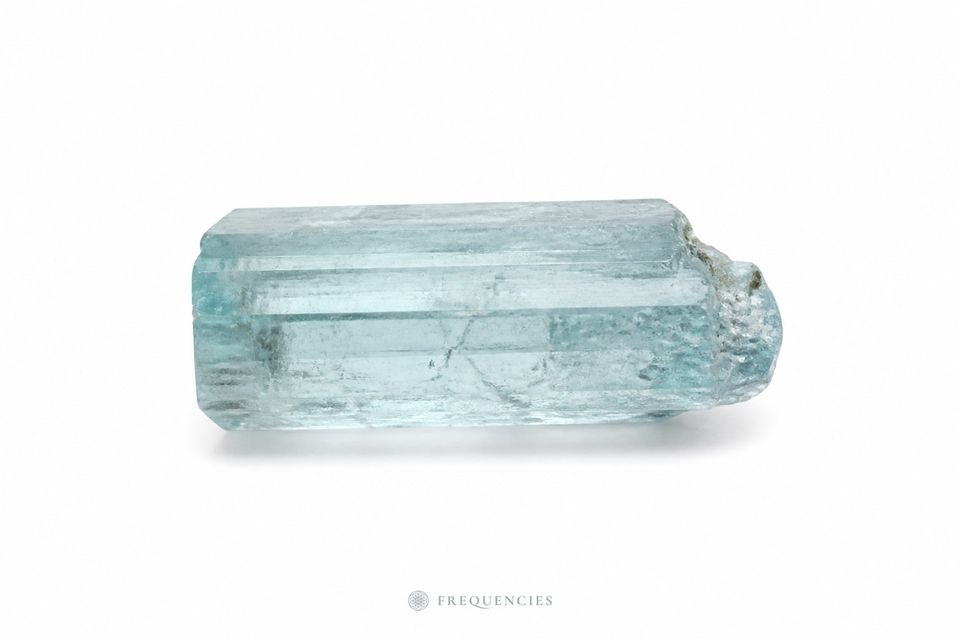
In everyday life, a bracelet knocks against table edges, laptops and door handles, and the hardness of the stone determines how quickly scratches appear. On the Mohs scale, quartz has a hardness of 7, and GIA points out that sand and dust consist mainly of quartz [3]. So stones softer than quartz get scratched more easily in daily wear. The table summarises the data on the stones used in our bracelets; you will find the full list in the care table [4].
| Stone | Mohs hardness | Water | Sun | What to watch out for |
|---|---|---|---|---|
| Aquamarine | 7.5 to 8 | fine | fine | one of the hardest bracelet stones |
| Amethyst | 7 | fine | avoid | long exposure to sun can fade the colour |
| Rose quartz | 7 | fine | avoid | long exposure to sun can make the colour paler |
| Rock crystal | 7 | fine | fine | durable for everyday wear |
| Black tourmaline | 7 to 7.5 | fine, briefly | fine | brittle, protect from hard knocks |
| Green aventurine | 6.5 to 7 | fine | fine | an unusually bright colour may mean it is dyed |
| Labradorite, moonstone | 6 to 6.5 | fine | fine | can split from a strong blow; protect moonstone from heat |
| Pyrite | 6 to 6.5 | avoid | fine | loses its shine in damp conditions |
| Sodalite | 5.5 to 6 | fine | fine | medium hardness |
| Lapis lazuli | 5 to 6 | avoid | avoid | porous, often dyed |
| Malachite, azurite | 3.5 to 4 | avoid | avoid | soft; malachite reacts with acids |
| Shungite | 3.5 to 4 | avoid | fine | can leave dark marks |
If you will be wearing the bracelet every day, the most durable choice is aquamarine or a quartz group stone: amethyst, rose quartz or rock crystal. Moonstone and labradorite are hard enough, but they are feldspars with cleavage in two directions, and GIA warns that a strong blow can split moonstone [5]. Malachite and azurite are soft and are better worn now and then rather than on days when your hands are busy. If you are choosing a stone as a personal symbol, you can read about its symbolism and history in the article on amulets and talismans.
Treatments and Names: What to Ask Before Buying
Beads are often made from stones that tend to be treated. Lapis lazuli is often dyed and impregnated with wax or plastic [4], and GIA names warm soapy water as the safest way to clean it but advises testing an inconspicuous spot first, as some dyes are not stable [2]. Unusually bright green aventurine may be dyed, while green goldstone is glass with glittering metal particles, not aventurine [4]. Howlite dyed to the colour of turquoise must not be called turquoise [4].
Reconstructed azurite and malachite material is also common in jewellery: crushed mineral that has been pressed and bound with plastic or resin [4]. The page of our azurite with malachite bracelet does not say whether the beads are natural, stabilised or reconstructed, so if this matters to you, ask us. The “magnetic hematite” that is popular on the market is usually an artificial material, hematine, as natural hematite is only weakly magnetic [4]. Read more about the signs of imitations in the article on how to recognise a real crystal.
Names do not always match the mineralogy either. Dalmatian jasper is actually a rock made of feldspar and quartz with dark spots, and here the word “jasper” is a trade name [4]. The letters A, AA and AAA next to beads are the sellers’ own quality grades: GIA explains that many companies create their own quality descriptions for coloured stones, so the letters can mean something different with each seller [6]. The AA in the name of our faceted rock crystal bracelet is also the supplier’s designation.
Did you know? In the mid and late 19th century, the jewellery known as marcasite jewellery, popular in the US and Europe, was mostly made of pyrite. Real marcasite oxidises quickly, its oxidation products damage everything they touch, and it is poorly suited to jewellery [7]. Pyrite, too, loses its shine easily [7] and can oxidise in damp conditions [4], so keep pyrite bracelets somewhere dry.
How to Care for a Stone Bracelet
The safest habit is to take the bracelet off before washing, swimming, sport, washing up and working with cleaning products. That way the stones are spared household chemicals and knocks, and the elastic cord gets wet less often.
GIA recommends cleaning amethyst, aquamarine and tourmaline with warm soapy water [3][8][9]. The same can be done with rose quartz and rock crystal, which our care table lists as safe in water [4]. After washing, wipe the bracelet with a soft cloth and let it dry on a towel. For moonstone, GIA recommends only warm soapy water and never ultrasonic or steam cleaners [5]. Nor is ultrasonic cleaning safe for amethyst if the stone is dyed or its fractures are filled [3]. It is safest not to clean stone bracelets ultrasonically at all.
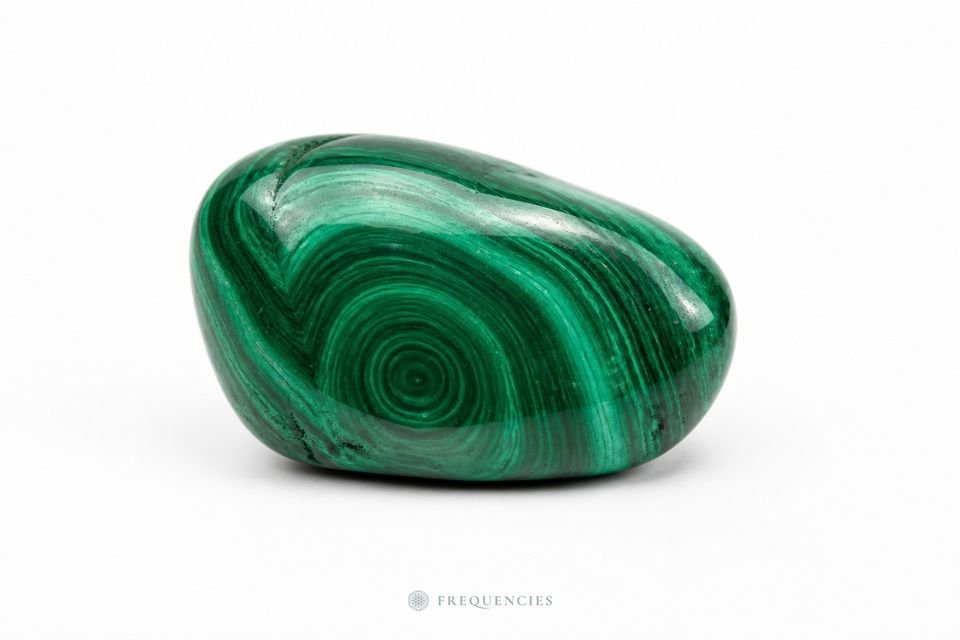
Do not soak pyrite, malachite, azurite, lapis lazuli or shungite. Malachite is sensitive to heat and reacts even with weak acids [10], while lapis lazuli is porous [4]. Wipe these stones with a slightly damp cloth and dry them straight away.
Did you know? If you wipe a dusty malachite bracelet with a dry cloth, the quartz grains in the dust, with a hardness of 7, can scratch the soft stone [3]. Wipe soft stones with a slightly damp cloth first.
How to Store Bracelets
Store each bracelet separately: in a pouch, a box with compartments, or on a soft pad. Quartz beads will scratch malachite, azurite, shungite and lapis lazuli if they rub against one another in a box. The page of the pyrite bracelet recommends keeping it away from softer stones [11], while the care table recommends keeping Dalmatian jasper away from harder stones [4].
Do not keep amethyst and rose quartz bracelets on a sunny windowsill: long exposure to bright light can fade the colour of amethyst [3], and the colour of rose quartz can also become paler [4]. Shungite can leave dark marks, so do not store it with light-coloured fabrics [4].
All our stone bracelets are currently in stock in our own warehouse, and in the Baltic States we usually deliver them within 1 to 3 working days; delivery to parcel lockers in the Baltic States is free for orders from €30 [11]. Prices currently range from €7.05 for the rock crystal chip bracelet to €29 for the azurite with malachite bracelet. You will find them all in the Bracelets category, and other jewellery with natural stones in the Jewellery section.
Frequently Asked Questions
How do I determine bracelet size?
Wrap a measuring tape or strip of paper around your wrist where you will wear the bracelet. If you want a looser fit, add 1 to 2 cm. With 8 and 10 mm beads, leave more room to spare, as large beads take up space on the inside of the bracelet.
What bracelet size fits a man?
Men’s wrists are usually wider: in the US Army measurements, the average is 17.6 cm for men and 15.5 cm for women. For most of our beaded bracelets, the product pages give a circumference of about 16 cm. If your wrist is wider, ask about the specific item first.
Can I shower or swim with a stone bracelet on?
It is better to take it off. Pyrite, malachite, azurite, lapis lazuli and shungite should not be soaked in water, and even harder stones can be damaged by knocks and household chemicals. Wash the bracelet separately, only with warm soapy water, and only if the stone tolerates it.
How do I clean a stone bracelet?
Amethyst, rock crystal, rose quartz and aquamarine can be rinsed in warm soapy water and dried. Soft and porous stones should be wiped with a slightly damp cloth, not soaked. Do not use ultrasonic or steam cleaners.
Which stones are most durable for bracelets?
Aquamarine (7.5 to 8 on the Mohs scale), quartz group stones (7) and black tourmaline (7 to 7.5). Malachite, azurite and shungite are soft (3.5 to 4) and scratch more easily.
What should I do if the elastic cord has stretched?
The bracelet can be restrung on a new elastic cord. Photograph the order of the beads first. To make the cord last longer, pull the bracelet over your hand with both hands and do not stretch it more than necessary.
Sources
- ANSUR II, US Army 2012 anthropometric study (C. C. Gordon et al., NATICK/TR-15/007, 2014), public data, Penn State OPEN Design Lab; average values calculated from public datasets: www.openlab.psu.edu/ansur2/
- GIA, “Lapis Lazuli Care and Cleaning Guide”: www.gia.edu/lapis-lazuli-care-cleaning
- GIA, “Amethyst Care and Cleaning Guide”: www.gia.edu/amethyst-care-cleaning
- frequencies.lv stone encyclopedia, care table and stone pages: frequencies.lv/enciklopedija/kopsana/
- GIA, “Moonstone Care and Cleaning Guide”: www.gia.edu/moonstone-care-cleaning
- GIA, FAQ, “What is AAA-quality kunzite?”: www.gia.edu/gia-faq-quality-kunzite
- Geology.com, “Pyrite”: geology.com/minerals/pyrite.shtml
- GIA, “Aquamarine Care and Cleaning Guide”: www.gia.edu/aquamarine-care-cleaning
- GIA, “Tourmaline Care and Cleaning Guide”: www.gia.edu/tourmaline-care-cleaning
- Geology.com, “Malachite”: geology.com/minerals/malachite.shtml
- frequencies.lv, “Delivery and Returns” (section 3, delivery times) and product pages (availability and prices as of 08.11.2026): frequencies.lv/piegade-un-atgriesana/