
For more than 70 years, the central scarab in Tutankhamun’s pectoral was considered to be chalcedony. Only in 1998 was it confirmed that it is carved from Libyan desert glass, which formed in the Sahara from a meteorite impact almost 30 million years ago [1]. This single stone clearly shows why amulets and talismans equally fascinate historians and geologists.
Amulet and talisman: what is the difference
In Latvian dictionaries, both words are similar, but the emphasis differs. An amulet is an object believed to have the power to protect its owner from misfortune, while a talisman is an object believed to bring luck and good fortune [2][3]. In short: in beliefs, an amulet repels, while a talisman attracts. In everyday language, both words are used as synonyms, and the dictionary even notes under talisman “also amulet” [3].
Both words have ancient origins. The Latin word amuletum was already used by the Roman writer Pliny the Elder in his “Natural History” [4]. The word talisman comes from the Greek telesma, which meant a religious ritual or completion, and entered European languages partly via Arabic, partly directly from medieval Greek [5]. The Metropolitan Museum of Art in New York defines an amulet as an object that was believed to possess positive qualities that it could supernaturally transmit to its owner [6].
Ancient Egyptian amulets: form, color, and material
In Egypt, amulets were used for almost five thousand years, from the predynastic period to Roman times, approximately from 4400 BCE to the 4th century CE. Most were small, typically 2 to 6 cm, and likely inexpensive, making them accessible to almost everyone, but funerary winged scarabs could be up to 25 cm wide. Amulets were placed on the mummy or between its wrappings. Egyptians believed that the power of an amulet was determined by its shape, decoration, inscription, color, material, and the words spoken over it [6].
The most popular material was faience. It could be made in green and blue colors, which were especially favored as they were associated with life and renewal. For semiprecious stones, color was also important: red was linked to dangerous forces, and for this reason, it was also considered protective. Gold, silver, and electrum were materials for the upper classes. One of the most common amulets was the udjat eye, or the Eye of the god Horus. In myth, it was wounded or stolen by the god Set, but restored by the god Thoth, and the Egyptian name of the amulet means “that which is whole again” [6].
Scarab: the beetle that rolls the sun
The sacred scarab is a dung beetle, and Egyptians observed how it rolled a ball of dung. They associated this movement with the sun, which crosses the sky each day, and believed that the beetle arose spontaneously from the earth [6]. The morning sun was depicted as a scarab, and the scarab symbol meant to arise and continue to exist [7]. Thus, the scarab became a sign of life and renewal.
Scarabs also had a practical role. A short inscription or the owner’s name and title was engraved on the flat underside, and it could be used to seal clay. Large heart scarabs with inscriptions were added to mummies, linking the amulet to the weighing of the heart in the afterlife. Egyptian amulets were also exported, and they were made in the Egyptian style throughout the Mediterranean region [6].
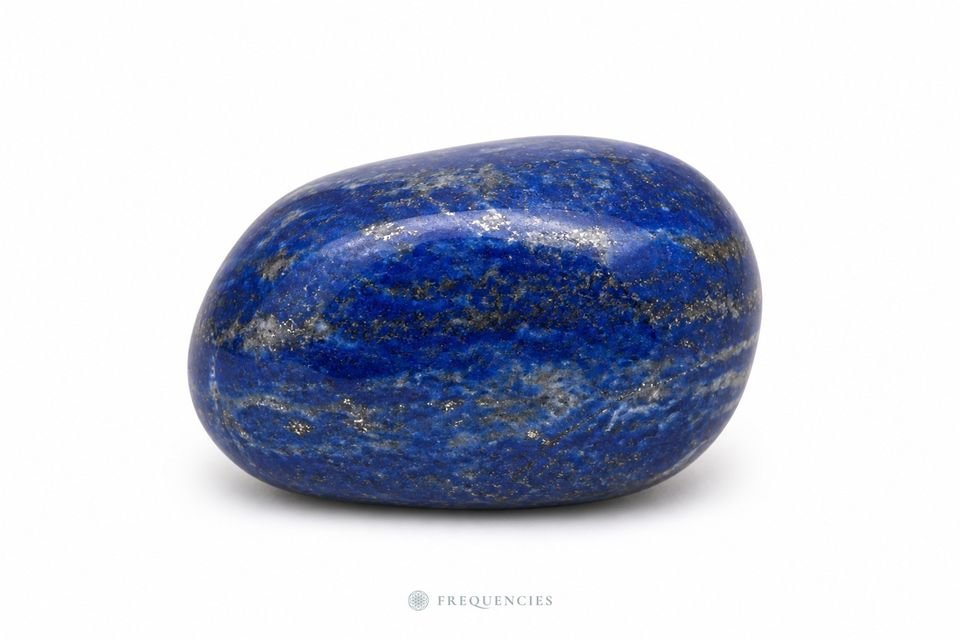
Scarabs were made from faience, glazed steatite, and semiprecious stones [6][8]. The Metropolitan Museum holds a 1.7 cm long lapis lazuli scarab with the name of Pharaoh Amenemhat III, dated to about 1887 to 1813 BCE, and a gold ring from the same period, whose scarab’s wing covers, chest, and head are inlaid with carnelian, lapis lazuli, and turquoise [9][10]. Lapis lazuli was an imported stone in Egypt: it was brought from distant Afghanistan [11], where the Badakhshan mines have been used for more than 6000 years [12]. In our shop, you will find lapis lazuli spheres, stones, and bracelets in the lapis lazuli category.
Tutankhamun’s scarab of Libyan desert glass
The pectoral with a yellow-green, transparent scarab at its center was kept in a box in Tutankhamun’s tomb treasure chamber. The tomb was discovered by Howard Carter in 1922, and the stone was long thought to be chalcedony [1]. In 1996, Italian geologist Vincenzo de Michele noticed in the Egyptian Museum in Cairo that the scarab resembled Libyan desert glass. When he was allowed to examine the stone, its properties matched glass samples from the Great Sand Sea [13].
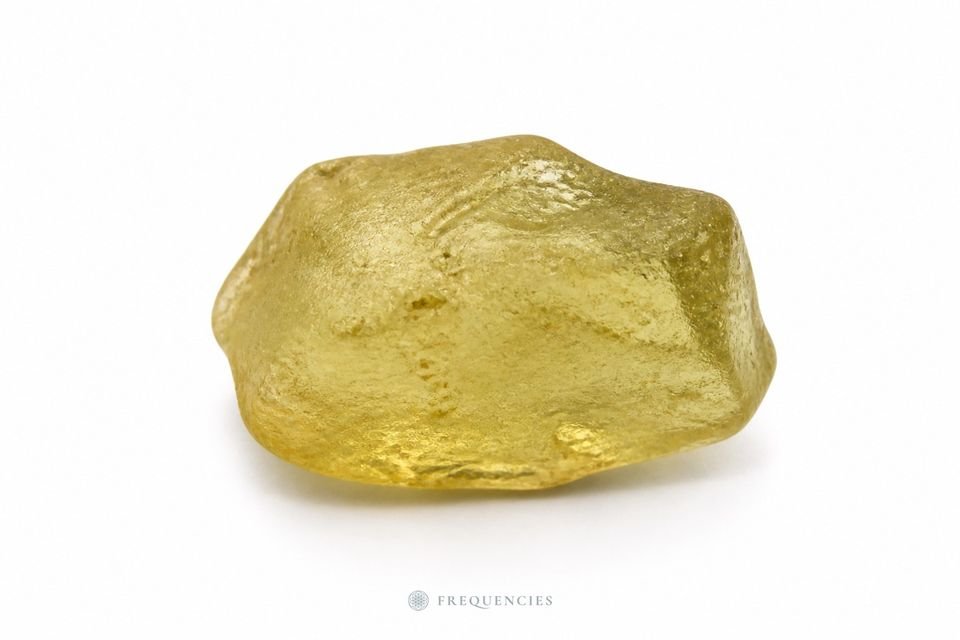
Libyan desert glass is almost pure silicon dioxide and is found in Egypt’s Western Desert, about 800 km west of the Nile Valley [1][14]. In 2019, geologists Aaron Cavosie and Christian Koeberl published evidence that the glass was formed by a meteorite impact. A study published in Budapest in 2025 emphasized that, so far, no other object made from this glass has been found in pharaonic Nile Valley archaeology [1]. Egyptologist Salima Ikram notes that such pectorals were used for religious purposes and as adornment, and their role was associated with protection and divine power. In her view, such a rare material was valued as a gemstone [7]. Small natural pieces of Libyan desert glass can be viewed in the shop’s Libyan desert glass category.
The blue eye: a Mediterranean amulet, usually glass
The belief in the evil eye is ancient and widespread: it was known in ancient Greece and Rome, as well as in Jewish, Islamic, Buddhist, and Hindu traditions. The evil eye is a gaze believed to cause harm, and its cause was most often seen as envy of someone’s prosperity or beauty. In medieval Europe, it was considered bad luck if someone, their children, or possessions were praised, and a blessing such as “God bless” was added to the compliment [15].
In Turkey, the nazar boncuğu is worn against the evil eye. The word nazar comes from Arabic and is related to watching and guarding, while boncuk means “bead” in Turkish. The traditional nazar is a handmade glass bead with concentric circles of dark blue, white, light blue, and black. The belief is that a broken nazar has absorbed a particularly strong evil gaze and should be replaced with a new one [16]. In İzmir province, these beads are still made in Nazarköy, which was called Kurudere until 2007, and in Görece. The glass is melted in traditional wood-fired furnaces, and the craft is passed from master to apprentice [17].
Did you know? The name of blue turquoise is also linked to Turkey. It originated in the 13th century from the French pierre tourques (“Turkish stone”), as this stone likely reached Europe from Turkey. In Egypt, turquoise has been found in royal burials over 6000 years old [18].
Latvian amulets: Thunder axes and Latvian symbols
Amulets were also worn in the territory of Latvia. At the Mežotne hillfort in Zemgale, an 11th to 13th-century bronze pendant in the shape of an axe, with the blade decorated with stylized sun symbols, was found. The object is kept in the Latvian National History Museum, and its description states that such pendants were worn as amulets, symbols of Thunder [19].
Latvian symbols, such as auseklītis, jumis, and Māra’s cross, are nowadays popular decorations on wooden souvenirs, clothing, and even soap packaging [20]. Cultural researcher Otto Ķenga notes that in the 1920s and 1930s, ornament researchers highlighted individual elements from their visual context, gave them chosen names, and freely derived their meanings from folk songs [21]. Therefore, it is more accurate to say that Latvian symbols are an ornamental tradition, whose currently known meanings were largely created by 20th-century researchers. Symbol researcher Valdis Celms recommends studying the meaning and placement of a symbol in a composition before putting it on an object [20]. Read more about this tradition in the article Handmade in Latvia.
Stones as modern symbols of luck
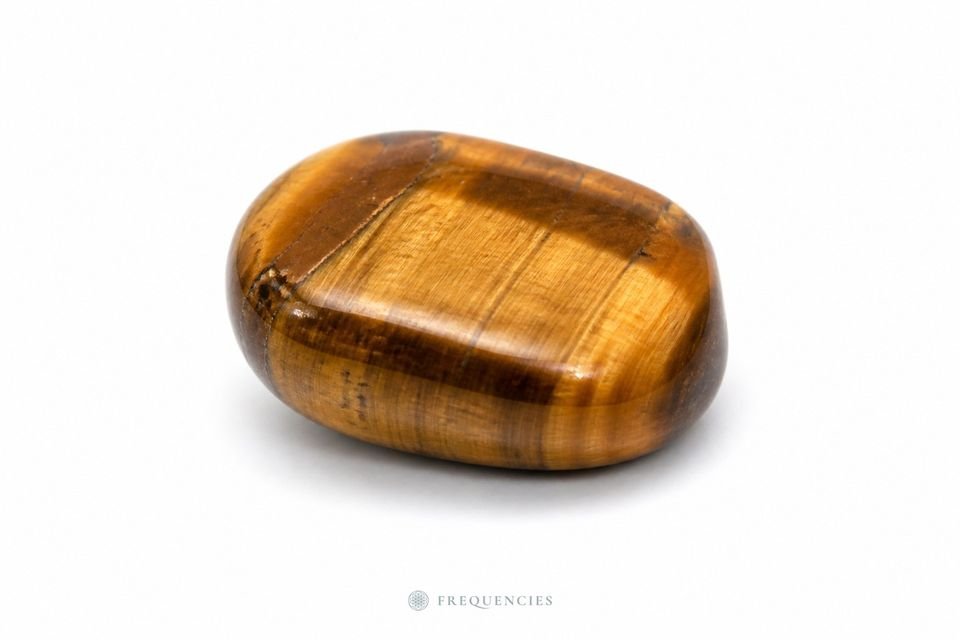
In the modern crystal community, stones are given symbolic meanings, and this is a tradition, not a scientific claim. Black tourmaline is considered in the crystal community as a symbol of stability and protection, and many place it at the entrance to their home. Obsidian symbolizes truth and protection, while tiger’s eye is a symbol of self-confidence and focus [22]. Tiger’s eye displays a moving, silky band of light, known as the cat’s eye effect, created by parallel fibers in the stone [22].
How to choose a stone for a pendant or bracelet
When choosing a stone as a personal symbol or gift, also consider its hardness and care. For an everyday bracelet, harder stones are suitable: tiger’s eye (7 on the Mohs scale), carnelian (6.5 to 7), and black tourmaline (7 to 7.5), though the latter is brittle along its fibers. Obsidian has a hardness of 5 to 5.5 and is brittle, so it is better suited for pendants and earrings than rings. Porous lapis lazuli should not be kept in water [22].
Also ask about treatments. Carnelian is often heat-treated, some carnelian on the market is dyed chalcedony, lapis lazuli is sometimes dyed and impregnated with wax, while turquoise is often stabilized with polymer [22]. An honest seller will indicate any treatment.
In our shop, crystal bracelets are made from rock crystal, pyrite, lapis lazuli, malachite, and other stones; the softer ones, such as lapis lazuli and malachite, are best removed before washing or working with your hands. If you are looking for a pendant handmade in Latvia, NKey FrQ torus pendants are design objects with natural crystals. For guidance on choosing a stone by color, feel, and care, read the guide How to Choose a Crystal, and for stones as gifts by birth month, see the article Birth Month Stones.
Frequently Asked Questions
What is the difference between an amulet and a talisman?
In the dictionary, an amulet is an object believed to protect from misfortune, while a talisman is an object believed to bring luck and good fortune. In everyday use, both words are often used as synonyms.
What does the scarab symbolize?
In Ancient Egypt, the scarab was a symbol of life and renewal. The beetle rolling a ball of dung was associated with the sun crossing the sky each day.
What is the blue eye made of?
The traditional Turkish nazar boncuğu is a handmade glass bead with circles of dark blue, white, light blue, and black. It is not a gemstone.
What is Tutankhamun’s scarab made of?
The central scarab of the pectoral is carved from Libyan desert glass, a natural glass formed by a meteorite impact almost 30 million years ago. Until 1998, it was thought to be chalcedony.
What is the ancient Latvian amulet?
Archaeological finds in Latvia include 11th to 13th-century bronze axe-shaped pendants, which are believed to have been worn as amulets, symbols of Thunder. Such a pendant was found, for example, at the Mežotne hillfort.
Do amulets really protect?
Amulets and talismans are part of cultural history and symbolism, and their effects are not scientifically proven. Many people wear them as a personal symbol, reminder, or meaningful gift.
Sources
- Simon R., Aegyptus et Pannonia IX, Budapest, 2025 (REAL, Library of the Hungarian Academy of Sciences): The curious history of Tutankhamun’s scarab
- Tēzaurs.lv (MLVV, LLVV): amulets
- Tēzaurs.lv (LLVV): talisman
- Lewis C. T., Short C., A Latin Dictionary (Perseus, Tufts University): amuletum
- Wiktionary: talisman (etymology)
- The Metropolitan Museum of Art: Ancient Egyptian Amulets
- Discover Magazine: King Tut’s Central Scarab May Have a Cosmic Connection
- The Metropolitan Museum of Art: Scarab With an Image of the Gods Ptah and Sakhmet (blue glazed steatite)
- The Metropolitan Museum of Art: Scarab of Sithathoryunet with the Name of Amenemhat III
- The Metropolitan Museum of Art: Scarab ring of Sithathoryunet
- Encyclopaedia Britannica: Ancient Egypt
- FREQUENCIES Stone Encyclopedia: Lapis Lazuli
- Current World Archaeology: In search of desert glass
- FREQUENCIES Stone Encyclopedia: Libyan Desert Glass
- Encyclopaedia Britannica: Evil eye
- University of Kansas, Center for Russian, East European & Eurasian Studies: Nazar Boncuğu
- Visit İzmir, İzmir City Tourism Portal: The Evil Eye Bead
- FREQUENCIES Stone Encyclopedia: Turquoise
- Mežotne Hillfort Treasures, Bauska Municipality (Latvian National History Museum collection, A11429:347): Pendant amulet
- LSM.lv: Expert: The use of ancient Latvian symbols should not be exaggerated
- Ķenga O., Crossroads: Cultural and Art Studies, Latvian Academy of Culture, 2024: Methodology of Latvian Ornament Study (1920-1943) as Narrative of Nationalism
- FREQUENCIES Stone Encyclopedia (data from GIA, Mindat, geology.com): Black tourmaline, obsidian, tiger’s eye, carnelian, lapis lazuli, turquoise