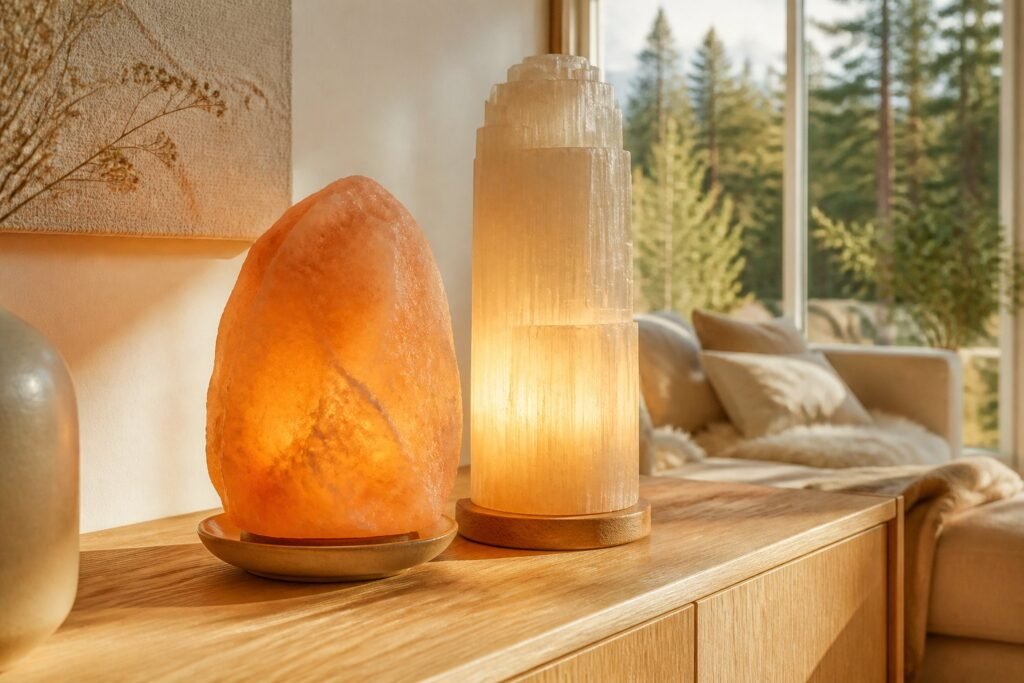
On a damp autumn evening, a salt lamp on the shelf may start to “sweat,” leaving a salty puddle beneath it by morning. This does not happen with a selenite lamp, even though both look like warmly glowing stone blocks. They are two different minerals: the salt lamp is made from halite or rock salt, while the selenite lamp is made from gypsum.
Salt Lamp and Selenite Lamp Compared in One Table
Both minerals are soft and naturally formed by the evaporation of salty water. However, they behave very differently at home, mainly due to their solubility in water.
| Property | Salt Lamp | Selenite Lamp |
|---|---|---|
| Mineral | halite or rock salt | gypsum, usually its fibrous variety satin spar |
| Chemical formula | NaCl, sodium chloride | CaSO4·2H2O, water-containing calcium sulfate |
| Origin | mainly Khewra mines in the Salt Range of Pakistan | for our shop’s lamps, Morocco |
| Mohs hardness | 2 to 2.5 | 2 |
| Solubility in water | about 360 g per liter | about 2 g per liter |
| Moisture and water | hygroscopic, absorbs water from humid air and “sweats” | does not form puddles in room humidity, but slowly dissolves and becomes matte in water |
| Light tone | warm, pinkish orange to reddish | milky white, with a silky glow |
| Care | dry cloth, tray under the lamp, dry room | only a dry, soft cloth or brush, never water |
The most important row in the table is solubility: salt dissolves in water over a hundred times better than gypsum [1] [2]. That is why every damp day affects a salt lamp, while only direct water harms a selenite lamp.
Halite: Rock Salt from Pakistan’s Salt Range
Halite is the mineral that makes up common table salt. The name comes from the ancient Greek word “hals,” meaning salt. Pure halite is colorless or white, but impurities give it pink, orange, and red shades [3]. It crystallizes in cubes and cleaves in three mutually perpendicular directions, so salt pieces often show straight, smooth planes where they break [4].
The so-called Himalayan salt comes from the Salt Range in Punjab province, Pakistan, south of the Himalayas. Most is mined in the Khewra mines in the Jhelum district. The salt layers there accumulated 600 to 540 million years ago, and Khewra samples contain 96 to 99% sodium chloride [5]. McGill University chemist Joe Schwarcz reminds us that this salt is mined in Pakistan, not the Himalayas [6].
Local legend says the deposit was discovered by the horses of Alexander the Great’s army, who licked the salty rocks. The main tunnel at ground level was built in 1872, during British rule, by mining engineer H. Warth, and salt is still extracted using the chamber and pillar method, leaving some salt as supports for the ceiling. The tunnels total about 40 km, the mine produces over 350,000 tons of salt per year, and the complex even has a small mosque made of salt bricks. Khewra is called the second largest salt mine in the world [7].
Gypsum and Selenite: The Mineral with a Moon Name
A selenite lamp is made from gypsum, a water-containing calcium sulfate. The name comes from the Greek “selenites lithos,” meaning “moon stone,” because in ancient times it was believed the mineral waxed and waned with the phases of the Moon. The Greek word “Selene” means Moon, and was also the name of the Moon goddess Selene. However, gypsum does not contain the chemical element selenium [8] [9]. Its Mohs hardness is 2, so it can be scratched with a fingernail [10].
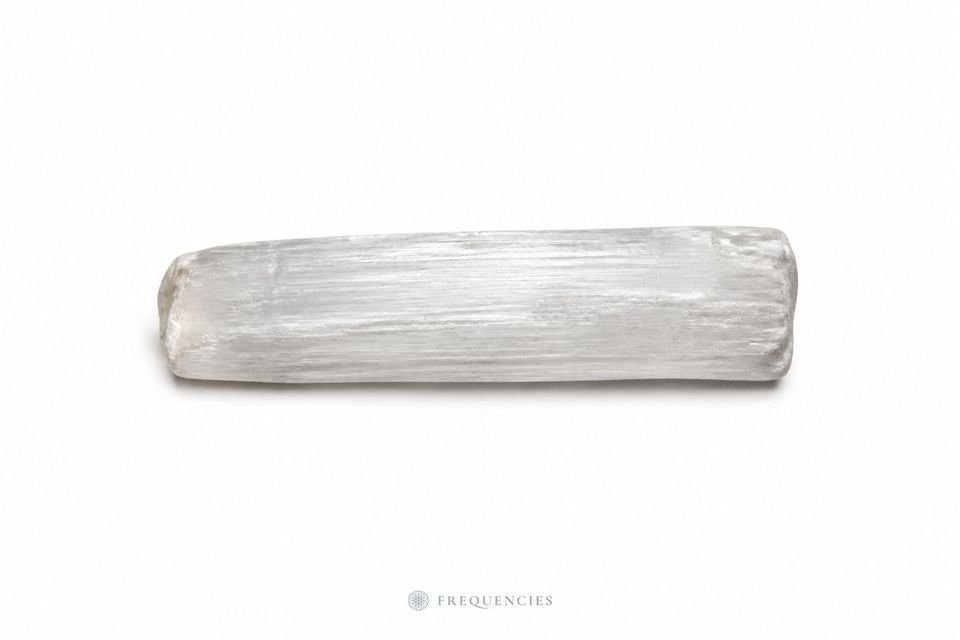
Strictly speaking, selenite is clear gypsum crystals, but lamps usually use satin spar, the fibrous variety of gypsum with a silky shine [10]. The names can be confusing. The moonstone sold in shops is a completely different mineral, a feldspar with a hardness of 6 to 6.5, while the name satin spar is also sometimes used for fibrous calcite, which has a hardness of 3 [8] [11]. Read more about gypsum varieties and deposits on the selenite page in the stone encyclopedia.
Did you know? Halite and gypsum are often neighbors in nature, as both crystallize from the same evaporating seawater. In the 19th century, chemist Usiglio gradually evaporated seawater in the lab and recorded the order in which minerals precipitated. Gypsum began to crystallize when about a fifth of the water remained, but halite only when a tenth was left [12]. In Morocco, where our selenite lamps come from, the Triassic layers of the High Atlas contain large deposits of both rock salt and gypsum [13].
Why a Salt Lamp “Sweats” but a Selenite Lamp Does Not
Salt is hygroscopic, meaning it attracts water vapor from the air [1]. If the relative humidity exceeds a certain threshold, pure sodium chloride absorbs so much water that a saltwater layer forms on its surface. This process is called deliquescence, and at 25 °C the threshold for sodium chloride is 75.3% [14]. In Latvia’s winter, outdoor air often exceeds this threshold: for example, in January 2020, the average relative humidity in Latvia was 89% [15]. Air in a heated room is drier, but in a bathroom, near a kitchen stove, or in an unheated summer house, a salt lamp can become wet.
Live Science cites a salt lamp seller’s website, which says that a lamp left off for a long time starts to “cry,” but the bulb’s heat keeps the salt dry [16].
Gypsum behaves differently. Only about 2 grams of gypsum dissolve in a liter of water [2], so puddles do not form on a selenite lamp in room humidity. However, direct contact with water is harmful to gypsum: the surface becomes matte and slowly dissolves. Therefore, do not place a selenite lamp in the bathroom or wash it.
Negative Ions: What Measurements Show
Many salt lamp sellers write that the lamp emits negatively charged ions. Such ions are formed in the air when oxygen, nitrogen, or carbon dioxide molecules capture free electrons. This happens, for example, when water forcefully strikes a surface and some water molecules split. Physicist Philipp Lenard described in 1892 how falling water splashes electrify the surrounding air, which is why negative ions can be detected near waterfalls [6].
Nothing like this happens in a salt lamp. Chemist John Malin, formerly of the American Chemical Society, explained to Live Science that sodium chloride is a very stable compound. To split it into ions with heat would require about 816 °C, and a 15 W bulb cannot reach such temperatures. Moisture on the salt surface can dissolve some salt, but as the water evaporates, the ions immediately recombine into salt [16].
This can also be checked with an instrument. Joe Schwarcz, head of McGill University’s Office for Science and Society, writes that a mass spectrometer, which detects even short-lived ions, does not register negative ions even when a salt lamp is placed at its intake [6]. Live Science concludes that there is no evidence that lamps produce a significant amount of negative ions [16]. Therefore, it is more honest to value a salt lamp, like a selenite lamp, as a natural stone light fixture.
How to Distinguish a Salt Lamp from a Selenite Lamp
Look at the structure of the stone. A selenite lamp shows long, parallel fibers running from the base upward, and as you walk by, a silky band of light glides across the stone. A salt lamp has no fibers: its breaks show straight planes corresponding to halite’s cubic cleavage [4], and its color is usually pink to orange.
Touch the stone on a humid day. A salt lamp may feel damp or sticky, and where saltwater has dried, a white salt layer remains. A selenite lamp stays dry, and since gypsum has low thermal conductivity, it does not feel as cold to the touch as glass or quartz [10].
You will not distinguish the lamps by hardness, as it is almost the same. Geologists’ lists of features mention halite’s salty taste, but geology.com does not recommend this test [4]. Do not drip water on the stone either: salt will become sticky, and a matte spot may remain on the selenite surface.
Care During Latvia’s Damp Autumn
For a salt lamp, choose the driest room and place a tray or plate underneath so saltwater does not reach wooden surfaces, cords, or plugs. If the lamp gets wet, unplug it, wipe it with a dry cloth, and let it dry. Replace the bulb with the type specified by the manufacturer. If you have a cat at home, choose the location especially carefully. The Pet Poison Helpline warns that cats may return to a salt lamp, and repeated licking can cause sodium poisoning [17].
Caring for a selenite lamp is simpler. Wipe off dust with a dry, soft cloth or brush, but never wash the lamp or wipe it with a damp cloth. Our shop’s lamp instructions state that the lamp is intended for indoor use only and should not be used in damp rooms [18]. All stone care rules are summarized in the care table.
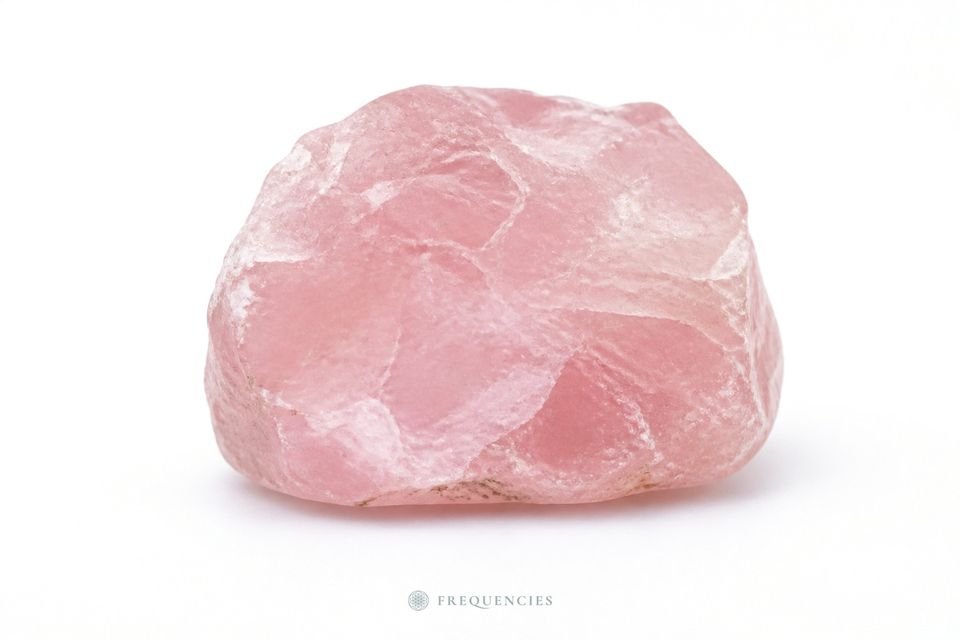
If you keep crystals next to the lamp, consider their hardness. The hardness of amethyst, rock crystal, and rose quartz is 7, so they can scratch both salt and gypsum. Place them on a soft cloth and do not lean them against the lamp. Unlike the two lamp minerals, rose quartz can be briefly rinsed in water, but prolonged sunlight can fade its color [11].
Which Lamp to Choose
The salt lamp is a traditional choice if you like warm, orange light and do not mind paying attention to the lamp on humid days. The selenite lamp is more practical for everyday use: its milky white light is gentler, and ordinary room humidity does not bother it as long as the stone does not come into contact with water.
Our shop offers seven selenite lamps from Morocco, 36 to 40 cm high and 3.3 to 4.8 kg in weight, with an E14 5 W LED bulb included [18]. You will find them in the selenite lamp category, and you can read about choosing the right size, bulb, and location in the article “Selenite Lamp: How to Choose Size, Light, and Placement at Home”. For a smaller gift, choose selenite candle holders, and you will find other selenite items in the selenite category. Orders over €30 are delivered free of charge to parcel machines in the Baltics.
Frequently Asked Questions
Is selenite salt?
No. Selenite is gypsum or calcium sulfate CaSO4·2H2O, while a salt lamp is made from halite or sodium chloride NaCl. Gypsum dissolves in water at about 2 grams per liter, salt at about 360 grams per liter.
Why is my salt lamp wet?
Salt is hygroscopic. When the relative humidity exceeds about 75%, it absorbs water from the air, and a saltwater layer forms on the surface. Place the lamp in a dry room and put a tray underneath.
Does a salt lamp emit negative ions?
Measurements do not confirm this. A mass spectrometer near a salt lamp does not detect negative ions, and chemist John Malin explains in a Live Science article that splitting sodium chloride into ions with heat would require about 816 °C.
Where does Himalayan salt come from?
It is mined in Pakistan, in the Salt Range of Punjab province, mainly in the Khewra mines. The salt layers there accumulated 600 to 540 million years ago.
Can I keep a selenite lamp in the bathroom?
No. Gypsum slowly dissolves in water and becomes matte in humidity, and our lamp instructions state that the lamp should not be used in damp rooms.
How do I clean a salt lamp?
Unplug the lamp and wipe it with a dry cloth. Do not wash or soak the lamp, as salt dissolves in water.
Sources
- Wikipedia, Sodium chloride: en.wikipedia.org/wiki/Sodium_chloride
- Wikipedia, Gypsum: en.wikipedia.org/wiki/Gypsum
- Wikipedia, Halite: en.wikipedia.org/wiki/Halite
- Geology.com, Halite: geology.com/minerals/halite.shtml
- Wikipedia, Himalayan salt: en.wikipedia.org/wiki/Himalayan_salt
- Joe Schwarcz, McGill University Office for Science and Society, “Niagara Falls and the Nebulous Positive Effects of Negative Ions”, 2024: mcgill.ca/oss/article/environment-general-science/niagara-falls-and-nebulous-positive-effects-negative-ions
- Wikipedia, Khewra Salt Mine: en.wikipedia.org/wiki/Khewra_Salt_Mine
- Wikipedia, Selenite (mineral): en.wikipedia.org/wiki/Selenite_(mineral)
- Wikipedia, Selene: en.wikipedia.org/wiki/Selene
- FREQUENCIES stone encyclopedia, Selenite: frequencies.lv/enciklopedija/selenits
- FREQUENCIES stone encyclopedia, Moonstone, Calcite, Rose Quartz, Amethyst, Rock Crystal: frequencies.lv/enciklopedija
- Wikipedia, Evaporite: en.wikipedia.org/wiki/Evaporite
- El Hassane Chellai, Mohamed Ghanmi, Miguel Doblas, Deposits Magazine, “Triassic salt in the High Atlas of Morocco”, 2016: depositsmag.com/2016/11/17/triassic-salt-in-the-high-atlas-morocco
- Wikipedia, Hygroscopy: en.wikipedia.org/wiki/Hygroscopy
- LVĢMC, Weather conditions, January 2020: videscentrs.lvgmc.lv/files/Klimats/Ikmenesa_laika_apstaklu_raksturojums/2020/Janvaris_2020.pdf
- Tia Ghose, Live Science, “Himalayan Salt Lamps: What Are They (and Do They Really Work)?”, 2017: livescience.com/59328-himalayan-salt-lamp-faq.html
- Pet Poison Helpline, “Are Salt Lamps Bad for Cats?”: petpoisonhelpline.com/uncategorized/are-salt-lamps-bad-for-cats
- frequencies.lv, Selenite lamp 38 cm 4.2 kg (product page) and selenite lamp category, 20.10.2026: frequencies.lv/products/selenita-lampa-38cm-42kg