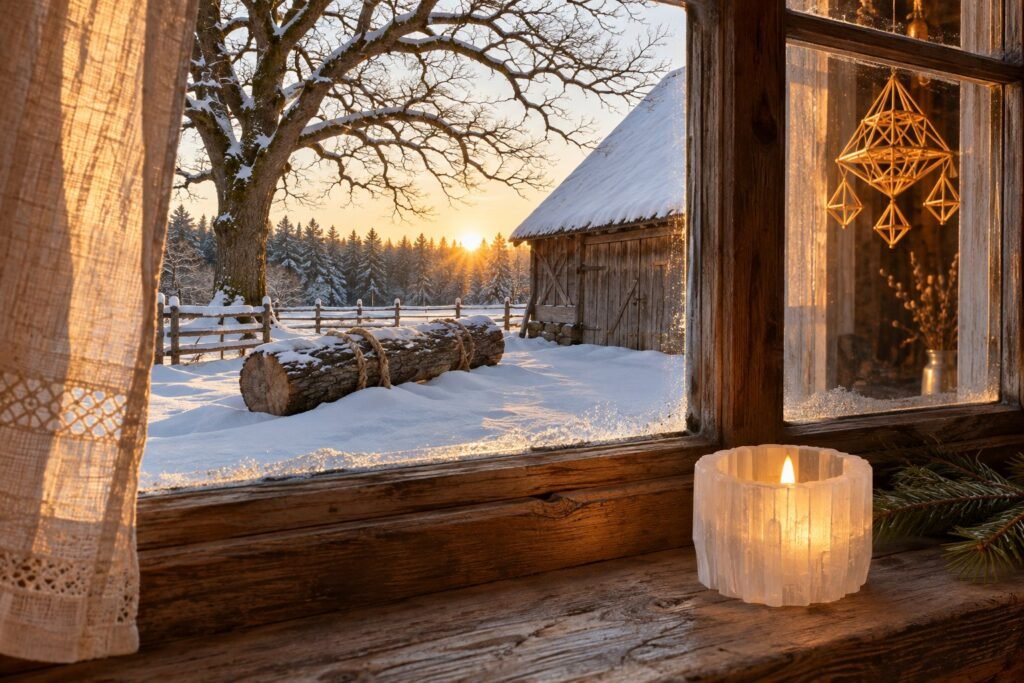
On Monday 21 December 2026, at 22:50 Riga time, the Sun will reach its southernmost point and astronomical winter will begin [1][2]. On that day, the Sun will be above the horizon in Riga for only 6 hours and 43 minutes [5]. In Latvian tradition, this darkest time of the year was greeted with log dragging, masks and a festive feast. In many places, people believed that you should eat nine times at Christmas [7][9].
When is the winter solstice in 2026
The winter solstice is a single precise moment, not a whole day. In 2026, it will occur on Monday 21 December at 22:50 Latvian winter time, or 20:50 Universal Time (UTC). Both timeanddate.com and the US Naval Observatory (USNO) give exactly this time [1][2]. The shortest day of the year in Latvia will be 21 December, and 22 December will be only one second longer [5].
| Year | Winter solstice | Riga time |
|---|---|---|
| 2024 | 21 December | 11:20 |
| 2025 | 21 December | 17:03 |
| 2026 | 21 December, Monday | 22:50 |
| 2027 | 22 December, Wednesday | 4:42 |
| 2028 | 21 December | 10:19 |
| 2029 | 21 December | 16:14 |
| 2030 | 21 December | 22:09 |
The table shows that the moment of the solstice moves about six hours later each year. In 2027, it will slip into the early morning of 22 December in Latvia, but in the leap year 2028 it will fall on 21 December again [1][2][3].
Why the solstice falls on 21 December and sometimes on 22 December
The Earth’s axis of rotation is not perpendicular to the plane in which the Earth orbits the Sun but is tilted by about 23.4 degrees. In December, the northern hemisphere is tilted away from the Sun, and at the moment of the solstice the Sun stands at the zenith over the Tropic of Capricorn, about 23.4 degrees south of the equator. The point where the Sun is directly overhead goes no further south, and after the solstice it starts moving north again [1][4].
The date changes because the calendar year is not exactly as long as the tropical year, the cycle in which the seasons repeat. The tropical year lasts about 365.242199 days, while an ordinary calendar year has 365 days, so the solstice arrives about six hours later each year. Once the difference has built up, 29 February in a leap year brings the calendar back into line with the tropical year, and the solstice returns to the earlier date [1].
In Universal Time, the winter solstice can fall anywhere from 20 to 23 December, but the extreme dates are rare: it last fell on 23 December in 1903, and it will next fall on 20 December in 2080 [1]. USNO data show that from 1951 to 2000 the solstice fell on 22 December in 31 of the 50 years, whereas from 2001 to 2050 it falls on 21 December in 37 of the 50 years (in Universal Time) [2].
The shortest day in Riga: 6 hours and 43 minutes
On 21 December, the Sun in Riga will rise at 8:59 and set at 15:43. At midday, it will climb only 9.7 degrees above the horizon. For comparison: at the 2026 summer solstice, the day in Riga lasted 17 hours and 52 minutes, and at midday the Sun stood 56.5 degrees high [5]. From 15 to 28 December, the Sun in Riga rises in almost exactly the same place, in the south-east [5]. This observation gave the phenomenon its international name: the English word “solstice” comes from the Latin sol (Sun) and sistere (to stand still) [1]. In Latvian, a synonym for saulgrieži (solstice) is “saulstāvji” [4].
Did you know? The earliest sunset in Riga does not fall on the solstice. As early as 13 to 16 December, the Sun sets at 15:41, while on 21 December it sets two minutes later. The latest sunrise, at 9:01, comes from 24 December to 1 January [5]. This happens because, by the clock, solar noon arrives a little later each day in December: in Riga it is at 12:12 on 1 December and at 12:26 on 1 January [5]. The difference between apparent (true) solar time and mean solar time is called the equation of time, and it is caused by the Earth’s slightly elliptical orbit and the tilt of its axis [6].
If you would like soft light on the long evenings, take a look at selenite lamps or candle holders for tea lights.
Christmas: the ancient Latvian solstice festival
In traditional Latvian culture, Christmas (Ziemassvētki) is the winter solstice festival, marking the middle of winter. The folklorist Aīda Rancāne writes in the National Encyclopedia of Latvia that the festival is rooted in the cult of the Sun: the shortening of the days and their subsequent lengthening can be seen as the symbolic death and rebirth of the Sun. The name of the festival is also closely linked to the ancient Winter Month (Ziemas mēnesis) [7]. Read more about the old Latvian month names in the article The Month of Souls, Frosts and Wolves.
The earliest written descriptions of Christmas on Latvian farmsteads date from the 17th century. Paul Einhorn, a pastor in Kurzeme (Courland), mentioned log dragging, masking and feasting in his 1649 work “Historia Lettica”, and later these customs were also described by Gotthard Friedrich Stender, known as Old Stender, and August Bielenstein, who often criticised their “pagan” elements [7].
In folk songs, Christmas is celebrated for three days and three nights, while folk beliefs add a fourth day [7]. One record says that the fourth day is celebrated as well, for the good of the billy goats and nanny goats [9]. In a broader sense, the festive season lasted from 13 December to 6 January. After the festival came the “holy evenings”, or “merry time”, when people did no work and no spinning but asked riddles, sang and told folk tales. The season ended with Epiphany, when crosses were drawn on doors [7].
The room was decorated with spruce branches, straw, bird feathers and colourful woollen yarn. Straw symbolised the afterlife, while the main decoration was the “puzuris”, also called a lantern, which was hung from the ceiling above the festive table as a sign of cosmic order [7].
Log Night: why the log is dragged and burned
Christmas Eve was called Log Night (Bluķa vakars). The log was usually cut from oak, dragged on bast ropes from house to house or around the family’s own farmstead, and finally burned [7]. An 1832 storybook from Kurzeme describes how a large, heavy log was rolled with joyful shouts from village to village and from house to house until it was burned [8].
Rancāne interprets the dragging and burning of the log as the re-creation of the Sun, a fertility deity: the old is destroyed so that the new can arise. According to tradition, dragging the log around the house, farmyard or fields protected them from unfavourable otherworldly forces [7]. The timing was not the same all over Latvia. Records from Sauka and Sunākste say that logs were rolled on Thursday evenings during the season of souls (veļu laiks), from Michaelmas to Martinmas, while in Lejasciems Log Nights were celebrated from Martinmas to Candlemas [8].
Logs are still dragged today. The Latvian Ethnographic Open-Air Museum will celebrate Christmas on Saturday 19 December, from 11:00 to 15:00, at its Riga site at Brīvdabas iela 21, and the programme includes folk dances, games, tin pouring for fortune-telling, workshops and log dragging [11]. Every year, the Latvian Folklore Society organises a Log Night with log dragging through the streets of Old Riga [7].
“Budēļi”, “ķekatas” and “čigāni”: who comes in masks
Christmas mask processions began on the first evening of the festival and could go on through all the “holy evenings” until Epiphany [7]. The dictionary defines “ķekatas” as a masked procession from house to house with teasing songs and various customs, while “budēļi” are the members of such a procession. The “budēļi” evenings, when the mask processions took place, lasted from Martinmas to Shrovetide [10].
In different regions, the maskers had different names: in Kurzeme they were called “būzuļi” and “miežvilki”, in Vidzeme “čigāni” and “bubuļnieki”, in Zemgale “ķēmi” and “danča bērni”, and in Latgale “kaladnīki” and “kaitas”. Among the most common characters were the Gypsy Man and the Gypsy Woman, the Bear, Goat, Crane, Horse, Wolf, Death, the Tall Old Woman and the Little Man [7].
The maskers arrived at the farmstead noisily, to announce themselves and scare away evil spirits. Each character had its own role: the Crane pecked at the girls, the Goat butted, the Bear growled into the corners and the Gypsy Woman told fortunes. The hosts offered the maskers food and drink, and on leaving, the maskers wished them a good harvest and blessings [7]. In the Christmas songs of Latgale, the most common refrain is “kaladū”, while around Alūksne and Gulbene people sing out “totari” [7].
The Christmas table: kūķi, peas and nine meals
Christmas Eve was also called Kūču Night, after the festive dish “kūča”, or “kūķis”. It was made from barley grains crushed in a mortar, boiled with salt and slow-cooked in the oven with fried bacon and onions [7]. The table also held boiled peas and beans, half a pig’s head or a pig’s snout, barley groat sausages, braised cabbage, bacon pies, “karašas” (flat cakes) and baked apples [7].
In many places, people believed that you should eat nine times at Christmas so that the coming year would be prosperous; this belief was recorded in Reņģe, Tirza, Smiltene and elsewhere [9]. In Kazdanga, beans and peas were cooked so that they would grow well, while in Naudīte a bowl of peas was left on the table in the evening, as people believed that the dead came to feast at midnight [9]. Rancāne explains that the richly laid table and the repeated meals were linked to ideas of fertility and plenty [7].
Beliefs and divination on Christmas night
People did not sleep on the festive night, believing that keeping vigil protected them from evil and brought good luck [7]. A song recorded in Jaunlaicene goes: “I do not sleep, I do not sleep on Christmas night, / So that my flax will not fall” [9].
Divination had its special time, usually Christmas Eve or midnight [7]. One method was recorded in Bērze: a key, bread, a ring and other objects were hidden under a hat or a bowl, and it was believed that whoever drew out the key would become master of a farm, whoever drew the bread would be rich and whoever drew the ring would marry [9]. People watched the sky too: in Kandava it was believed that a starry Christmas night meant many lambs in the coming year, and in Piltene that it meant plenty of berries and mushrooms [9].
Did you know? As early as 1627, Paul Einhorn recorded the belief that at midnight on Christmas night all the waters turn into wine for one hour, and that during this hour no animal sleeps, but all stand on their feet [9].
If you would like to follow the Moon next year, you will find all the full moons and new moons of 2027 in the 2027 Moon Phase Calendar, where you can also mark the days that matter to you. You will find more festive ideas in the Gift Ideas category.
Solstice evening at home: candles, selenite and stones attributed to the Sun
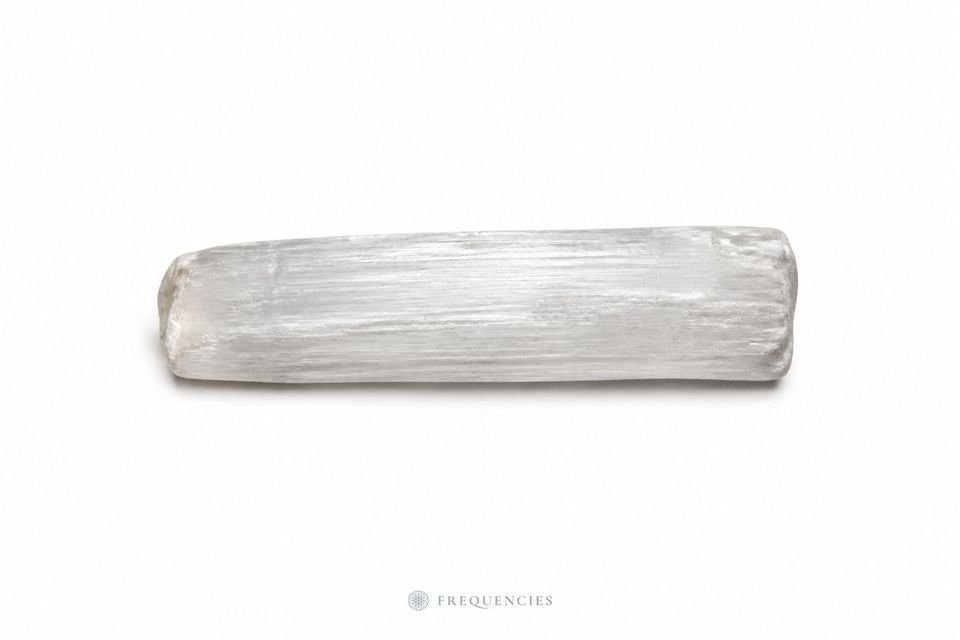
Ancient elements also live on in modern Christmas symbolism: “puzuri”, fire, candles and lanterns [7]. If you celebrate the solstice at home, you can light a candle in a selenite candle holder. Selenite is a soft variety of gypsum with a Mohs hardness of 2. Clean it only with a soft, dry cloth, as water can damage its surface [12]. Never leave a burning candle unattended, and place the candle holder on a stable, heat-resistant surface.
In our encyclopedia, the Sun, as a traditional planet, is linked with sunstone, citrine, rock crystal and pyrite [12]. Sunstone is an orange to reddish feldspar with glittering platelets, while most of the citrine on the market is heat-treated amethyst [12]. Rock crystal has a winter story too: the Roman naturalist Pliny the Elder believed it was a kind of ice, as you can read in the article Snowflakes and Ice Crystals [13].
If you are looking for a gift for someone born around the solstice, see the article Birth Month Stones: there, the stones for December are turquoise, tanzanite and zircon, while the stone for January is garnet [13]. In the article Crystals by Zodiac Sign, Capricorn is counted from 22 December, and its stones include garnet, onyx, shungite and smoky quartz [13].
Frequently Asked Questions
When is the winter solstice in 2026?
The winter solstice in 2026 is on Monday 21 December, at 22:50 Riga time or 20:50 Universal Time. This is also the shortest day of the year: in Riga, it will last 6 hours and 43 minutes.
Why is the winter solstice on 21 December?
The ordinary calendar year is slightly shorter than the tropical year, the cycle in which the seasons repeat, so the moment of the solstice moves about six hours later each year, and a leap year moves it back again. This is why the solstice usually falls on 21 or 22 December.
When is the winter solstice in 2027?
In 2027, the winter solstice in Latvia will be on Wednesday 22 December, at 4:42 Riga time.
What are the winter solstice traditions in Latvia?
In Latvian tradition, the winter solstice is Christmas. It is ushered in by Log Night, when a log is dragged from house to house and burned, and its typical customs are mask processions, divination, staying awake all night and a table with kūķi, peas and beans.
What are the Latvian Christmas beliefs?
In many places, people believed that you should eat nine times at Christmas so that the coming year would be prosperous, and that a starry festive night meant plenty of lambs, berries and mushrooms. These are recorded folk beliefs, not predictions.
Where can you see log dragging in Riga?
The Latvian Ethnographic Open-Air Museum will celebrate Christmas on Saturday 19 December, from 11:00 to 15:00, with log dragging, folk dances and games. Every year, the Latvian Folklore Society organises a Log Night with log dragging through the streets of Old Riga.
All full moon and new moon dates for 2027 in Riga time are listed in Moon Phases 2027.
Sources
- timeanddate.com. December Solstice 2026 (Riga time, Earth’s axial tilt, date change)
- US Naval Observatory (USNO), Astronomical Applications Department. Earth’s Seasons and Apsides (data 1951 to 2050)
- timeanddate.com. Seasons, Equinoxes and Solstices for Riga (2022 to 2030)
- Tēzaurs, Institute of Mathematics and Computer Science, University of Latvia. Entry “saulgrieži” (based on the Dictionary of the Latvian Literary Language)
- timeanddate.com. Sunrise and sunset times in Riga: December 2026, January 2027, June 2026
- timeanddate.com. What Is the Equation of Time?
- A. Rancāne. Christmas in Latvian Traditional Culture. National Encyclopedia, National Library of Latvia (updated 29.05.2026)
- P. Šmits. Latvian Folk Beliefs (1940 to 1941), digital version by the Institute of Mathematics and Computer Science, University of Latvia: Log Night, Nos. 3463 to 3474
- P. Šmits. Latvian Folk Beliefs: Christmas, Nos. 34369, 34405, 34416, 34418, 34433, 34438, 34459, 34480, 34486, 34536, 34613, 34681
- Tēzaurs, Institute of Mathematics and Computer Science, University of Latvia. Entries “ķekatas” and “budēļi” (based on the Dictionary of the Latvian Literary Language)
- Latvian Ethnographic Open-Air Museum. Log Dragging, 19.12.2026
- FREQUENCIES Stone Encyclopedia: selenite, sunstone, citrine, rock crystal, pyrite, garnet, turquoise, tanzanite (composition, traditional planet, care)
- FREQUENCIES articles: Birth Month Stones, Crystals by Zodiac Sign, Snowflakes and Ice Crystals