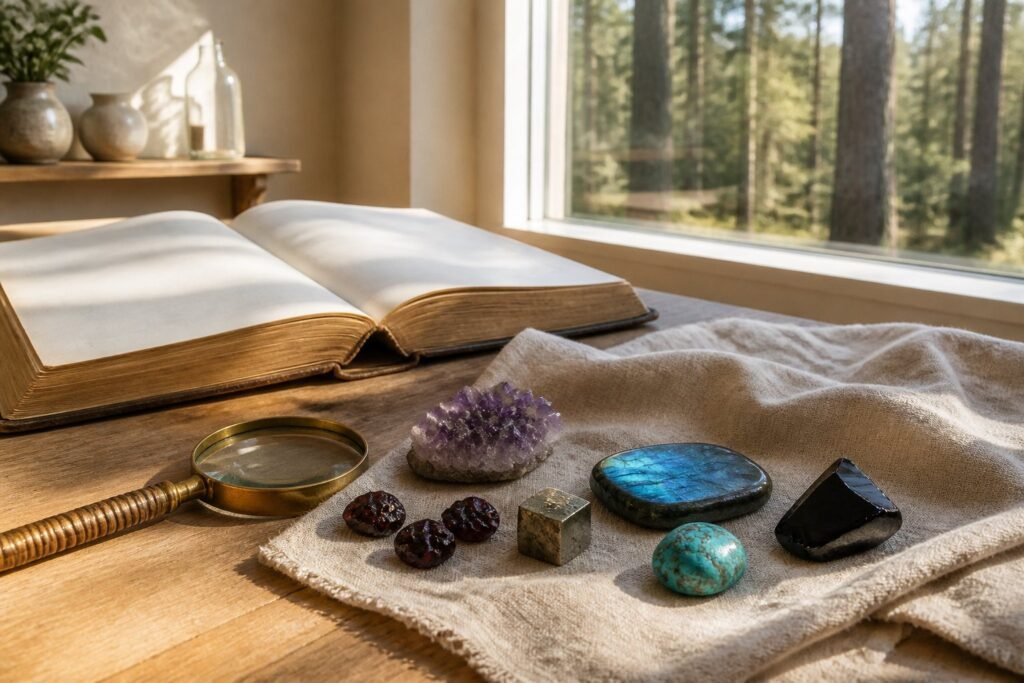
Amethyst means “not intoxicated,” garnet is possibly named after the pomegranate, while obsidian, according to Pliny the Elder, is named after a Roman, and the word was later altered by a printing error. The names of stones conceal ancient beliefs, trade routes, names of places and people, and many of them can be deciphered if you know where to look.
Words from Ancient Beliefs: Amethyst and Selenite
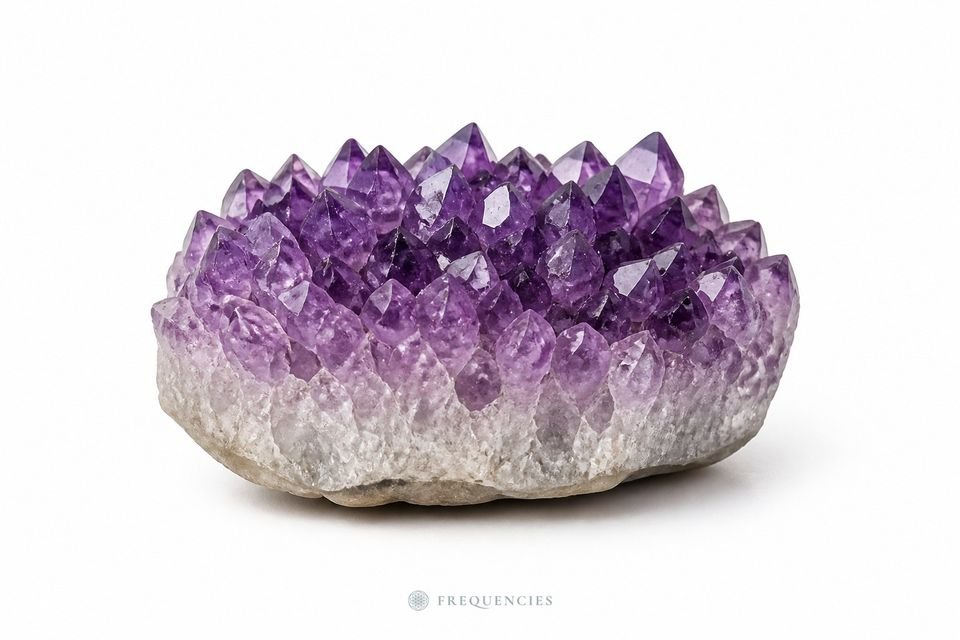
The word amethyst is borrowed from the Greek amethystos, “not intoxicated”: a- means “not,” while the verb methyskein, “to intoxicate,” is based on methys, wine [1]. In antiquity, it was believed that amethyst jewelry prevented intoxication, and amethyst rings were worn at feasts [1][3]. However, linguist Robert Beekes offers another explanation: the stone is named after its color, which resembles red wine so diluted with water that it no longer intoxicates [1]. The well-known legend of the maiden Amethyst, whom the goddess Diana turned into a white stone and Bacchus poured wine over, is not found in classical sources. It was composed by the French poet Rémy Belleau (1528 to 1577) in a poem about Bacchus and Amethyst, included in his collection dedicated to gemstones (1576) [2][3].
Selenite comes from the Greek selēnē, Moon: selēnitēs lithos means “moon stone” [4]. Etymonline mentions two possible reasons: the color of the stone or the belief that it grows and wanes with the phases of the Moon [4]. The chemical element selenium is not present in selenite, although the words are similar [3].
By Color and Resemblance: Garnet, Hematite, Rhodonite, and Citrine
The name of garnet comes from Medieval Latin granatum. Etymonline explains that the word is possibly borrowed from the name of the pomegranate, as the stone resembles the shape of its seeds or the color of its flesh. There is also another version: the word could have come from the Latin granum, “grain,” which in the Middle Ages also meant the red dye cochineal [5]. In Latvian, the connection is even clearer, as Tēzaurs lists two words granāts: one means the pomegranate tree or its fruit, the other a group of silicate minerals [6].
Did you know? Hematite is possibly the first mineral whose name ends with the suffix “-ite.” It was named around 325 to 300 BCE by the ancient Greek scientist Theophrastus: aimatitis lithos means “blood stone” [7]. The reason is the powder: even metallic gray hematite leaves a reddish-brown streak [3]. In Latvian dictionaries, hematite has a synonym with the same meaning, blood stone [6].
Rhodonite received its name in 1819 from the Greek rhodon, “rose,” because of its pink color [8]. Citrine comes from the French citrin, “lemon yellow,” whose root is the Latin citrus [9]. Malachite is Greek malachitis, “mallow stone,” because its green color resembles mallow leaves [10], while onyx in Greek means nail, as its color sometimes resembles a human nail, pink with white stripes [11]. Celestine was named in 1798 by the German mineralogist Abraham Gottlob Werner after the Latin caelestis, “heavenly,” because the first specimen was pale blue [12][3].
By Properties: Pyrite and Aventurine
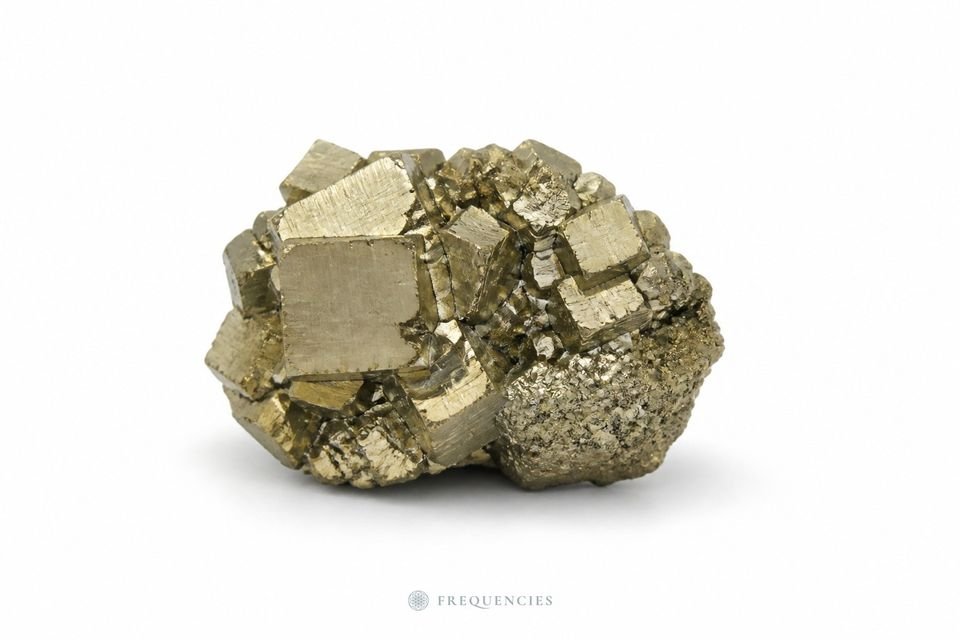
The name of pyrite originated in antiquity from the Greek pyr, “fire,” because when struck against another mineral or metal, it produces sparks [13]. The Greek pyritēs lithos meant “fire stone” or “flint,” but Etymonline explains the name by the stone’s luster [14]. In ancient times, fire was struck with pieces of pyrite and flint, and in the 16th and 17th centuries, pyrite was used in the ignition of early firearms [3]. Because of its brass-yellow shine, it is also called fool’s gold [3].
The name aventurine comes from the Italian a ventura, “by chance.” Glass with tiny copper inclusions was first accidentally produced in Italy at the beginning of the 18th century, and later this name was also used for natural quartz with sparkling mica flakes [15][3].
By Places: Labradorite, Tanzanite, Moldavite, and Agate
Labradorite is named after the coast of Labrador in Canada, where Moravian missionaries found it in boulders around 1770 [16]. The first recorded deposit is on Paul Island near Nain [17]. Tanzanite is one of the newest gemstones. Blue-violet crystals were found in 1967 in the Merelani area in northern Tanzania, and Tiffany & Co. named the stone after the country and launched a major advertising campaign in 1968 [18]. Mineralogically, tanzanite is a variety of zoisite [3].
Moldavite is named after the German name of the Vltava River, Moldau. The name was introduced in 1836 by the mineralogist Zippe after the main deposit near the Vltava in South Bohemia [20]. Pliny associated the name agate with the Achates River in Sicily, where the stone was found, but the river could just as well have been named after the stone [21]. Amazonite was named in 1847 by the mineralogist Breithaupt after an unspecified location “near” the Amazon River [22], although no amazonite deposits are known in the Amazon region [3].
By People: Howlite, Prehnite, Zoisite, and Obsidian
Howlite honors the chemist, geologist, and mineralogist Henry How (1828 to 1879), who worked in Nova Scotia, Canada, and was the first to describe this mineral. How himself named it silico-boro-calcite, but soon the American mineralogist James Dwight Dana renamed it howlite [23]. Prehnite was named in 1788 by Werner in honor of the Dutch Colonel Hendrik von Prehn, who is credited with discovering the mineral in 1774 at the Cape of Good Hope [24]. Zoisite, whose blue-violet variety is tanzanite, was named in 1805 after Baron Sigmund Zois, who financed mineral collecting expeditions [19][3]. Kunzite, in turn, honors Tiffany & Co. vice president and gemologist George Frederick Kunz [25].
The story of obsidian is more unusual. Pliny the Elder wrote that this volcanic glass was found in Ethiopia by a Roman named Obsidius, and from this comes the name obsianus lapis, Obsidius’ stone. Etymonline calls the form obsidianus, from which the modern word derives, a printing error [26], but our encyclopedia notes that even in ancient manuscripts the word was written differently, so the exact form is uncertain [3].
Traces of Trade Routes: Turquoise and Lapis Lazuli
The name of turquoise comes from the French pierre tourques, “Turkish stone.” This arose in the 13th century, and GIA explains that the stone most likely first reached Europe from Turkish sources [27]. However, the deposit was not in Turkey. Mindat writes that the original material came from the mountains of Iran and traveled to Europe via Turkey [28], and the Nishapur region of Iran is traditionally the source of the highest quality turquoise [3]. Thus, the stone was named after the route by which it reached Europe, not the deposit itself.
Lapis lazuli followed a similar route. Etymonline explains that the English word azure, sky blue, comes from the Persian lajward, which is a place name in Turkestan where the stone was mined and which was mentioned by Marco Polo. The initial “l” of the Medieval Latin word lazur was mistakenly separated as the French definite article l’, and thus the form azur arose [29]. The name lapis lazuli comes from the same Persian word [3].
Where Sources Do Not Agree
Not all names can be explained with certainty. Topaz, as Pliny writes, is named after a distant island in the Red or Arabian Sea, but this may be folk etymology, and the word is possibly related to the Sanskrit tapas, “heat, fire” [30]. The name chalcedony is usually explained by the ancient city of Chalcedon, now part of Istanbul, and such an origin was already mentioned by Agricola in 1546 [31]. Etymonline, referring to the Oxford English Dictionary, calls this connection very doubtful [32].
The English carnelian arose from the word cornelian, when its spelling was influenced by the Latin carnem, “flesh,” because of the stone’s color [33]. Our encyclopedia notes that the oldest form most likely comes from the red berries of the European cornel (Cornus mas) [3]. The word tourmaline comes from Sri Lanka, but its meaning is unclear: Etymonline writes that the Sinhalese toramalli was a general name for carnelian [34], but other sources translate it as “mixed stones” [3].
Stones in the Latvian Language: From Pomegranate to Emerald Green
Tēzaurs lists several color names that include the name of a stone. Smaragdzaļš is “that which has the green color characteristic of emerald,” tirkīzzils is “that which has the blue color characteristic of turquoise,” while rubīnsarkans is “bright, intense red” [6]. The dictionary gives the poetic synonym zītars for amber [6].
The pomegranate has another unexpected relative. The English grenade, projectile, comes from the French grenade, pomegranate, and the weapon was named so because the many-seeded fruit resembled a powder-filled, fragmenting bomb, or because of the shape [35]. In Latvian, the projectile is granāta, but the stone is granāts [6]. Garnet is also the birthstone for January, and all the birthstones for each month are compiled in the article Birth Month Stones.
In the shop, you can hold the stories of these words in your hands: amethyst clusters and polished stones, garnets, pyrite, and labradorite. If you want to check whether a cheap “turquoise” is actually dyed howlite, read the article How to Recognize a Real Crystal.
Frequently Asked Questions
What does the word amethyst mean?
Amethyst comes from the Greek amethystos, which means “not intoxicated.” In antiquity, it was believed that amethyst jewelry prevented intoxication from wine. However, the legend of the maiden Amethyst was composed in the 16th century by the French poet Rémy Belleau.
Why is garnet called garnet?
The name comes from Medieval Latin granatum, which is usually associated with the pomegranate, as red garnets resemble its seeds. There is also a version that the word comes from the Latin granum, grain, which in the Middle Ages also referred to a red dye.
What does turquoise mean?
Turquoise means “Turkish stone,” from the French pierre tourques. The stone was mined in Iran, but reached Europe via Turkey, so the name retained Turkey.
What does pyrite mean?
Pyrite comes from the Greek pyr, fire, because when struck against metal or another stone, it produces sparks. In antiquity, fire was struck with it, and because of its golden shine, pyrite is also called fool’s gold.
What does smaragdzaļš mean?
In Tēzaurs, smaragdzaļš is “that which has the green color characteristic of emerald.” Similarly formed are the words tirkīzzils and rubīnsarkans.
Where does the name obsidian come from?
Pliny the Elder wrote that volcanic glass was found in Ethiopia by a Roman named Obsidius, so it was called Obsidius’ stone. Etymonline calls the form obsidianus a printing error, but the word was already written differently in ancient manuscripts.
Sources
- Amethyst. Online Etymology Dictionary (Etymonline)
- Wikipedia: Amethyste, Rémy Belleau
- FREQUENCIES Stone Encyclopedia: amethyst, selenite, hematite, pyrite, aventurine, celestine, amazonite, zoisite, obsidian, turquoise, lapis lazuli, carnelian, tourmaline
- Selenite. Etymonline
- Garnet. Etymonline
- Tēzaurs, LU MII: entries granāts (1), granāts (2), granāta, hematite, blood stone, smaragdzaļš, tirkīzzils, rubīnsarkans, zītars
- Hematite. Mindat.org
- Rhodonite. Mindat.org
- Citrine. Etymonline
- Malachite. Etymonline
- Onyx. Etymonline
- Celestine. Mindat.org
- Pyrite. Mindat.org
- Pyrite. Etymonline
- Aventurine. Mindat.org
- F. W. Rudler. Labradorite. Encyclopaedia Britannica, 1911 (Wikisource)
- Labradorite. Mindat.org
- Tanzanite History and Lore. GIA
- Zoisite. Mindat.org
- Moldavite. Mindat.org
- Agate. Etymonline
- Amazonite. Mindat.org
- Howlite. Mindat.org
- Prehnite. Mindat.org
- Kunzite. Mindat.org
- Obsidian. Etymonline
- Turquoise History and Lore. GIA
- Turquoise. Mindat.org
- Azure. Etymonline
- Topaz. Etymonline
- Chalcedony. Mindat.org
- Chalcedony. Etymonline
- Carnelian. Etymonline
- Tourmaline. Etymonline
- Grenade. Etymonline