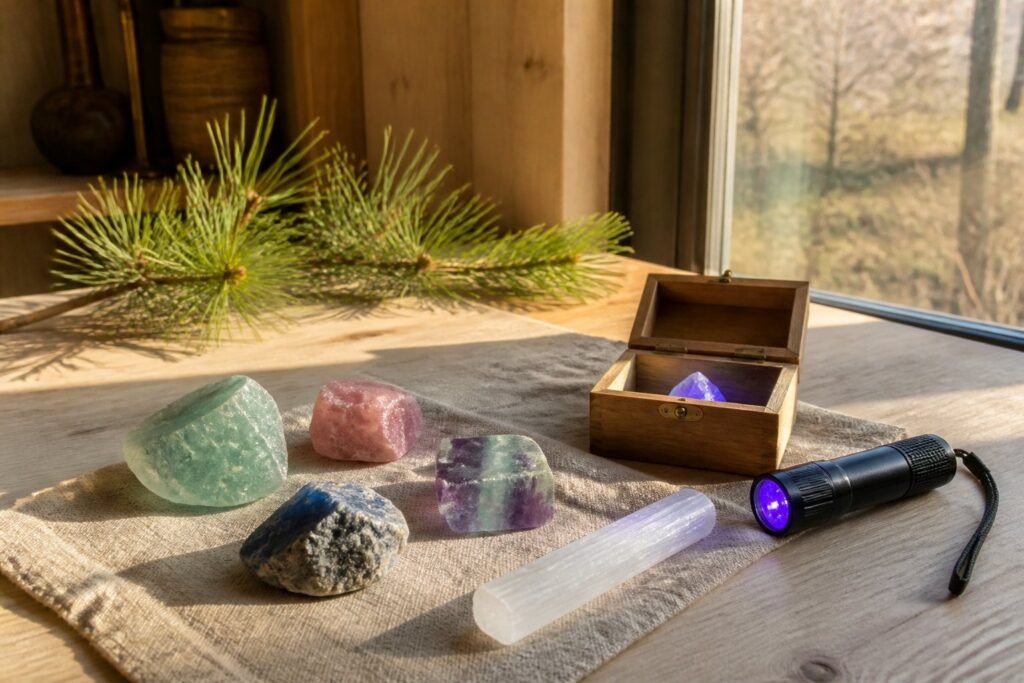
In a dark room, under the beam of a UV torch, green fluorite can light up blue, while a pebble from the shore of Lake Superior in Michigan starts to glow orange [1, 2]. This phenomenon is called fluorescence, and in 1852 it was named after a mineral: the physicist George Gabriel Stokes derived the term from fluor-spar, the English name for fluorite at the time [3, 4]. Fluorite and calcite often glow under UV light, but not every specimen does: only about 15% of minerals show fluorescence visible to the human eye, and even among them some specimens do not glow [1, 6, 10].
Why Fluorescence Is Named After Fluorite
Fluorescence is a glow produced when a substance absorbs, for example, ultraviolet radiation and almost instantly gives it off again as light. This takes about a hundred-millionth of a second, so the glow stops the moment the lamp is switched off [5]. In the mineral, UV radiation, which the eye cannot see, is converted into visible light of a longer wavelength [6].
Stokes (1819-1903) was a physicist and mathematician, and he introduced the word in a long paper on the change of refrangibility of light, published in 1852 in the Royal Society of London’s journal Philosophical Transactions [3]. He named the phenomenon after the mineral that was then called fluor-spar in English and is known today as fluorite [4]. In a footnote, Stokes himself explained that he had formed the word in the same way as the similar term “opalescence”, which is derived from the name of a mineral [3]. Mindat adds that fluorite often shows this effect very strongly [1].
Did you know? A chemical element is also named after fluorite. The mineral itself was named in 1797 by Carlo Antonio Galeani Napione, who derived the name from the Latin fluere (“to flow”), because fluorite was used as a flux in smelting metals [1]. In 1813 the English chemist Humphry Davy, on the suggestion of André-Marie Ampère, formed the name of the element fluorine from the name of the mineral [4].
Fluorescence or Phosphorescence: Why Glow-in-the-Dark Pebbles Are Usually Not Natural
Phosphorescence is an afterglow: the substance keeps glowing after the radiation source has been switched off, and depending on the conditions this can last from a thousandth of a second to days or even years [7]. Some minerals phosphoresce, such as calcite, celestine, fluorite, sphalerite and willemite, but they glow only briefly after the lamp is switched off [6].
An afterglow lasting for hours is produced by artificial phosphors. Strontium aluminate with small additions of europium and dysprosium, for example, was discovered in the mid-1990s; once charged, it glows for as long as tens of hours and is used in emergency exit signs, watch dials, decorative stars and toys [8]. If a “stone” keeps glowing in the dark long after the light has been switched off, it is most likely a product containing such a pigment rather than a natural mineral. For other ways to tell a natural stone from an imitation, read the article how to recognise a real crystal.
Which UV Light to Choose: Longwave and Shortwave
Three UV ranges are used to study minerals: shortwave (UV-C, 100 to 280 nm), midwave (UV-B, 280 to 315 nm) and longwave (UV-A, 315 to 400 nm). The three-wave lamp described by Geology.com, for example, uses 255, 310 and 365 nm [6]. Cheap “black light” lamps and many UV torches emit longwave UV, but most fluorescent minerals respond to shortwave UV, and many minerals glow in different colours under shortwave and longwave light [6].
Fluorescence is usually caused by particular impurities, which mineralogists call activators. Impurities of iron or copper, on the other hand, can weaken or completely quench the glow, so two specimens of the same mineral can look entirely different under UV light, and some do not glow at all [6]. There is no way of telling in advance whether a particular stone will glow, or in what colour.
Fluorite: The Blue Glow That Started It All
Mindat writes that fluorite usually glows blue under longwave UV light and that the blue comes from divalent europium ions. Other impurities give other colours: fluorites from Mapimí in Mexico, for example, glow red, and some fluorites also phosphoresce [1]. Geology.com describes the typical shade as bluish violet under both shortwave and longwave light [6].
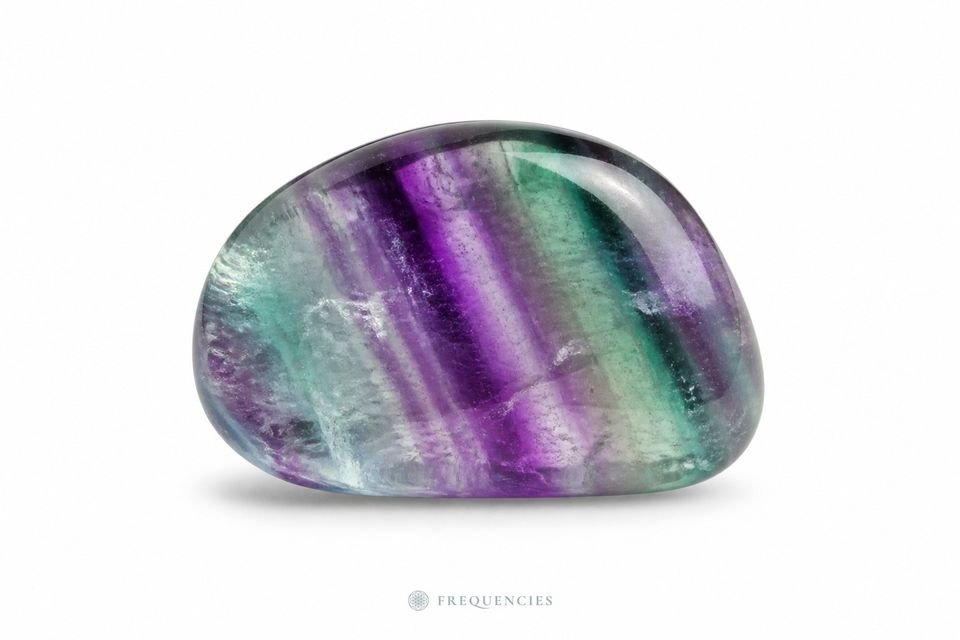
Fluorite is soft, with a hardness of 4 on the Mohs scale. Our encyclopedia notes that many specimens glow under UV light, but UV is not a reliable way to identify fluorite [9]. Some fluorites turn paler in light, so it is better not to keep them on a sunny windowsill [1]. In the shop’s fluorite category you will find polished green fluorite stones, raw rainbow fluorite and a polished fluorite point.
Calcite and Manganese Calcite: The Red Glow of Manganese
Calcite can glow red, blue, white, pink, green and orange under UV light [6]. Mindat writes that it can fluoresce under longwave, midwave and shortwave UV, under X-rays and even in sunlight. Often this is a bright red glow under shortwave light caused by manganese, as in Franklin in the USA and Långban in Sweden [10].
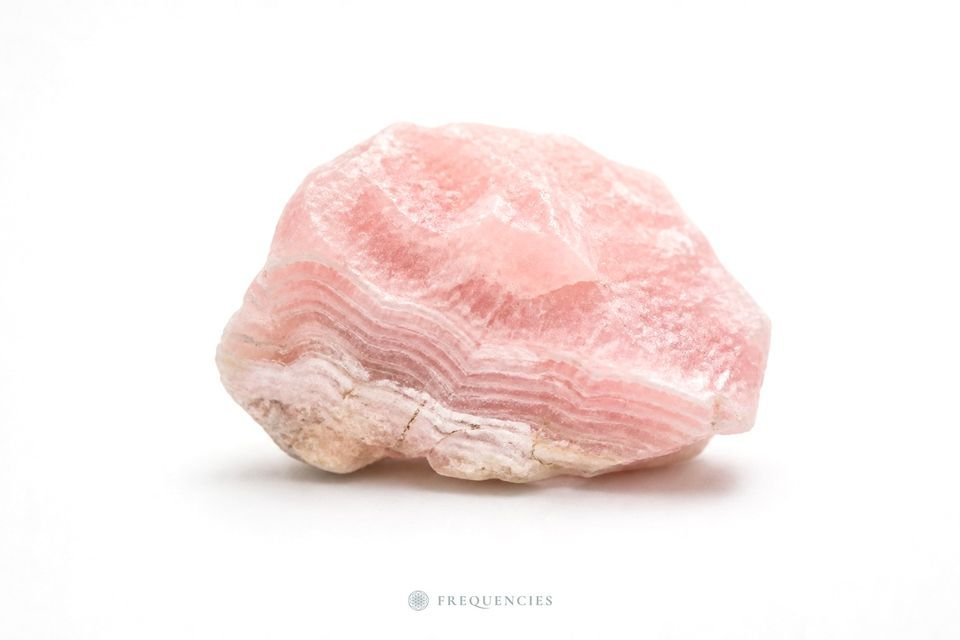
Manganese calcite is calcite with a high manganese content [11]. Because manganese in calcite is a known source of red fluorescence, it is worth testing, but Mindat describes the bright red glow specifically under shortwave light, which an ordinary torch does not give. In the shop’s calcite category there are polished manganese calcite and honey calcite stones, as well as orange calcite chips.
Aragonite is the same calcium carbonate, only with a different crystal lattice. Under longwave light it tends to glow pale pink, yellow, white or bluish, with a greenish or white afterglow [12].
Sodalite, Hackmanite and Michigan’s Glowing Pebbles
Mindat writes that sodalite glows bright red-orange under shortwave UV light, while under longwave light it can be blue, white, pink, red or yellow, and it may have a yellowish afterglow [13]. Our encyclopedia notes that sodalite often shows orange fluorescence under a UV lamp [9]. In the shop’s sodalite category there are polished sodalite stones, chips and a bracelet.
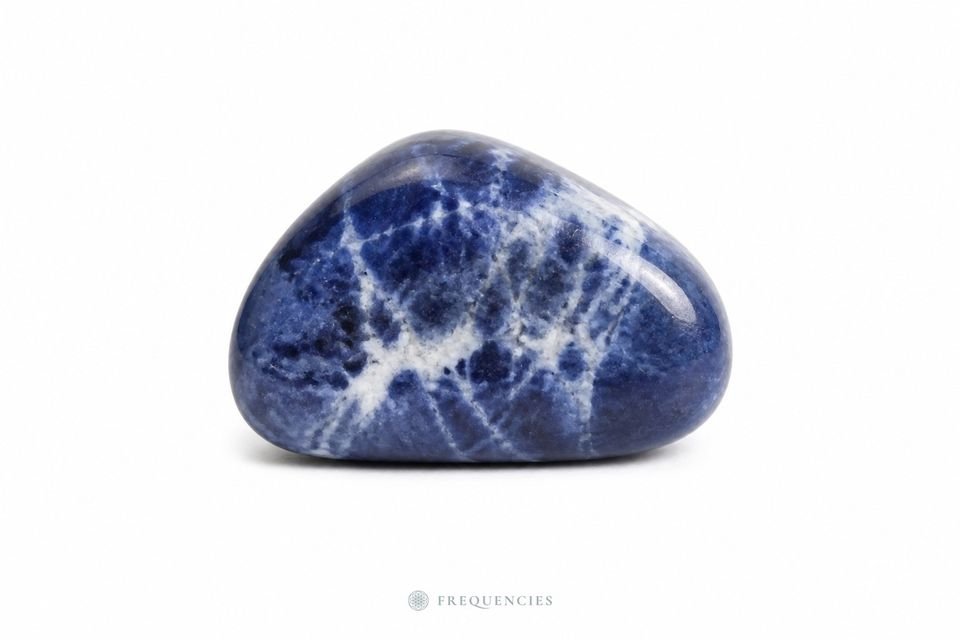
Hackmanite, a variety of sodalite, is named after the Finnish geologist Victor Axel Hackman. It shows tenebrescence, a reversible change of colour: pink, violet or blue hackmanite quickly turns colourless in sunlight, but the colour comes back under shortwave UV light or in the dark. Its fluorescence can also come in different colours, and Mindat links the orange glow to sulphur ions [14].
One night in June 2017, Erik Rintamaki was using a cheap longwave UV torch on the shore of Lake Superior in Michigan’s Upper Peninsula when he noticed stones glowing bright orange or yellow. He called them Yooperlites, and they turned out to be syenite pebbles containing fluorescent sodalite, the first verified and documented find of sodalite in the state of Michigan. Scientists believe that these rocks formed in Canada and were carried to Michigan by glaciers during the ice age [2].
Ruby, Selenite, Opal and Amber: What Else Can Glow
Ruby owes both its red colour and its red fluorescence to chromium, but a higher iron content can suppress the glow. GIA writes that rubies formed in marble usually fluoresce red even in the ultraviolet part of sunlight, which makes their colour even more vivid [15]. Mindat adds that the strength of the glow depends on the amount of chromium and on the ratio of chromium to iron [16]. Opaque ruby in fuchsite also contains corundum, but whether the ruby glows depends on the individual specimen.
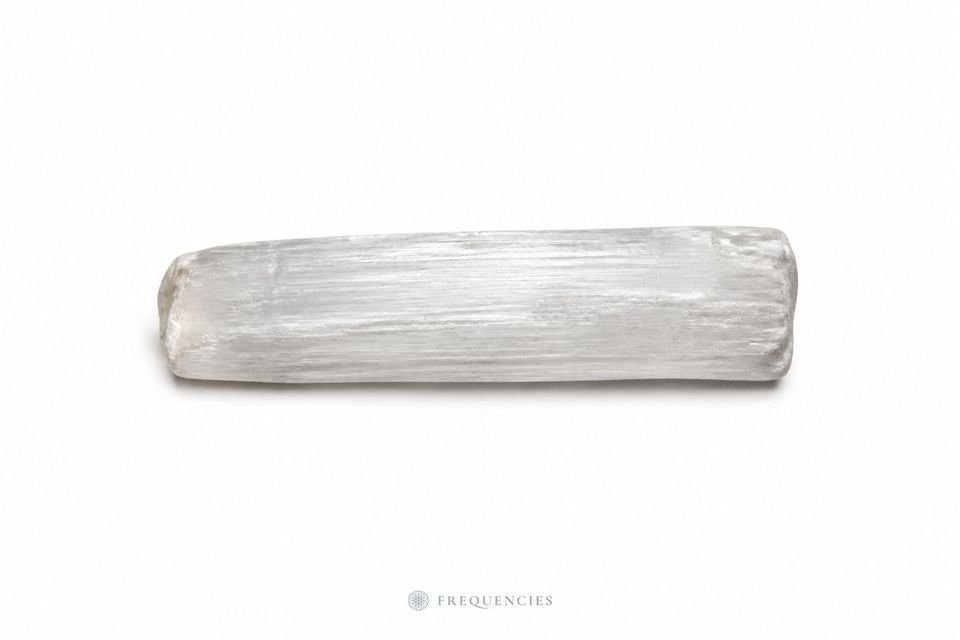
Gypsum, of which selenite is also a variety, fluoresces often and in different ways: most often pale blue or golden yellow, and selenite crystals can have glowing hourglass-shaped zones [17]. In the trade, selenite is often fibrous gypsum, also called satin spar [9]. Selenite items have their own category in the shop: lamps, rods, hearts, obelisks and candle holders.
Geology.com mentions that ruby, kunzite, diamond and opal sometimes fluoresce as well [6]. Mindat describes the glow of opal as yellow to green, caused by uranyl [18].
Amber can glow under UV light too. GIA’s journal Gems & Gemology describes a rosary whose amber beads showed moderate to strong chalky greenish blue and yellow fluorescence under longwave UV light, while the Bakelite beads looked brown [19]. Artificial resins can glow as well, however: in another case the amber part fluoresced bluish white and the artificial resin yellow-green, and the materials were reliably identified by infrared spectroscopy [20].
Mindat describes the mineral lazurite, which gives lapis lazuli its blue colour, as non-fluorescent. If a blue stone glows orange under UV light, this may point to sodalite rather than lapis lazuli. Not every sodalite glows, however, and orange-brown fluorescence under longwave light can also be shown by some translucent blue and green minerals of the same sodalite group, so this is not a reliable test [21].
An Experiment in a Dark Room: How to Do It Safely
For a home experiment, all you need is a longwave UV torch (365 nm), a dark room and a few stones. UV-A radiation covers wavelengths from 315 to 400 nm, and the US Army Public Health Center warns that sufficiently intense UV-A and blue light can damage the retina of the eye. In the centre’s assessment, the torches it tested would not cause injury in normal use, because the safety limits would only be exceeded by long or repeated exposure, and the centre advises against shining the beam into other people’s faces [22].
Geology.com warns that looking into the lamp can seriously injure the eyes and that UV light on the skin can cause burns, and it recommends wearing safety glasses with any UV lamp. Mineral lamps that also emit shortwave UV call for even more care than cheap black light lamps [6]. Before you start, follow a few rules:
- Give a child the torch only when an adult is present, and agree that the beam is never pointed at eyes, faces or pets.
- Choose a torch marked 365 nm or UV-A.
- First look at the stones in daylight, then darken the room and shine the light on each stone in turn.
- Write down which stone glows, in what colour, and whether the glow continues after the torch is switched off: this way you will see the difference between fluorescence and phosphorescence.
- Handle fluorite and calcite gently, as their hardness is only 4 and 3 and they scratch easily [9].
After the experiment, store the stones in a dry place. For how to look after each mineral, see the encyclopedia’s care table.
Where to See Minerals That Glow Under UV Light in Latvia
In Riga you can see many glowing minerals in one place at the Latvian National Museum of Natural History, 4 K. Barona Street. In 2020, after reconstruction, the museum’s “Mineralogy” exhibition opened a “Luminescence” section in which 87 minerals from all over the world light up as the wavelength of the ultraviolet light changes. Seventeen of them, including willemite, calcite, opal, aragonite and agrellite, were bought by the museum specially for this display case [23]. Altogether the exhibition has more than 400 minerals, including specimens from Nikolaus von Himsel’s 18th-century collection, and visitors can work out some of the properties of minerals for themselves [24].
The museum explains that luminescence is tested under both longwave and shortwave UV light, because some minerals respond only to a particular wavelength [23]. According to the museum, some minerals and rocks found in Latvia glow as well: calcite, dolomite, gypsum, feldspar and quartz fluoresce red, orange or yellow, while amber glows green and bluish green [23]. To read about the minerals found in Latvia, see the articles Are There Crystals and Gemstones in Latvia and Gypsum Rock and Selenite in Latvia.
The museum is currently closed on Mondays and Tuesdays, and opening hours change on public holidays, so check the opening hours on the museum’s website before you visit [25].
Frequently Asked Questions
Which stones glow under UV light?
Fluorite, calcite, aragonite, sodalite and its variety hackmanite, gypsum (selenite) and amber are known for fluorescence, as are some rubies and opals. The glow is usually caused by impurities, so different specimens of the same mineral can glow in different colours or not glow at all.
Which mineral glows under UV light: fluorite or calcite?
Both can. Fluorite gave its name to fluorescence itself and usually glows blue under longwave UV light, while calcite can glow red, blue, white, pink, green or orange, and often bright red under shortwave light. Not every specimen glows, however, because the glow is usually caused by impurities.
Does fluorite always glow under UV light?
No. Most often fluorite glows blue under longwave UV light because of europium impurities, but other impurities give other colours, and some specimens do not glow at all. That is why a UV torch cannot reliably identify fluorite.
Does amber glow under UV light?
It can. Gemmological laboratories have described a bluish white or chalky greenish blue glow in amber under longwave UV light, but some artificial resins fluoresce too, so amber is reliably identified by spectroscopy.
What kind of UV lamp do you need for minerals?
At home, a longwave UV-A torch at 365 nm is the most convenient. Many minerals respond more strongly to shortwave UV-C light, but these lamps are more hazardous and call for more care.
Is a UV torch dangerous for the eyes?
Looking into the beam for a long time or repeatedly can damage the eyes. Never look into the lamp, do not point the beam at the faces of people or animals, and wear safety glasses if you use the lamp for longer.
What is the difference between fluorescence and phosphorescence?
Fluorescence stops the moment the lamp is switched off. Phosphorescence is an afterglow that continues for a while: in natural minerals it is usually brief, but artificial phosphors can glow for hours.
Where in Latvia can you see minerals that glow under UV light?
The “Mineralogy” exhibition at the Latvian National Museum of Natural History in Riga has a luminescence section where 87 minerals from all over the world light up under UV light. Check the museum’s opening hours before you visit.
Sources
- Mindat.org, Fluorite: www.mindat.org/min-1576.html
- Rock & Gem Magazine, “Yooperlites: What & Where to Find Them” (2026): www.rockngem.com/yooperlites-appeal-part-1
- G. G. Stokes, “On the change of refrangibility of light”, Philosophical Transactions of the Royal Society of London, 142 (1852), 463-562: royalsocietypublishing.org/doi/10.1098/rstl.1852.0022
- Online Etymology Dictionary, fluorescence (and the related entry fluorine): www.etymonline.com/word/fluorescence
- Encyclopaedia Britannica, fluorescence: www.britannica.com/science/fluorescence
- Geology.com, Hobart M. King, “Fluorescent Minerals and Rocks: They Glow under UV Light”: geology.com/articles/fluorescent-minerals
- Encyclopaedia Britannica, phosphorescence: www.britannica.com/science/phosphorescence
- ESRF (European Synchrotron Radiation Facility), “X-rays reveal the energy storage mechanism of glow-in-the-dark materials” (20.07.2020): www.esrf.fr/home/news/spotlight/content-news/spotlight/spotlight365…
- FREQUENCIES stone encyclopedia: fluorite, calcite, sodalite, selenite (data from GIA, Mindat, geology.com): frequencies.lv/enciklopedija
- Mindat.org, Calcite: www.mindat.org/min-859.html
- Mindat.org, Manganese-bearing Calcite: www.mindat.org/min-2526.html
- Mindat.org, Aragonite: www.mindat.org/min-307.html
- Mindat.org, Sodalite: www.mindat.org/min-3701.html
- Mindat.org, Hackmanite: www.mindat.org/min-1789.html
- GIA, Ruby Description: www.gia.edu/ruby-description
- Mindat.org, Ruby: www.mindat.org/min-3473.html
- Mindat.org, Gypsum: www.mindat.org/min-1784.html
- Mindat.org, Opal: www.mindat.org/min-3004.html
- GIA, Gems & Gemology, Spring 2017, “Plastic amber imitation rosary” (N. A. Ambalathveettil, M. Karam, S. Singbamroong): www.gia.edu/gems-gemology/spring-2017-gemnews-plastic-amber-imitati…
- GIA, Gems & Gemology, Winter 2013, “Composite amber” (J. Liang et al., NGTC): www.gia.edu/gems-gemology/wn13-gni-composite-amber
- Mindat.org, Lazurite: www.mindat.org/min-2357.html
- U.S. Army Public Health Center, “Hazard Alert for Ultraviolet-A Flashlights and Black Lights Used for Inspections”, Fact Sheet 24-014-0815: ph.health.mil/PHC%20Resource%20Library/HazardAlertforUltraviolet-AF…
- Latvian National Museum of Natural History, LV portāls, “Dabas muzejā košās krāsās iemirdzas pasaules minerāli” [Minerals from around the world light up in bright colours at the Museum of Natural History] (24.02.2020): lvportals.lv/dienaskartiba/313478-dabas-muzeja-kosas-krasas-iemirdz…
- Latvian National Museum of Natural History, “Mineralogy” exhibition: www.dabasmuzejs.gov.lv/lv/ekspozicijas/mineralogija
- Latvian National Museum of Natural History, opening hours: www.dabasmuzejs.gov.lv/lv/apmekle/darbalaiks