
In his collection “Latvian Folk Beliefs”, Pēteris Šmits devoted more than 200 numbered entries to Candlemas. They record candle pouring and laughter, but also the ban on combing your hair and the sun that has to shine long enough for a horse to be saddled [1]. One record says that Candlemas is the middle of winter [1]. In 2027, it falls on Tuesday 2 February.
When is Candlemas and why on 2 February
Candlemas is a Christian feast celebrated on 2 February. It commemorates the event described in the Gospel of Luke (Luke 2:22-38): following Jewish law, Mary went to the Temple in Jerusalem 40 days after the birth of Jesus to be purified and to present her firstborn son to God [2]. This is why the feast falls exactly 40 days after Christmas [2], and it closes the Christmas cycle of the liturgical year [3].
The earliest account was left by the pilgrim Egeria, who described the festival procession in Jerusalem at the end of the 4th century [3][2]. In her time, the feast was on 14 February, 40 days after Epiphany, which was then celebrated as the birth of Christ, but in 542 the Emperor Justinian I had it moved to 2 February [2]. Orthodox churches that follow the Julian calendar celebrate Candlemas on 15 February, and the Armenian Church on 14 February [3]. Candlemas is not mentioned in the Latvian law “On Public Holidays, Commemoration Days and Days of Celebration”, so it is not a public holiday in Latvia [4].
Why is it called Candlemas
The name comes from the candles in church. Britannica writes that by the middle of the 5th century the custom of celebrating the feast with lighted candles had already been introduced, and that this is where the English name Candlemas comes from [2]. The National Encyclopedia of Latvia adds that the blessing of candles came into use in the 11th century [3]. The Cistercian monk Bernard of Clairvaux wrote that people walk in procession two by two with candles in their hands, and that it is because of this custom and the many lights that the day is called Candelaria, or Candlemas [3]. A similar explanation was recorded in Vecpiebalga: in the old days, people are said to have gone to church with lighted candles (LTT 29688) [1]. The Latvian name, Sveču diena, likewise means “Candle Day”.
In the records of Šmits’s collection, the day is also called Svecaine and Winter Mary’s Day, in Latgale Svacaine and Gromnica, in Asare Grabnīca and in Gārsene Grabenīca (LTT 29690 to 29692, 29763, 29764) [1]. In Latvian, February is also called the candle month (sveču mēnesis) [5], and Paul Einhorn already called it that in 1649; read more in the article The Month of Souls, Frosts and Wolves [6]. Šmits himself noted that the Lutherans gave up blessing candles, but that many old customs and superstitions survived in Lutheran lands too, although he had no information about any ancient Latvian celebrations around this time of year (LTT 29687) [1].
Candle pouring: why candles were poured on this day
Tēzaurs defines a candle as a piece of stearin, paraffin, wax or rendered fat with a wick in the middle, used for lighting [5]. One record mentions pine splints alongside candles: “We celebrate Candlemas with candles and pine splints” (LTT 29699) [1]. Several beliefs say that candles should be poured on Candlemas. A record from Jaunroze says candles were poured then “so that they would burn all the more brightly and sparingly”, and in Tirza people believed they would come out straight and burn brightly (LTT 29703, 29705) [1]. In Latgale, however, it was recorded that candles are not poured on Candlemas but taken to church to be blessed (LTT 29691) [1].
Šmits’s section on candles also has general beliefs about candle pouring. They say that you must laugh while pouring candles so that they burn brightly, but if the women pouring them quarrel, the candles will burn dimly and crackle (LTT 29665, 29666) [7]. In Lubāna, people believed that candles should be poured on a sunny day, and then they would burn brightly (LTT 29683) [7].
Blessed candles were believed to have protective power. In Latgale, people believed they protected the house from thunder, and they were placed in the hands of the dying to light their way (LTT 29691) [1]. As early as 1654, the pastor Georg Mancelius wrote in his collection of sermons “Lettische Postill” that people credited these candles with the power to stop storms, thunder, hail and lightning (LTT 29707) [1]. Candles are still poured today: on Candlemas 2025, trench candles for Ukrainian soldiers were poured at the Kuldīga Cultural Centre [8].
Beliefs about the weather: sun, snow and saddling a horse
Most of the records are about predicting the weather and the harvest. In Lubāna, Ikšķile, Jaunroze, Sesava and elsewhere, people believed that if the sun shines on Candlemas for at least as long as it takes to saddle or harness a horse, the summer will bring good haymaking weather or a good year (LTT 29780 to 29793) [1]. The beliefs do contradict one another, though. In other records, a bright, sunny Candlemas promises plenty more snow (LTT 29778, 29816), while an overcast day “foretells a good year, a bright one a bad year” (LTT 29828) [1].
Beekeepers hoped for snow, because they believed that if it snows on Candlemas, the bees will swarm a lot in summer (LTT 29770, 29774) [1]. In Vecgulbene, a beekeeper’s rhyme was recorded: “I would rather see a wolf / Than see the sun shine out” (LTT 29775) [1]. People also believed that icicles hanging from the eaves promise a warm spring, and a rich year was expected if so much dripped from the gable eaves that a cockerel could drink its fill (LTT 29802, 29840) [1].
Did you know? The oldest dated weather belief in Šmits’s Candlemas section is LTT 29777 with the source “S. Gūberts, 1688”: “If the sun shines brightly on Candlemas, then even more snow will come than has fallen before” [1]. A similar German tradition held that on a sunny Candlemas the hedgehog casts a shadow and winter comes back. The National Encyclopedia of Latvia writes that this is directly linked to the origin of the American Groundhog Day on 2 February, as many of the early settlers in Pennsylvania were German [3].
What was done and what was forbidden on Candlemas
A record from Vecgulbene says that Candlemas was celebrated with great merriment. People there believed that whoever spends more and makes merrier on this day will have a rich and happy year, and a folk song goes: “All year I saved money, / Waiting for Candlemas” (LTT 29694, 29695) [1]. In several places, people believed you should laugh so as to be cheerful all year (LTT 29733 to 29736) [1]. In Ikšķile, it was believed that thick porridge should be cooked on Candlemas, and then the milk would have thick cream (LTT 29708), while another record says that a candle should be stuck in the middle of a bowl of thick porridge so that the flax will not be flattened (LTT 29858) [1].
To make the flax grow tall, people went visiting on Candlemas, and the longer the journey, the taller the flax would grow (LTT 29845 to 29849) [1]. In Vecgulbene, for the same reason, people sledged down a hill (LTT 29850), while in Lubāna and Jaungulbene it was believed that girls should eat cranberries to be as beautiful as the berries (LTT 29726, 29727) [1].
There were also many prohibitions. You were not to comb your hair, or it would stand up like candles all year (LTT 29875, 29876); cabbages were not cooked or eaten, so that their heads would not grow long and thin like candles (LTT 29863, 29865); and needles were not handled, so that poverty would not prick like needles (LTT 29698) [1]. Several records say that spinning was forbidden on this day, because otherwise the flax or the piglets would not thrive (LTT 29760, 29855) [1].
Candlemas at nursery and at home with children
You can turn the beliefs into observations. On Candlemas, note down with the children whether the sun shone and whether it snowed, and in summer compare this with the belief about haymaking weather. You can also give the length of the day precisely: on 2 February 2027, the Sun in Riga will rise at 8:21 and set at 16:54, so it will be above the horizon for 8 hours and 33 minutes, almost 1 hour and 50 minutes longer than on the day of the winter solstice, 21 December 2026 [9][10]. The record “Candlemas is the middle of winter” (LTT 29689) [1] roughly matches astronomy too. By our calculation from US Naval Observatory data, the midpoint between the winter solstice on 21 December 2026 and the spring equinox on 20 March 2027 falls on 4 February 2027, two days after Candlemas [10].
The children’s content team at LSM, Latvia’s public broadcaster, writes that the main Candlemas dish is thick porridge, into which a candle can be stuck [11]. An adult should light the candle, and Latvia’s State Fire and Rescue Service (VUGD) recommends placing candles out of reach of children and pets [12]. For younger children, an LED candle is a safer choice, and pouring candles with hot wax or paraffin is best left to adults. If you show stones to children, remember that crystals are not toys: keep small polished stones out of reach of children under 3 years old, as they can be swallowed or choked on.
Candlelight at home: how to burn candles safely
On 28 November 2025, VUGD reported that in 2025, up to 31 October, candles and tea lights left unattended in Advent wreaths and on Christmas trees had possibly caused 20 fires in which three people died [13]. VUGD recommends the following rules for candle use [12]:
- place the candle on a non-flammable surface in a stable holder that matches the size and shape of the candle;
- keep it away from curtains, fabrics and furniture, as well as from televisions, radiators, stoves and fireplaces;
- leave at least 10 centimetres between burning candles and make sure there is no draught in the room;
- the flame must not touch the holder, decorations or glass directly;
- trim the wick regularly, put the candle out with a proper candle snuffer, and do not move a burning candle unless it is in a portable lantern;
- never leave a burning candle unattended, even for a short time, and before going to bed, make sure it is extinguished.
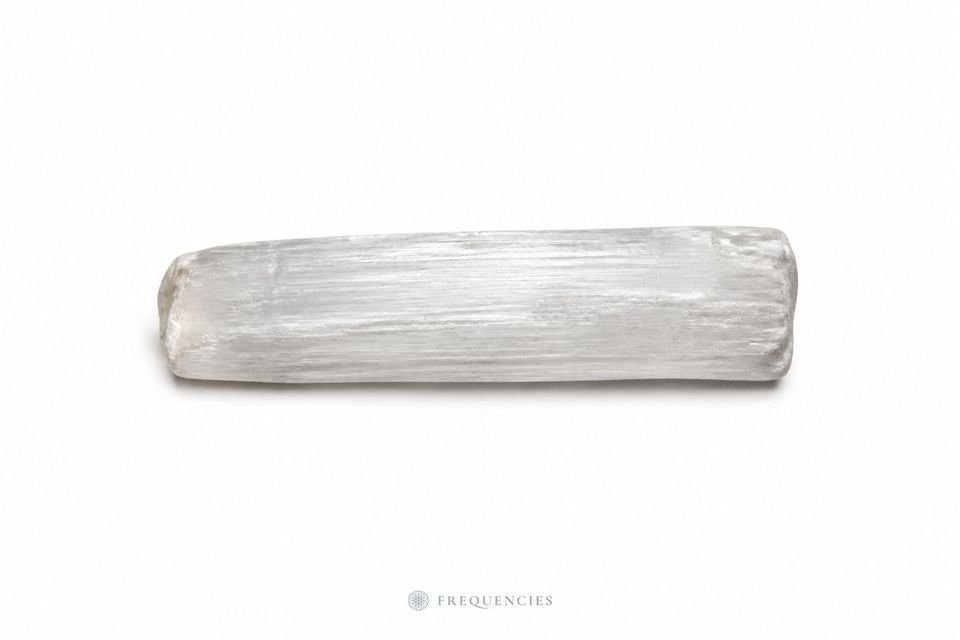
Selenite candle holders are often made of satin spar, a fibrous gypsum with a Mohs hardness of only 2 [14]. Put a tea light in with its metal cup, as the flame must not touch the holder directly [12]. Clean the holder only with a dry cloth, as gypsum slowly dissolves in water and the surface may turn matt [14]. You will find round selenite candle holders in the section Selenite Candle Holders. For more colourful light, there is a lotus candle holder made of thin, translucent Capiz shells (currently €17) [15], which you will find together with the selenite holders in the Candle Holders section.
For light without an open flame, a selenite lamp works well: for example, the 37 cm high lamp comes with an E14 5 W LED bulb and currently costs €110 [15]. You can read about choosing the size and position of a lamp in the article Selenite Lamp, and all the lamps are in the Selenite Lamps section.
Crystals by the candle: which to keep away from heat
If you place stones next to a candle holder, keep them out of reach of the flame and heat, as some minerals do not tolerate heat [14]. Opal contains water, and heat, very dry air or bright direct light can give it a network of fine cracks. Malachite is soft, with a hardness of 3.5 to 4, and sensitive to heat and acids [14]. In moonstone, heat and rapid temperature changes can cause cracks, while the blue colour of celestine can fade if the specimen is in direct sunlight or heat [14]. Larimar should not be exposed to sun and heat either, and topaz, which has perfect cleavage, should be protected from high heat and rapid temperature changes [14].
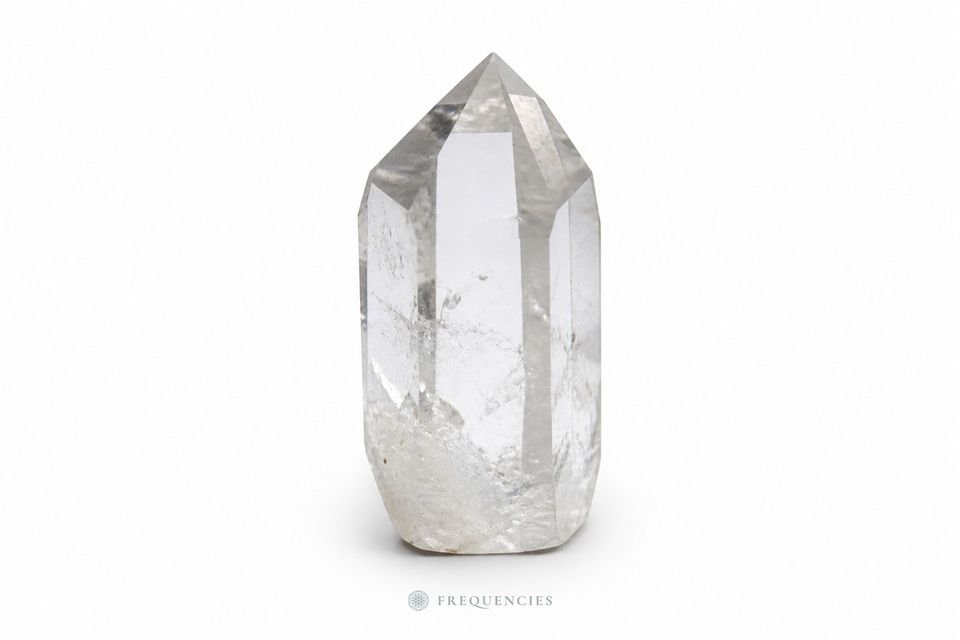
In the daytime, the stone itself can be a hazard. In sunlight, rock crystal spheres and other transparent round crystals can concentrate the rays like a lens and set nearby objects alight, so do not put them on a sunny windowsill or near curtains [14].
Frequently Asked Questions
When is Candlemas in 2027?
Candlemas is celebrated on 2 February, 40 days after Christmas, and in 2027 it falls on a Tuesday. Orthodox churches that follow the Julian calendar celebrate it on 15 February.
Why are candles poured on Candlemas?
Folk beliefs say that candles poured on Candlemas will burn brightly, straight and sparingly. People also believed that you should laugh and not quarrel while pouring candles. These are recorded beliefs, not advice on candle quality.
What should not be done on Candlemas?
The beliefs say that on Candlemas you should not comb your hair, cook cabbage, handle needles or spin. Otherwise, it was said, your hair would stand up like candles, cabbages would grow long, thin heads, and the flax and piglets would not thrive.
What are the Candlemas weather beliefs?
In many places, people believed that if the sun shines for as long as it takes to saddle a horse, there will be good haymaking weather in summer. Other beliefs say that a bright day promises plenty more snow, while snow on Candlemas promises many swarms of bees.
Is Candlemas a public holiday?
No. Candlemas is not included in the law “On Public Holidays, Commemoration Days and Days of Celebration”, so it is not a public holiday in Latvia.
How can you mark Candlemas at nursery?
Tell the children the beliefs, note down together whether the sun shines and whether it snows, and make thick porridge. Only an adult should light the candles, and they should be placed out of children’s reach.
Sources
- P. Šmits. Latvian Folk Beliefs (1940 to 1941), digital version by the Institute of Mathematics and Computer Science, University of Latvia: Candlemas, Nos. 29687 to 29888
- Encyclopaedia Britannica. Candlemas (editorial article)
- V. Tēraudkalns. Candlemas (Sveču diena). National Encyclopedia, National Library of Latvia (updated 02.10.2026)
- Law “On Public Holidays, Commemoration Days and Days of Celebration”, likumi.lv (version of 18.03.2025)
- Tēzaurs, Institute of Mathematics and Computer Science, University of Latvia. Entries “sveču mēnesis” (candle month) and “svece” (candle)
- FREQUENCIES. The Month of Souls, Frosts and Wolves: Old Latvian Month Names (P. Einhorn, 1649)
- P. Šmits. Latvian Folk Beliefs, digital version by the Institute of Mathematics and Computer Science, University of Latvia: Candles, Nos. 29665 to 29686
- LSM.lv, Skrunda Television. On Candlemas in Kuldīga, trench candles are poured (02.02.2025)
- timeanddate.com. Sunrise and sunset times in Riga: February 2027, December 2026
- US Naval Observatory (USNO), Astronomical Applications Department. Earth’s Seasons and Apsides (2026 and 2027) and Sun and Moon Data for One Day (Riga, 2.02.2027 and 21.12.2026)
- LSM.lv children’s content team. Do not comb hair, handle needles, spend money, and cook porridge: ancestors’ wisdom for Candlemas (02.02.2024)
- State Fire and Rescue Service. Use of Candles (Open Flame) (15.10.2024)
- State Fire and Rescue Service. Let Advent Candles Burn Safely (28.11.2025)
- FREQUENCIES Stone Encyclopedia: selenite, opal, malachite, moonstone, celestine, larimar, topaz, rock crystal (composition, hardness, care; data from GIA, Mindat, geology.com)
- frequencies.lv product pages (price and availability checked 08.11.2026): selenite round candle holder, lotus candle holder, selenite lamp 37 cm