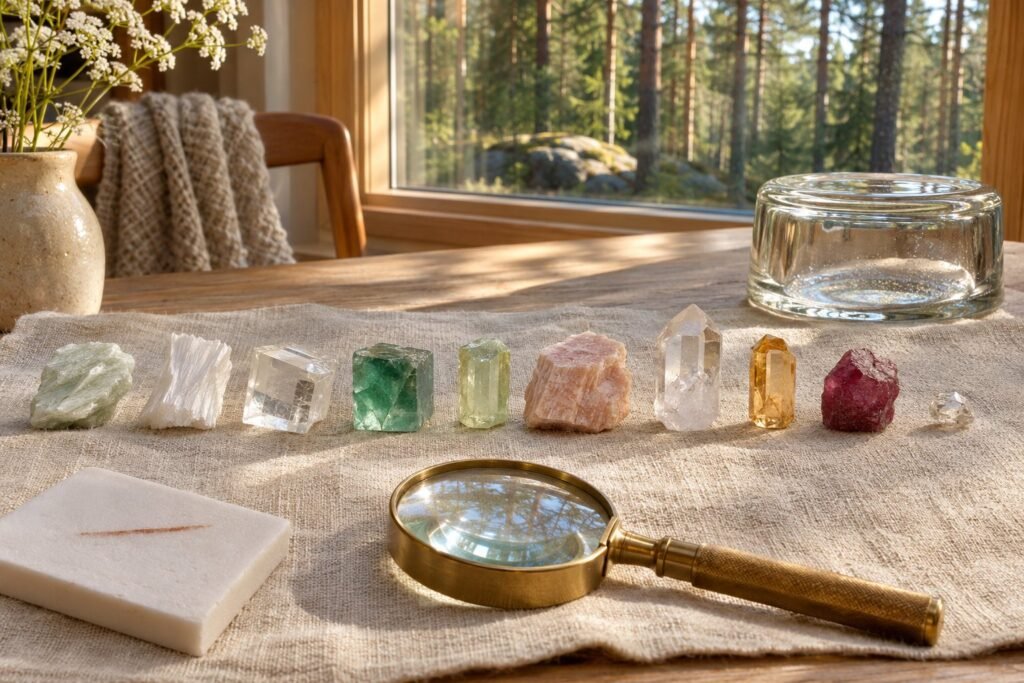
Ruby and diamond are next to each other on the Mohs scale, in 9th and 10th place, but according to Vickers hardness data compiled by geology.com, diamond is almost five times harder [1]. The Mohs scale does not measure hardness in equal steps. It simply ranks minerals by which can scratch which, and this test can be done in the field or in a classroom without a laboratory [1].
What is the Mohs scale
The Mohs scale is a relative scratch hardness scale from 1 to 10. Each division is represented by one mineral, which scratches all minerals with a lower number, and Mindat stresses that these divisions are arbitrary and non-linear [2]. Here, hardness means resistance to scratching, not resistance to impact or breaking [1].
GIA and Britannica date the scale to 1812, when the German mineralogist Friedrich Mohs chose ten minerals and gave them numbers [3, 4]. All of them except diamond are fairly common and cheap [1]. Dainis Ozols’s book “Minerals and Rocks of Latvia” notes that the Mohs scale is not divided more finely than into half divisions; for example, the hardness of hornblende is 5.5 [5].
The 10 Mohs scale minerals and what can scratch them
For each mineral on the scale, Britannica gives a feature by which it can be tested with everyday objects. Geology.com compares them with Vickers hardness, which is determined from the size of the dent left when a tiny point is pressed into the surface with a set force [1, 4].
| Mohs hardness | Mineral | Feature | Vickers hardness, kg/mm² |
|---|---|---|---|
| 1 | talc | easily scratched with a fingernail, greasy to the touch | 27 |
| 2 | gypsum (selenite) | can be scratched with a fingernail | 61 |
| 3 | calcite | easily scratched with a knife, barely with a copper coin | 157 |
| 4 | fluorite | easily scratched with a knife, but less easily than calcite | 315 |
| 5 | apatite | hard to scratch with a knife | 535 |
| 6 | orthoclase, potassium feldspar | cannot be scratched with a knife, scratches glass with difficulty | 817 |
| 7 | quartz | easily scratches glass | 1161 |
| 8 | topaz | scratches glass even more easily | 1567 |
| 9 | corundum (ruby and sapphire) | cuts glass | 2035 |
| 10 | diamond | used for cutting glass | 10,000 |
The Vickers numbers clearly show that the steps are not equal: fluorite’s number is about twice that of calcite, but diamond’s is almost five times that of corundum [1]. Britannica, too, stresses that the Mohs scale is not linear [4]. GIA puts it in a nutshell: only another diamond can scratch a diamond [3]. Orthoclase is also present in moonstone, which consists of orthoclase with thin layers of albite [6].
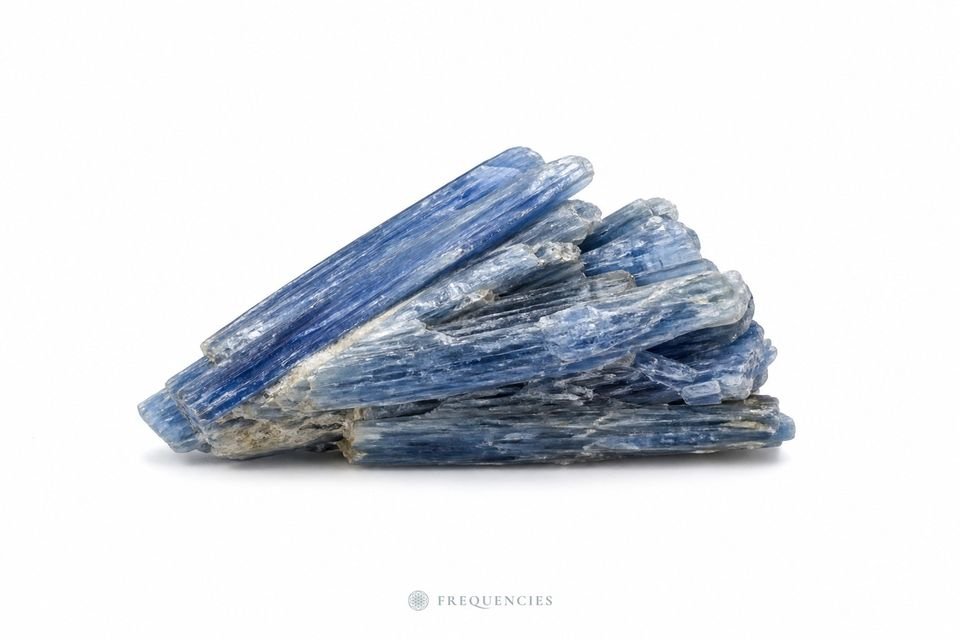
Did you know? The hardness of kyanite depends on the direction in which it is scratched. Along the long axis of its blade-shaped crystals its hardness is about 5, but across it about 7, because the atomic bonds differ in strength in these directions [1]. Our encyclopedia’s kyanite page lists a hardness of 4.5 to 5 along the crystal and 6.5 to 7 across [6].
How hard are the most popular crystals
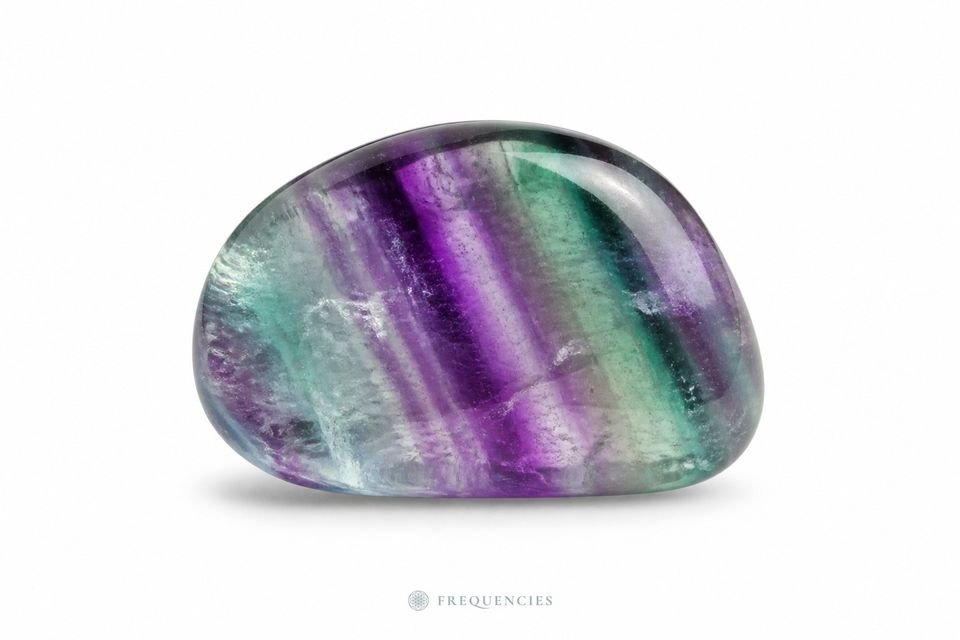
In our stone encyclopedia, the hardness values range from 2 to 9. Among the softest are selenite (2), calcite (3), malachite (3.5 to 4) and fluorite (4). Turquoise has a hardness of 5 to 6, obsidian 5 to 5.5, and feldspars such as moonstone, labradorite and amazonite 6 to 6.5. Pyrite is just as hard. Amethyst, rose quartz, citrine and rock crystal are varieties of quartz, and their hardness is 7. Black tourmaline has a hardness of 7 to 7.5, topaz 8, and ruby 9 [6].
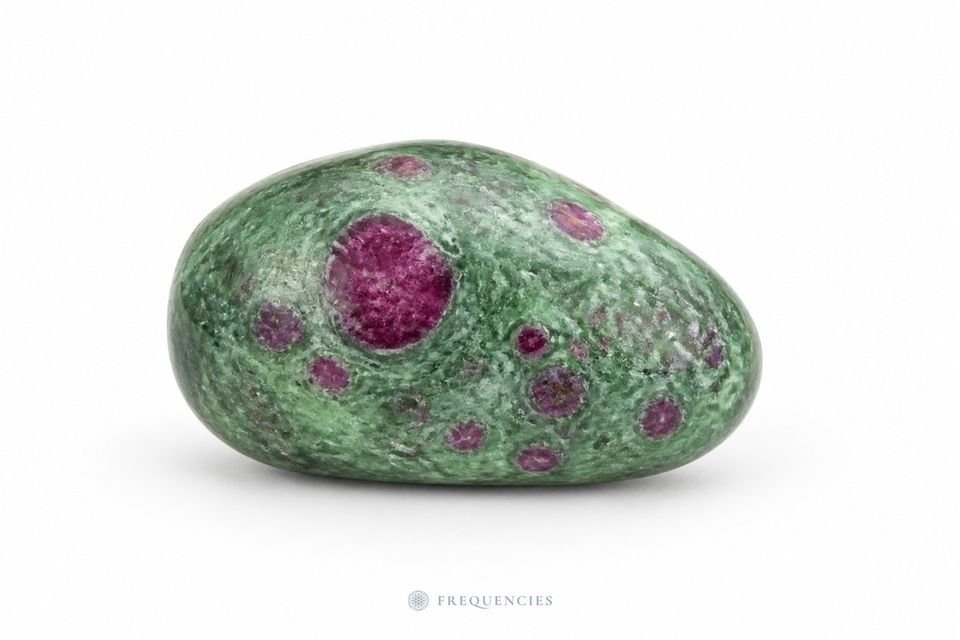
In a rock, each mineral can have its own hardness. Ruby in fuchsite is a rock in which the ruby grains have a hardness of 9, but the green fuchsite matrix only 2 to 3 [6]. According to GIA, the hardness of opal ranges from 5 to 6.5, depending on its composition and the conditions in which it formed [7]. You will find the hardness and care recommendations for all stones in the care table, and polished stones from calcite to ruby in fuchsite in the polished stones category.
Hardness is not durability: what the Mohs scale does not tell you
GIA divides a stone’s durability into three properties. Hardness determines how well a stone resists scratches. Toughness shows whether it breaks or chips easily. Stability describes resistance to chemicals and temperature changes [3]. Diamond is the hardest, yet GIA writes that a hard knock in the direction of its cleavage can split it even in everyday wear [3]. For corundum, of which ruby and sapphire are made, GIA notes excellent toughness and the absence of cleavage [8].
Our encyclopedia has several examples of stones that need gentle care although they are not soft. Topaz has a hardness of 8 but perfect cleavage, so it should be protected from knocks. Pyrite has a hardness of 6 to 6.5 but can oxidise in damp conditions, so keep it dry [6]. According to GIA, turquoise, with a hardness of 5 to 6, can change colour on contact with chemicals, cosmetics and even skin oils or sweat [9]. So hardness alone does not tell you whether a stone can be washed, put in the sun or worn every day. That information is on each stone’s page in the encyclopedia.
Hardness does matter in everyday life, though. Household dust contains quartz particles, and quartz has a hardness of 7. So stones softer than quartz get scratched over time by dust and daily contact, and even wiping the dust off can scratch them [10]. Store soft stones away from quartz and other hard stones, and dust them gently with a soft cloth, without rubbing [6].
What to compare with: fingernail, coin, glass and steel
At home, the scale minerals are often replaced by objects whose hardness is roughly known. Britannica gives these values: fingernail about 2.2, copper coin about 3.2, pocket knife about 5.1, glass plate about 5.5, steel needle about 6.5 and streak plate about 7 [4]. Ozols gives a simpler list: fingernail 2.5, copper coin 3, ordinary glass 5 and steel 5 to 7 [5].
These numbers are approximate. Geology.com tested the objects recommended in three introductory geology textbooks and found that the hardness of glass ranges from 4 to 7, that of knife blades from 5 to 6.5 and that of streak plates from different manufacturers from 5 to 7. As a reliable standard, geology.com names a quartz crystal with a hardness of 7 [1]. Coins, too, are only partly suitable. The one, two and five cent euro coins are made of copper-plated steel [11], so they are not a pure copper standard, and geology.com recommends using a real piece of copper [1].
How to test hardness without damaging the stone
First, think about whether a test is needed at all. If you know the stone’s name, you will find its hardness in the stone encyclopedia. Do not scratch polished stones, spheres or jewellery. How to tell quartz from glass without scratching is explained in the article How to Recognise a Real Crystal. If you still want to test a rough stone, follow these steps.
- Scratch the standard, not the stone. Drag the sharp edge of the stone across an object of known hardness, such as a quartz crystal or thick glass. If the stone scratches the standard, the stone is the harder of the two [1], and the scratch stays on the standard. If the stone is softer, it leaves a streak of its own powder [12], so for the test choose an edge in a place that will not show. Geology.com describes the reverse method, in which the standard is drawn across the unknown stone, but then the scratch stays on your stone [1].
- Tell a scratch from powder. After the attempt, wipe the surface with your finger and examine it with a magnifying glass. A scratch is a groove in the surface, but the mark of a softer mineral is like chalk on a blackboard and wipes off [1, 4].
- On a streak plate, use only a part of the stone that will not show. The hardness of an unglazed porcelain plate is usually 6.5 to 7. A softer mineral leaves a streak of its own powder, but a harder one scratches the plate [12]. The powder comes from your stone, so use the bottom edge or a rough broken piece. What the colour of the streak can tell you is explained in the article Mineral, Rock or Crystal.
- If you have to scratch the stone itself, do it where it will not show. Geology.com recommends drawing once, slowly and with firm pressure, rather than rubbing back and forth, and then repeating the test to confirm the result. Small grains in a rock are easier to test with hardness picks, whose tips are made of materials with hardnesses from 2 to 9 [1].
For safety, hold the object you are drawing across down on the table with one hand, and draw the stone away from you, parallel to the fingers holding it. Cover the table with thick cardboard or a rubber mat [1]. A hard stone can be brittle and may break or crumble during testing [1], so do not press stones with perfect cleavage, such as kyanite, too hard [6]. For a glass standard, choose a thick piece without sharp edges, such as the bottom of a jar, and do not hold thin glass in your hand. If schoolchildren are doing the test, an adult should be with them. Stones are not toys. Keep small stones out of reach of young children, as children under 3 years old may put them in their mouths and choke.
You will find rough samples for testing, such as rough amethyst, which is quartz with a hardness of 7, in the rough stones category. We deliver orders from €30 free of charge to parcel lockers in the Baltic States.
Frequently Asked Questions
What is the Mohs scale?
It is a relative scratch hardness scale with ten minerals from talc (1) to diamond (10). Each mineral scratches all those with a lower number, but the divisions are not of equal size.
What is the hardness of quartz on the Mohs scale?
Quartz has a hardness of 7 and easily scratches glass. Quartz varieties such as amethyst, rose quartz, citrine and rock crystal have the same hardness.
What is the hardness of a fingernail on the Mohs scale?
Britannica estimates fingernail hardness at about 2.2, while geology.com gives 2 to 2.5. A fingernail can scratch talc and gypsum, and therefore also selenite.
Which is the hardest mineral on the Mohs scale?
The hardest is diamond with a hardness of 10. According to the Vickers hardness table from geology.com, it is almost five times harder than corundum, which has a Mohs hardness of 9, and GIA writes that only another diamond can scratch a diamond.
Can a hard stone be washed in water?
Hardness does not tell you that. For example, pyrite has a hardness of 6 to 6.5 but can oxidise in damp conditions. Care recommendations for each stone are in our care table and on the stone’s page in the encyclopedia.
Why is the Mohs scale not linear?
The divisions of the Mohs scale are arbitrary and simply arrange minerals in order. According to the Vickers hardness table from geology.com, fluorite is about twice as hard as calcite, but diamond is almost five times harder than corundum.
Sources
- Geology.com, H. M. King, “Mohs Hardness Scale”: geology.com/minerals/mohs-hardness-scale.shtml
- Mindat.org, glossary, “Mohs scale”: www.mindat.org/glossary/mohs_scale
- GIA, “Diamond Care and Cleaning Guide” (hardness, toughness, stability): www.gia.edu/diamond-care-cleaning
- Encyclopaedia Britannica, “Mohs hardness” (table by C. Klein, 1989): www.britannica.com/science/Mohs-hardness
- D. Ozols, “Minerals and Rocks of Latvia”, Latvian Petroglyph Centre, 2008 (on the Nature Conservation Agency website), section “Hardness”: www.daba.gov.lv/lv/media/1745/download
- FREQUENCIES stone encyclopedia and care table: hardness and care (data from GIA, Mindat, geology.com): frequencies.lv/enciklopedija/kopsana/
- GIA, “Opal Care and Cleaning Guide”: www.gia.edu/opal-care-cleaning
- GIA, “Ruby Care and Cleaning Guide”: www.gia.edu/ruby-care-cleaning
- GIA, “Turquoise Care and Cleaning Guide”: www.gia.edu/turquoise-care-cleaning
- International Gem Society, D. Clark, “Gemstone Hardness and Wearability” (updated 04.04.2025): www.gemsociety.org/article/hardness-and-wearability/
- European Central Bank, “Common sides of euro coins” (coin composition): www.ecb.europa.eu/euro/coins/common/html/index.en.html
- Geology.com, H. M. King, “Streak Test”: geology.com/minerals/streak-test.shtml