
Valentine’s Day only began to be celebrated as a day for lovers around the 14th century, and some researchers believe that the first to link it with romance was the English poet Geoffrey Chaucer [1][2]. In Latvia, the holiday took root even later: a study of the Latvian press by Oksana Kovzele, a researcher at Daugavpils University, shows that this happened only after independence was restored, in the 1990s and especially in the 21st century [3]. If you are looking for a gift that will last longer than flowers, a natural stone heart suits women and men alike.
Where Does Valentine’s Day Come From
Valentine’s Day is on 14 February. Britannica writes that the day may be named after the priest Valentine, who was martyred around the year 270 under the Emperor Claudius II. Other sources associate the holiday with Bishop Valentine of Terni, and it is possible that both stories are about the same person [1]. The Catholic Church still recognises Valentine as a saint, but in 1969 he was removed from the General Roman Calendar because there is too little reliable information about his life [4].
The best-known stories about Valentine are legends. In one, he is said to have married couples in secret so that the men would not have to go to war. In another, Valentine is said to have befriended the jailer’s daughter while in prison and written her a letter signed as her Valentine [1]. The roots of the holiday are sometimes traced to the Roman festival of Lupercalia, which was celebrated in mid-February. Pope Gelasius I banned it at the end of the 5th century, and he is sometimes credited with introducing Valentine’s Day, but Britannica stresses that the true origin of the holiday is unclear [1].
The first to link the day with love was probably Chaucer, in his poem “The Parliament of Fowls” (“The Parlement of Foules”), written between 1380 and 1390 [2]. Lines 309 and 310 read: “For this was on seynt Valentynes day, / Whan every foul cometh ther to chese his make”, which in modern English is roughly: for this was on Saint Valentine’s Day, when every bird comes there to choose its mate [5]. Soon afterwards, the first love letters mentioning Valentine’s Day appeared [2].
Why Are Hearts Given on Valentine’s Day
Valentine’s Day cards usually depict Cupid, the Roman god of love, and hearts, which were traditionally considered the seat of emotions. Birds became a symbol of the day because it was believed that mid-February was the beginning of the birds’ mating season [1]. Formal greetings, or valentines, appeared in the 16th century, and by the end of the 18th century commercially printed cards were already in use [1]. In mid-19th-century England, sending them became cheaper when the penny post was introduced [2]. Some historians trace the roots of the cards to German friendship cards, and nowadays Valentine’s Day greetings are also sent to friends and relatives [2][1].
Did you know? St Valentine is also regarded as the patron saint of beekeepers, and a skull attributed to him can be seen in a glass reliquary in the Basilica of Santa Maria in Cosmedin in Rome [4].
Heart-Shaped Stones: How to Choose the Material and Size
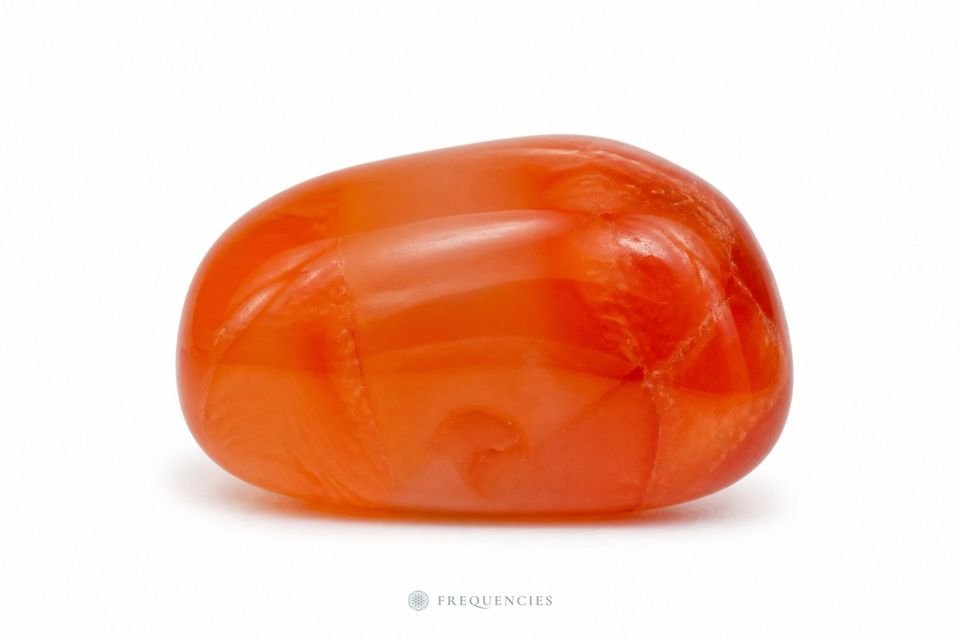
A small heart of 2.5 to 3 cm fits in the palm of your hand or in a gift bag together with a card, while a heart of about 4 cm will stand out more on a shelf. Choose the material by its colour and by how gently the stone needs to be cared for. The table shows seven hearts that are currently in stock in our shop [6][7].
| Heart | Colour | Mohs hardness | Care | Current price |
|---|---|---|---|---|
| Rose quartz, 2.5 cm | soft pink | 7 | can be rinsed briefly; do not leave in direct sunlight for long | €8 |
| Carnelian, 3 cm | orange-red | 6.5 to 7 | can be rinsed in water | €9 |
| Phantom amethyst, 3 cm | violet with internal layers | 7 | can be rinsed; long exposure to sun may fade the colour | €9.50 |
| Quartz, ≈4 cm | clear, light | 7 | can be rinsed in water | €10 |
| Milky quartz, ≈4 cm | milky white | 7 | can be rinsed in water | €11.11 |
| Amazonite, flat, ≈4 cm | greenish-blue | 6 to 6.5 | can be rinsed; long exposure to sun may affect the colour | €12.55 |
| Selenite, 7 cm | white, silky | 2 | dry cloth only | €15 |
Rose quartz, amethyst, milky quartz and clear quartz belong to the quartz group, and their hardness is 7 [7]. A harder stone scratches a softer one, so store hearts separately, especially the selenite heart [8]. Carnelian lets light through at least at the edges, which distinguishes it from opaque jasper [7]. Amazonite is a greenish-blue variety of microcline, a potassium feldspar. On the market it is sometimes misleadingly called Amazon jade, although it is not jade [7]. Phantom amethyst shows the outlines of earlier crystal faces; read more about this in the article Crystal Shapes. All hearts are in the Heart Shapes section.
Rose Quartz: A Valentine’s Day Classic
In the crystal community, rose quartz is a symbol of love and gentleness, which is why it is often chosen as a gift for loved ones [7]. This is symbolism: the stone does not make anyone fall in love or change a relationship, but it is a reminder of the thought with which it was given. Why rose quartz is pink, how to spot a dyed one and why it should not be kept in direct sunlight are explained on the encyclopedia page Rose Quartz.
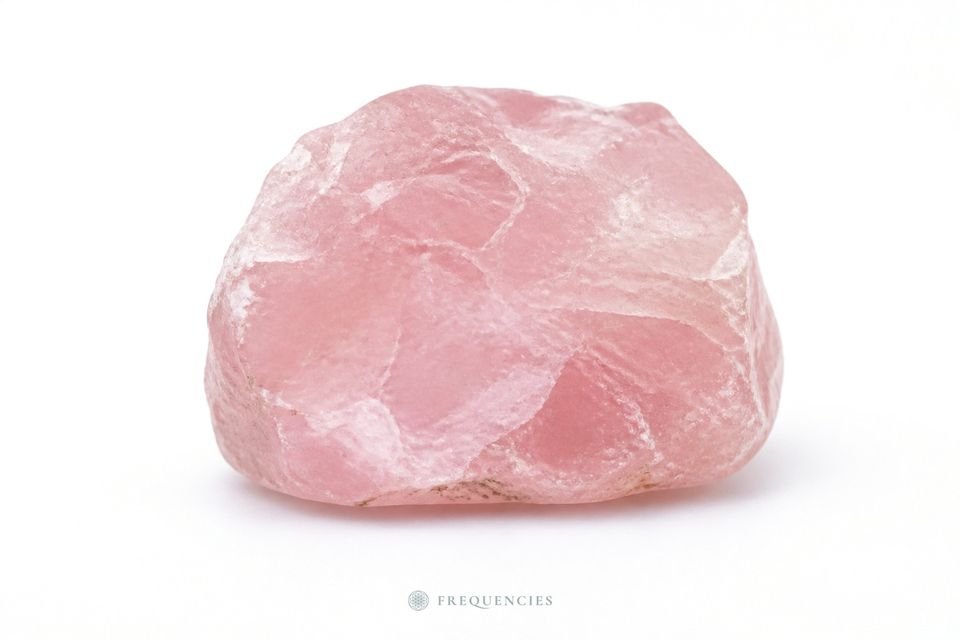
The colour of rose quartz is soft and shows best in pieces at least a centimetre thick [7]. For a couple, two matching rose quartz bracelets, currently €7.77 each, work well, while as a single gift there is the bracelet with 6 mm beads, currently €14 (regular price €18) [6]. If you are making a gift yourself, you can pour rose quartz chips (currently from €3 for 20 g) into a small glass jar together with a handwritten note [6]. You will find more options in the Rose Quartz section.
A Valentine’s Day Gift for Him
The heart shape also suits a man if he collects stones or appreciates small symbolic objects. A more understated choice is the clear quartz heart from Brazil, about 3.5 × 4.5 cm, or the orange-red carnelian heart [6]. If a heart seems too sweet, choose a pyrite bead bracelet (currently €13.80) [6]. Pyrite is iron disulfide with a brass-yellow colour and a metallic lustre, but it is not a metal. In damp conditions, pyrite can oxidise, so keep the bracelet dry [7]. You will find more ideas in the article A Gift for the Man Who Has Everything.
Selenite Heart and a Candlelit Evening for Two
A selenite heart is larger and pale: a standing selenite heart of about 8 cm and a smooth 7 cm heart that sits comfortably in the palm currently cost €15 each [6]. The name selenite comes from the Greek “selēnítēs lithos”, meaning “moon stone”, because the transparent crystals have a moonlight-like glow [7]. It is a soft variety of gypsum with a hardness of 2 that slowly dissolves in water, so do not wash it; clean it only with a dry cloth [7]. You will find all selenite hearts in the Selenite Hearts section.
For an evening for two, there is a selenite heart-shaped candle holder for a tea light (currently €11.77) [6]. Place it on a non-flammable surface, away from curtains, and never leave a burning candle unattended [9].
The NKey FrQ Heart Temple Pendant: Handmade in Latvia
For a more personal gift, there is the NKey FrQ Heart Temple pendant. It is a 4 cm torus pendant with a copper winding and natural crystals: rose quartz, emerald, malachite, rhodonite, green aventurine and ruby in fuchsite [10]. The pendant is handmade in Latvia and can be chosen with gold- or silver-coloured wire, on a cord or on a chain [10]. It currently costs from €200 and is in stock [10]. It is a piece of jewellery, and the choice of crystals in it has a symbolic meaning [10].
You can read about how pendants like this are made in the article Handmade in Latvia, and you will find other designs in the Torus Pendants section. A personalised pendant takes 2 to 5 weeks to make [10][11], so by our reckoning it is safer to order one at least six weeks before 14 February 2027. After that, choose a ready-made design that is in stock [10].
When to Order So That Your Gift Arrives by 14 February
In 2027, Valentine’s Day falls on Sunday 14 February. If the item is in stock, delivery takes 1 to 3 working days, and delivery to parcel lockers in the Baltic States is currently free for orders of at least €30 [10][11]. By our reckoning, as a rough guide, it is safer to order by Tuesday 9 February 2027, so that the parcel arrives by Friday 12 February [11]. Every stone is natural, so its shade and pattern may differ slightly, and if the picture shows several pieces, you will receive a similar, hand-picked specimen.
Frequently Asked Questions
What should I give a woman for Valentine’s Day?
A popular choice is a rose quartz heart or bracelet, as in the crystal community rose quartz is considered a symbol of love. For a gift in lighter tones, a selenite heart or a selenite tea light holder works well.
What should I give a man for Valentine’s Day?
The heart shape is also suitable for a man if you choose a more restrained material, such as carnelian or clear quartz. If a heart seems too sweet, a more neutral choice is a pyrite bracelet with a metallic sheen.
Why is Valentine’s Day on 14 February?
14 February is the feast day of St Valentine. Legends associate him with secret marriages and a letter to the jailer’s daughter, but as a lovers’ day it began to be celebrated only around the 14th century, and some researchers see the first connection in Chaucer’s poem.
What does rose quartz symbolise?
In the crystal community, rose quartz is considered a symbol of love, gentleness and warmth. This is tradition and symbolism, not a scientific or medical claim.
How do I care for a heart-shaped stone?
A rose quartz heart can be rinsed briefly in lukewarm water and wiped dry, while a selenite heart should only be cleaned with a dry cloth. Store hearts separately so that harder stones do not scratch softer ones.
By what date should I order a Valentine’s Day gift?
If the item is in stock, delivery takes 1 to 3 working days. By our reckoning, as a rough guide, it is safer to order by Tuesday 9 February 2027, as 14 February falls on a Sunday that year.
Sources
- Encyclopaedia Britannica. Valentine’s Day (editorial article)
- A. Zelazko. Why Do We Give Valentine Cards? Encyclopaedia Britannica
- O. Kovzele (Daugavpils University). Perception of St. Valentine’s Day in the Culture Space of Latvia. Technium Social Sciences Journal, vol. 15, 2021, pp. 516-525.
- Encyclopaedia Britannica. St. Valentine (editorial article)
- G. Chaucer. The Parliament of Fowles, lines 309 and 310 (Wikisource text)
- frequencies.lv product pages (price, size and availability checked 08.11.2026): rose quartz heart, carnelian heart, phantom amethyst heart, quartz heart, milky quartz heart, amazonite heart, selenite heart 7 cm, standing selenite heart, selenite heart candle holder, rose quartz bracelet, rose quartz bracelet 6 mm, rose quartz chips, pyrite bracelet
- FREQUENCIES Stone Encyclopedia: rose quartz, amethyst, quartz, milky quartz, carnelian, amazonite, pyrite, selenite (composition, hardness, care; data from GIA, Mindat, geology.com)
- FREQUENCIES. Crystal Shapes: tumbled, raw or spheres (Mohs scale, phantom amethyst)
- State Fire and Rescue Service. Use of Candles (Open Flame) (15.10.2024)
- frequencies.lv. Heart Temple · NKey FrQ 11 pendant (4 cm), product page (materials, variants, availability, delivery; checked 08.11.2026)
- frequencies.lv. Delivery and Returns (delivery times and free delivery threshold; checked 08.11.2026)