
Selenite, which many crystal lovers use to cleanse other stones, cannot tolerate water itself: it is gypsum, and a small teaspoonful of this mineral will dissolve completely in a litre of water [1]. After washing, its silky surface may turn matt [2]. So before you use any method, it is worth knowing what your particular stone can tolerate: water, salt, sunlight or heat.
Cleansing and Cleaning: Two Different Things
In the crystal community, cleansing is a symbolic custom. Many crystal lovers place a new or long-used stone in the light of the full moon, on a selenite plate or next to a rock crystal cluster, hold it in sage or palo santo smoke, rinse it under running water or bury it in salt. In the community, charging usually means placing a stone in sunlight or moonlight. These are traditions, not scientifically proven effects.
Cleaning is ordinary care: removing dust, fingerprints and grease. Both have one rule in common: they must be safe for the stone itself. Our care table shows for each stone whether it tolerates water and sunlight and how easily it scratches [3]. Sorted by method, the same data look like this:
| Method | Not suitable for | Reason |
|---|---|---|
| Running water and soaking | selenite, malachite, azurite, pyrite, calcite, celestine, fluorite, turquoise, lapis lazuli, opal | they dissolve, absorb water, are soft and sensitive, or oxidise |
| Salt and salt water | all the stones above | salt water is water, and dry salt grains can scratch selenite |
| Sunlight | amethyst, rose quartz, citrine, kunzite, fluorite, opal, selenite; transparent spheres | colour fades, opal dries out, a sphere concentrates the rays like a lens |
| Burying in soil | pyrite, selenite, soft and porous stones | moisture and sand |
| Selenite plate | the plate itself, if hard stones are slid on it | selenite has a hardness of only 2 |
| Smoke | all stones, if held in the flame | heat and rapid temperature changes |
| Sound | no restrictions | nothing touches the stone |
Running Water: Which Stones It Can Damage
Quartz group stones, such as rock crystal, amethyst, rose quartz, agate and jasper, can usually be rinsed in water and washed in warm soapy water, but do not soak dyed agates or dyed or coated quartz, such as blue or golden quartz [3]. Water can damage many other stones, for different reasons.
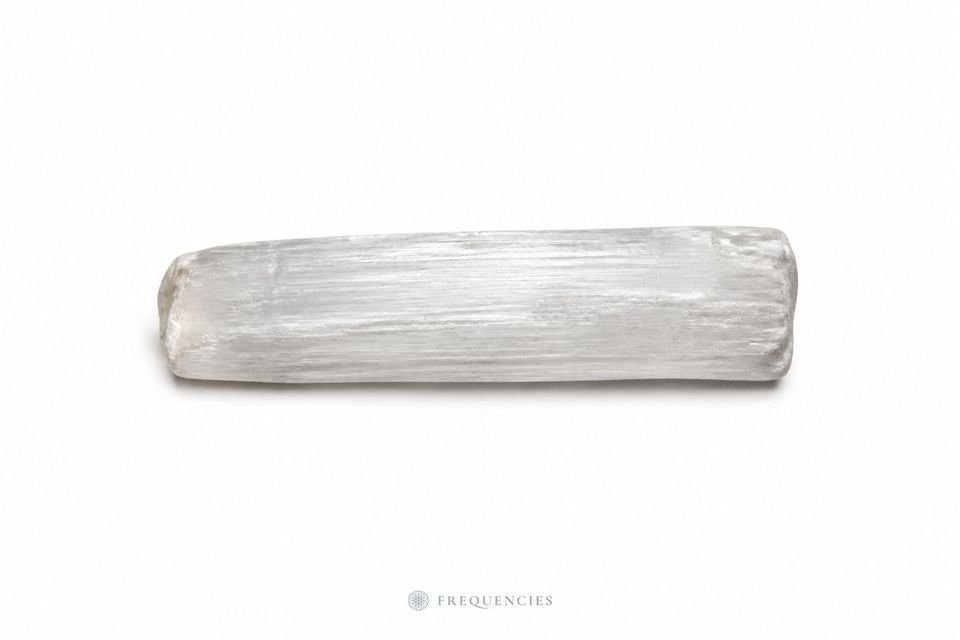
- Dissolve. Selenite is gypsum, which slowly dissolves in water [1], so its surface turns matt after washing [2].
- Absorb liquid. GIA states that porous stones such as turquoise, malachite and lapis lazuli can absorb cleaning solutions and change colour [5].
- Are soft and sensitive. Malachite and azurite are copper minerals with a hardness of 3.5 to 4 [6, 7]. Malachite is also porous [5], sensitive to heat and reacts even with weak acids [8], so it should not be soaked or cleaned with acidic products. Calcite, too, is soft and sensitive to acids [3].
- Oxidise. Pyrite can oxidise in damp conditions, so keep it dry [3].
- Contain water or are glued. Opal contains water, and in heat, dry air or bright light it can develop a network of fine cracks [5]. Do not soak glued opals (doublets and triplets) [3].
Our table also recommends protecting celestine, fluorite, howlite, chrysocolla, lepidolite, moldavite and shungite from water [3]. Even stones that tolerate water can be damaged by rapid temperature changes. GIA warns that all stones risk thermal shock if they are put into water straight after a steam cleaner, before they have cooled, and it does not recommend boiling for any stone except diamond [5]. Do not rinse cold rock crystal in hot water [9]. Why quartz tends to crack in heat is explained in the article Sauna Stones.
Salt and Salt Water: Why They Are No Gentler Than Water
The community also uses salt: a stone is buried in dry salt or left overnight in salt water. Salt water is still water, so it harms the stones mentioned above in the same way. Porous stones soak up the solution [5], and as the water dries out, the salt stays behind in the pores and cracks. In his notes on the solubility of gypsum, Christopher Hall points out that highly soluble salts, including table salt, cause efflorescence and salt crystallisation damage in brick, stone and concrete [1].
Dry salt is not harmless either. Halite, or table salt, has a hardness of 2 to 2.5 and gypsum 1.5 to 2 [4, 10], and on the Mohs scale the harder material scratches the softer one [11]. This is why salt grains can leave scratches on selenite, which even a fingernail can scratch: a fingernail has a hardness of 2 to 2.5 [11]. Besides, after the salt the stone has to be rinsed, which means water again. If you would like to keep this custom, put the stone in a small glass dish and set the dish in the middle of a bowl of salt so that the salt does not touch the stone. Why salt dissolves quickly in water while selenite only slowly turns matt is compared in the article Salt Lamp or Selenite Lamp.
Sunlight and Moonlight
The community uses sunlight for charging, but it changes the colour of some stones. GIA states that most kunzite fades easily in light and that some amethyst also loses colour if left in strong direct light for a long time [5]. The care table also advises against direct sunlight for rose quartz, citrine, smoky quartz, fluorite, celestine, selenite and opal [3]. In opal, heat and strong light speed up drying, which can end in cracks [5]. In its rose quartz description, GIA mentions that rose quartz from some deposits fades in natural light [20].
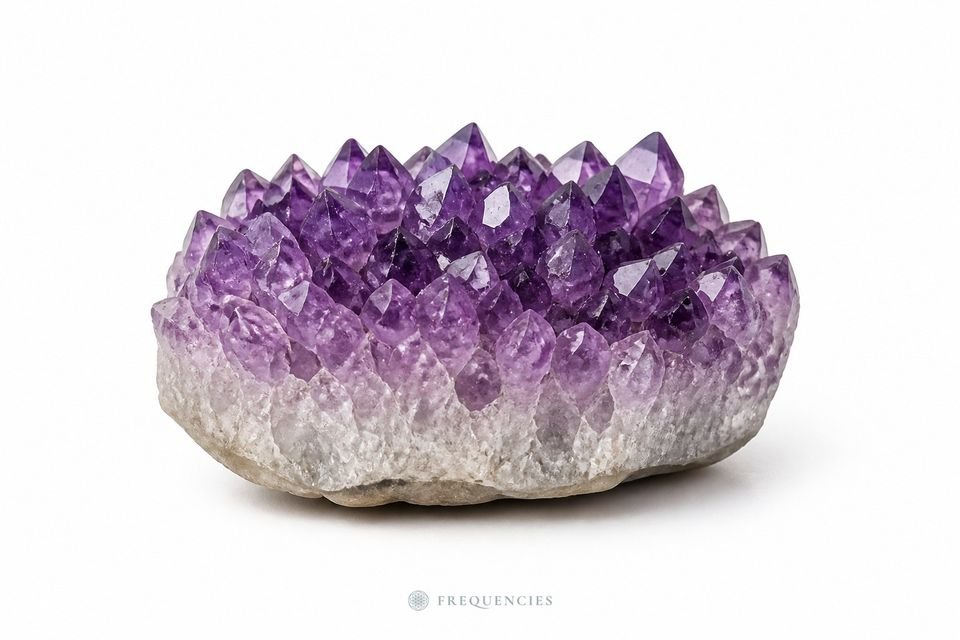
The second risk is fire. In sunlight, a transparent rock crystal sphere concentrates the rays like a lens and can set nearby objects alight [9].
Did you know? On 26 January 2024 in Epping, England, a decorative glass “crystal ball” used as a doorstop in a bathroom reflected sunlight coming in through the window and set fire to a pile of towels. The resident heard the smoke alarm and put out the burning towel themselves, but firefighters advised keeping mirrors and glass and crystal objects out of direct sunlight, especially at times of year when the sun is low [12].
Placing a stone in moonlight is one of the gentlest methods, as nothing touches it. Many crystal lovers leave their crystals on the windowsill on the night of the full moon. Take them in before the morning sun, especially from an east-facing windowsill, and do not leave them outdoors, where dew and rain are just as much water for soft stones.
Burying in Soil, Smoke and Sound
Some crystal lovers bury a stone in the garden or in a flowerpot for a while. Soil is damp and contains sand, so this method does not suit stones that need protecting from water, or soft stones [3]. Pyrite is particularly sensitive. A description of a project at the Natural History Museum in London states that pyrite can start to oxidise when the relative humidity is above 60%, producing sulfuric acid and iron sulfates. The damage can be recognised by cracks, white or yellowish needle-like crystals and a smell of sulfur [13].
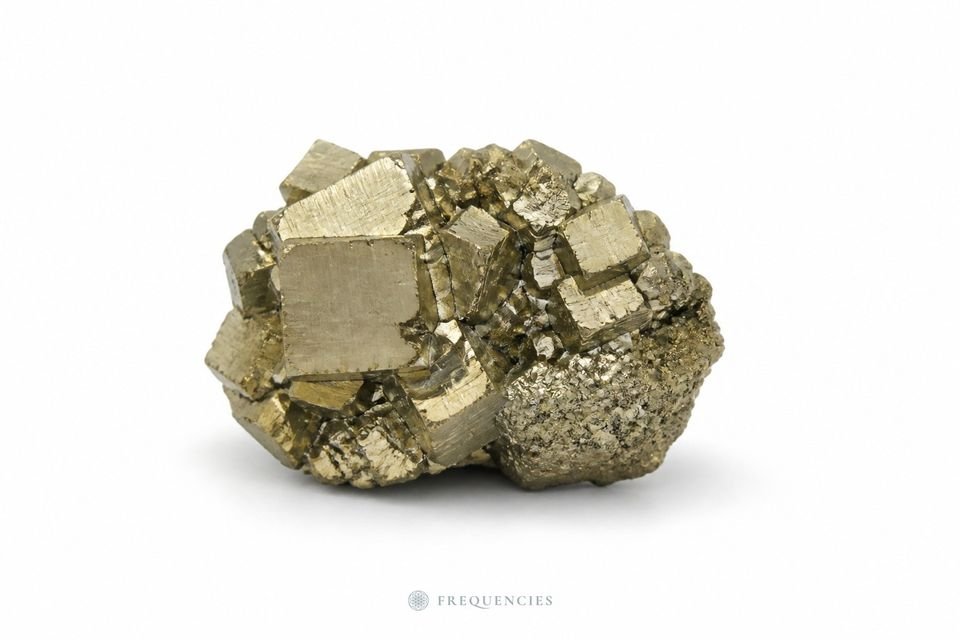
Did you know? In August 2015, the Natural History Museum in London launched a three-year project, “Project Airless”, to stop pyrite decay in collections holding 7 million fossils and 500,000 mineral specimens. According to the estimates at the time, 14,000 specimens needed urgent protection. The damaged specimens were treated and sealed airtight in plastic film bags with oxygen absorbers [13].
When smudging a stone, hold it in the smoke, not in the flame, as many stones cannot tolerate heat and rapid temperature changes [5]. The origins of frankincense, palo santo and white sage, and how to burn them safely at home, are described in the article Frankincense, Palo Santo and White Sage, and you will find products for smudging in the incense category.
With the sound method, too, no water, grains or heat touch the stone. The community uses singing bowls, small bells and tuning forks for this.
Selenite Plate and Charging Set
In crystal tradition, selenite is used for the symbolic cleansing of other crystals [14], so stones are laid on a selenite plate or dish or next to a selenite rod [2]. However, selenite is softer than almost any stone placed on it. Quartz has a hardness of 7 and gypsum only 2, so amethyst or rock crystal slid across selenite will leave scratches on it [11]. Set stones down on selenite rather than sliding them, and clean the selenite itself with a soft, dry brush [2]. You will find selenite dishes and rods in the selenite category, and for lamp care, read the article Selenite Lamp.
The charging and discharging set contains rock crystal and hematite chips on which, by tradition, other crystals and jewellery are placed to cleanse and charge them symbolically. The chips can be rinsed under running water and dried [15]. Hematite has a hardness of 5 to 6.5 and rock crystal 7 [3], so do not rub selenite or malachite on the chips. You will find other sets in the crystal sets category.
Stones in Drinking Water: Why It’s Better Not To
In the crystal community, some people also put stones in water that they later drink. The International Gem Society (IGS) advises against making such elixirs with toxic stones, and its table lists as high-risk stones malachite and azurite (which contain copper), cinnabar (mercury) and realgar (arsenic) [16]. The same group also includes pyrite, with a note that it can react dangerously if swallowed by accident [16]. Cinnabar is mercury sulfide, and geology.com recommends handling it as a toxic substance [17].
Metals can leach even from a stone that is widely used for water treatment. Inga Jurgelāne and Jānis Ločs, researchers at Riga Technical University, tested two shungite samples and found that nickel, copper, lead, cadmium, zinc, chromium and arsenic leached into the water. Lead and cadmium concentrations exceeded the limit permitted for drinking water for several days, and nickel concentrations for up to two weeks [18]. In damp conditions, pyrite can form sulfuric acid, and some pyrite contains arsenic as an impurity [19]. So do not put stones in drinking water. Keep small stones and chips out of children’s reach: they are not toys, and for children under 3 years old, small parts pose a risk of swallowing and choking [15].
How to Clean Dust off Crystals Safely
For everyday care, a soft, dry brush or cloth suits every stone. Hard quartz group stones can be washed in warm soapy water with a soft brush and then dried [3]. GIA recommends mild liquid soap and urges caution with solvents and ammonia, which are found in most household cleaning products. An ultrasonic cleaner can damage porous, dyed and oiled stones, as well as stones with cracks, while steam carries a risk of thermal shock [5].
Vinegar and lemon juice damage calcite, malachite and aragonite, as these react with acids [3, 8]. Store stones with a hardness of up to 5 separately in a fabric pouch, as harder stones will scratch them [3, 11]. If hemimorphite leaves blue colour on damp cotton wool, it has most likely been dyed [3]. How to recognise dyed stones and glass imitations is explained in the article How to Recognise a Real Crystal.
Frequently Asked Questions
How do you cleanse crystals?
The crystal community uses the light of the full moon, a selenite plate, smoke, sound, running water and salt. The gentlest on the stone are moonlight, sound and smoke, as long as the stone is not held in the flame, but water, salt and sunlight do not suit many stones. Check your stone in the care table first.
Which crystals should not be put in water?
Do not keep selenite, malachite, azurite, pyrite, calcite, celestine, fluorite, turquoise, lapis lazuli, opal, howlite or shungite in water. They dissolve, absorb water, oxidise, or are soft and sensitive to acids. Rock crystal, amethyst, rose quartz, agate and jasper can usually be rinsed, but do not soak dyed or coated stones.
Can crystals be cleansed in salt?
Salt water is water, so it does not suit stones that need protecting from water, and porous stones absorb it. Dry salt grains can scratch selenite. If you would like to keep the custom, put the stone in a glass dish in the middle of a bowl of salt.
Can crystals be left in sunlight?
Sunlight does not change the colour of rock crystal, but kunzite, some amethyst and some rose quartz may fade in prolonged bright light. Our care table also recommends protecting citrine and fluorite from direct sunlight. In sunlight, transparent spheres act as a lens and can set curtains alight, so do not keep them on a sunny windowsill.
Does selenite cleanse other crystals?
That is what the crystal community believes, and stones are laid on a selenite plate or dish. It is a belief, not a proven effect. Set stones down on selenite rather than sliding them, because selenite has a hardness of only 2 and harder stones will scratch it.
Can crystals be put in drinking water?
No. Some minerals contain copper, mercury or arsenic, and researchers at Riga Technical University (RTU) found that even shungite releases nickel, lead and cadmium into water. Do not put stones in drinking water.
Sources
- C. Hall, “The solubility of gypsum in water”, Hall’s Notes and Queries NQ9, University of Edinburgh blog site, 2025: blogs.ed.ac.uk/christopherhall/wp-content/uploads/sites/6693/2025/0…
- FREQUENCIES Stone Encyclopedia: selenite: frequencies.lv/enciklopedija/selenits/
- FREQUENCIES Stone Encyclopedia, care table (water, sunlight, hardness; data from GIA, Mindat and Britannica): frequencies.lv/enciklopedija/kopsana/
- Handbook of Mineralogy (Mineralogical Society of America), “Gypsum”: www.handbookofmineralogy.org/pdfs/gypsum.pdf
- D. D. Martin, “Gemstone Durability: Design to Display”, Gems & Gemology, GIA, Summer 1987, pp. 63-77: www.gia.edu/doc/Gemstone-Durability-Design-to-Display.pdf
- Handbook of Mineralogy (Mineralogical Society of America), “Malachite”: www.handbookofmineralogy.org/pdfs/malachite.pdf
- Geology.com, H. M. King, “Azurite”: geology.com/minerals/azurite.shtml
- Geology.com, H. M. King, “Malachite”: geology.com/minerals/malachite.shtml
- FREQUENCIES Stone Encyclopedia: rock crystal: frequencies.lv/enciklopedija/kalnu-kristals/
- Handbook of Mineralogy (Mineralogical Society of America), “Halite”: www.handbookofmineralogy.org/pdfs/halite.pdf
- Geology.com, H. M. King, “Mohs Hardness Scale”: geology.com/minerals/mohs-hardness-scale.shtml
- Essex County Fire and Rescue Service, “Sunlight reflecting off crystal ball causes fire”, 26.01.2024: www.essex-fire.gov.uk/incidents/sunlight-reflecting-crystal-ball-ca…
- Natural Sciences Collections Association (NatSCA), “Project Airless” (Natural History Museum, London), 18.03.2016: natsca.blog/2016/03/18/project-airless/
- frequencies.lv: Selenite rods 12 to 15 cm (symbolism, care): frequencies.lv/products/selenita-stieni-12-15cm-3/
- frequencies.lv: Mineral charging and discharging set (rock crystal and hematite): description, care, safety: frequencies.lv/products/mineralu-uzlades-izlades-komplekts-kalnu-kr…
- International Gem Society, “Gemstone Toxicity Table”: www.gemsociety.org/article/gemstone-toxicity-table/
- Geology.com, H. M. King, “Cinnabar”: geology.com/minerals/cinnabar.shtml
- I. Jurgelāne, J. Ločs, “Shungite Application for Treatment of Drinking Water: is It the Right Choice?”, Journal of Water and Health 19(1), 2021, pp. 89-96 (RTU Science Repository): ortus.rtu.lv/science/lv/publications/32222
- FREQUENCIES Stone Encyclopedia: pyrite: frequencies.lv/enciklopedija/pirits/
- GIA, “Rose Quartz Description” (light resistance): www.gia.edu/rose-quartz-description