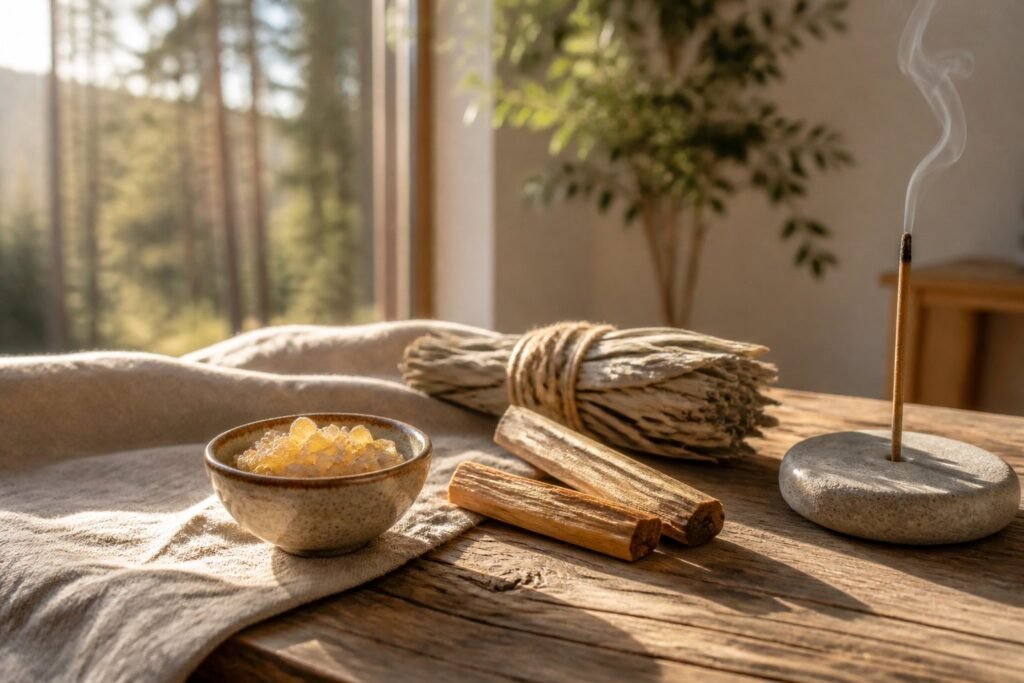
The Latvian word for incense, vīraks, was borrowed from Middle Low German wīrōk, and its German counterpart Weihrauch literally means “holy smoke” [1][2]. In ancient times caravans carried the resin itself along a network of trade routes stretching more than 2,000 kilometres from southern Arabia to the Mediterranean [3]. Today incense sticks, palo santo and white sage are found in many homes, and each of them has its own, often surprising origin.
What Is Incense: Tree Resin and a Word with a Broad Meaning
In Latvian dictionaries, vīraks is a fragrant substance for burning, usually in religious ceremonies [4]. That is why the word covers both the resins burned in church and aromatic sticks with lavender or palo santo. In the narrower sense, vīraks is frankincense, the resin of trees of the genus Boswellia. The main species are B. sacra, B. papyrifera, B. frereana and B. serrata, which grow in Somalia, in the Hadramaut in Yemen, in Oman and in parts of India and Pakistan [5].
To obtain the resin, the trunk of the tree is cut, and a milky sap oozes from the cut and hardens into grains in the air [5]. This resource is not inexhaustible. A study published in Nature Sustainability in 2019 found that more than 75% of the Boswellia papyrifera populations studied lacked young trees, even though this species is now the main source of frankincense. The researchers predict that frankincense production will halve over the next 20 years, and they name livestock grazing, frequent fires and over-tapping of the trees as the causes [6].
The Frankincense Route: From the Omani Desert to Mediterranean Ports
Since 2000 the Land of Frankincense in southern Oman has been on the UNESCO World Heritage List. It includes the Wadi Dawkah valley, where frankincense trees (Boswellia sacra) still grow and their resin is still collected today, the caravan oasis of Shisr and two ancient ports. The port of Khor Rori was in use from the 4th century BC to the 5th century AD, and the port of Al Baleed from the 8th to the 16th century; objects from China’s Ming dynasty have also been found there [7].
From southern Arabia, frankincense and myrrh travelled all the way to the ports of the Mediterranean. The section of this route in the Negev desert, with the Nabataean towns of Haluza, Mamshit, Avdat and Shivta, has been on the UNESCO list since 2005. The trade flourished from the 3rd century BC to the 2nd century AD, and its profits made it possible to build towns, fortresses and caravanserais in the desert. Dams, cisterns and sophisticated irrigation systems made farming possible there as well [3].
Did you know? The Greek historian Herodotus wrote that the Arabians could gather frankincense only after driving off, with the smoke of storax resin, the small, speckled winged serpents that guarded every tree in great numbers [8]. There are no winged serpents in nature, but the legend shows how remote and hard to reach the homeland of frankincense seemed to the Greeks.
Egypt, Myrrh and the Gifts of the Magi
In ancient Egypt, trees yielding aromatic resins were brought in from Arabia and the Somali coast, and incense was burned both in the daily rituals before the cult image of the sun god Amun-Ra and at funerals [9]. The female pharaoh Hatshepsut, who reigned from about 1479 to 1458 BC, had an expedition to the distant land of Punt depicted in her mortuary temple at Deir el-Bahari. The reliefs show ebony, ivory, gold, exotic animals and incense trees being loaded onto ships [10]. Researchers still argue about where exactly Punt lay: it is sought both in Africa and on the Arabian Peninsula [11].
Myrrh is the resin of trees of the genus Commiphora, and its name comes from the Arabic word murr, meaning “bitter”. Myrrh trees belong to the same family, Burseraceae, as frankincense trees [12]. Herodotus described how, in the most expensive method of mummification, Egyptian embalmers filled the abdomen with pure crushed myrrh, cassia and other spices, but not with frankincense [13].
In the Christian tradition, frankincense is one of the three gifts that the wise men from the East brought to the newborn Jesus: gold, frankincense and myrrh [14]. The story is remembered at Epiphany, on 6 January [15]. Frankincense is often explained as a symbol of Christ’s priesthood [5].
Church Incense: From the 4th Century to the Botafumeiro
The Christian Church began to use incense in the Eucharistic liturgy in the 4th century, and its smoke became a symbol of the prayers of the faithful rising upwards [9]. The image is already familiar from the Psalms, where prayer is likened to an offering of incense [16]. In the Catholic and Orthodox Churches the use of incense in worship has never stopped, but in the Church of England incense was used only occasionally after the Reformation and came back widely in the 19th century under the influence of the Oxford Movement [9].
One of the best-known thuribles is the botafumeiro in the cathedral of Santiago de Compostela in Spain. Eight helpers set this huge thurible swinging on a rope, and it flies across the transept right up to the ceiling [5]. The composition of incense itself has changed over the centuries: in the 17th and 18th centuries natural substances began to be replaced by chemicals from the perfume industry, and this trend continues today [9].
What Incense Burning Is Called in the Catholic Church
In Catholic liturgy, the use of incense is called incensation [34]. Incense is burned in a thurible (Latin turibulum), a metal vessel with a lid and chains that holds a small bowl of glowing charcoal. The incense is kept in a boat (Latin navicula, “boat”), from which the celebrant puts it onto the charcoal with a small spoon. He then holds the thurible by its chains and swings it so that the fragrant smoke spreads [35]. In everyday Latvian the general verb kvēpināt is used, one of whose meanings is “to make fragrant smoke by burning (something)” [37].
The General Instruction of the Roman Missal (GIRM) describes incensation as an expression of reverence and prayer, citing Psalm 141 and the Book of Revelation. Incense may be used at any Mass: during the entrance procession; at the beginning of Mass, to incense the cross and the altar; at the Gospel procession and the proclamation of the Gospel; after the offerings have been placed on the altar; and when the host and the chalice are shown after the consecration [36]. The Instruction also sets the number of swings. Three swings of the thurible are used, for example, to incense the Most Blessed Sacrament, the Book of the Gospels, the paschal candle, the priest and the people, two swings for relics and images of the saints, and the altar is incensed with single swings [36]. In the Catholic Church’s explanation, the fragrance of incense also symbolises the good works and virtues of the faithful [34].
Incense Resin, Sticks and Cones: The Differences
Britannica defines incense as grains of fragrant resin, sometimes mixed with spices, that are usually sprinkled on glowing charcoal in a censer [9]. That is exactly how it is used in church, where the incense goes into the thurible [35]. At home, ready-made forms are more common. A review by researchers in the journal Clinical and Molecular Allergy divides incense into sticks with and without a core, cones, coils, powder, ropes and herb bundles [38].
The classic incense stick has a thin bamboo core. One end of it is dipped in a binder and coated with a mixture of fragrance, plant and wood powder. The typical stick described in the review consists by weight of 21% plant and wood powder, 35% fragrance, 11% binder and 33% bamboo, and one stick burns for 50 to 90 minutes [38]. In a coreless stick, the whole mass is incense material [38]. Our shop has both kinds. The Ispalla palo santo and eucalyptus sticks from Peru have a bamboo core coated with a mixture of palo santo powder, palo santo resin and eucalyptus leaf powder [39]. The Good Fortune set, on the other hand, contains 15 sticks without a bamboo core, 4 cones and a stone holder [40]. Resin incense, together with sticks, cones and a holder, comes in the Pureworks gift set [41].
Palo santo sticks, by contrast, are small pieces of wood: the description of the palo santo wood in our shop gives only natural Bursera graveolens wood as the material [23]. White sage, for its part, is a bundle of leaves [42]. Whatever the form, burning produces smoke containing fine solid particles and gases, so researchers advise ventilating the room well while burning incense and not staying in the smoke for long [38].
Palo Santo: One Name, Two Different Trees
In Spanish palo santo means “holy wood”, and the name is used for at least two different species. Incense sticks are made from Bursera graveolens, which grows in seasonally dry tropical forests from Mexico to Peru and Venezuela. It belongs to the same family, Burseraceae, as frankincense and myrrh trees [17]. On the Red List of the International Union for Conservation of Nature (IUCN), this species was assessed as Least Concern in 2019 [18].
Under Peruvian law, however, palo santo is a critically endangered species. Felling live trees is prohibited, and only naturally fallen or dead trees, branches and remains may be collected [19]. In January 2026 SERFOR, Peru’s National Forest and Wildlife Service, reported that more than a tonne of illegally obtained palo santo wood had been seized in the Piura region [20].
The other palo santo is Bulnesia sarmientoi, which grows in Argentina, Bolivia, Paraguay and Brazil. Since 2010 it has been listed in Appendix II of CITES, the Convention on International Trade in Endangered Species, so permits are needed for international trade in its logs, sawn wood, veneer, powder and extracts, although the restriction does not apply to finished products such as perfumes containing these extracts [21]. IUCN assesses this species as Endangered [22]. So the claim that “palo santo is endangered” is either true or misleading, depending on which tree is meant. When buying, look for the Latin species name and the country of origin: the description of the palo santo sticks in our shop, for example, gives the species as Bursera graveolens and the origin as Peru [23].
White Sage: A Californian Plant with Deep Roots in Indigenous Culture
White sage (Salvia apiana) is a shrub of the mint family that grows wild only in southern California and north-western Mexico [24]. For the Indigenous peoples of California and Mexico, such as the Cahuilla, Chumash and Kumeyaay, it has been an important plant in daily life and ceremonies for thousands of years. Smudging with white sage is sacred to many of these communities, and it became popular in wider society in the 1960s and 1970s, when the hippie and New Age movements took it up [25].
The demand has created a problem. In June 2021 the Tongva ethnobotanist Samantha Morales-Johnson said that she had received about 136 kg of white sage that park rangers had confiscated from illegal harvesters in the Etiwanda Preserve. Packed into bags, the plants had started to ferment in the heat, and about 14 kg were spoiled [25]. The California Native Plant Society (CNPS) estimates that there are only a few commercial growers, so most of the white sage sold around the world is harvested in the wild [26]. White sage has no special protection at federal or state level in the US, and IUCN has not yet assessed it [24].
Indigenous views differ. Kimberly Morales Johnson, secretary of the San Gabriel Band of Mission Indians, says: “For Indigenous people, white sage is an ancestor, not just a plant” [26]. The Tongva artist Weshoyot Alvitre believes that such plants should not be sold at all, whether or not the seller is Indigenous. The Chumash author Rose Ramirez, on the other hand, is convinced that it is no longer possible to stop the trade, so the label “responsibly sourced” must become a reliable guarantee [27]. If you do choose white sage, ask the seller where it comes from and prefer cultivated sage, as the plant conservation organisation United Plant Savers also recommends [24].
Crystals and Smoke: Community Practice and Stone Care
In the crystal community, sage or palo santo smoke is often used to “cleanse” stones. This is a tradition, not a scientifically proven effect, but the dry method does have a practical basis, because some stones do not tolerate water. Our stone encyclopedia mentions smoke as a community practice for selenite, for example. Its hardness is only 2 on the Mohs scale, and in water its surface can turn matt or start to dissolve [28]. This also applies to selenite candle holders and lamps. You can read more about selenite lamps in the article Selenite Lamp.
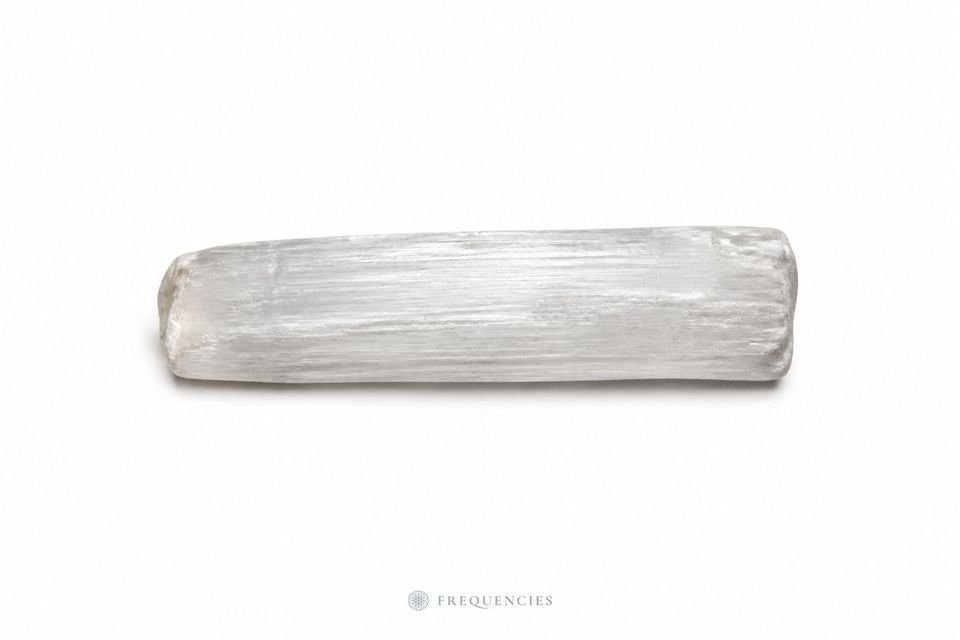
Porous lapis lazuli and soft malachite are better kept out of water, fluorite can fade, and pyrite can oxidise in damp conditions [28]. Black tourmaline is harder (7 to 7.5) but brittle along its fibres, so it too is best kept away from water as far as possible. A black tourmaline amulet together with incense sticks is also included in one of the shop’s gift sets [29]. Hold the stone in the smoke, not in the flame, because prolonged heat or sudden changes in temperature harm many stones. What all stones need is summarised in the care table.
Burning Incense Safely at Home
The London Fire Brigade lists candles, incense sticks and oil burners among the most common causes of fires [30]. In Latvia, on 19 December 2025 the State Fire and Rescue Service reminded the public that more than 20 fires that year had already been possibly caused by candles left unattended [31]. The same rules apply to burning incense.
- Never leave a smouldering stick, sage or palo santo unattended, and put it out completely before you leave the room or go to sleep [30].
- Use a heat-resistant holder on a stable surface where it cannot be knocked over by accident, and keep it away from curtains, furniture and clothing [30].
- Throw the ashes away only once they are completely out and cold [30].
- Burn incense in a well-ventilated room, air the room afterwards, and keep incense products out of reach of children and pets [23][29].
- Birds have particularly sensitive respiratory systems, so it is best not to burn incense in a room where a bird lives [32].
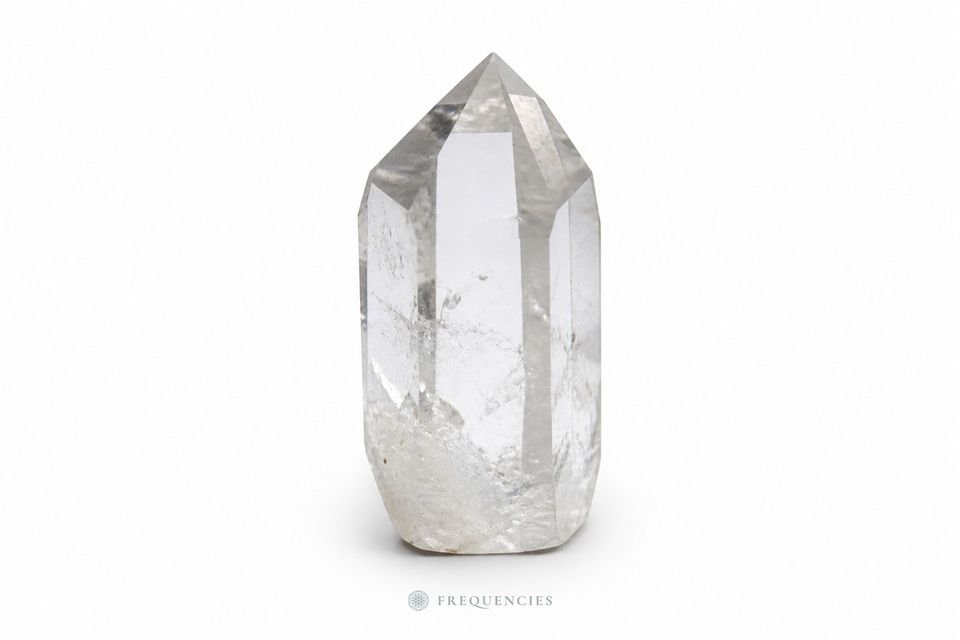
There is also a less well-known tip connected with fire. A clear rock crystal sphere can focus the sun’s rays like a lens and set nearby objects alight, so do not put it on a sunny windowsill next to curtains or dried herb bundles [28].
How to Choose Incense, Palo Santo and Sage Responsibly
First, read the ingredients. Some incense sticks are made from aromatic oil, charcoal and a binder rather than from Boswellia resin [33], which fits the broad meaning of the Latvian word vīraks. If you want real frankincense resin, check that the packaging names a Boswellia species. When buying palo santo, ask about the species and the origin, and choose cultivated rather than wild-harvested white sage [24]. In our shop’s incense section you will find palo santo sticks from Peru, white sage from California and incense sets, and the materials are listed in the product descriptions. If you would like to add a crystal to a gift, take a look at the guide How to Choose a Crystal.
Frequently Asked Questions
What is incense?
Incense is a fragrant substance for burning. In the narrower sense it is frankincense, the resin of Boswellia trees from southern Arabia, East Africa and India, but in everyday use the word also covers aromatic incense sticks.
What is incense burning called in the Catholic Church?
In Catholic liturgy it is called incensation. Incense is burned in a thurible, a metal vessel on chains that holds glowing charcoal, and it is kept in a boat (navicula).
Is palo santo an endangered species?
It depends on the tree. Bursera graveolens, which is used for incense sticks, is listed as Least Concern by IUCN, but in Peru it is protected by national law and only fallen wood may be collected. Bulnesia sarmientoi is an endangered species and has been listed in CITES Appendix II since 2010.
What is church incense made of?
Historically, the main substances burned were frankincense and myrrh resins, as well as aromatic wood, bark, seeds and flowers. Frankincense resin is still an important ingredient, especially in Catholic and Orthodox churches.
Where does white sage grow?
In the wild it grows only in southern California and north-western Mexico. Most of the white sage sold on the market is harvested in the wild, so it is better to choose cultivated sage.
How can you burn incense safely at home?
Use a heat-resistant holder on a stable surface away from curtains, never leave a smouldering stick unattended, air the room, and throw the ashes away only once they are completely cold.
What is myrrh?
Myrrh is the resin of trees of the genus Commiphora, in the same family, Burseraceae, as frankincense trees. The name comes from the Arabic word murr, meaning “bitter”.
Sources
- Mīlenbahs and Endzelīns, Latvian-German dictionary (ME IV, 640): vīraks
- DWDS, W. Pfeifer, Etymological Dictionary of German: Weihrauch
- UNESCO World Heritage Centre: Incense Route: Desert Cities in the Negev
- Tēzaurs.lv (LLVV): vīraks
- Encyclopaedia Britannica: Frankincense
- Bongers F. et al., Nature Sustainability, 2019: Frankincense in peril
- UNESCO World Heritage Centre: Land of Frankincense
- Herodotus, Histories, Book 3, Chapter 107 (Perseus, Tufts University): Histories 3.107
- Encyclopaedia Britannica: Incense
- Smithsonian Magazine: The Queen Who Would Be King
- Polish-Egyptian Archaeological and Conservation Expedition at Deir el-Bahari: The Punt Expedition in Hatshepsut’s Temple
- Encyclopaedia Britannica: Myrrh
- Herodotus, Histories, Book 2, Chapter 86 (Perseus, Tufts University): Histories 2.86
- Latvian Bible Society, New Revised Latvian Bible 2024: Mateja evaņģēlijs, 2. nodaļa [Gospel of Matthew, chapter 2]
- Wikipedia (in Latvian): Zvaigznes diena [Epiphany]
- Latvian Bible Society, New Revised Latvian Bible 2024: Psalmi, 141. psalms [Psalm 141]
- Wikipedia: Bursera graveolens
- IUCN Red List: Bursera graveolens (2019 assessment)
- Andina, Peru State News Agency: Serfor decomisa más de 6,000 kilos de palo santo por no acreditar su origen legal
- SERFOR, Peru’s National Forest and Wildlife Service (gob.pe), 07.01.2026: Piura: Serfor incauta más de una tonelada de madera de palo santo de origen ilegal
- Species+, UNEP-WCMC and CITES Secretariat: Bulnesia sarmientoi
- IUCN Red List: Plectrocarpa sarmientoi, syn. Bulnesia sarmientoi (2017 assessment)
- frequencies.lv: Holy Aromatic Palo Santo Wood, 2 pcs (material, origin, safety instructions)
- United Plant Savers: White Sage (Salvia apiana)
- JSTOR Daily, Dumbarton Oaks Plant Humanities Initiative: Plant of the Month: White Sage
- ABC7 Los Angeles: The white sage black market is contributing to the native plant’s decimation in Southern California
- High Country News: Sage advice
- FREQUENCIES stone encyclopedia (data from GIA, Mindat, geology.com): Care table and stone pages
- frequencies.lv: Sagrada Madre gift set with incense and black tourmaline amulet
- London Fire Brigade: Maisonette fire in Coulsdon (2021), safety advice on incense sticks
- LV portāls, 19.12.2025: Operatīvie dienesti atgādina: droši svētki sākas ar katra paša rīcību [Emergency services remind: safe holidays start with each of us]
- VCA Animal Hospitals: Household Hazards and Dangers to Birds
- frequencies.lv: Sagrada Madre premium incense with aroma, 24 g (materials)
- Katolis.lv, Catholic Church Information Agency (Latvia): Dievkalpojumi, ceremonijas, liturģiskie žesti [Services, ceremonies, liturgical gestures]
- Katolis.lv, Catholic Church Information Agency (Latvia): Liturģiskie tērpi, trauki, liturģiskās grāmatas un citi piederumi [Liturgical vestments, vessels, liturgical books and other items]
- Holy See, Congregation for Divine Worship and the Discipline of the Sacraments: General Instruction of the Roman Missal (GIRM), nos. 276 and 277
- Tēzaurs.lv (LLVV, MLVV): kvēpināt
- Lin T.-C., Krishnaswamy G., Chi D. S., Clinical and Molecular Allergy, 2008: Incense smoke: clinical, structural and molecular effects on airway disease
- frequencies.lv: Ispalla Palo Santo and Eucalyptus incense, 13 g (materials, origin)
- frequencies.lv: Good Fortune incense set with holder in a metal box, 8×5.5 cm (contents)
- frequencies.lv: Pureworks Perfumery Esoteric Collection gift set (contents)
- frequencies.lv: White sage (California) ≈10 cm