Amethyst, rose quartz, rock crystal, citrine, and tiger’s eye look completely different, but to a mineralogist, they are all the same mineral: quartz with a hardness of 7. The color, price, and care differ: amethyst can fade over time on a sunny windowsill, while tiger’s eye will not change in the same spot. Therefore, when thinking about how to choose a crystal, start with its intended purpose, not the stone’s name.
First, determine the purpose of the crystal
A gift, a decoration for a table or shelf, the start of a collection, and a personal symbol are four different tasks, and each suits a different stone.
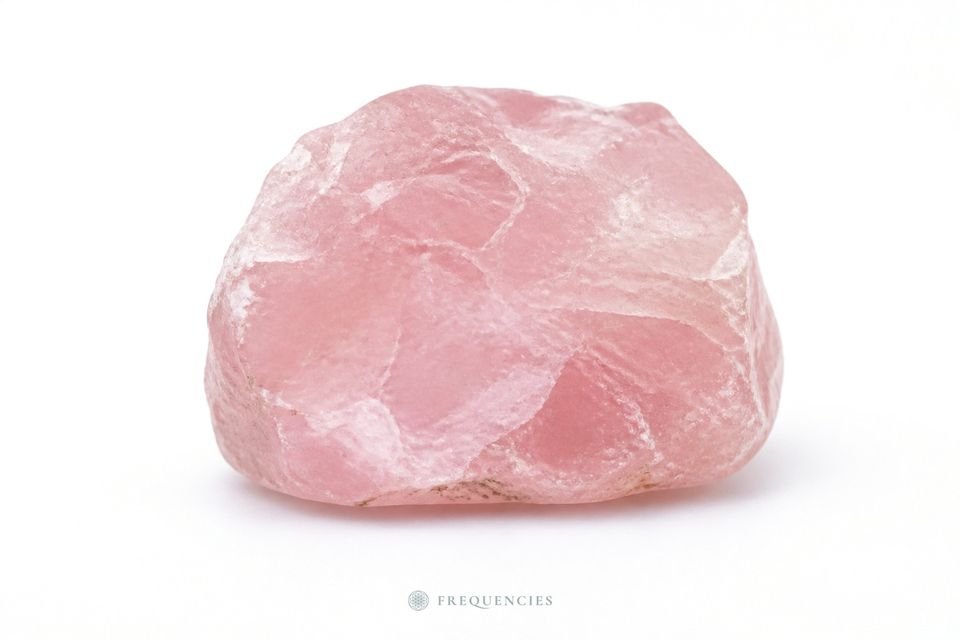
For a gift, choose a polished stone or a heart shape that is comfortable to hold in the hand and does not require special care. Rose quartz is a safe start, and the Gemological Institute of America (GIA) also lists it as the stone for the fifth wedding anniversary. Ready-made sets from €15 and gift cards from €10 can be found in the Gift Ideas section.
For a table or shelf, choose a stone that can also be viewed from a distance: an amethyst druse, a sphere, or a selenite lamp. Also consider the light. Labradorite and black tourmaline, whose color does not change in the sun, can be placed in a sunny spot, but amethyst and rose quartz are better kept away from direct sunlight.
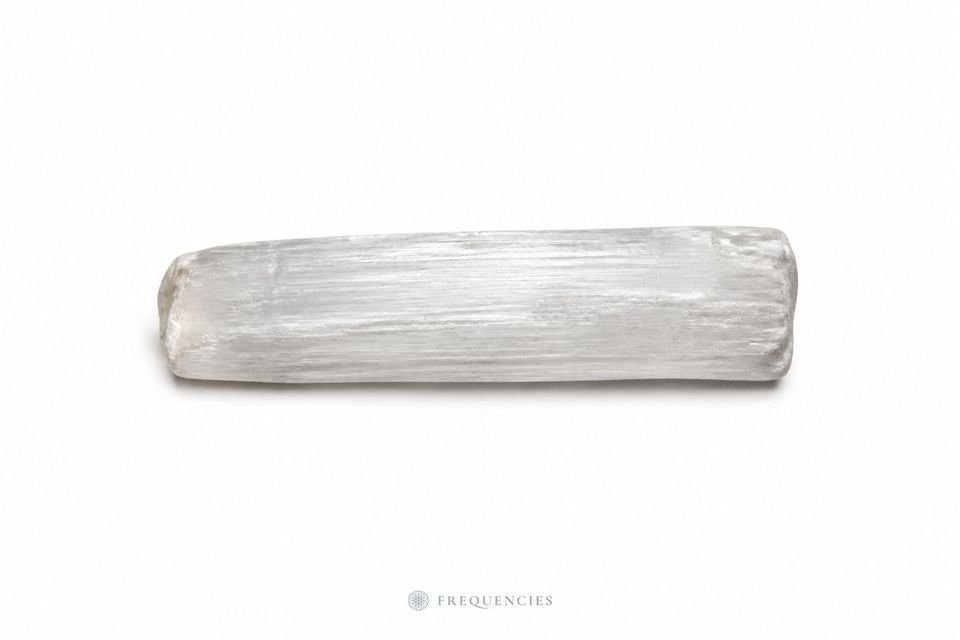
For a collection, start with raw stones from different mineral groups so that the differences are visible on the shelf: hexagonal quartz crystals, the striated prisms of black tourmaline, and the silky fibers of selenite. Write down the name and origin of each stone, and after a year you will have a small home museum.
As a personal symbol, a stone is chosen for its meaning. Rose quartz is a symbol of love and gentleness, tiger’s eye symbolizes self-confidence in the crystal community, and many choose black tourmaline as a symbol of safety. A small polished stone is convenient to carry in a pocket or bag.
Color and the stone that catches your eye
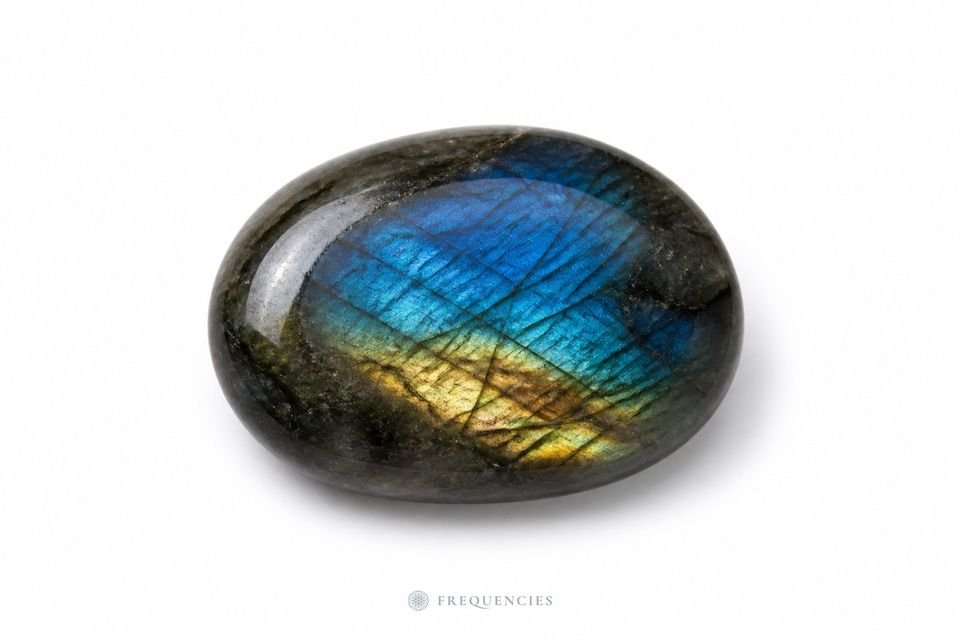
Color is the simplest way, as you see it immediately. In the violet range are amethyst and fluorite, in soft pink tones rose quartz, in honey and golden brown tones citrine and tiger’s eye, while rock crystal and selenite are transparent and white. In deep blue lapis lazuli, golden pyrite specks shine, while labradorite flashes blue, green, and golden colors on a gray background.
Carefully evaluate stones whose color seems too bright. Bright blue, green, or violet agate is usually dyed, as natural agate colors are brown, white, red, gray, pink, black, and yellow.
In the crystal community, a popular practice is to choose the stone that catches your eye: place several stones in front of you or open several product images and take the one your gaze returns to again and again. This is a method of selection, not a property of the stone, but it is honest: at home, you will keep the stone you like best.
When buying online, compare the size in centimeters and the weight in grams, as a 3 cm stone and a 7 cm sphere may look the same in a photo. If the product image shows several samples, we hand-select a similar specimen, as each natural stone is unique.
By zodiac sign or birth month
Both traditions help to choose a stone with personal meaning, especially as a gift. In the list of birthstones, also published by GIA, amethyst belongs to February, opal and tourmaline to October, and citrine and topaz to November. Stones for all twelve months can be found in the article Birth Month Stones.
In crystal astrology, each sign has several stones. In our catalog, amethyst is associated with Virgo, Capricorn, Aquarius, and Pisces, rose quartz with Taurus and Libra, and labradorite with Leo, Scorpio, and Sagittarius. If several stones match your sign, make the final choice by color or shape. The full list by sign is in the article Crystals by Zodiac Sign.
Shape and budget
The same stone can be a raw piece, a polished pebble, chips, a druse, a sphere, a heart, an obelisk, or a wand. A raw stone shows the natural crystal form, a polished one is comfortable to hold, and in a sphere, you can view the internal patterns of the stone from all sides. Read more about each shape in the article Crystal Shapes.
The choice of shape is also influenced by the stone itself. The gentle color of rose quartz is best seen in pieces at least a centimeter thick, so in small chips it appears paler. Selenite has a hardness of only 2, so it is better to choose it as a wand, sphere, or lamp for a shelf, not as a pocket stone, where it would be scratched by keys.
You can start with a small amount. In our store, rock crystal polished stones cost from €1.90, a selenite wand 6 to 8 cm is €3.50, and raw amethyst 2 to 4 cm is €4.50. A rock crystal sphere 4 cm costs €18.50, amethyst druses start from €21, and an approximately 6 cm rose quartz sphere costs €39 (prices as of October 2026). If the order is from €30, delivery to parcel machines in the Baltics is free.
Care: which stones do not tolerate water or sun
The care requirements determine where the stone can be placed, so check them before purchase. Hard quartzes, such as amethyst, rock crystal, and tiger’s eye, tolerate a short rinse in lukewarm water, but some popular stones do not tolerate water, and some lose color in the sun.
| Stone | Water | Sun | Why |
|---|---|---|---|
| Selenite | No | Protect | Hardness 2; slowly dissolves in water (about 2 g/l), surface becomes matte |
| Malachite | Not long | Protect | Soft (3.5 to 4); do not inhale dust from raw stone |
| Pyrite | No | Allowed | Can oxidize in moisture; store dry |
| Lapis lazuli | Not long | Protect | Porous; prolonged contact with water and chemicals is not recommended |
| Fluorite | Not long | Protect | Soft (4) and can fade |
| Amethyst, citrine | Allowed | Protect | Prolonged direct sunlight can fade the color |
| Rose quartz | Allowed | Protect | Sources differ, so as a precaution avoid prolonged direct sun |
| Rock crystal sphere | Allowed | Not on windowsill | In the sun, can focus rays like a lens |
Clean sensitive stones with a dry, soft cloth and store them separately from harder ones. More than 100 stones with water, sun, and hardness notes are compiled in the encyclopedia’s care table. Many crystal lovers cleanse their stones in moonlight or on a selenite plate, and for colored stones, this community practice is gentler than keeping them in the sun.
Did you know? A transparent sphere in the sun can act as a lens. In January 2024, Essex firefighters in England reported that a glass crystal ball used as a doorstop in a bathroom reflected sunlight onto a pile of towels, and the towel caught fire. Therefore, do not place rock crystal spheres on a sunny windowsill or near curtains.
How to distinguish a natural stone from an imitation
Some signs can be checked at home. Quartz with a hardness of 7 scratches ordinary glass (test on the bottom of the stone) and stays cool in the hand longer. Glass has characteristic round air bubbles and a completely uniform interior, while natural quartz has irregular inclusions. A perfectly clear and suspiciously cheap “crystal” is often glass. An honest seller also indicates treatments, for example, that citrine is obtained by heating amethyst. Other signs can be found in the article How to Recognize a Real Crystal.
8 stones to start with
These eight stones are easy to find, and each has its own story to tell when giving as a gift.
- Amethyst. The name comes from the ancient Greek word amethystos, meaning “not intoxicated.” Keep it away from direct sunlight to prevent the violet tone from fading.
- Rose quartz. It usually forms in massive pieces, so well-formed rose quartz crystals are rare and highly valued by collectors.
- Rock crystal. Pliny the Elder wrote nearly 2,000 years ago that it is ice solidified by especially strong cold, and the name comes from the Greek word krystallos, meaning “ice.”
- Citrine. Natural citrine is rare, and most citrine on the market is heated amethyst. In our store, we name it accordingly: Citrine (Heated Amethyst).
- Black tourmaline. This is the most common tourmaline, easily recognized by deep longitudinal striations and a rounded triangular cross-section.
- Labradorite. Named after Labrador in Canada, where it was found near Nain in 1770 by a Moravian missionary. The color flash is seen only at a certain angle, so turn the stone in the light.
- Selenite. This variety of gypsum is named after the Greek word meaning “Moon,” and gypsum crystals up to 11 m long have been found in the caves of the Naica mines in Mexico.
- Tiger’s eye. The silky band of light that glides across the surface is created by crocidolite fibers included in the stone; this was demonstrated in 2003 by geologists at Pennsylvania State University.
The hardness, care, and history of all eight stones, as well as pages for more than 100 other stones, can be found in the stone encyclopedia.
Frequently Asked Questions
How to choose your first crystal?
Start with the purpose: gift, table decoration, collection, or personal symbol. Then choose the color and shape that fits your space. For beginners, hard quartzes such as amethyst, rose quartz, and rock crystal are convenient.
Which crystals should not be in water?
Selenite, pyrite, angelite, and calcite do not tolerate water, while malachite, lapis lazuli, fluorite, and hematite should not be kept in water for long. Clean them with a dry, soft cloth.
Which crystals fade in the sun?
Amethyst, citrine, fluorite, and amazonite can lose color in prolonged direct sunlight, and as a precaution, also rose quartz. Keep them in a bright room, but not on a sunny windowsill.
How to distinguish a real crystal from glass?
Quartz scratches glass, stays cool in the hand longer, and does not have round air bubbles. A suspiciously cheap and perfectly clear stone is often glass.
Which crystal to give as a gift?
A safe option is rose quartz or the recipient’s birth month stone, for example, amethyst for someone born in February. A polished stone or heart shape does not require special care.
How much does a crystal for a beginner cost?
In our store, polished stones cost from €1.90, spheres from €18.50, and amethyst druses from €21. For orders from €30, delivery to parcel machines in the Baltics is free.
Sources
- FREQUENCIES Stone Encyclopedia
- FREQUENCIES Care Table
- GIA: Amethyst
- GIA: Birthstones
- GIA: Citrine
- GIA: Rose Quartz
- GIA: Lapis Lazuli
- Geology.com: Amethyst
- Geology.com: Labradorite
- Geology.com: Mohs Hardness Scale
- Minerals.net: Schorl
- Penn State: Structure of tiger’s eye reevaluated after 125 years
- Wikipedia: Gypsum
- Pliny the Elder, Natural History, Book 37, Chapter 9 (Perseus)
- Essex County Fire and Rescue Service: Sunlight reflecting off crystal ball causes fire (2024)