Malachite
Carbonate class, Cu2CO3(OH)2

Malachite

Malachite is a stone traditionally associated with transformation and protection.

Hardness 3.5-4 Protect from water Protect from direct sunlight Earth
In brief

Malachite is a copper carbonate hydroxide (Cu2CO3(OH)2) in a bright green colour with concentric bands and a hardness of 3.5 to 4 on the Mohs scale. It is one of the first ores from which people smelted copper. The main deposit is in the Democratic Republic of the Congo. In the crystal community, malachite is traditionally associated with change and growth, and its bands are seen as a symbol of the power of nature.

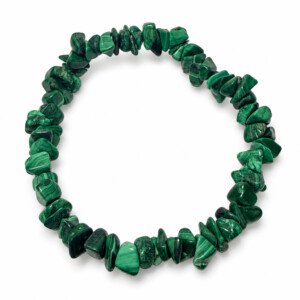
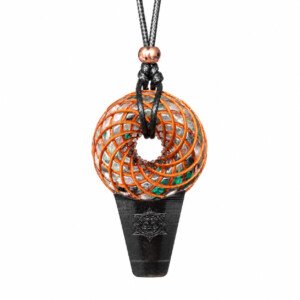
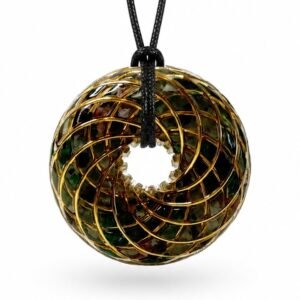
Malachite in our shop

Exhibit label

Name
Malachite
Type
Mineral
Mineral group
Carbonate class, Cu2CO3(OH)2
Hardness
3.5-4 on the Mohs scale
Colour
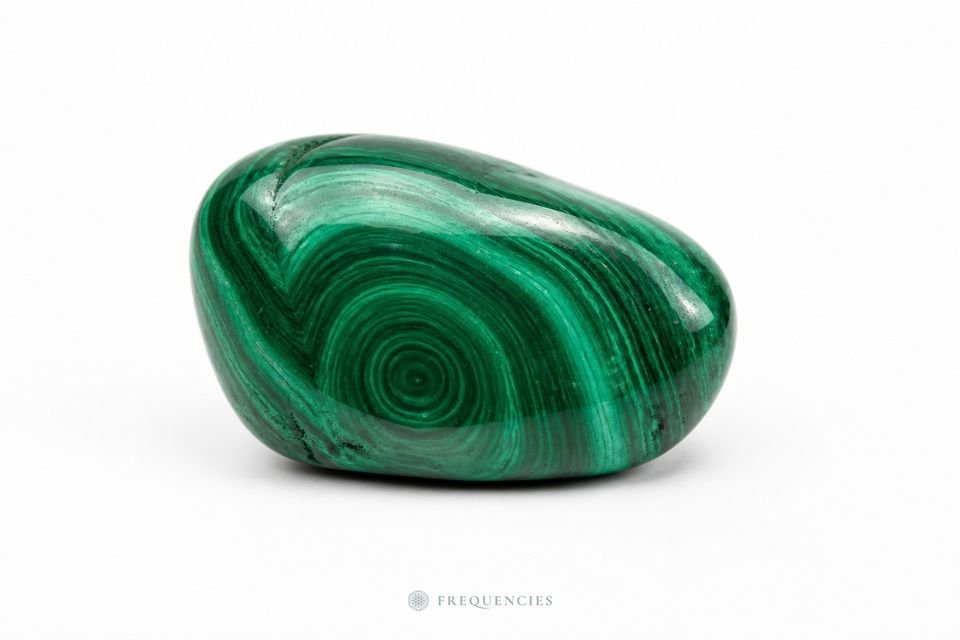
Bright green with concentric banding
Main locality
DR Congo
Localities
DR Congo, Namibia, Russia, Australia
Planet
Venus (tradition)

Mohs hardness scale

3.5-4out of 10

A soft stone: it can be scratched by glass and steel. Store it separately and clean it with a soft cloth.

Care

Water

Protect from water

Water can damage the surface or colour. Clean with a dry, soft cloth.

Sun

Protect from direct sunlight

The colour is stable in light, but malachite is very sensitive to heat, so protect it from hot, direct sunlight and heaters.

Storage

Soft, easily scratched

Avoid: acids and ammonia, heat and hot water, prolonged direct sunlight, harsh cleaning agents, strong knocks.

Note. Raw malachite can be sensitive; do not inhale the dust and do not keep it in water for long.

In the crystal community, the following are used for cleansing: sage or palo santo smoke, the presence of selenite, sound vibrations, moonlight.

From geology to your shelf

  • How it forms. Malachite is a copper carbonate hydroxide that forms at shallow depth in the oxidation zone of copper deposits, when groundwater transforms the primary sulphide ores. It is often found together with azurite and calcite, especially in limestone. Jewellery-grade malachite today is mined mostly in the Katanga copper belt of the Congo.
  • Where the colour comes from. The green colour is given by copper, which is a constituent of the mineral. The concentric bands and "eyes" arise as malachite grows in kidney-shaped and stalactitic masses. The colour does not fade in light.
  • History. The name comes from the Greek molochitis, because the colour of malachite recalls the leaves of the mallow, and from antiquity until around 1800 it was used as a green pigment. The Malachite Room of the Winter Palace in St Petersburg was finished in the late 1830s with Ural malachite.
  • How to recognise a genuine stone.
    • Natural malachite is heavy (density around 3.6 to 4.05), whereas resin and plastic imitations are noticeably lighter.
    • Natural bands come in different shades of green from pale to very dark, but not black; glossy black swirls and unnatural band geometry point to an imitation.
    • Tiny air bubbles and cavities in the surface point to resin or reconstituted material.
  • Treatment and imitations. Small cavities are sometimes filled with wax. The market also has reconstituted malachite (crushed natural malachite with resin), resin imitations, and mixtures of barite and quartz with epoxy resin.
  • How to choose. Clear, contrasting bands and round concentric "eyes" are the most prized. Because malachite is soft (hardness 3.5 to 4) and sensitive to heat and acids, choose a smoothly polished surface without pits.
  • Traditional meaning

    This is crystal tradition and symbolism, not a scientific or medical claim. The chakras, signs and elements match our product pages.

    Chakras

    Heart ChakraSolar Plexus Chakra

    Malachite is traditionally associated with the Heart Chakra and Solar Plexus Chakra, and with change.

    Zodiac signs

    ♏︎Scorpio♑︎Capricorn

    In traditional crystal astrology, malachite is often associated with people who value change and inner balance.

    Element

    Earth

    The Earth element is traditionally said to give this stone the symbolism of change and a balanced character.

  • Main symbolism: transformation and protection
  • Traditionally associated with transformation, protection and more mindful inner work
  • Traditionally associated with change and inner peace
  • In the crystal community, malachite is traditionally associated with change and growth, and its green bands are regarded as a symbol of the power of nature. Many people place it in a living room or on a desk as a decorative accent and give it to people who are starting something new.
  • The traditional meaning of crystals has not been medically proven and does not replace the advice of a professional.

    Stories and legends

    Malachite is named after the leaves of the mallow.

    The name comes from the Greek "molochitis lithos", meaning "mallow-green stone". The mineral was named so because its colour recalls the leaves of the mallow plant. Malachite is a copper carbonate mineral with characteristic green bands.

    The ancient Egyptians imagined paradise as the "Field of Malachite".

    In ancient Egypt the paradise of the afterlife was called the "Field of Malachite", and green malachite pigment was also used in burial rituals. In Egypt and in the territory of present-day Israel, malachite was mined more than 4,000 years ago and used for obtaining copper. Malachite was one of the first ores from which people smelted copper.

    The Winter Palace in St Petersburg has the famous Malachite Room.

    After the fire of 1837 in the Winter Palace, the Jasper Room was rebuilt as the Malachite Drawing Room, which became the main reception room of the empress's apartments. It also holds a huge malachite vase, and today the room is part of the Hermitage Museum. In the 19th century the Ural deposits supplied much malachite for jewellery and sculpture.

    For centuries malachite was used as a green colour in paintings.

    Ground malachite was used by painters as a green pigment until around 1800. The pigment was sensitive to acids, and its tone tended to vary. Artificial malachite pigment is called green verditer, or basic copper carbonate.
    Interesting facts

    • Malachite is a copper carbonate hydroxide mineral with characteristic concentric banding.
    • The dust of raw malachite should not be inhaled, so the stone is worked with caution.
    • Polished malachite is common in jewellery, but it must be protected from soaking and scratches.

    How to use it

    • Wear it gently as jewellery traditionally associated with transformation and protection

    Pairs well with

    Frequently asked questions

    What is malachite?

    Malachite is a copper carbonate hydroxide that forms in the oxidation zone of copper deposits, and its green colour is given by copper. It is one of the first ores from which people smelted copper. The name comes from a Greek word that refers to the colour of mallow leaves.

    What does malachite symbolise?

    In the crystal community, malachite is associated with change and growth, and its green bands are regarded as a symbol of the power of nature. Traditionally it corresponds to the Heart and Solar Plexus Chakras, the Earth element, and the signs of Scorpio and Capricorn.

    Is malachite poisonous?

    Not in jewellery or on a shelf: polished malachite is considered safe. The harm lies in dust, which contains copper, so when cutting or grinding the stone it must not be inhaled. Do not hold raw malachite in the mouth or put it in drinking water or food.

    How can real malachite be recognised?

    Natural malachite is heavy, whereas resin and plastic imitations are noticeably lighter. Real bands come in different shades of green from pale to very dark, but not black. Tiny air bubbles in the surface point to resin or reconstituted material.

    May malachite be put in water?

    No, it should not be soaked. Malachite is soft, reacts even with weak acids such as vinegar or lemon juice, and is sensitive to heat. Clean it with a soft, slightly damp cloth and dry it immediately.

    Does malachite fade in the sun?

    Usually not: the colour of malachite is stable in light. Even so, do not keep it in prolonged direct sunlight or near a heater, because malachite is very sensitive to heat.

    How hard is malachite?

    Malachite has a hardness of only 3.5 to 4 on the Mohs scale, and it has perfect cleavage. Protect malachite jewellery and figures from scratches and knocks, and store them separately from harder stones.

    Where is malachite mined?

    Most of the malachite sold today comes from the Democratic Republic of the Congo. Less is mined in Australia, Namibia and the US state of Arizona, whereas in the 19th century the most famous deposits were in the Urals, and the Malachite Room of the Winter Palace was finished with Ural malachite.

    Read more

    Malachite: Properties, Meaning, and How to Use It in Daily Life

    Sources. Mineralogical data: GIA Gem Encyclopedia, Mindat, Encyclopaedia Britannica (frequencies.lv crystal database v2).
    Further information: geology.com, en.wikipedia.org, minerals.net, le-comptoir-geologique.com.
    Shopping Basket
    Scroll to Top