Amethyst
Quartz variety

Amethyst

Purple quartz, traditionally associated with calm, clarity and intuition.

Hardness 7 May be rinsed in water Protect from direct sunlight Air
In brief

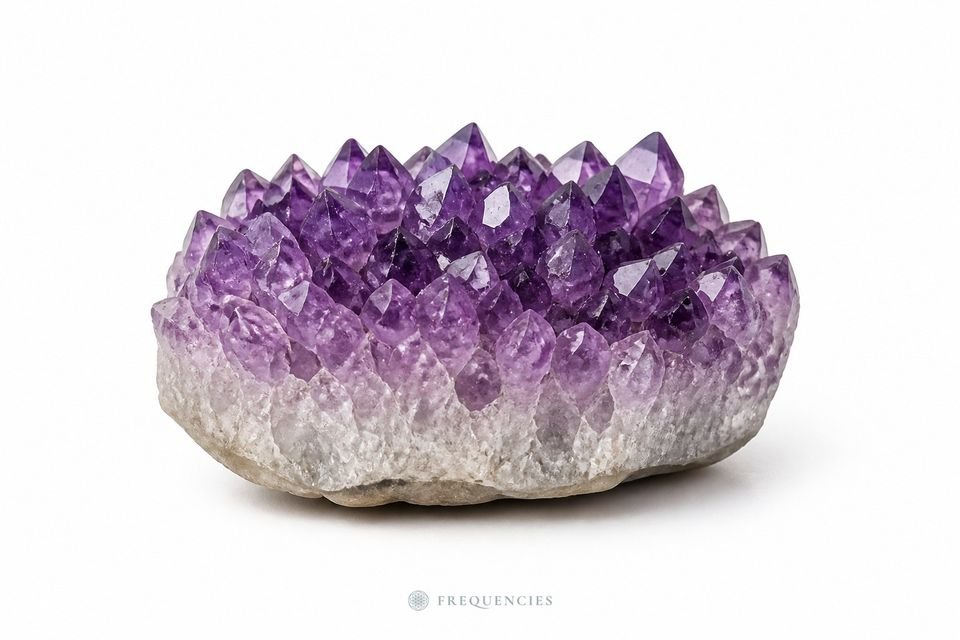
Amethyst is the violet variety of quartz (SiO2), with a hardness of 7 on the Mohs scale. Its violet colour comes from iron impurities exposed to natural radiation from the surrounding rock. The main deposit is in Brazil, and amethyst is also mined in Uruguay, Zambia and Madagascar. It is the birthstone for February, and in the crystal community it is regarded as a symbol of calm, spiritual clarity and intuition.

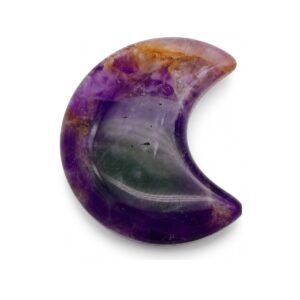
Amethyst in our shop

Exhibit label

Name
Amethyst
Type
Mineral
Mineral group
Quartz group (SiO2)
Hardness
7 on the Mohs scale
Colour
From soft lavender to deep purple, sometimes with white or grey zoning
Main locality
Brazil
Localities
Brazil, Uruguay, Zambia, Madagascar, South Korea
Planet
Jupiter, Neptune (tradition)

Mohs hardness scale

7out of 10

A hard stone: it scratches glass and is durable in everyday wear. Even so, protect it from knocks.

Care

Water

May be rinsed in water

A brief rinse in lukewarm water, then wipe dry.

Sun

Protect from direct sunlight

Prolonged direct sunlight can affect the colour, surface or structure

Storage

Durable in everyday wear

Avoid: prolonged direct sunlight, harsh cleaning agents, strong knocks.

Note. Prolonged sunlight can fade the purple tone.

In the crystal community, the following are used for cleansing: a brief rinse under running water, the presence of selenite, sound vibrations, moonlight.

From geology to your shelf

  • How it forms. Amethyst is a variety of purple quartz. The most important deposits form in cavities and fissures in igneous rocks: in Brazil and Uruguay, in the cavities of basalt lava flows, several tonnes of amethyst crystals can grow. Smaller cavities are called geodes, and they are often sold opened up as interior objects.
  • Where the colour comes from. As the crystal grows, a small amount of iron enters it, and natural gamma radiation from radioactive elements in the surrounding rock irradiates this iron, producing the purple colour. As the amount of iron changes during growth, colour zones appear, and in prolonged direct sunlight some amethyst can fade.
  • History. The name comes from the Greek amethystos, "not intoxicated", and in ancient Greece it was associated with wine and a clear mind. Amethyst adorns bishops' rings and the British royal regalia, and it was once valued on a par with ruby, emerald and sapphire.
  • How to recognise a genuine stone.
    • Natural amethyst often shows angular zones of darker and lighter colour.
    • Round air bubbles and a completely uniform interior under magnification point to glass.
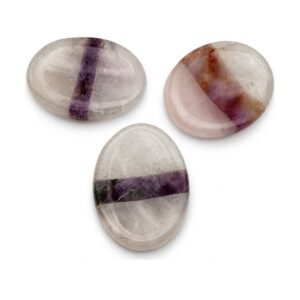
    • Hardness 7: amethyst scratches ordinary glass, whereas fluorite of a similar colour is much softer.
    • Synthetic hydrothermal amethyst is chemically identical to the natural stone and is often sold without being declared; it can be reliably told apart only in a laboratory.
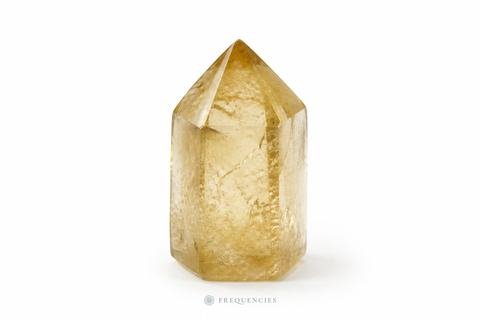
  • Treatment and imitations. Amethyst is heated to lighten a very dark colour or remove a brownish tint, and also to turn it into yellow citrine or greenish prasiolite. Since the 1970s, synthetic amethyst grown by the hydrothermal method has also been on the market.
  • How to choose. The most highly valued is a transparent, deep purple or reddish purple colour that is even and free of colour zones. Because amethyst is usually clean, it is better not to choose stones with fissures or inclusions visible to the eye.
  • Traditional meaning

    This is crystal tradition and symbolism, not a scientific or medical claim. The chakras, signs and elements match our product pages.

    Chakras

    Third Eye ChakraCrown Chakra

    Amethyst is traditionally associated with spiritual clarity, intuition and a calm mood.

    Zodiac signs

    ♍︎Virgo♑︎Capricorn♒︎Aquarius♓︎Pisces

    Amethyst is often chosen by people who value calm and clarity in everyday life.

    Element

    Air

    The Air element traditionally symbolises clarity, lightness and calm.

  • Main symbolism: spiritual clarity and protection
  • Traditionally associated with meditation, intuition and a calm state of mind
  • Traditionally associated with calm and orderly thoughts
  • In the crystal community, amethyst geodes and druses are often placed in a bedroom, workplace or meditation corner as a symbol of calm and clarity. Traditionally, amethyst is held in the hands or placed alongside during meditation, and it is a popular gift for people born in February.
  • The traditional meaning of crystals has not been medically proven and does not replace the advice of a professional.

    Stories and legends

    The name amethyst means "not intoxicated".

    The word comes from the ancient Greek "amethystos", which is translated as "not intoxicated". In ancient Greece and Rome it was believed that amethyst jewellery and vessels prevented intoxication from wine. The well-known legend of the maiden Amethyst and the god of wine Bacchus is not found in classical sources: it was composed in the 16th century by the French poet Rémy Belleau.

    Amethyst was once as valuable as ruby and emerald.

    For a long time amethyst was valued on a par with ruby, emerald and sapphire. When huge deposits were discovered in Brazil in the 19th century, the stone became widely available and its price fell sharply. Today large quantities of amethyst are mined in the cavities of basalt rock in Brazil and Uruguay.

    Amethyst adorns royal regalia and bishops' rings.

    In the Middle Ages amethyst was regarded as a symbol of royalty, and it is found in the British coronation regalia. In church tradition bishops wore amethyst rings, and the stone is one of the emblems of the twelve apostles. Today amethyst is the February birthstone.

    The world's largest amethyst geode is the "Empress of Uruguay".

    The geode was found in 2007 in a mine near the town of Artigas in northern Uruguay. It is 3.27 metres tall and weighs about 2.5 tonnes. The geode can now be seen at the museum The Crystal Caves in Atherton, Australia.
    Interesting facts

    • The name comes from the ancient Greek word "amethystos", meaning "not intoxicated".

    How to use it

    • Place it on a desk as a purple accent

    Pairs well with

    Frequently asked questions

    What is amethyst?

    Amethyst is a variety of purple quartz (SiO2). The purple colour is produced by iron impurities irradiated by natural radiation from the surrounding rocks. The name comes from the ancient Greek word amethystos, meaning "not intoxicated".

    What does amethyst symbolise?

    In the crystal community, amethyst is regarded as a symbol of calm and spiritual clarity. It is associated with the third eye and crown chakras, the element of air, and the signs of Virgo, Capricorn, Aquarius and Pisces, and it is the birthstone for February.

    How can you recognise a genuine amethyst?

    Natural amethyst often shows angular zones of darker and lighter colour, whereas round air bubbles and a completely uniform interior point to glass. Amethyst scratches ordinary glass. Synthetic amethyst, which is chemically the same, can be reliably told apart only in a laboratory.

    Can amethyst be put in water?

    Yes. Amethyst can be washed in warm soapy water and rinsed under running water. Avoid steam cleaning, heat and sudden temperature changes, because they can cause cracks.

    Does amethyst fade in the sun?

    Yes, it can fade. Some amethysts lose colour saturation in prolonged, intense light, so do not keep geodes and druses on a sunny windowsill.

    Is amethyst treated?

    Sometimes. Some amethyst is heated to lighten a very dark colour or remove a brownish tint. More strongly heated amethyst turns yellow, and this is how most of the citrine on the market is obtained. Since the 1970s, synthetic amethyst has also been on the market.

    What determines the price of amethyst?

    The most highly valued is a transparent, deep purple or reddish purple colour without colour zones and without fissures visible to the eye. Amethyst was once valued on a par with ruby, but after the discovery of the large Brazilian deposits in the 19th century it became widely available and cheaper.

    Amethyst in our shop: more

    Read more

    Amethyst: Properties, Meaning, and How to Use It in Daily Life

    Sources. Mineralogical data: GIA Gem Encyclopedia, Mindat, Encyclopaedia Britannica (frequencies.lv crystal database v2).
    Further information: geology.com, gia.edu, gia.edu, minerals.net.
    Shopping Basket
    Scroll to Top