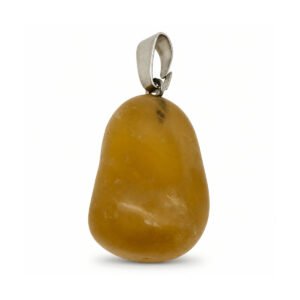

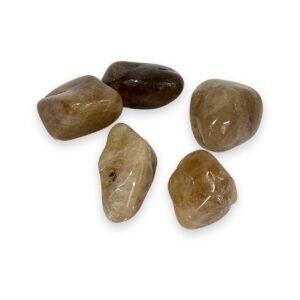
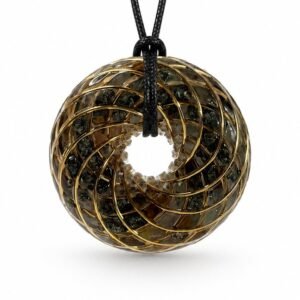
The name citrine comes from the French word citron, meaning lemon.
The name reflects the lemon-yellow colour of the stone, and its deeper root is the Latin word citrus. Citrine is a transparent, pale yellow to brownish orange variety of quartz.
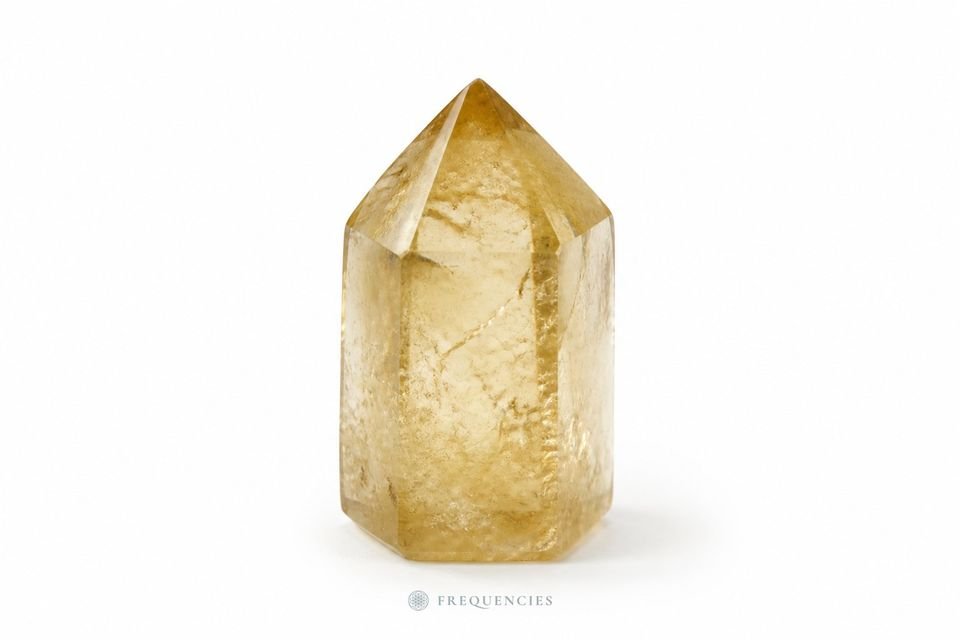
Citrine is a stone traditionally associated with optimism, abundance, lightness and motivation.
Citrine is a yellow to brownish-orange variety of quartz (SiO2) with a hardness of 7 on the Mohs scale. Natural citrine is rare, and most of the citrine on the market is heated amethyst. The name comes from the French word citron. In the crystal community, citrine is seen as a symbol of optimism and abundance, and it is often given for a 13th wedding anniversary.
A hard stone: it scratches glass and is durable in everyday wear. Even so, protect it from knocks.
A brief rinse in lukewarm water, then wipe dry.
GIA notes that the colour of some citrines can fade in prolonged intense light.
Avoid: prolonged direct sunlight, harsh cleaning agents, strong knocks.
In the crystal community, the following are used for cleansing: a brief rinse under running water, the presence of selenite, sound vibrations, moonlight.
This is crystal tradition and symbolism, not a scientific or medical claim. The chakras, signs and elements match our product pages.
Citrine is traditionally associated with the energy of the solar plexus and sacral chakras, lightness and motivation.
In traditional crystal astrology, citrine is often associated with people who value lightness, motivation and inner balance.
The Fire element is traditionally said to give this stone lightness, motivation and a balanced character.
The traditional meaning of crystals has not been medically proven and does not replace the advice of a professional.
The name reflects the lemon-yellow colour of the stone, and its deeper root is the Latin word citrus. Citrine is a transparent, pale yellow to brownish orange variety of quartz.
Because of the similar golden tone, citrine was once regarded as topaz. Today both are birthstones for November, and citrine was added to the modern birthstone list in 1952. Citrine is also given on a 13th wedding anniversary.
Natural citrine is rare, so most citrine is produced by heating amethyst, whose pale violet colour turns yellow. Large Brazilian amethyst geodes are often heated to obtain citrine "cathedrals", and the main source of such amethyst is eastern Brazil.
The name ametrine is formed from the words amethyst and citrine. Most of the world's commercial ametrine comes from the Anahí mine in south-eastern Bolivia.
Citrine is a yellow to brownish orange variety of quartz (SiO2) with a hardness of 7 on the Mohs scale, so it is suitable for all kinds of jewellery. The name comes from the French word citron, lemon, and its deeper root is the Latin citrus.
In the crystal community, citrine is regarded as a symbol of optimism and abundance. It is associated with the solar plexus and sacral chakras, the Fire element and the signs of Aries, Gemini, Leo and Libra, and it is often given on a 13th wedding anniversary.
Often, yes. Natural citrine is rare, and most of the citrine on the market is heated amethyst, less often heated smoky quartz. In both cases it is natural quartz, and in honest trading such a stone is called citrine (heated amethyst).
Natural citrine is usually pale yellow, whereas heated amethyst is a saturated orange, reddish or brownish. In heated druses the colour is most intense at the tips, while the base is white. A gemmologist can determine it reliably, for example with a dichroscope.
Yes. Citrine can be safely cleaned in warm soapy water. Steam cleaning is not recommended because of the heat, but ultrasonic is generally safe if the stone is not dyed and has no filled fractures.
Yes, it can fade. Prolonged intense light makes the colour of some citrines paler, so do not leave it in direct sun for long. Also avoid heat and sudden temperature changes, which can cause cracks.
No. Citrine is quartz, whereas topaz is a different mineral. Because of the similar golden tone they were often confused in the past, and today both are birthstones for November.
The most highly valued colour is a saturated yellow to reddish orange without a brownish tint. The colour should be even, because pale stones are common and cheap.
Citrine: Properties, Meaning, and How to Use It in Daily Life
 Clear Quartz
 Selenite
 Rose Quartz
 Black Tourmaline