Quartz
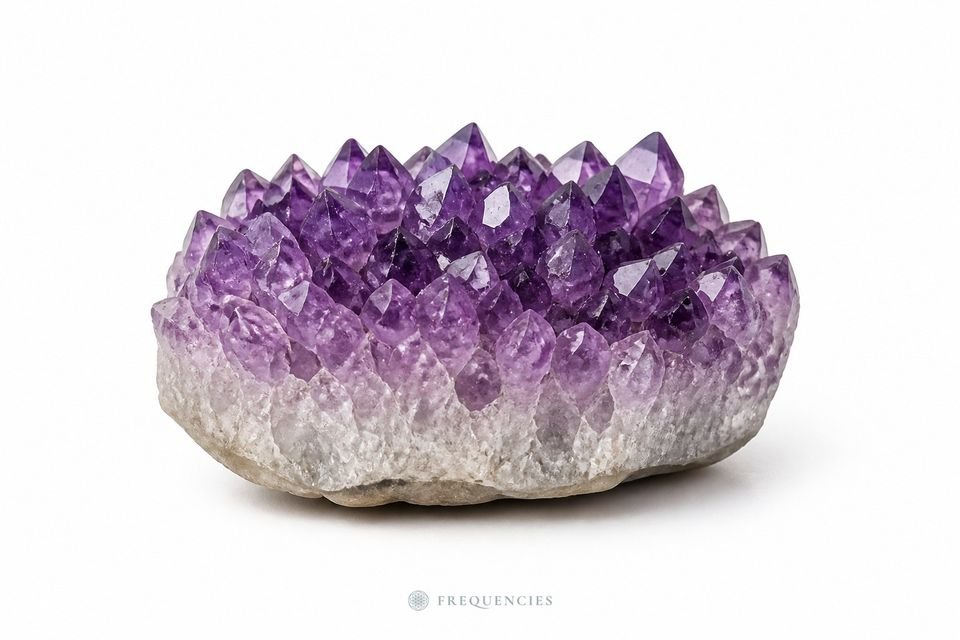
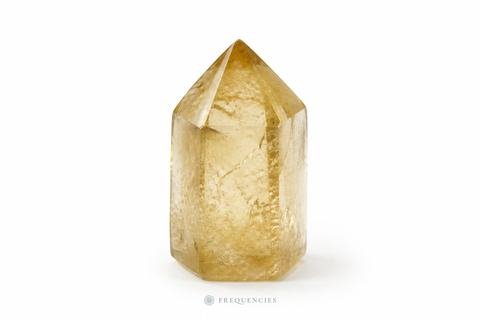
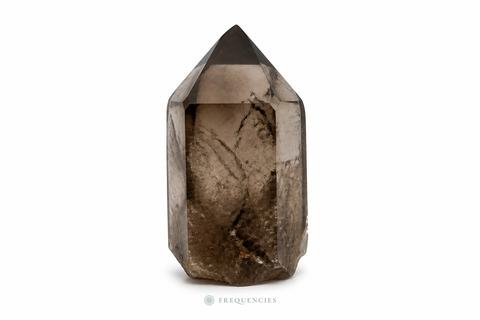
Quartz is one of the commonest minerals in the Earth's crust. It is silica with a hardness of 7 on the Mohs scale. Pure quartz is colourless, but impurities, natural radiation and inclusions colour it purple, yellow, pink or brown.
Quartz is a silicon dioxide (SiO2) mineral with a hardness of 7 on the Mohs scale. It is resistant to weathering, which is why beach sand consists mostly of tiny quartz grains. Varieties of quartz include amethyst, citrine, rose quartz and clear quartz. In the crystal community, quartz, especially clear quartz, is traditionally regarded as a symbol of clarity.
Exhibit label
Mohs hardness scale
A hard stone: it scratches glass and is durable in everyday wear. Even so, protect it from knocks.
Care
Water
A brief rinse in lukewarm water, then wipe dry.
Sun
May be kept in a bright place.
Storage
Store apart from harder stones.
Note. The coloured varieties (amethyst, citrine, rose quartz, smoky quartz) can fade in prolonged bright sunlight. Transparent spheres act as a lens in the sun.
Varieties of quartz and their colours
The International Mineralogical Association (IMA) list of minerals for November 2026 records 6,252 recognised species, and quartz, with the formula SiO2, is one of them. Amethyst, citrine and chalcedony are not on this list, because they are varieties of quartz that differ in colour, inclusions or grain size, not in chemical formula or crystal lattice. Cristobalite, tridymite and coesite, by contrast, are separate species: their formula is also SiO2, but their crystal lattice is different. The Mindat page for quartz lists more than a hundred varieties, but the table includes those that have a separate article in our encyclopedia.
| Variety | Appearance | What determines the colour or appearance |
|---|---|---|
| Clear Quartz | Clear, colourless | Pure quartz without colouring impurities |
| Amethyst | Pale lilac to dark purple | Iron impurities in the crystal lattice and natural gamma radiation |
| Citrine | Pale yellow to brownish orange | Natural citrine is rare; most of the citrine on the market gets its yellow colour from heating amethyst |
| Rose Quartz | Soft pink, milky translucent | Microscopic fibres resembling the mineral dumortierite |
| Smoky Quartz | Grey, brown to almost black (morion) | Aluminium impurities and natural gamma radiation |
| Milky Quartz | White, translucent to opaque | Countless tiny inclusions of gas or liquid |
| Rutilated Quartz | Clear with golden or reddish needles | Needle-like inclusions of rutile |
| Tiger’s Eye | Golden brown with a sliding band of light | Quartz that has grown together with amphibole fibres; these have mostly turned into limonite |
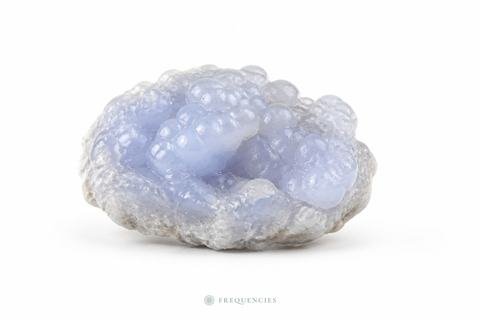
| Blue Quartz | Blue, opaque to translucent | Inclusions of other minerals; Mindat names fibrous amphiboles and tourmaline as the most common |
| Green Quartz | Pale green; the transparent kind is called prasiolite | Naturally green quartz is rare; most is obtained by heating amethyst or by irradiating quartz from certain deposits |
| Tangerine Quartz | Orange, the tone often lies on the surface of the crystal | A coating or inclusions of iron oxides, mainly hematite |
| Golden Quartz | Lemon yellow to honey brown | Trade name; the tone may come from iron oxides or from treatment |
| Sulphur Quartz | Yellow with zones of inclusions | Trade name; the composition of the inclusions cannot be determined without laboratory analysis |
| Lemurian Quartz | Clear crystals with horizontal striations | Trade name for clear quartz whose striations are signs of growth |
Sources. Causes of colour according to Mindat (clear quartz, amethyst, smoky quartz, rutilated quartz and blue quartz, prasiolite, tiger's eye) and GIA (the amethyst colour circle, citrine, rose quartz); the descriptions of milky, green, tangerine, golden, sulphur and Lemurian quartz follow the pages of our encyclopedia.
Traditional meaning
This is crystal tradition and symbolism, not a scientific or medical claim. The chakras, signs and elements match our product pages.
Chakras
Zodiac signs
Element
The traditional meaning of crystals has not been medically proven and does not replace the advice of a professional.
Interesting facts
- Quartz is piezoelectric: when compressed, it produces a small electrical voltage. This is why quartz crystals are used in watches and electronics.
- Clear quartz is pure, colourless quartz, whereas amethyst, citrine and rose quartz are its coloured varieties.
- The sand on beaches is mostly tiny grains of quartz, because quartz is very resistant to weathering.
The chalcedony group: agate, onyx, carnelian and jasper
Chalcedony is quartz whose crystals are microscopically small. Mindat explains that this word has two meanings: in the broader sense it is the collective name for all microcrystalline varieties of quartz, which also covers chrysoprase and flint, whereas in the narrower, scientific sense it means only a fibrous aggregate of microscopically small quartz crystals.
- Agate. This is a distinctly banded, fibrous chalcedony that forms mainly in volcanic rocks, more rarely in sedimentary rocks, at a temperature of roughly 20 to 200 °C. Mindat explains that the bands are visible because the transparency of the chalcedony changes periodically, and that the name comes from the Achates river in Sicily.
- Onyx. This is a variety of agate with straight, parallel bands, usually black and white. When reddish-brown bands alternate with white or black ones, the stone is called sardonyx, and a uniformly black stone is called black onyx on the market.
- Carnelian. Britannica describes it as translucent chalcedony whose red to reddish-brown colour is produced by finely dispersed hematite. Its transmission of light distinguishes it from jasper of a similar colour, which is opaque or only slightly translucent.
- Jasper. Historically this word has denoted opaque to slightly translucent chalcedony rich in impurities, or microcrystalline flint, which usually contains many tiny inclusions of hematite, iron hydroxides and other minerals. GIA regards jasper, together with agate and onyx, as a variety of chalcedony, whereas Mindat classifies it as a rock and notes that lapidaries also informally use this word for other opaque materials, including some igneous and sedimentary rocks. For example, Dalmatian Jasper is actually an igneous rock.
- What they have in common. Chalcedony has a waxy or dull lustre and a hardness of 6.5 to 7 (Mindat). It is porous, and GIA lists chalcedony among the stones that have been dyed since ancient times. It has been used in jewellery since Mesopotamian times (GIA).
Varieties
Quartz occurs in various colours and forms. Each variety has its own page.
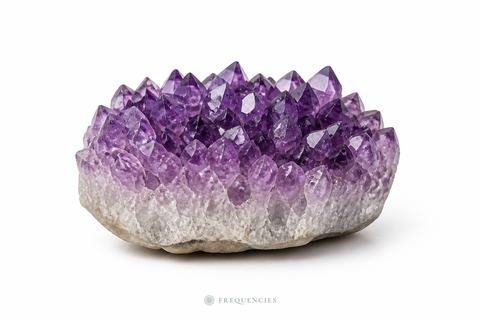 Amethyst
 Clear Quartz
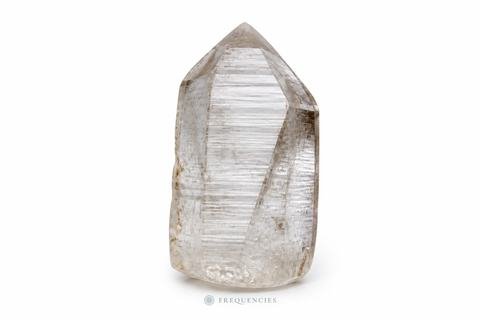 Lemurian Quartz
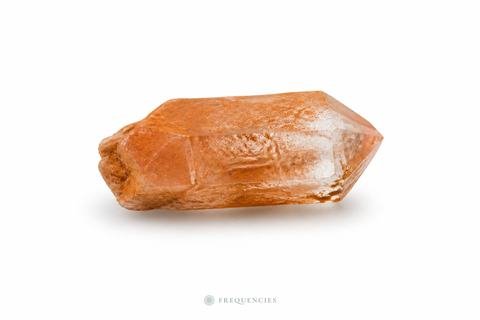 Tangerine Quartz
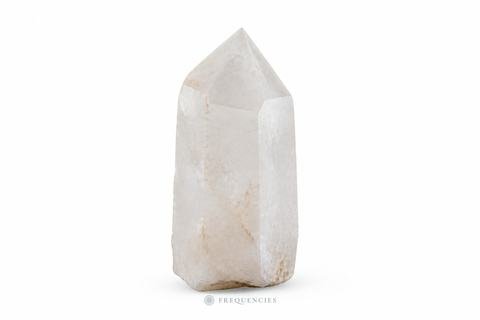 Milky Quartz
 Rose Quartz
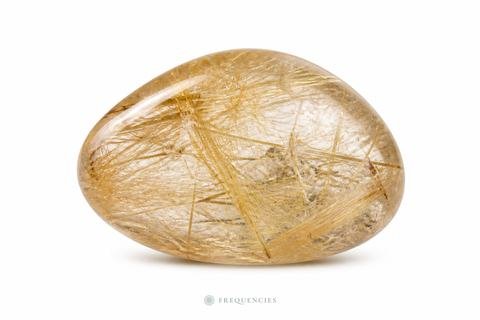 Rutilated Quartz
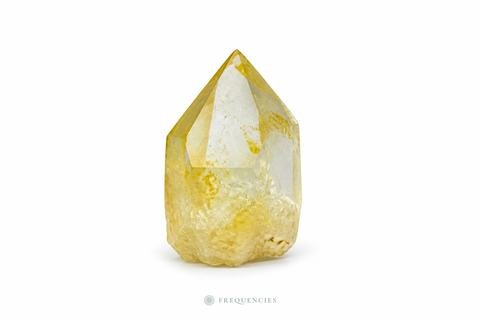 Sulphur Quartz
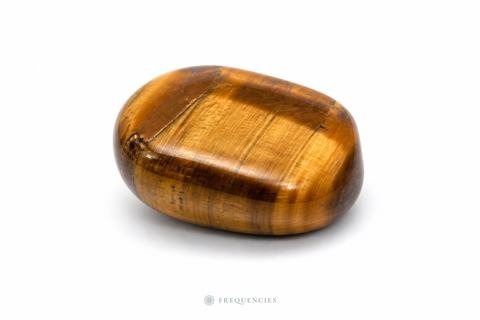 Tiger’s Eye
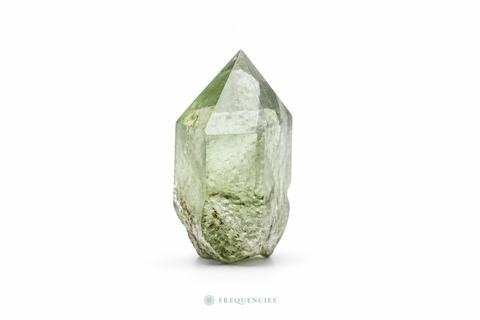 Green Quartz
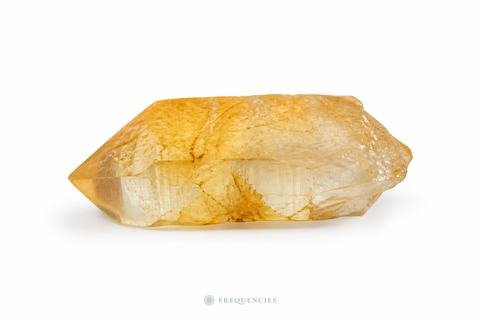 Golden Quartz
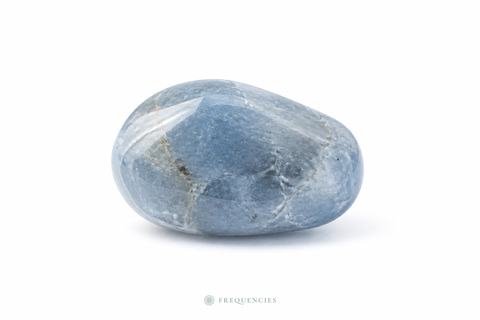 Blue Quartz
Quartz sand in Latvia
In Latvia quartz can also be found in sands. Ordinary sand consists of grains of quartz, feldspar and other minerals that Pleistocene glaciers crushed and carried from Fennoscandia, the bed of the Baltic Sea, Estonia and Latvia itself. Quartz sand, by contrast, is a separate mineral resource used in industry (National Encyclopedia).
- What sets them apart. In quartz sands the quartz content exceeds 90 to 95%, and they contain few colouring compounds, namely oxides of iron, titanium and chromium. They are found in Devonian and Jurassic deposits, which are much older than the sand brought by the glaciers.
- Where they are found. Devonian quartz sands accumulated on a delta plain, and today they occur in north-eastern Latvia, mainly around Valmiera, Liepa and Mārsnēni. The Bāle-Bērziņi and Cīruļi deposits have been explored there, but sand is extracted only at Bāle-Bērziņi. Jurassic quartz sands accumulated in rivers and their mouths, and their beds lie in southern Kurzeme, north and east of Dzelda, where the Skudras and Pīlādži deposits have been explored (NE).
- What they are used for. Cabinet of Ministers Regulations No. 321 designate as quartz sand deposits of national significance the "Bāle-Bērziņi" deposit, intended for the production of window and technical glass, and the "Cīruļi" and "Skudras" deposits, intended for glass production and the making of metal casting moulds.
- How much is extracted. LVGMC data show that from 2020 to 2023 roughly 20,000 to 30,000 cubic metres of quartz sand were extracted in Latvia each year, whereas for ordinary sand the figure was 2.9 to 4.6 million cubic metres. Quartz sand deposits have been identified in the Kuldīga, Valmiera and Cēsis municipalities.
- Where to see them in nature. If you would like to see quartz sand rocks with your own eyes, visit the protected geological sites where they are exposed (LVGMC): the Sietiņiezis sandstone outcrop, the Liepa Cliff, Liepas Lielā ellīte and the Riežupe sandstone caves.
Frequently asked questions
What is quartz?
Quartz is a mineral of silica (SiO2) and one of the commonest minerals in the Earth's crust. It is very resistant to weathering, which is why the sand on beaches is mostly tiny grains of quartz.
What does quartz symbolise?
In the crystal community, quartz, especially clear quartz, is regarded as a symbol of clarity, but each coloured variety has its own symbolism. Traditionally, quartz is associated with the crown chakra, the element of fire and the signs of Leo and Capricorn.
How does quartz differ from clear quartz?
Quartz is the name of the mineral, whereas clear quartz is pure, colourless quartz, also called rock crystal. Amethyst, citrine, rose quartz and smoky quartz are its coloured varieties, whereas agate, carnelian and onyx are microcrystalline quartz, or chalcedony.
What is aura quartz?
Aura quartz is natural quartz whose surface has been coated in a laboratory with a thin layer of evaporated metal, such as gold or titanium. This produces a bright rainbow sheen that is not characteristic of natural quartz, so such a stone is treated.
How hard is quartz?
The hardness of quartz is 7 on the Mohs scale, and it is the reference mineral for hardness 7 on that scale. Quartz therefore scratches ordinary glass and a knife blade, and it can be scratched only by harder stones, such as topaz, corundum and diamond.
Why is quartz used in watches?
Quartz has the piezoelectric effect: when an electrical voltage is applied to the crystal, it oscillates at a very steady rhythm. Watches usually use a quartz crystal that oscillates 32,768 times a second, and the electronics derive from it a precise one-second signal.
Can quartz be put in water?
Yes. Quartz does not dissolve in water, and clear quartz, amethyst and rose quartz alike can be washed in warm soapy water and rinsed. Avoid only sudden temperature changes and steam cleaning, especially if the crystal has fissures.
Does quartz fade in the sun?
Clear quartz does not fade, but the coloured varieties, such as amethyst, citrine, rose quartz and smoky quartz, can become paler in prolonged bright sunlight. Transparent quartz spheres act as a lens in the sun and can set nearby objects alight.
Further information: cnmnc.units.it, gia.edu, gia.edu, gia.edu, 4cs.gia.edu, mindat.org, mindat.org, mindat.org, britannica.com, gia.edu, mindat.org, enciklopedija.lv, likumi.lv, videscentrs.lvgmc.lv.