Smoky Quartz
Quartz variety

Smoky Quartz

Smoky quartz is a stone traditionally associated with grounding, protection and calm stability.

Hardness 7 May be rinsed in water Protect from direct sunlight Earth
In brief

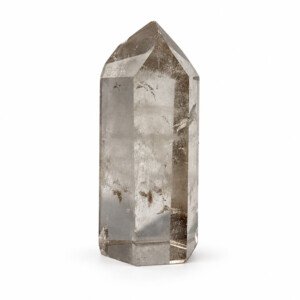
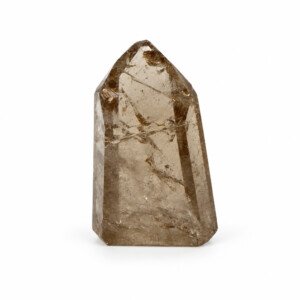
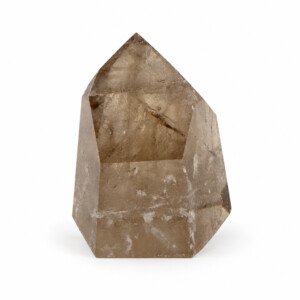
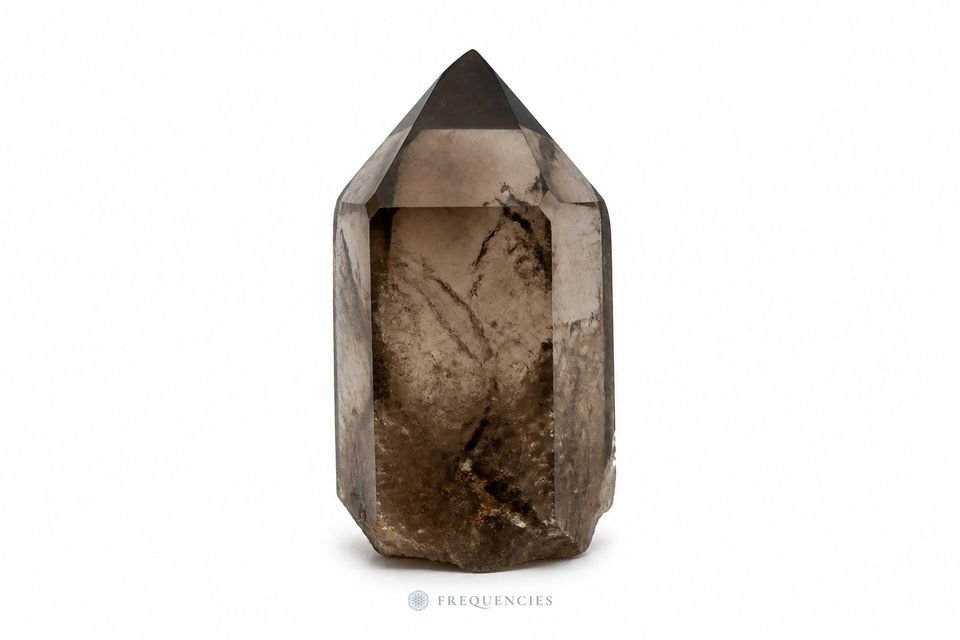
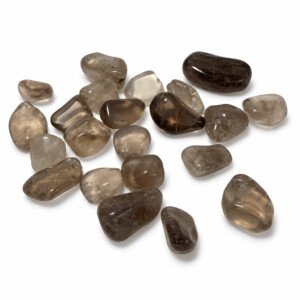
Smoky Quartz is a smoky grey to dark brown variety of quartz (SiO2) with a hardness of 7 on the Mohs scale. The darkest, almost black variety is called morion, and in Scotland it is known as cairngorm. The colour is produced by aluminium impurities and natural radiation. In the crystal community, it is traditionally associated with grounding and stability.

Smoky Quartz in our shop

Exhibit label

Name
Smoky Quartz
Type
Mineral
Mineral group
Quartz group (SiO2)
Hardness
7 on the Mohs scale
Colour
From smoky grey to dark brown
Main locality
Brazil
Localities
Brazil, Switzerland, Scotland, Madagascar
Planet
Pluto (tradition)
Some smoky quartz is produced by irradiating colourless quartz in a laboratory, and very dark natural crystals are sometimes heated to make the colour lighter. Most smoky quartz is of natural colour.

Mohs hardness scale

7out of 10

A hard stone: it scratches glass and is durable in everyday wear. Even so, protect it from knocks.

Care

Water

May be rinsed in water

A brief rinse in lukewarm water, then wipe dry.

Sun

Protect from direct sunlight

A short time in the sun does no harm, but prolonged UV light and heating above about 200 to 300 °C can weaken the colour.

Storage

Durable in everyday wear

Avoid: prolonged heat, harsh cleaning agents, strong knocks.

Note. If the stone is porous, dyed or has a softer surface, dry cleansing is the safer choice.

In the crystal community, the following are used for cleansing: a brief rinse under running water, the presence of selenite, sound vibrations, moonlight.

From geology to your shelf

  • How it forms. Smoky quartz is found mainly in quartz and pegmatite veins that cut through igneous and metamorphic rocks, and in Alpine fissures. Especially dark material is often found near deposits of radioactive minerals.
  • Where the colour comes from. The colour is produced by natural gamma radiation from the surrounding rocks, which creates colour centres around aluminium impurities in the quartz; the very dark, almost opaque variety is called morion. If the crystal is heated above about 200 to 300 °C, the colour fades.
  • History. As early as the 12th century in China, sunglasses were made from flat plates of smoky quartz. In Scotland it is called "cairngorm", after the Cairngorm Mountains, and is used in kilt pins and in the handles of dirks.
  • How to recognise a genuine stone.
    • Hardness 7, a glassy lustre and a conchoidal fracture, as with all quartz; glass is softer.
    • Round gas bubbles and a completely uniform interior point to glass; in natural quartz the inclusions are irregular.
    • Pale yellow quartz with a smoky tint may be heated smoky quartz sold as citrine.
  • Treatment and imitations. Some clear quartz is irradiated in a laboratory to produce a smoky colour, and very dark natural smoky quartz is sometimes heated to make it lighter. Because the natural material is cheap and widely available, artificial irradiation is not common.
  • How to choose. Look for high transparency and few inclusions. For cutting, orangey or reddish brown tones are preferred to greyish brown.
  • Traditional meaning

    This is crystal tradition and symbolism, not a scientific or medical claim. The chakras, signs and elements match our product pages.

    Chakras

    Root Chakra

    Smoky quartz is traditionally associated with the energy of the root chakra and with calm stability.

    Zodiac signs

    ♑︎Capricorn♏︎Scorpio♐︎Sagittarius

    In traditional crystal astrology, smoky quartz is often associated with people who value calm stability and inner balance.

    Element

    Earth

    The Earth element is traditionally said to give this stone calm stability and a balanced character.

  • Main symbolism: grounding and protection
  • Traditionally associated with grounding, protection and more conscious inner work
  • Traditionally associated with calm stability and inner peace
  • In the crystal community, smoky quartz is traditionally associated with the energy of the earth and with stability, and many people place it by the front door or at their workplace. It is often used at the end of meditation and as a gift for people starting a new chapter in life.
  • The traditional meaning of crystals has not been medically proven and does not replace the advice of a professional.

    Stories and legends

    Scottish cairngorm adorns kilt pins and dirks.

    Cairngorm is a variety of smoky quartz named after the Cairngorm Mountains in Scotland. It is traditionally used in Scottish jewellery, kilt pins and the handles of the small Scottish dagger "sgian-dubh". The very dark, almost black variety is called morion.

    In ancient China sunglasses were made from smoky quartz.

    In 12th century China thin, flat plates of smoky quartz were used as sunglasses. This is one of the earliest known kinds of sunglasses in the world.

    Classic crystals of smoky quartz grow in Alpine fissures.

    Smoky quartz often forms in Alpine fissures, and classic localities are the St Gotthard area in Switzerland and Chamonix in the Mont Blanc massif in France. Large, well-formed quartz crystals also come from the pegmatites of Minas Gerais in Brazil.
    Interesting facts

    • The colour of smoky quartz is produced by natural radiation from the surrounding rocks acting on aluminium impurities in the quartz.
    • In Scotland smoky quartz is called "cairngorm", after the Cairngorm Mountains, and it is traditionally used in Scottish jewellery.
    • Very dark natural crystals are sometimes heated to make the colour lighter; heat weakens the smoky tone.

    How to use it

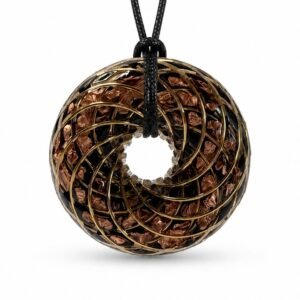
    • Wear it every day as a piece of jewellery traditionally associated with grounding and protection

    Pairs well with

    Frequently asked questions

    What is smoky quartz?

    Smoky quartz is a smoky grey to dark brown variety of quartz (SiO2) with a hardness of 7 on the Mohs scale. The very dark, almost black and opaque variety is called morion.

    Why is smoky quartz brown?

    The colour is produced by aluminium impurities in the quartz, which the natural gamma radiation of the surrounding rocks turns into colour centres. The more of these centres there are, the darker the crystal, so especially dark material is often found near deposits of radioactive minerals.

    What does smoky quartz symbolise?

    In the crystal community, smoky quartz is associated with grounding and stability. It is linked to the root chakra, the Earth element and the signs of Capricorn, Scorpio and Sagittarius. In Scotland it is called cairngorm, after the Cairngorm Mountains, and it is traditionally used in Scottish jewellery.

    Is smoky quartz natural?

    Mostly, yes. Some smoky quartz is produced by irradiating colourless quartz in a laboratory, but the natural material is cheap and widely available, so artificial irradiation is not common. Very dark natural crystals are sometimes heated to make the colour lighter.

    How can you recognise genuine smoky quartz?

    By its inclusions. In natural quartz the inclusions are irregular, whereas round gas bubbles and a completely uniform interior point to glass, which is also softer. Pale yellow quartz with a smoky tint may be heated smoky quartz sold as citrine.

    Can smoky quartz be put in water?

    Yes. Smoky quartz can be washed in warm soapy water and rinsed. Avoid steam cleaners and heat, because in strong heat its colour can fade.

    Does smoky quartz fade in the sun?

    In prolonged sun it can fade. A short time in the sun does not harm smoky quartz, but prolonged UV light and heating above about 200 to 300 °C weaken its colour. So do not keep it for long on a sunny windowsill or near a heat source.

    What determines the value of smoky quartz?

    High transparency and few inclusions are valued, and for cutting, orangey or reddish brown tones are preferred to greyish brown. Natural smoky quartz is widely available, so it is usually not expensive.

    Smoky Quartz in our shop: more

    Sources. Mineralogical data: GIA Gem Encyclopedia, Mindat, Encyclopaedia Britannica (frequencies.lv crystal database v2).
    Further information: geology.com, en.wikipedia.org, geology.com, rockhounding.org.
    Shopping Basket
    Scroll to Top