Agate is named after a river in Sicily.
The ancient Greek scholar Theophrastus and the Roman Pliny the Elder wrote that the stone was named after the river Achates in Sicily, where it was found. Linguists, however, allow that the river itself may have been named after the stone. Agate is a variety of chalcedony, a microcrystalline quartz, with characteristic bands.
A tiny agate from Pylos is an outstanding work of Bronze Age art.
In the tomb of the Griffin Warrior near the Palace of Nestor at Pylos, Greece, an agate sealstone about 3.5 cm long was found, dating from about 1450 BC. It is engraved with a combat between two warriors in such fine detail that it is hard to make out without magnification. Researchers call it the finest piece of Aegean Bronze Age glyptic art ever found.
Idar-Oberstein in Germany is an ancient centre of agate working.
In Idar-Oberstein agate was being worked on a large scale as early as about 1375. In the early 19th century the techniques for dyeing agate, which make pale stones vivid, were developed here. Today dyed Brazilian agates are very common on the world market.
Agate grows in the gas bubbles of volcanic rocks.
Most agates form as nodules in volcanic rocks, where former gas bubbles are filled by water containing silica. The silica is deposited layer by layer, and this produces the characteristic bands. Agate is much harder than the surrounding rock, so after the rock weathers away agate is often found in river gravel and on beaches.
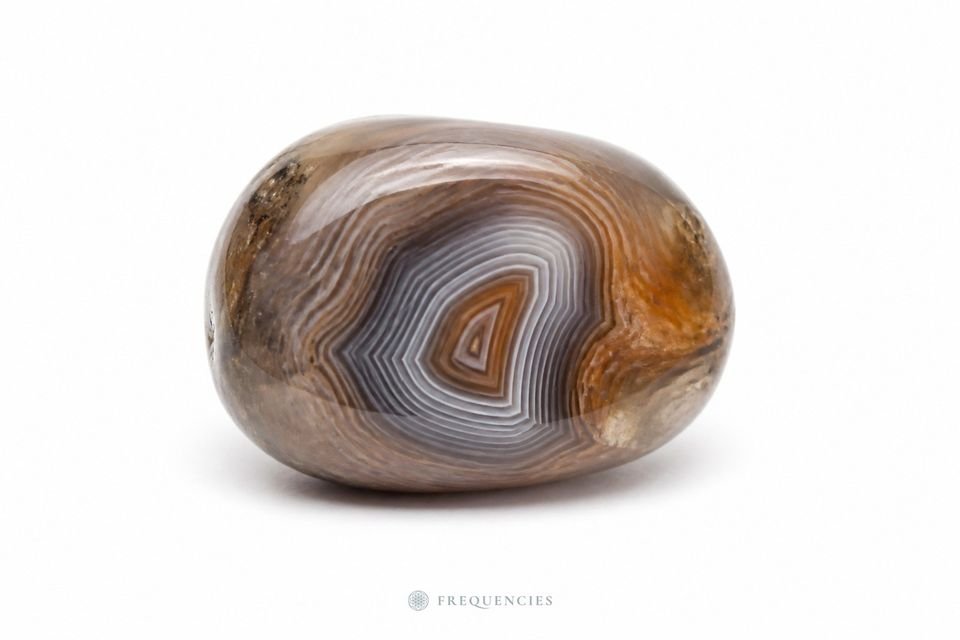
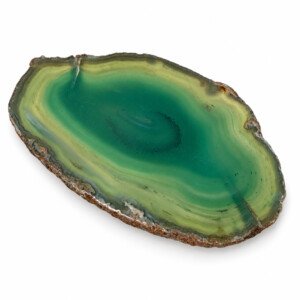
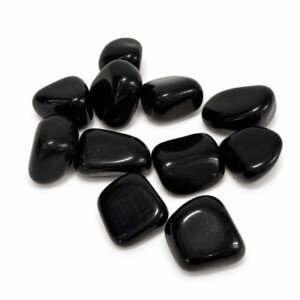
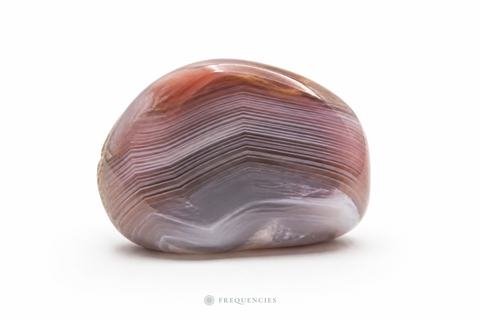 Botswana Agate
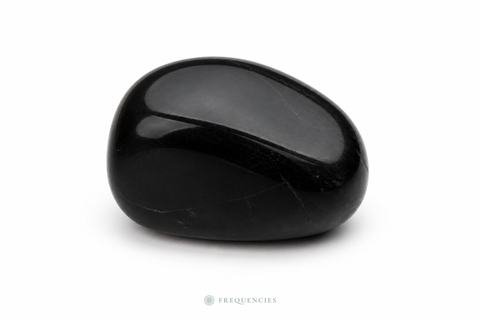 Black Agate
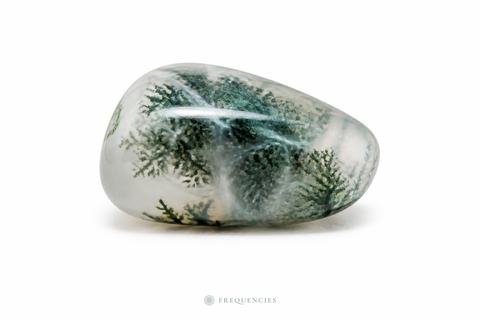 Moss Agate
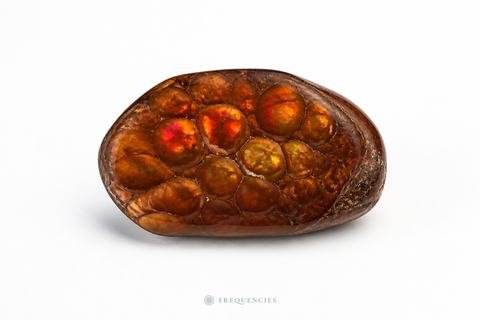 Fire Agate
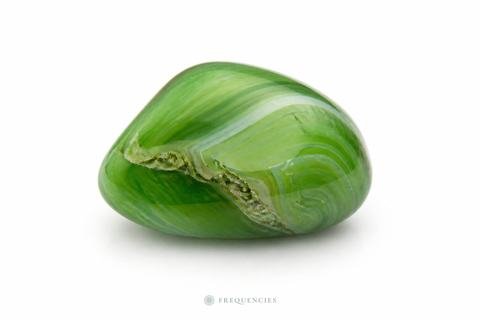 Green Agate
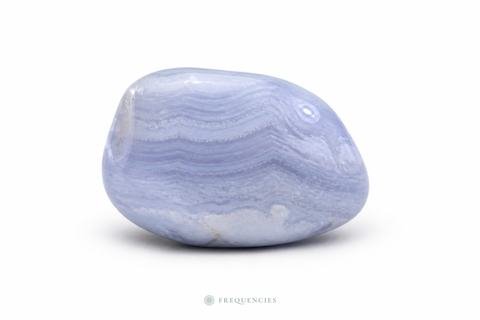 Blue Lace Agate
 Clear Quartz
 Rose Quartz
 Black Tourmaline
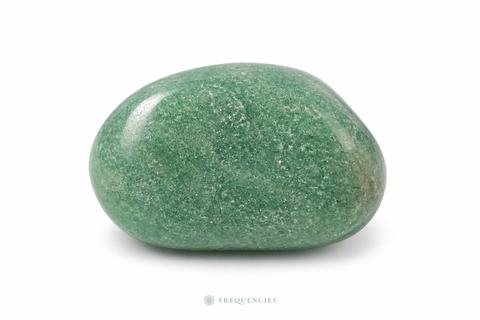 Aventurine