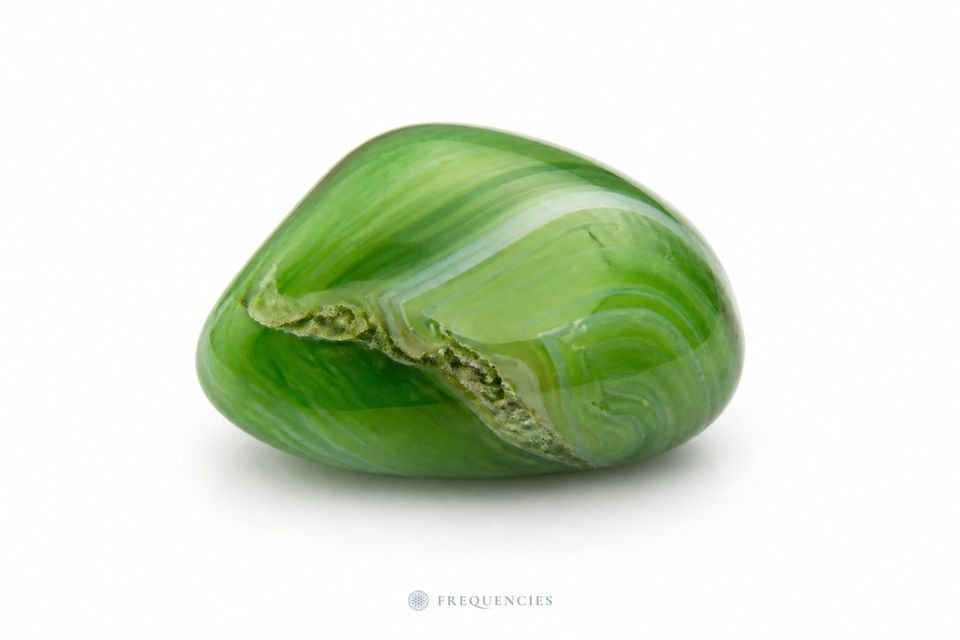
Green Agate
A fresh green agate, traditionally associated with growth and new beginnings.
Green Agate is banded chalcedony (SiO2) with a hardness of 6.5 to 7 on the Mohs scale, but the bright green colour is almost always the result of dyeing. The dye collects in cracks, and naturally green agate is rarer and of a softer shade. The material itself remains natural agate. In the crystal community, it is traditionally associated with growth and new beginnings.
Exhibit label
Mohs hardness scale
Moderately hard: durable in everyday wear, but it can be scratched by harder stones. Store it separately.
Care
Water
A brief rinse in lukewarm water, then wipe dry.
Sun
The tone of dyed agate can fade in prolonged direct sunlight, because some dyes are not resistant to UV light
Storage
Avoid prolonged direct sunlight, solvents, acetone, bleach and prolonged soaking.
Note. Clean dyed agate with warm water and mild soap, then dry it.
In the crystal community, the following are used for cleansing: a brief rinse under running water, the presence of selenite, sound vibrations, moonlight.
Traditional meaning
This is crystal tradition and symbolism, not a scientific or medical claim. The chakras, signs and elements match our product pages.
Chakras
Green agate is traditionally associated with the heart and root chakras, which symbolise openness, balance and a stable foundation.
Zodiac signs
In crystal astrology green agate is often recommended to Taurus as a symbol of nature, growth and stability.
Element
The earth element traditionally symbolises growth, freshness and a connection with nature.
The traditional meaning of crystals has not been medically proven and does not replace the advice of a professional.
Interesting facts
- In the classic Idar-Oberstein method, agate is dyed green with chromium or nickel salts and then heated.
- Naturally greenish or yellowish-green agates are found, for example, in Queensland, Australia.
- The dye is often revealed by colour that has collected in cracks and tiny surface hollows.
How to use it
- Place it on a shelf or by houseplants in a shady spot as a fresh, green accent
- Use it in spring or when you are setting intentions for a new beginning
- Wear it as a coloured piece of jewellery with everyday clothes
- Include it in a composition of green-toned crystals together with green aventurine
Pairs well with
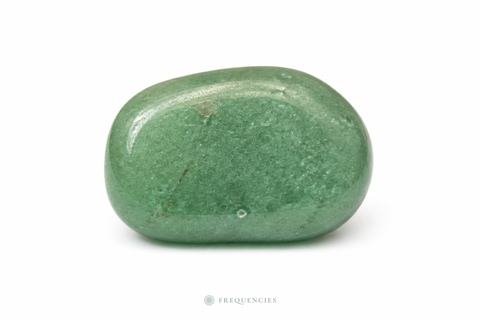 Green Aventurine
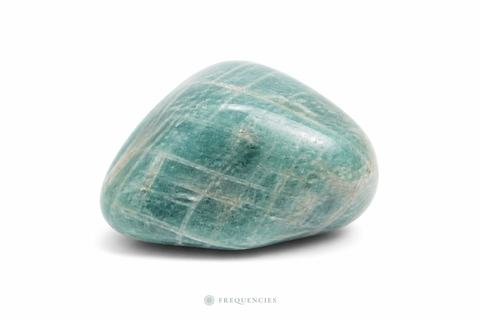 Amazonite
 Rose Quartz
 Clear Quartz
Frequently asked questions
Is green agate dyed?
Bright green agate is almost always dyed. Lime green is usually given to agate by chromium or nickel salts or organic dyes, whereas naturally green agate is rarer and of a softer tone, for example the greenish or yellowish-green agates from Queensland, Australia.
How can you recognise dyed agate?
By the colour in the cracks. The dye collects in cracks and tiny surface hollows, where the tone is darker, and a very bright, even lime green is hardly ever found in nature.
Is dyed agate a real stone?
Yes. Dyeing changes only the colour, but the material itself is still natural agate, a banded chalcedony with a hardness of 6.5 to 7 on the Mohs scale. An honest seller always discloses the dyeing.
What does green agate symbolise?
Green agate symbolises freshness, growth and a new beginning. In the crystal community it is associated with the root and heart chakras, the earth element and the signs of Taurus, Gemini and Virgo.
May green agate be put in water?
Yes, briefly. Clean it in warm water with mild soap and dry it immediately, but do not soak it for long and do not use solvents, acetone or bleach, because they can dissolve the dye.
Does green agate fade in the sun?
Dyed agate can. Some dyes are not resistant to UV light, so the tone of dyed agate can become duller in prolonged direct sunlight, and it is better stored in the shade.