Green Aventurine
Aventurine variety

Green Aventurine

A green variety of quartz with a delicate shimmer, traditionally associated with luck and new opportunities.

Hardness 6.5-7 May be rinsed in water Sunlight is not harmful Earth Air
In brief

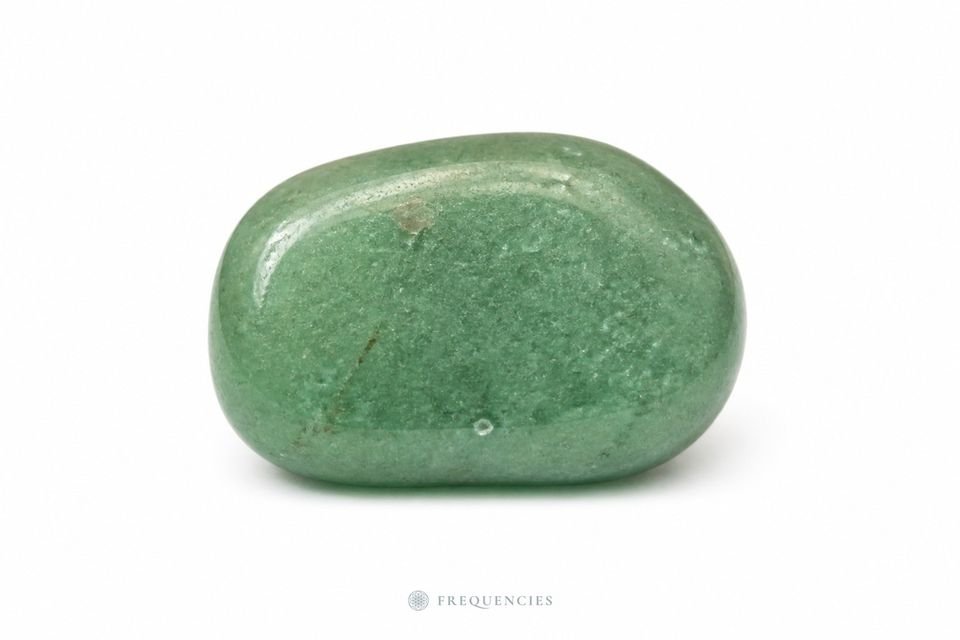
Green Aventurine is a quartz or quartzite with platelets of fuchsite (chromium-bearing mica) that create a fine shimmer, or aventurescence. Its hardness is 6.5 to 7 on the Mohs scale. The name comes from the Italian words a ventura, by chance. In the crystal community, green aventurine is traditionally associated with luck and new opportunities, and many people carry it in their wallet.

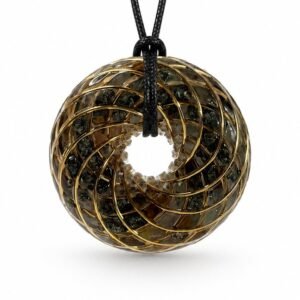
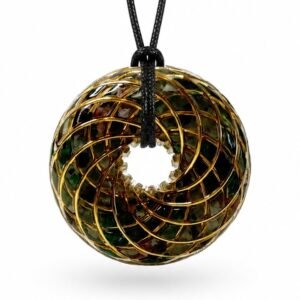
Green Aventurine in our shop

Exhibit label

Name
Green Aventurine
Type
Rock (quartzite)
Mineral group
Quartz group (SiO2); quartz or quartzite with inclusions of fuchsite (chromium-bearing mica)
Hardness
6.5-7 on the Mohs scale
Colour
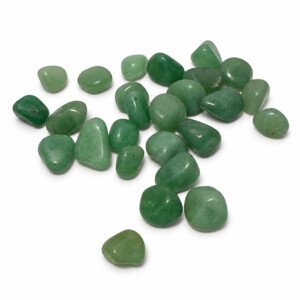
Light to dark green, opaque to semi-translucent, often with a delicate shimmer produced by tiny mica platelets
Main locality
India
Localities
India, Brazil, Russia, Tanzania, Spain, Austria
Planet
Venus (tradition)
The natural green colour comes from fuchsite. Weakly shimmering aventurines and ordinary quartz are sometimes dyed in bright tones, and polymer-impregnated aventurine is also found. Green goldstone is artificial glass with metal particles, not aventurine.

Mohs hardness scale

6.5-7out of 10

Moderately hard: durable in everyday wear, but it can be scratched by harder stones. Store it separately.

Care

Water

May be rinsed in water

A brief rinse in lukewarm water, then wipe dry.

Sun

Sunlight is not harmful

May be kept in a bright place.

Storage

Durable in everyday wear

Avoid: prolonged soaking and hot water, harsh cleaning agents, strong knocks.

Note. If the tone is unusually bright or even, the stone may be dyed; it is safer to care for such a stone with a damp cloth and not to soak it.

In the crystal community, the following are used for cleansing: a brief rinse under running water, the presence of selenite, sound vibrations, moonlight.

From geology to your shelf

  • How it forms. Aventurine is a semi-translucent quartz or quartzite with many flat, flake-like mineral inclusions. In green aventurine these are flakes of fuchsite, a chromium-rich mica. Green and bluish-green aventurine comes mainly from India, from the Mysore and Chennai area.
  • Where the colour comes from. The green colour is produced by just a few per cent of fuchsite. The shimmer, or aventurescence, is produced by light reflecting off mica flakes aligned in one direction.
  • History. The name comes from the Italian "a ventura", or "by chance": Italian glassmakers accidentally obtained a glittering glass with copper particles. The name was later applied to the similarly glittering natural stone.
  • How to recognise a genuine stone.
    • The shimmer of natural aventurine is delicate and often weak; very bright, evenly scattered copper-coloured sparkles point to "goldstone" glass.
    • Bright, unnatural tones and colour that collects in cracks point to dyed quartz.
    • A polished surface may have tiny pits where coarser mica particles have fallen out.
  • Treatment and imitations. The most common imitation is goldstone, glass with metal particles. Aventurine and quartz without a shimmer are also often dyed in bright colours.
  • How to choose. A shimmer that is noticeable at once and even is rare and valuable, because in many stones it is weak. Look for an even green tone and a smooth polish without pits.
  • Traditional meaning

    This is crystal tradition and symbolism, not a scientific or medical claim. The chakras, signs and elements match our product pages.

    Chakras

    Heart Chakra

    In crystal traditions green aventurine is associated with the heart chakra, whose symbolic colour is also green. It is regarded as a symbol of openness, compassion and new opportunities.

    Zodiac signs

    ♈︎Aries♍︎Virgo

    In traditional crystal astrology green aventurine is often recommended to Aries and Virgo. For Aries it symbolises the courage to begin something new, for Virgo calm and gradual growth.

    Element

    EarthAir

    The earth element traditionally symbolises stability and growth, and the air element lightness and new ideas. Together they form the calmly optimistic image of green aventurine.

  • Main symbolism: luck, optimism and new opportunities
  • In crystal traditions it symbolises growth, gratitude and trust in the rhythm of life
  • Traditionally associated with calm optimism, patience and openness to change
  • In the crystal community green aventurine is traditionally associated with luck and opportunity, so many people carry it in a wallet or pocket and give it when someone is starting something new. It is also placed by a cash box or desk as a symbol of prosperity.
  • The traditional meaning of crystals has not been medically proven and does not replace the advice of a professional.

    Stories and legends

    The natural stone is named after Venetian glass.

    The name comes from the Italian "avventura", meaning "chance" or "adventure". It was first used for a glittering glass produced in 17th-century Venice by the Miotti family. Legend has it that the glass came about by chance, when copper shavings fell into the molten glass, and the word was later applied to the natural glittering quartz too.

    Most green aventurine comes from India.

    Green and bluish-green aventurine is mined mainly in India. Cream, grey and orange aventurine is mined in Chile, Spain and Russia. Aventurine is used in jewellery and as a decorative and building stone.

    Interesting facts

    • The green colour of aventurine is produced by fuchsite, a chromium-bearing variety of mica; just a few per cent of fuchsite is enough to make the stone distinctly green.
    • The name comes from the Italian words "a ventura", meaning "by chance". It was originally applied to a glass with copper sparkles that Italian glassmakers happened to produce, and the name later passed to the similarly glittering natural stone.
    • The most important aventurine-producing country is India, followed by Brazil; smaller amounts are also mined in Russia, Spain, Austria and Tanzania.

    How to use it

    • Wear it on a bracelet as an everyday reminder of new opportunities
    • Place it on a desk next to plans or documents connected with your goals
    • Use it as a green accent near houseplants or in a composition on a nature theme
    • Give it to someone who is starting a new stage of life

    Pairs well with

    Frequently asked questions

    What does green aventurine symbolise?

    Green aventurine symbolises luck, optimism and new opportunities. In the crystal community it is associated with the heart chakra, the earth and air elements and the signs of Aries and Virgo, and many people carry it in a wallet or pocket as a symbol of prosperity.

    Why does green aventurine sparkle?

    Because of fuchsite. Fuchsite is a chromium-bearing mica whose tiny flakes reflect light, and this shimmer is called aventurescence. Just a few per cent of fuchsite makes the stone distinctly green.

    Is aventurine quartz?

    Yes. Aventurine is quartz or quartzite with flat mica inclusions, and its hardness is 6.5 to 7 on the Mohs scale. The name comes from the Italian "a ventura" (by chance), because it was originally applied to a glass with copper sparkles that was produced by chance.

    Is green aventurine jade?

    No. Green aventurine is sometimes sold misleadingly as "Indian jade", but it is quartz with fuchsite, not nephrite or jadeite. Aventurine is usually recognised by its delicate shimmer, which jade lacks.

    How can you recognise genuine aventurine?

    By its shimmer. In natural aventurine the sparkles are delicate and uneven, whereas very bright, evenly scattered copper-coloured sparkles point to glass known as goldstone. Bright, unnatural tones and colour in cracks point to dyed quartz.

    May green aventurine be put in water?

    Yes. It can be rinsed or washed in warm soapy water and then dried, just do not soak it for long and do not use hot water. An unusually bright, possibly dyed stone is safer cared for with a damp cloth.

    Does green aventurine fade in the sun?

    Natural stone usually does not, because the green tone is produced by durable fuchsite. Dyed specimens can, however, fade in prolonged sun, so store an unusually bright stone in the shade.

    Green Aventurine in our shop: more

    Sources. Mineralogical data: GIA Gem Encyclopedia, Mindat, Encyclopaedia Britannica (frequencies.lv crystal database v2), geology.com, gia.edu, gia.edu, gia.edu, crystals.com, kerykeion.net, frequencies.lv, frequencies.lv, frequencies.lv.
    Further information: geology.com, en.wikipedia.org, rocktumbler.com.
    Shopping Basket
    Scroll to Top