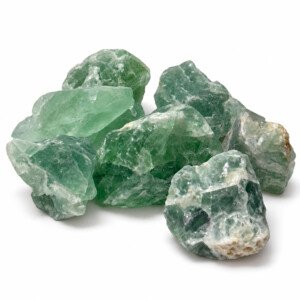
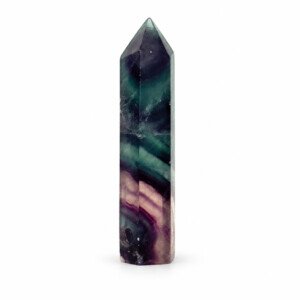
Fluorite gave its name to fluorescence and to the chemical element fluorine.
The name comes from the Latin "fluere", to flow, because in metallurgy fluorite was used as a flux that makes ore easier to smelt. In 1852 the physicist George Gabriel Stokes named the phenomenon of a substance glowing in UV light fluorescence, after fluorite. The name of the chemical element fluorine also comes from the name of the mineral.
England's "Blue John" is a fluorite found in only one place in the world.
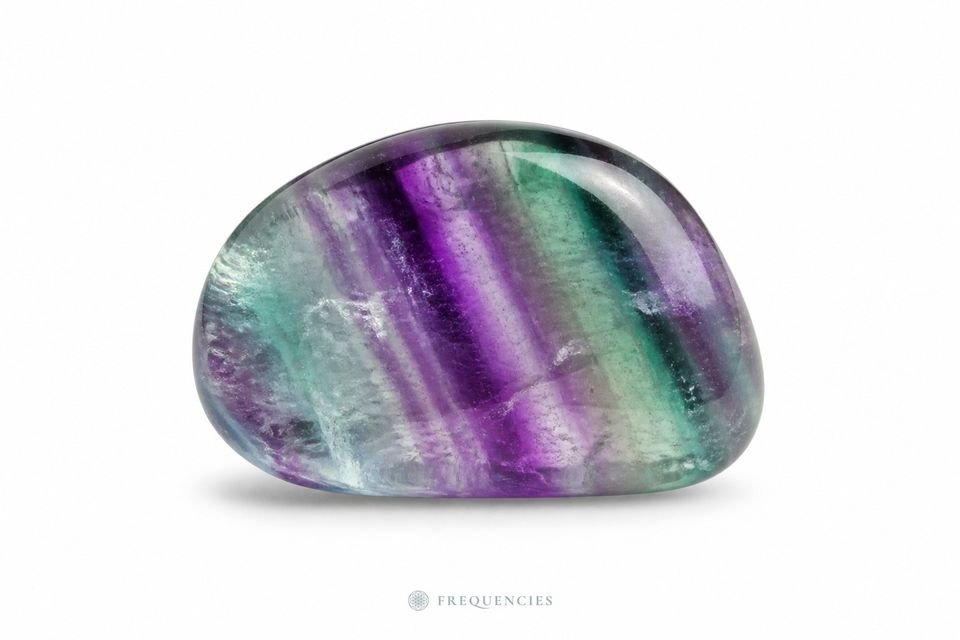
The fluorite "Blue John", banded in violet blue and yellow, is found only near the village of Castleton in Derbyshire, England. The first known reference to it dates from 1766, and in the 18th century vases and fireplace panels were made from it, for example at Kedleston Hall. Today only about half a tonne a year is mined.
The ancient Romans prized vessels made of fluorite.
Pliny the Elder described a stone mottled in violet and white from which costly vessels were made; researchers link this stone with fluorite. The Roman-era Crawford Cup, kept in the British Museum, is made of fluorite. The story that the Romans obtained "Blue John" in England, however, has not been proven, according to researchers.

 Clear Quartz
 Selenite
 Rose Quartz
 Black Tourmaline