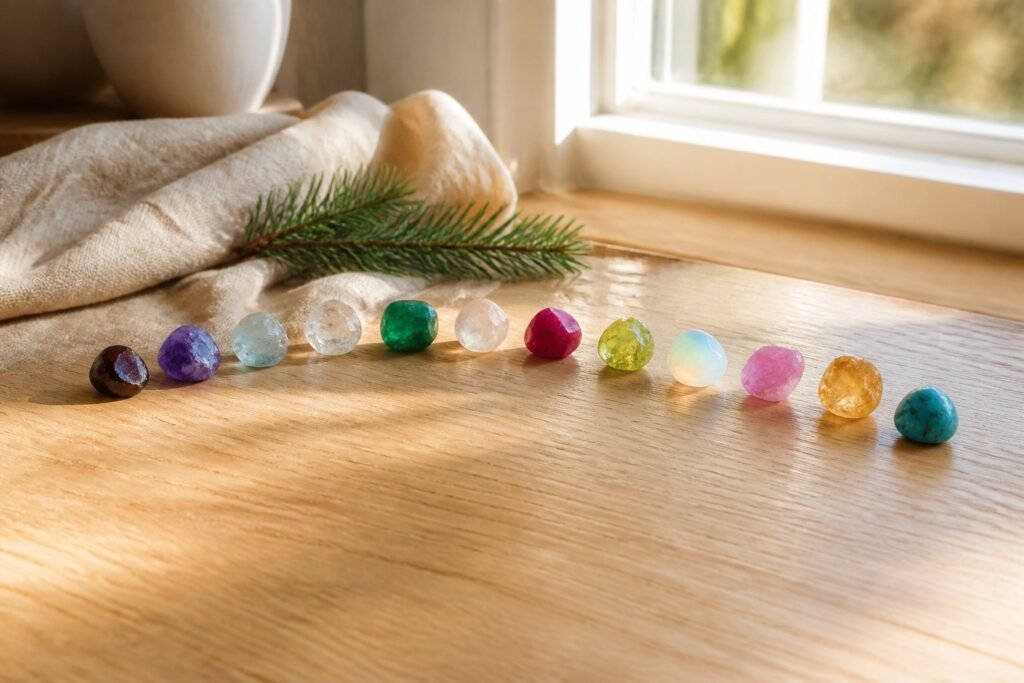
The foundation of the modern birth month stone list was approved in August 1912 in Kansas City by the US National Jewelers Association. Since then, the list has only been updated a few times: June now has three stones, while April still has only diamond. Your birth month stone can adorn a ring or sit on your desk, and each of the twelve months has its own story.
Birth Month Stones: Table
The middle column shows the stones currently listed by the Gemological Institute of America (GIA). The right column shows what has changed since 1912 and what alternatives the British list offers.
| Month | Modern Stone (GIA) | History and Alternatives |
|---|---|---|
| January | garnet | no changes since 1912 |
| February | amethyst | no changes since 1912 |
| March | aquamarine, bloodstone | in 1912, bloodstone was the main stone |
| April | diamond | rock crystal also in the British list |
| May | emerald | chrysoprase also in the British list |
| June | pearl, moonstone, alexandrite | alexandrite since 1952 |
| July | ruby | carnelian also in the British list |
| August | peridot, spinel, sardonyx | in 1912, sardonyx was the main stone, spinel since 2016 |
| September | sapphire | no changes since 1912 |
| October | opal, tourmaline | both were already in the 1912 list |
| November | topaz, citrine | citrine since 1952 |
| December | turquoise, tanzanite, zircon | lapis lazuli also in 1912, tanzanite since 2002 |
Where Did the Birthstone List Come From?
The story usually begins in the Bible. In Exodus chapter 28, the high priest Aaron’s breastplate is described as having twelve gemstones in four rows, each stone engraved with the name of one of the tribes of Israel. The first-century historian Josephus Flavius associated these twelve stones with the twelve months and zodiac signs.
Did you know? The names of the stones differ even in Latvian Bible translations. In the 1965 edition, the first row of the breastplate has carnelian, topaz, and emerald, while in the 1997 edition by the Latvian Bible Society, it is ruby, topaz, and emerald. In ancient times, gemstones were named by color, so it is impossible to say for certain which minerals adorned the breastplate.
American mineralogist George Frederick Kunz wrote in his 1913 book “The Curious Lore of Precious Stones” that the custom of wearing your month’s stone most likely originated in 18th-century Poland. In the same book, he published the list approved by the National Jewelers Association (now Jewelers of America) in 1912. Later, the list was expanded: in 1952 with alexandrite, citrine, and zircon; in 2002 with tanzanite; and in 2016 with spinel. In the UK, the National Association of Goldsmiths created its own list in 1937, offering more affordable alternatives to the more expensive stones. The lists of different organizations still differ slightly, so in one source you may see two stones for March, in another only one.
January: Garnet
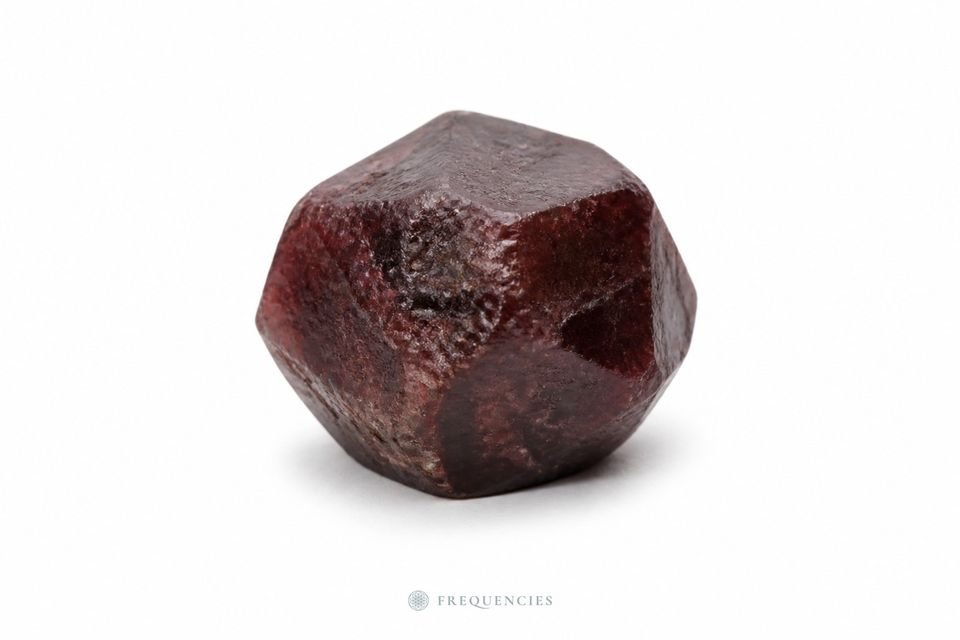
The word garnet refers to a whole group of silicates, and as gemstones, five species are most important: pyrope, almandine, spessartine, grossular, and andradite. The name comes from the medieval Latin word granatus, meaning “pomegranate.” Red garnets were found in necklaces of ancient Egyptian pharaohs, and in Rome, garnet signet rings were used to seal wax. In the Victorian era, the popular red pyropes were mainly sourced from Bohemia, now the Czech Republic. Garnet’s hardness is 6.5 to 7.5 on the Mohs scale, so it is softer than ruby and sapphire and more easily scratched in jewelry.
February: Amethyst
Amethyst is the violet variety of quartz with a hardness of 7. The Greek word amethystos literally means “not intoxicated,” and because of its wine-like color, Greek myths associated it with Bacchus, the god of wine. Until the 19th century, the main source of amethyst was Russia, and it was as rare as ruby or emerald. This changed when large deposits were discovered in Brazil. Russian Empress Catherine the Great wore amethyst necklaces and earrings. Prolonged direct sunlight can fade the violet tone, so it is best to keep amethyst clusters in a shaded place.
March: Aquamarine and Bloodstone
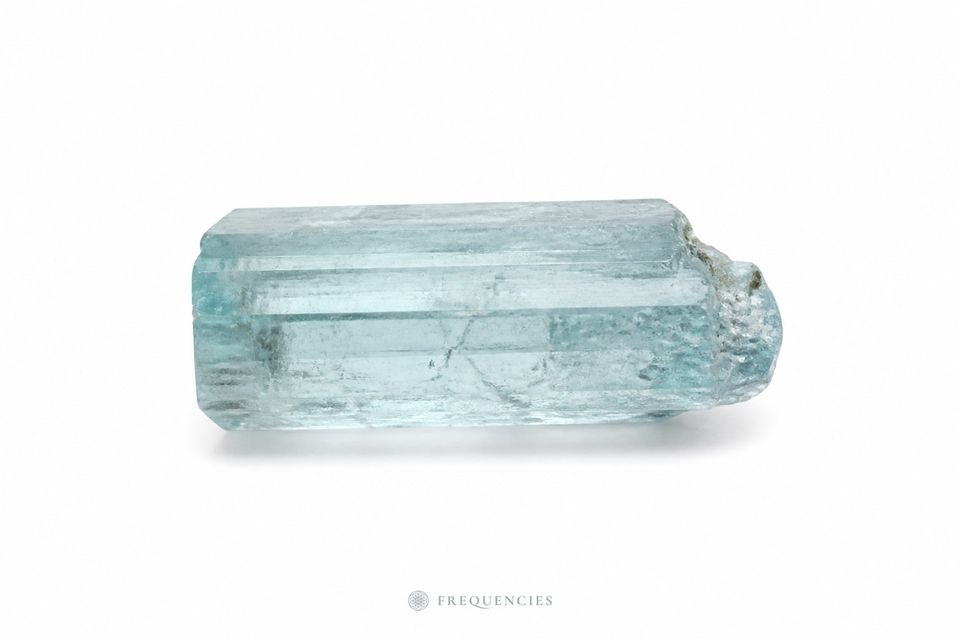
Aquamarine, like emerald, is a beryl, only blue, and its name in Latin means “sea water.” Most aquamarines are heat-treated to enhance the blue color, and this treatment is permanent. The world’s largest faceted aquamarine is considered to be the Dom Pedro: a 10,363-carat, approximately 36 cm tall obelisk, cut by German gem cutter Bernd Munsteiner and kept at the Smithsonian Institution. The other March stone, bloodstone or heliotrope, is a dark green chalcedony with red iron oxide spots. The word heliotrope in ancient Greek is related to the phrase “turn the sun,” and most bloodstone on the market comes from India.
April: Diamond
Diamond is the only gemstone composed of a single element: it is about 99.95% carbon, crystallized at a depth of around 160 km. Its hardness is 10 on the Mohs scale, and only another diamond can scratch it. The root of the word is the Greek adamas, “invincible.” The history of diamonds began in India, where they were collected from rivers and streams, but the largest ever found, the 3,106-carat Cullinan, was discovered in 1905 at the Premier mine in South Africa. The 530-carat Cullinan I, cut from it, is part of the British Crown Jewels and kept in the Tower of London. In the British list, April’s more affordable alternative is rock crystal, the colorless variety of quartz.
May: Emerald
Emerald is the green variety of beryl, and the word emerald comes from the ancient Greek smaragdos, “green gemstone.” Cleopatra used these stones in royal jewelry, and Pliny the Elder wrote that nothing is greener than emerald. In Colombia, the finest emeralds have been mined for over 500 years: the Muzo mines are known for darker green stones, Chivor for lighter and more bluish ones. Natural emeralds almost always have visible inclusions, called jardin (garden), and most faceted stones have fractures filled with oil or resin. Therefore, emeralds should only be cleaned in warm soapy water, never in an ultrasonic cleaner.
June: Pearl, Moonstone, and Alexandrite
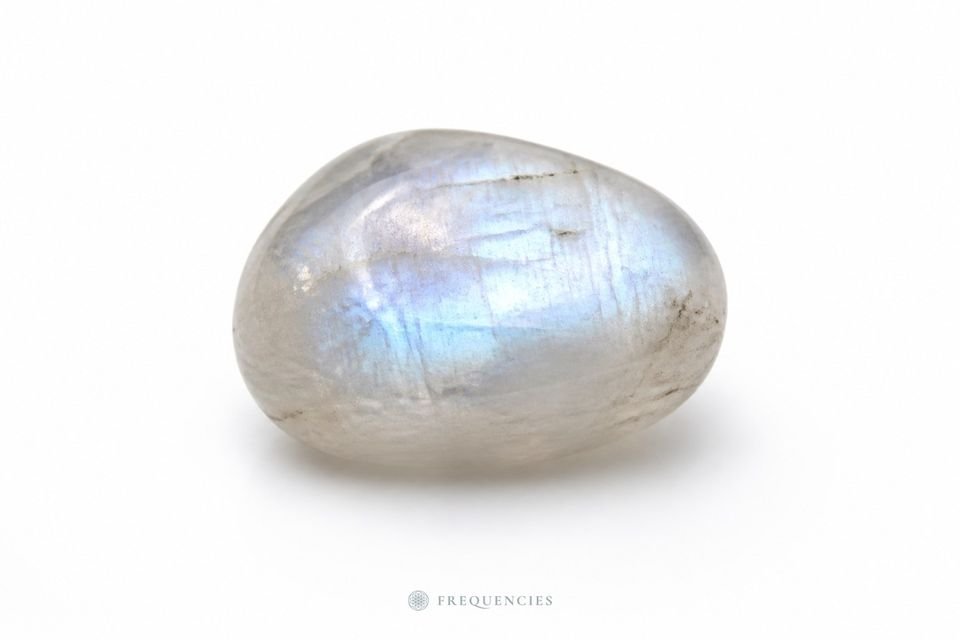
Pearl is an organic gemstone: the mollusk forms it in its tissue, coating a foreign body layer by layer with nacre, and most pearls sold today are cultured. Moonstone is a feldspar, orthoclase with thin layers of albite, and the light that seems to float across the surface when the stone is turned is called adularescence. In Hindu mythology, moonstone was considered solidified moonbeams. The main sources are India and Sri Lanka. The “rainbow moonstone” found in trade is actually a light labradorite. Alexandrite is a variety of chrysoberyl that changes color under different lighting. Large deposits were discovered in the Urals in 1830, and the stone was named after the heir to the throne, Alexander II.
July: Ruby
Ruby is red corundum: its color comes from chromium, and the more chromium, the redder the stone. The word is based on the Latin ruber, “red,” but in ancient India, ruby was called the king of gemstones. In Myanmar’s Mogok region, rubies have been mined for over five centuries. With a hardness of 9 on the Mohs scale, ruby is durable, but many stones on the market have fractures filled with lead glass, and even lemon juice can damage them. The British list also includes carnelian for July.
August: Peridot, Spinel, and Sardonyx
Peridot is a variety of olivine gemstone, and it forms very deep in the earth: it is brought to the surface by lava from the mantle, and some peridot reaches Earth in pallasite meteorites. The oldest known source is Zabargad Island in Egypt, and for centuries peridot was confused with emerald and topaz. Spinel was added to August’s stones in 2016. Sardonyx, a chalcedony with reddish-brown sard and white or black onyx bands, was the main August stone in the 1912 list, and GIA still lists it as the third August stone.
Did you know? The Black Prince’s “ruby,” a roughly 170-carat red stone in the British Imperial State Crown, is actually spinel. The Prince of Wales, Edward, received it in 1367, when spinel and ruby were not yet distinguished.
September: Sapphire
Sapphire is the same mineral, corundum, as ruby. Sapphire usually refers to blue corundum, but it is found in many other colors, and only red corundum is called ruby. Sapphires have been mined in Sri Lanka for over 2,000 years, but they were discovered in Kashmir around 1881, when a landslide in the Himalayas exposed a nest of blue crystals. Princess Diana’s engagement ring features a 12-carat blue sapphire with diamonds. In 1934, John D. Rockefeller Jr. purchased a 62.02-carat sapphire from Myanmar.
October: Opal and Tourmaline
Opal is an amorphous hydrated silicon dioxide. Its play of color is created by tiny, uniformly sized silica spheres arranged in regular layers, splitting light into spectral colors; if the spheres are arranged chaotically, the opal is common and lacks play of color. The name likely comes from the Sanskrit upala, “gemstone.” Australia’s deposits are the world’s most productive, and black opal comes from Lightning Ridge in New South Wales. Opal contains water, so heat and very dry air can create a network of fine cracks.
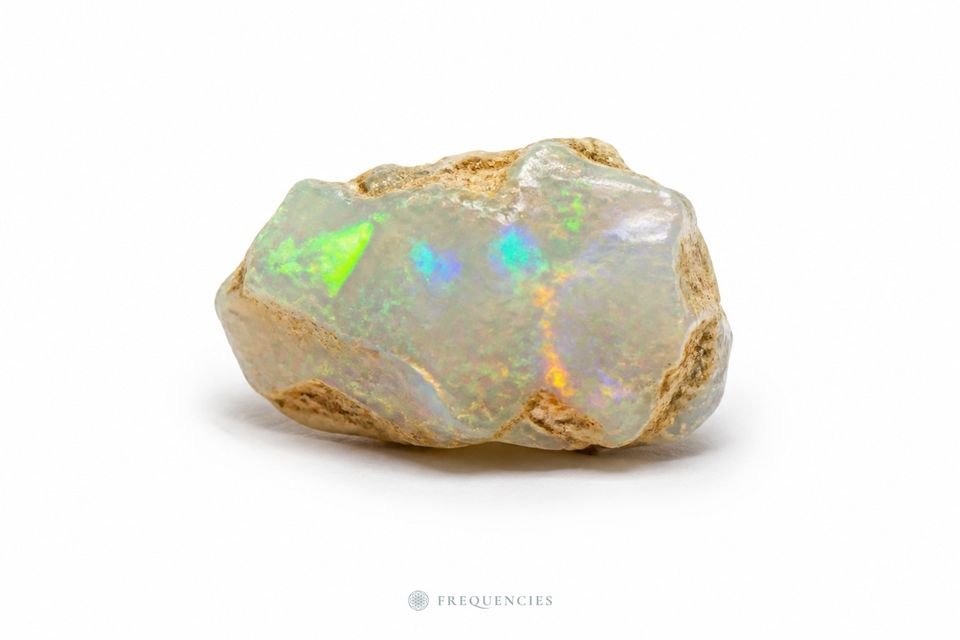
Tourmaline gets its name from the Sinhalese toramalli, “stone with mixed colors,” because a single crystal often contains several colors. From 1902 to 1910, 120 tons of pink and red tourmaline, or rubellite, were shipped from San Diego County mines in California to China, and GIA attributes this to the Empress Dowager Cixi’s fondness for the color. When heated or pressed, tourmaline acquires an electric charge.
November: Topaz and Citrine
Topaz has a hardness of 8, but it has perfect cleavage, so it should be protected from impacts. Almost all blue topaz on the market is irradiated and heat-treated colorless topaz, as natural blue topaz is very rare. The name of the pinkish-orange imperial topaz is explained in two ways: either by Russian tsars who wanted to keep the best colors from the Urals for themselves, or by the visit of Brazilian Emperor Pedro II to Ouro Preto in 1881. Citrine is named after the French citron, “lemon,” and was added to the list in 1952. Most citrine on the market is heat-treated amethyst with an intense orange or reddish tone, while natural citrine is usually pale yellow.
December: Turquoise, Tanzanite, and Zircon
Turquoise is a porous copper and aluminum phosphate, and it adorns Tutankhamun’s burial mask. In the Nishapur area of Iran, turquoise has been mined for over a thousand years. Only a small part of mined turquoise can be used without treatment, so it is often stabilized with polymer. Tanzanite is blue-violet zoisite: blue stones from Tanzania were recognized as zoisite in 1962, the main deposit in the Merelani Hills was found in 1967, and in 1968 Tiffany & Co. launched a major advertising campaign. Merelani is the only place in the world where tanzanite is mined. Zircon is a natural mineral, not to be confused with synthetic cubic zirconia, and the oldest known mineral grains on Earth are about 4.4 billion-year-old zircon crystals from Australia.
Birthstone as a Gift: How to Choose
If a gemstone in jewelry does not fit your budget, choose the same mineral in another form. The shop offers bracelets with aquamarine, amethyst, moonstone, and tourmaline, while among the tumbled stones you will find garnet for those born in January and emerald for those born in May. For those born in July, a raw ruby or zoisite with ruby inclusions is suitable, and for those born in April, the British tradition offers rock crystal as an alternative. Add a note to your gift with one fact about the stone, for example, that the Dom Pedro aquamarine weighs more than two kilograms. Each crystal is natural and unique, so if the product image shows several samples, you will receive a similar, hand-selected specimen. Find more ideas in the Gift Ideas section, and delivery to parcel lockers in the Baltics is free for orders over €30.
Frequently Asked Questions
How do I find out my birth month stone?
The birth month stone is determined only by the month, not by the date or year: in January it is garnet, in February amethyst, in March aquamarine, and so on up to December, which has turquoise, tanzanite, and zircon. If a month has several stones, you can choose any of them.
Is a birthstone the same as a zodiac stone?
No. A birthstone corresponds to the calendar month, while zodiac signs change in the second half of the month, and zodiac stones have their own tradition with different stones.
Why do some months have several stones?
Even in the 1912 list, several months had alternatives, and more stones were added in 1952, 2002, and 2016. In addition, the US and UK lists, as well as those of various organizations, differ slightly.
Which is the newest birthstone?
Spinel, which was added as an August stone in 2016 by Jewelers of America and the American Gem Trade Association (AGTA). Before that, tanzanite was added for December in 2002.
How should I care for my birth month stone?
It depends on the mineral. Opal and turquoise are sensitive to water and chemicals, emerald and tanzanite should not be cleaned with ultrasound or steam, and amethyst and citrine can fade in prolonged sunlight. The requirements for each stone are summarized in the care table.
Sources
- gia.edu/birthstones
- gia.edu/birthstones/january-birthstones
- gia.edu/birthstones/february-birthstones
- gia.edu/birthstones/march-birthstones
- gia.edu/birthstones/april-birthstones
- gia.edu/birthstones/may-birthstones
- gia.edu/birthstones/june-birthstones
- gia.edu/birthstones/july-birthstones
- gia.edu/birthstones/august-birthstones
- gia.edu/birthstones/september-birthstones
- gia.edu/birthstones/october-birthstones
- gia.edu/birthstones/november-birthstones
- gia.edu/birthstones/december-birthstones
- gia.edu/diamond-description
- gia.edu/turquoise-description
- gia.edu/gems-gemology/fa13-opal-digit-patterns-rondeau
- gutenberg.org/ebooks/57978 (G. F. Kunz, The Curious Lore of Precious Stones, 1913: 1912 Kansas City list, Poland 18th c., Josephus Flavius)
- nationaljeweler.com/articles/5278-rocks-on-the-evolution-of-the-birthstone-l…
- nationaljeweler.com/fashion/style/blog/diamonds-gems/supply/4301-ja-agta-add…
- en.wikipedia.org/wiki/Birthstone (British NAG list 1937, references to Osborne 1985 and NAG; AGTA tanzanite 2002, reference to Grande and Augustyn 2009)
- bibele.bibelesbiedriba.lv/bible/LTV1965/EXO.28/
- bibele.bibelesbiedriba.lv/bible/RLV/EXO.28/
- biblegateway.com/passage/
- geology.com/minerals/zircon.shtml
- jckonline.com/ (AGTA director: spinel was only distinguished from ruby at the end of the 18th c., previously balas ruby)
- gemsociety.org/article/history-of-birthstones/ (in ancient times, minerals were named by color)
- merriam-webster.com/dictionary/amethyst (amethystos: negation + to be intoxicated)
- news.wisc.edu/
- lv.wikipedia.org/wiki/Heliotrops
- frequencies.lv/produkta-kategorija/rotas/rokasspradzes/ (and other category pages (product names checked 20.10.2026))