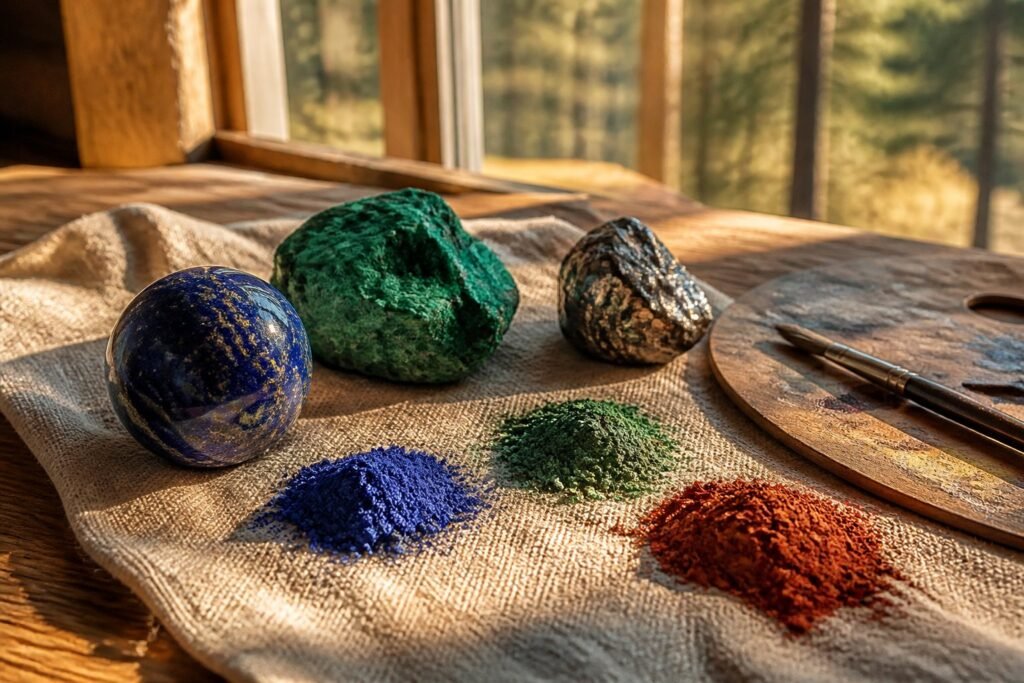
In 1485 in Florence, when signing a contract with the painter Domenico Ghirlandaio for an altarpiece, the client specified that the blue color must be ultramarine worth about four florins per ounce [1]. This color was obtained from lapis lazuli brought from the mountains of Afghanistan, and the same stones today are found in crystal collections. Mineral pigments are ground stones, and some of them were once more expensive than gold [2][3].
What are mineral pigments
A pigment is a colored substance in fine powder form, which is mixed with a binder to create paint. Mineral pigments were made from stones: the most colorful pieces were selected, impurities were removed, and the material was ground into powder, which was then mixed with oil or another binder [4]. Medieval painters also bound the powder with egg yolk or glue [5]. The table summarizes four stones and the colors made from them.
| Stone | Pigment and color | Where and when used |
|---|---|---|
| Lapis lazuli | ultramarine, deep blue | from the 6th century in Afghanistan, widely in 14th and 15th century European art |
| Azurite | azurite, blue | from Ancient Egypt to the 18th century, the main blue color in medieval Europe |
| Malachite | malachite green | Ancient Egyptian eye paint, European paintings in the 15th and 16th centuries |
| Hematite | red ochre | prehistoric paint mixtures and cave paintings, Renaissance flesh tones |
Lapis Lazuli and Ultramarine: The Blue That Was More Expensive Than Gold
Lapis lazuli is not a single mineral, but a rock. Its blue color is created by the mineral lazurite, and it usually also contains white calcite and golden pyrite grains [6][7]. The most famous deposits are in the Hindu Kush mountains in northeastern Afghanistan near the Kokcha River, where around the village of Sar-e-Sang, lapis lazuli forms lenses up to six meters thick in marble [8]. The Gemological Institute of America (GIA) writes that the Badakhshan mines were already operating around 700 BCE, are still active today, and are the oldest known commercial gemstone sources in the world [9]. Lapis lazuli inlays from Sar-e-Sang are also found in Tutankhamun’s golden burial mask [8].
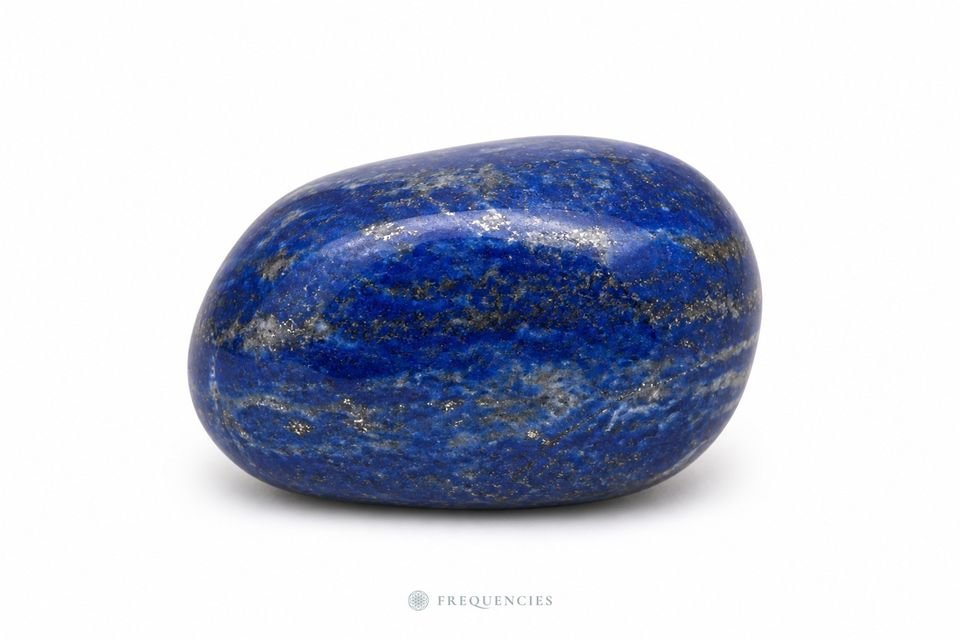
Lapis lazuli began to be used as a pigment in the 6th century in Afghanistan. It reached Europe via Venice and was most widely used in 14th and 15th century book miniatures and Italian paintings on wooden panels [3]. The name ultramarine comes from the Latin “ultramarinus,” meaning “beyond the sea,” because the stone was brought from distant lands [10]. Obtaining good pigment was difficult. The Italian artist Cennino Cennini, in his painter’s handbook probably written at the end of the 14th century [11], described how lapis lazuli powder is mixed with pine resin, mastic, and wax, kneaded for at least three days, and then the blue pigment is pressed out in warm lye water, kneading the mass like bread dough [5]. The first extractions yielded the best blue color: if the stone was good, the blue from the first two extractions was worth eight ducats per ounce, but the last two extractions Cennini called worse than ashes [5].
Therefore, ultramarine was often reserved for the most important places in a painting, such as the robes of Christ and the Virgin Mary [3]. Ghirlandaio’s contract specified both the total price of the painting, 115 florins, and how expensive the blue pigment had to be [1]. The National Gallery in London, describing Sassoferrato’s painting “The Virgin in Prayer” (1640 to 1650), calls ultramarine the most expensive blue pigment. It was made from lapis lazuli mined in northeastern Afghanistan [2]. In Michelangelo’s painting “The Entombment,” the lower right corner remains empty. The gallery writes that the Virgin Mary was probably intended to be painted there and suggests that the artist left this color for last, as ultramarine was the most expensive and possibly hard-to-obtain pigment [12]. Titian, in his painting “Bacchus and Ariadne,” painted the bright blue sky with pure ultramarine, but the distant, greenish-blue landscape with azurite [13].
Did you know? In a 2019 published study, scientists reported finding hundreds of tiny lapis lazuli particles in the dental calculus of a woman buried near a small women’s monastery in Dalheim, near Paderborn, Germany. She died at the age of 45 to 60 between 1000 and 1200. Researchers concluded that she most likely painted book miniatures with ultramarine and, while working, licked the tip of her brush [14]. The authors call this a direct proof that in the Middle Ages, luxurious manuscripts were also created by women.
In our shop’s Lapis Lazuli section, you will find polished lapis lazuli from Afghanistan and a 4 cm lapis lazuli sphere with golden pyrite veins, while other spheres can be found in the Spheres section. Before purchasing, it is useful to know that lapis lazuli is often dyed, dyed howlite or magnesite is sometimes sold as lapis, and sodalite is also similar [7]. Read more about imitation features in the article How to Recognize a Real Crystal.
1828: Ultramarine from the Laboratory
Already in 1814, the French chemist Vauquelin published that the blue masses from a glass factory’s soda furnace were similar in composition to lapis lazuli [3]. In 1824, the French Society for the Encouragement of National Industry announced a prize of 6,000 francs for anyone who could invent synthetic ultramarine costing no more than 300 francs per kilogram [3]. The prize remained unawarded for four years, until on February 4, 1828, it was given to Jean-Baptiste Guimet [3]. A month later, Christian Gottlob Gmelin, a chemistry professor at the University of Tübingen, published a slightly different method. The two argued for years over who was first, but France left the prize with Guimet [3].
Around 1830, Guimet was already producing ultramarine in his factory in France [3]. Synthetic ultramarine has the same chemical composition as the natural one [10], and it cost many times less [3][4]. Therefore, natural ultramarine from lapis lazuli is nowadays mainly used by artists learning historical techniques [4].
Azurite: The Everyday Blue of the Middle Ages
Azurite is a copper carbonate that forms when water rich in carbon dioxide seeps into the ground and reacts with copper ores [15]. It was used as a pigment already in Ancient Egypt, but in the Middle Ages and Renaissance it was the most important blue pigment in Europe [15]. The Fitzwilliam Museum in Cambridge writes that book miniature painters often used azurite as a cheaper alternative to the expensive ultramarine [16]. Cennini wrote that azurite is found near silver veins and is abundant in Germany, and warned that when choosing lapis lazuli, it should not be confused with azurite stone [5].
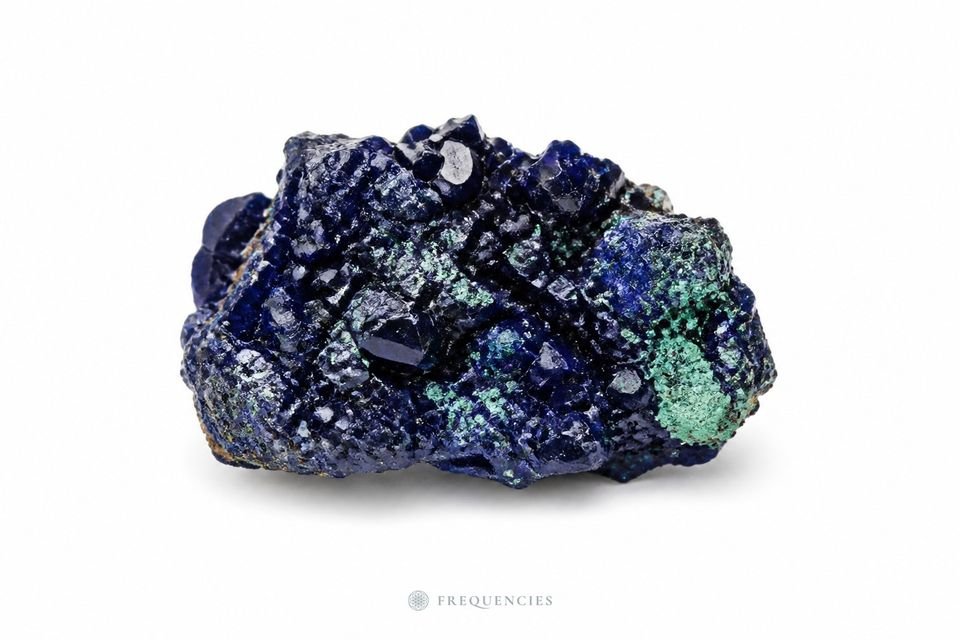
The blue of azurite does not always remain stable. Over time, azurite slowly transforms into malachite, so its color becomes lighter and greener [15]. From the 18th century, it was gradually replaced by artificial pigments such as Prussian blue [15]. In nature, azurite and malachite often occur in the same deposit and can be intergrown, and such material is called azurmalachite [15]. In our shop, both colors meet in the azurite and malachite bracelet.
Malachite: Green Color from Copper Ore
Malachite is a green copper carbonate. It forms at shallow depths above copper deposits, precipitating from water in cracks and cavities [17]. In Egypt and present-day Israel, malachite deposits were used more than 4,000 years ago to obtain copper, and from the same material, jewelry and pigments were also made [17]. In Ancient Egypt, malachite was mainly used as eye paint: it was obtained in Sinai and the eastern desert, and malachite powder and raw pieces have been found in many tombs [18]. Malachite was ground on flat cosmetic palettes with a pebble [19].
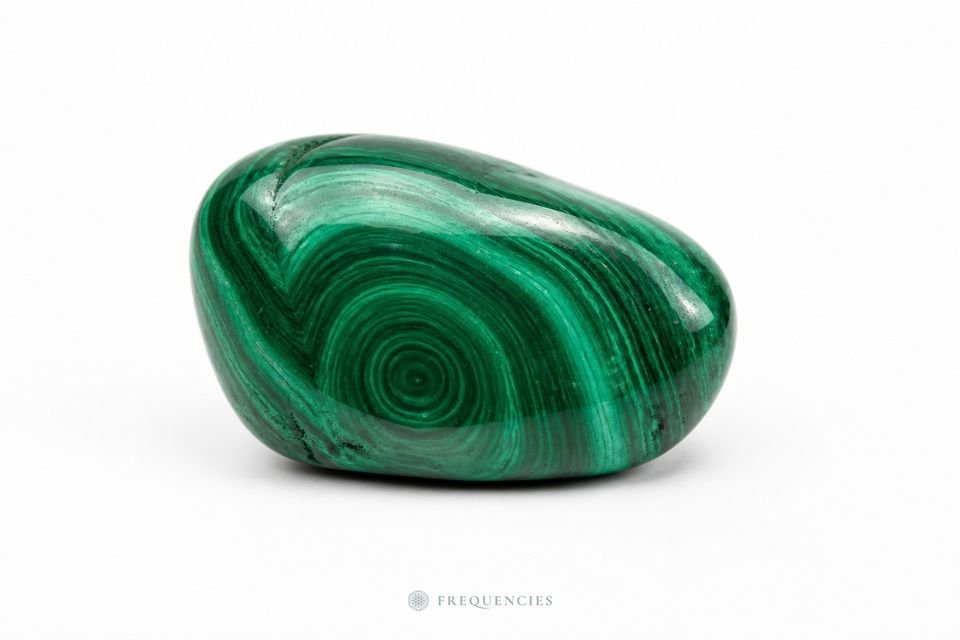
In Europe, malachite pigment is found in 15th and 16th century paintings, but in the 17th century it was used less and less as other green pigments appeared [17]. In book miniatures, especially in Italy and France, it was often used from the early 15th century [20]. Scientists at the National Gallery in London have studied malachite in Giovanni Bellini’s painting “The Agony in the Garden” [21]. In the 19th century, large Ural deposits supplied much malachite for jewelry and sculptures, but today much of the malachite used for jewelry comes from the Democratic Republic of the Congo [17]. You will find malachite jewelry in the Malachite section.
Hematite and Red Ochre: The Oldest Color
Red ochre is one of the oldest colors that people deliberately made. Archaeologists use the term ochre for earth or rock containing red or yellow iron oxides or hydroxides [22]. In Blombos Cave in South Africa, in 2008, a workshop about 100,000 years old was found with two sets of tools for working ochre. Ochre pieces were rubbed against quartzite slabs, the powder was mixed with crushed bones, charcoal, and liquid, and stored in two large sea snail shells [22]. Researchers suggest the mixture was used for decoration and coloring [22].
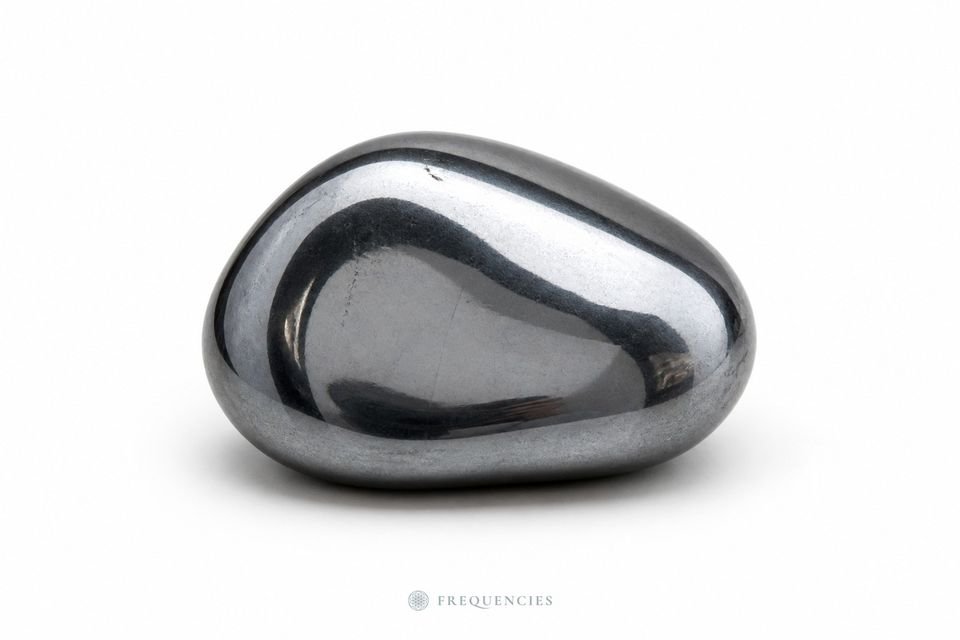
Hematite is iron oxide Fe2O3, and its name comes from the Greek word “haimatitis,” meaning “blood red,” because when ground it is red [23][7]. Hematite pigments were used for cave paintings up to 40,000 years old, and in the Renaissance, red hematite was mixed with white pigment to obtain flesh tones [23]. You can test this yourself: if you drag raw hematite across an unglazed porcelain tile, it leaves a reddish-brown streak, even though the stone itself is often silvery gray [7][23]. Strongly magnetic “magnetic hematite” beads, on the other hand, are a man-made material [7]. Iron oxides also color carnelian and red jasper [7].
Safety: Why Not to Grind These Stones at Home
If these stories make you want to grind your own paint, it is better not to do so. Azurite and malachite contain copper. Our encyclopedia notes that azurite dust must not be inhaled, after handling raw samples it is recommended to wash your hands, and azurite should never be placed in drinking water or used for water elixirs [7]. Malachite powder must also not be inhaled [7], and in the artist pigment safety data sheet, malachite pigment is classified as harmful if swallowed, with a warning to avoid dust formation and to wash thoroughly after use [24].
Lapis lazuli is porous, so prolonged exposure to water and chemicals is not recommended [7]. Malachite and azurite are soft, with a hardness of 3.5 to 4, and malachite is sensitive to heat and acids, so clean these stones with a dry or slightly damp cloth and protect them from scratches [7]. Care instructions for all stones are summarized in the care table.
Frequently Asked Questions
What are mineral pigments?
They are ground colored minerals or rocks, which are mixed with a binder such as oil or egg yolk. The most important in history were ultramarine from lapis lazuli, azurite, malachite, and ochres containing iron oxides.
What is ultramarine made from?
Natural ultramarine is made from lapis lazuli, by extracting the blue mineral lazurite from the rock. Since about 1830, synthetic ultramarine with the same chemical composition has been produced, and it is much cheaper.
Was ultramarine really more expensive than gold?
Sources on pigment history state that in the Renaissance, ultramarine was more expensive than gold, and the National Gallery in London calls it a pigment that was once more valuable than gold. In the 1485 contract in Florence, it was specified that ultramarine should be worth about four florins per ounce.
What is ochre made from?
Ochre is earth or rock with iron oxides or hydroxides, and depending on these, it is red or yellow. Hematite is iron oxide, and when ground it is red, so it is used to obtain red pigment.
Is malachite poisonous?
Malachite contains copper. The risk comes from its dust and ingestion: the dust must not be inhaled, and malachite pigment is classified as harmful if swallowed. Therefore, do not grind the stone, do not put it in drinking water, and wash your hands after handling raw samples.
How to distinguish natural lapis lazuli from imitation?
Natural lapis lazuli has randomly scattered pyrite dots and white calcite areas. In dyed material, the dye accumulates in cracks and can stain a cotton swab moistened with acetone, while sodalite usually does not have golden pyrite dots.
Sources
- Domenico Ghirlandaio and Spedale degli Innocenti contract, 1485 (English translation, SUNY Oneonta art history course materials). https://www.oneonta.edu/faculty/farberas/arth/arth200/artist/artist_contracts.htm
- The National Gallery, London. Sassoferrato, The Virgin in Prayer, 1640-50. https://www.nationalgallery.org.uk/paintings/sassoferrato-the-virgin-in-prayer
- WebExhibits. Pigments through the Ages: History of Ultramarine. https://www.webexhibits.org/pigments/indiv/history/ultramarine.html
- Geology.com. Lapis Lazuli. https://geology.com/gemstones/lapis-lazuli/
- Cennino Cennini. Il Libro dell’Arte (The Craftsman’s Handbook), D. V. Thompson translation, 1933, chapters LX and LXII. https://noteaccess.com/Texts/Cennini/2a.htm
- GIA (Gemological Institute of America). Lapis Lazuli. https://www.gia.edu/lapis-lazuli
- FREQUENCIES stone encyclopedia: lapis lazuli, azurite, malachite, hematite, carnelian, red jasper, sodalite (data checked against GIA, Mindat, geology.com). https://frequencies.lv/enciklopedija/
- IUGS Geological Heritage. The Sar-e-Sang Lapis Lazuli Deposit. https://iugs-geoheritage.org/?p=10779
- GIA. Lapis Lazuli History and Lore. https://www.gia.edu/lapis-lazuli-history-lore
- Fitzwilliam Museum, Cambridge (MINIARE). Ultramarine. https://fitzmuseum.cam.ac.uk/illuminated/lab/overview-of-artists-materials/ultramarine/type/material
- The National Gallery, London. Glossary: Cennino Cennini. https://www.nationalgallery.org.uk/paintings/glossary/cennino-cennini
- The National Gallery, London. Michelangelo, The Entombment, about 1500-1. https://www.nationalgallery.org.uk/paintings/michelangelo-the-entombment
- The National Gallery, London. Titian, Bacchus and Ariadne. https://www.nationalgallery.org.uk/paintings/titian-bacchus-and-ariadne
- Max Planck Society. Illuminating women’s role in the creation of medieval manuscripts (2019). https://www.mpg.de/12632827/medieval-women-early-involvement-in-manuscript-production
- Geology.com. Azurite. https://geology.com/minerals/azurite.shtml
- Fitzwilliam Museum, Cambridge (MINIARE). Azurite. https://fitzmuseum.cam.ac.uk/illuminated/lab/overview-of-artists-materials/azurite/type/material
- Geology.com. Malachite. https://geology.com/minerals/malachite.shtml
- Global Egyptian Museum. Glossary: Malachite. https://www.globalegyptianmuseum.org/glossary.aspx?id=232
- National Museums Liverpool. Cosmetic Palette. https://www.liverpoolmuseums.org.uk/artifact/cosmetic-palette-39
- Fitzwilliam Museum, Cambridge (MINIARE). Malachite. https://fitzmuseum.cam.ac.uk/illuminated/lab/overview-of-artists-materials/malachite/type/material
- The National Gallery, London. Chemistry of colour: malachite (Bellini, The Agony in the Garden). https://www.nationalgallery.org.uk/behind-the-scenes/chemistry-of-colour-malachite
- ScienceDaily / University of the Witwatersrand. 100,000-year-old ochre toolkit and workshop discovered in South Africa (2011). https://www.sciencedaily.com/releases/2011/10/111013141807.htm
- Geology.com. Hematite. https://geology.com/minerals/hematite.shtml
- Cornelissen & Son. Malachite pigment, safety data sheet (2014). https://www.cornelissen.com/media/attachment/file/m/s/msds_pgr_malachite.pdf