Even a professional weaver takes about two and a half weeks to weave a Lielvārde belt, which is traditionally 3 meters long and 10 cm wide, working 8 hours a day. A personalized NKey FrQ pendant is created in 2 to 5 weeks. In both cases, the time is determined by human hands, not by the speed of a production line.
Handcraft in Latvia: A Skill Preserved by Museums and Recognized by Law
The Latvian Ethnographic Open-Air Museum was founded in 1924. On the shore of Lake Jugla, covering 87 hectares, it displays more than 100 examples of folk architecture, telling the story of rural life in Latvia from the late 17th century to the late 1930s. The museum also has a separate collection of contemporary folk applied art, meaning that craftsmanship is preserved there as a living skill that continues today.
Craftsmanship in Latvia also has legal significance. The Latvian Chamber of Crafts was established in 1935, its activities were suspended by the occupying power in 1940, and the chamber was restored in 1993. The law “On Craftsmanship,” adopted on February 2, 1993, stipulates that a person becomes a master craftsman after passing a master’s examination and receiving a master’s diploma. The right to use the title “master craftsman” is granted only to persons registered in accordance with the law.
Latvian Symbols: Ornamentation That Must Be Justified
In ancient times, Latvians placed symbols on jewelry, tools, and clothing, says Dagnija Pārupe, a representative of the folk costume center “Senā klēts,” on LSM. The Auseklītis or eight-pointed star, Jumis, Māra’s cross, and the fire cross are now seen in knitwear, textiles, and wooden souvenirs. During the Latvian Popular Front, the Auseklītis also adorned the sweater of Awakening leader Dainis Īvāns.
Latvian symbols as a separate system of signs are newer than the patterns themselves. Otto Ķenga, a researcher at the Latvian Academy of Culture, writes that textile ornaments from the 19th century were widely studied already in the first quarter of the 20th century: in 1923, Jānis Sudmalis published the book “Latvian Patterns: Ornaments,” and Ernests Brastiņš published “Latvian Ornamentation.” Researchers at the time extracted individual elements from their visual context and called some of them Latvian without sufficient research.
Symbol researcher Valdis Celms warns on LSM that the use of symbols should not be exaggerated. If the ornamentation contradicts the material, construction, or use of the object, he calls it empty decoration, but justified ornamentation with clear symbolic meaning is appropriate. This is a good measure for modern handcraft as well: form, material, and meaning form a unified whole.
A good example is the Lielvārde belt, which is included in the Latvian Cultural Canon under Folk Traditions. It is woven from linen and wool, originates from Lielvārde and neighboring parishes in central Latvia, and 74 different belt variants have been found so far. The pattern, which seems simple from a distance, requires more than two weeks of work.
Open-Air Museum Fair: A Gathering of Craftspeople Since 1971
The folk applied art fair at the Open-Air Museum takes place on the first weekend of June. Ethnographer Daina Kraukle writes in the book “Fairs in Latvia. Riga” that in 1971, when it was held for the first time, no other event in Latvia gathered so many folk artisans. The museum calls it the largest fair in Latvia, with at least 500 participants each year: craftspeople from all regions, food producers, and caterers.
The scale is well illustrated by the numbers. In 2019, 549 vendors participated in the fair with their crafts, and it was attended by more than 36,000 people. In June 2026, the fair was held for the 54th time, with more than 500 craftspeople participating, and special attention was given to clay products. Each year, the museum highlights one craft, and 2026 is dedicated to ceramics. Craftsman Kārlis Ziediņš was carving a spoon from sweet cherry wood by his tent and admitted in an LSM feature that the work no longer requires effort and is like meditation for him. The next fair is scheduled for June 5 and 6, 2027.
Did you know? In November 2006, when the NATO summit was held in Riga, guests received 4,500 pairs of hand-knitted mittens. Each pair was different, and the patterns were taken from ethnographic samples from Vidzeme, Zemgale, Kurzeme, and Latgale. Knitters were sought throughout Latvia, ranging in age from 30 to 86, with an average age of 60. Before packaging, each pair was photographed and included in a catalog.
How Handmade Differs from Mass Production
Time. A production line repeats the same movement, but in handcraft, time becomes part of the object. The Lielvārde belt takes about two and a half weeks, a personalized NKey FrQ pendant 2 to 5 weeks, and the process starts only after the choice of crystals is coordinated with you.
Differences. Mass-produced items must be identical, but this is not necessary for handmade work. There are 74 known variants of the Lielvārde belt, the NATO summit mittens were 4,500 different pairs, and each natural crystal is unique. Small differences indicate that the item was made by a person.
Traceability. With handmade items, you can usually find out who made it and from what. NKey FrQ products are created by us right here in Latvia, while crystals and other goods are selected from trusted suppliers in Europe. Each product on the website indicates the country of origin and safety information in accordance with the EU General Product Safety Regulation (GPSR).
Repairability. If you know who made the item, you also know whom to ask about care or repair. EU legislation also encourages repair rather than disposal: Directive (EU) 2024/1799 on the promotion of goods repair was adopted on June 13, 2024, and member states had to transpose it by July 31, 2026. It provides for extending the seller’s liability period by 12 months if the buyer chooses repair in case of non-conformity.
Local economy. If you buy from a Latvian craftsperson, the payment goes to the person who made the item, and work continues in their workshop. The fair shows how extensive this network is: hundreds of masters from all regions gather at one market in Riga every year.
How an NKey FrQ Pendant Is Made: Step by Step
NKey FrQ is our brand of pendants and wellbeing devices, and we create each item by hand in Latvia. The pendants are 3 and 4 cm in size, while the wellbeing devices are 7, 15, and 24 cm, intended for both spaces and individuals. A personalized pendant is made in the following steps.
1. Your details. In the order form, you provide your date, time, and place of birth, as well as any additional wishes you may have.
2. Crystal selection and your approval. Based on your birth data, we select a combination of crystals, and within three days you receive a personal description of the selected crystals. We start work only after your approval.
3. Crystals one by one. Each pendant is based on the torus shape. Each crystal is placed with tweezers in its designated spot in a silicone mold. In the full arrangement, the torus has 228 slots for crystals, including filler crystals, and a central crystal in the core. The “core only” version has one central crystal surrounded by pure resin.
4. Clear resin, vacuum, and polishing. The mold is filled with clear epoxy resin and degassed in a vacuum chamber to remove air from the resin. Once the resin has hardened, the pendant is hand-polished. Each crystal is visible through the clear resin.
5. Copper winding. Finally, the torus is hand-wound with two wires in opposite directions using a specific winding technique, the ends are soldered and sealed. The wire is always copper, and you can choose its color: silver, gold, or natural copper. This is only the color of the wire, not a precious metal.
6. Receiving. The creation of a personalized item takes 2 to 5 weeks, and you receive it together with a personal explanation. You can estimate the approximate color based on the selected crystals, but you will see the exact pattern and arrangement of the crystals only upon receipt.
If you wish to give a personalized NKey FrQ for Christmas, order it by November 15. Ready-made NKey FrQ pendants are delivered in 1 to 3 business days. NKey FrQ is a wellbeing and design item, not a medical device.
Why No Two NKey FrQ Pendants Are Ever the Same
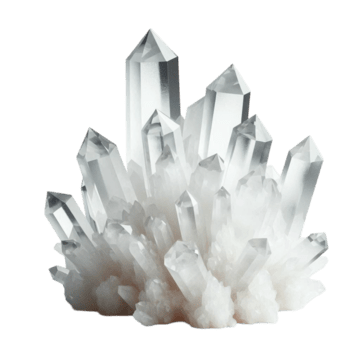
The main reason is natural crystals. Rock crystal is quartz with a hardness of 7 on the Mohs scale, and natural inclusions indicate its natural origin. It is used in many collection designs, for example, in the Angel Peace pendant together with angelite and labradorite, while in the Mind Balance pendant it is paired with fluorite.
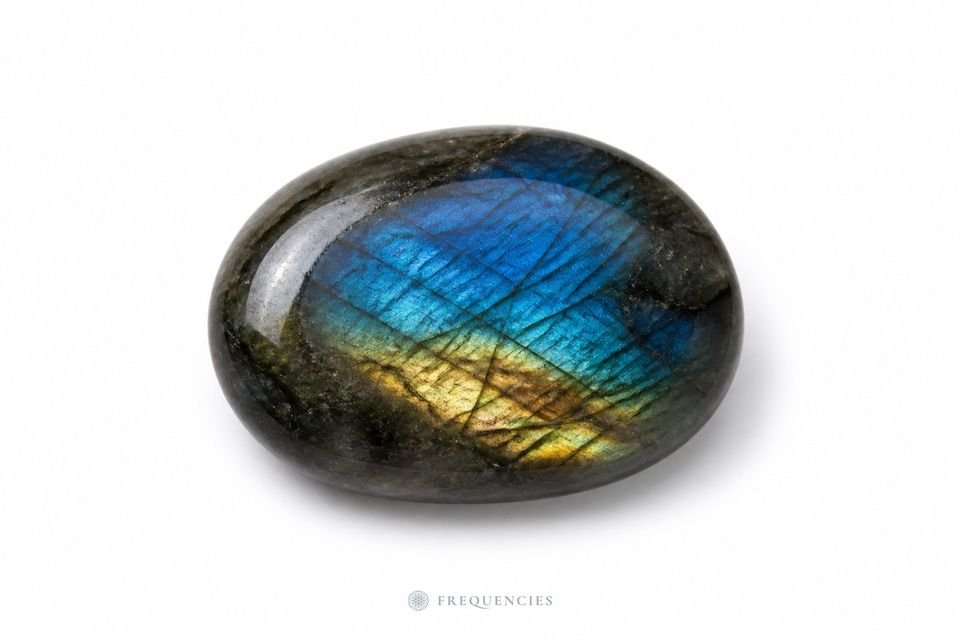
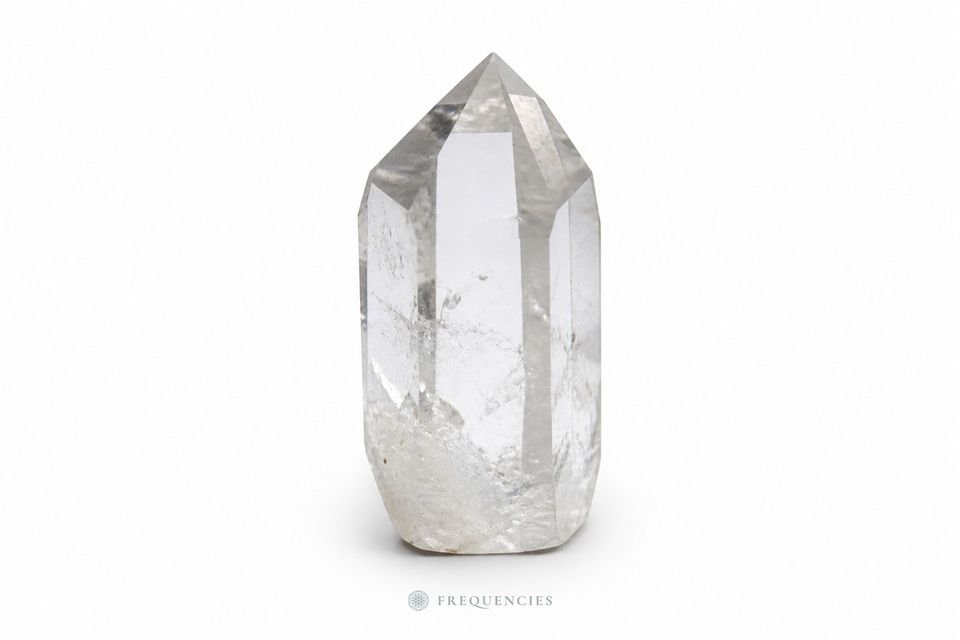
Each stone also has its own features. The flash of color in labradorite is best seen when viewed directly from above if the stone is cut parallel to the reflective layers. Rhodonite is characterized by black manganese oxide veins on a pink background and is used in the Heart Balance pendant. In the Power Center pendant, five stones meet: tiger’s eye, hematite, amethyst, rhodonite, and rock crystal. When tiger’s eye is turned in the light, a band of light moves across its surface.
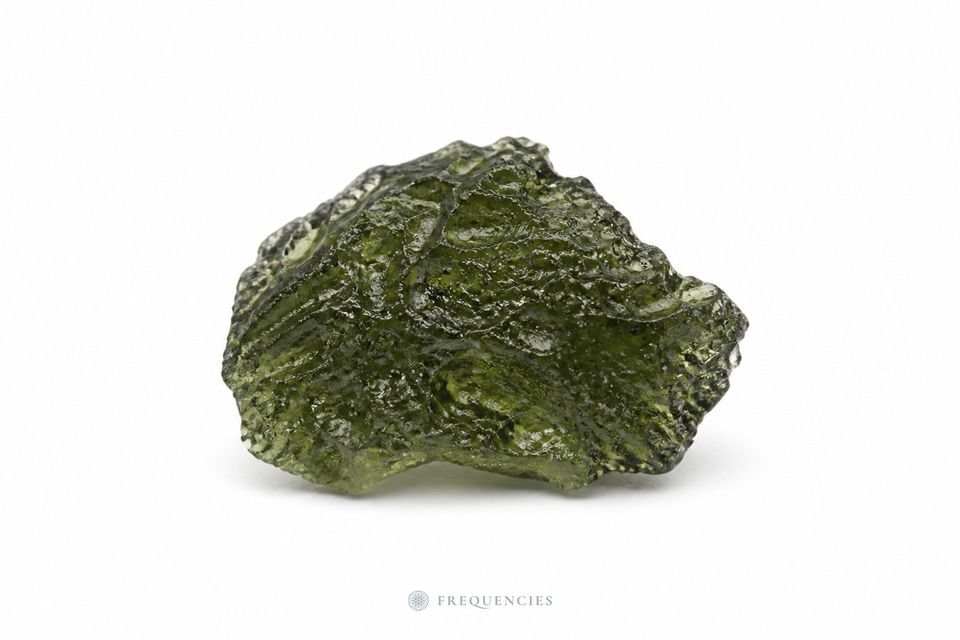
Moldavite is featured in the 3 cm Cosmic Transformation pendant. It is a natural glass that, according to geologists, formed in the heat of an asteroid impact about 15 million years ago in Central Europe. Moldavite is fragile, so it is better suited for pendants and earrings than rings. You will find the hardness, origin, and care of each stone in the encyclopedia of stones.
How to Choose Handmade Items That Will Last
Genuine handmade work can be recognized by a few simple features, useful both at fairs and online.
- Ask about the maker. If the seller can tell you where, how, and how long the item was made, that’s a good sign.
- Check the material. The most common imitation of rock crystal is glass, and much of the moldavite offered online is industrially produced green glass. Strongly magnetic “magnetic hematite” is usually a synthetic material, as natural hematite is only weakly magnetic.
- Expect small differences. For handmade products, the image is usually illustrative, and your item may differ slightly.
- Find out how to care for it. The care table shows which stones can be washed with water and placed in the sun.
- Plan your time. Personalized work takes weeks, not days. Delivery to parcel lockers in the Baltics is free for orders from €30.
You will find ready-made designs in the NKey FrQ pendants section, larger items in the wellbeing devices section, and individual crystals, such as rock crystal, in the store’s crystal section. Read about the history of the torus shape in the article Torus: a symbol of sacred geometry in mathematics, nature, and physics.
If you want a pendant made just for you, apply for a personalized NKey FrQ.
Frequently Asked Questions
Are NKey FrQ pendants really handmade in Latvia?
Yes. Each NKey FrQ pendant and wellbeing device is made by hand in Latvia: each natural crystal is placed with tweezers, everything is embedded in clear resin, and the torus is wound with copper wire using a specific winding technique.
How long does it take to make a personalized NKey FrQ pendant?
The creation of a personalized pendant or device takes 2 to 5 weeks. Ready-made NKey FrQ pendants are delivered in 1 to 3 business days. For a Christmas gift, order your personalized pendant by November 15.
What information is needed for personalization?
Please provide your date, time, and place of birth, as well as any additional wishes. Within three days, you will receive a description of the selected crystals, and we start work only after your approval.
Do two pendants of the same design look identical?
No. The crystals are natural, and each is placed by hand, so the pattern in each pendant is different. You will see the exact arrangement of the crystals only upon receipt.
When does the Open-Air Museum fair take place?
The folk applied art fair takes place on the first weekend of June. It was first held in 1971, and the next fair is scheduled for June 5 and 6, 2027.
Is NKey FrQ a medical device?
No. NKey FrQ is a wellbeing and design item and is not intended for diagnosing or preventing health disorders.
Sources
- Latvian Ethnographic Open-Air Museum: About Us
- Latvian Ethnographic Open-Air Museum: Fair
- Latvian Ethnographic Open-Air Museum: Contemporary Folk Applied Art Collection
- LSM: After the pandemic break, the Open-Air Museum again holds the crafts fair (D. Kraukle on 1971)
- LSM: The 50th Open-Air Museum fair postponed to August (2019 figures)
- LSM: The traditional crafts fair has taken place at the Open-Air Museum (2026)
- LSM: Expert: The use of ancient Latvian symbols should not be exaggerated
- LSM: Auseklītis. How to knit it into clothing?
- O. Ķenga. Methodology of Latvian Ornament Study (1920-1943) as Narrative of Nationalism. Krustpunkti, 2024 (journal Culture Crossroads)
- Latvian Cultural Canon: Lielvārde Belt
- Ministry of Defence of the Republic of Latvia: NATO Riga Summit 2006 (book, mittens)
- Law “On Craftsmanship” (likumi.lv)
- Latvian State Archives: Latvian Chamber of Crafts, historical overview
- European Commission: Directive (EU) 2024/1799 on repair of goods
- Cuatrecasas: EU imposes new repair obligations on manufacturers and sellers
- Geology.com: Moldavite
- Geology.com: Hematite
- FREQUENCIES stone encyclopedia (data from GIA, Mindat, geology.com)
- FREQUENCIES: NKey FrQ pendants and wellbeing devices
- FREQUENCIES: About Us
- FREQUENCIES: Delivery and Returns