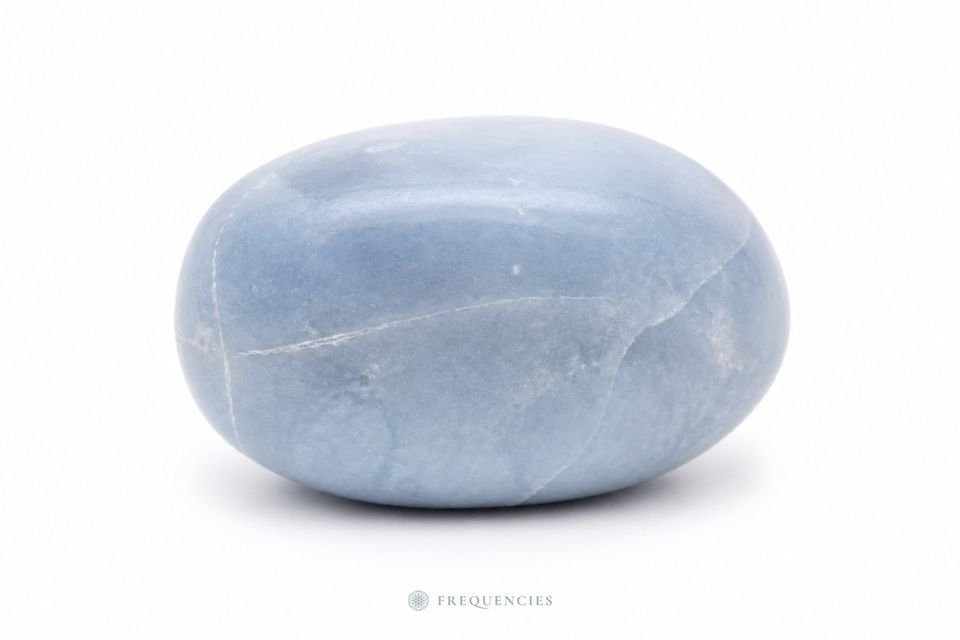
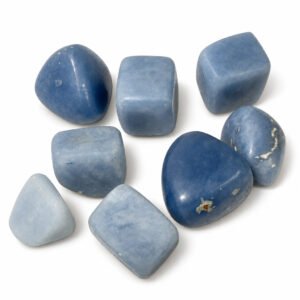
Angelite is the trade name for blue anhydrite from Peru.
Mineralogically, angelite is anhydrite, calcium sulphate without water of crystallisation, with a soft, bluish grey colour. It was found in Peru and introduced to the world gem market in the late 1980s. The name "angelite" was chosen deliberately to evoke associations with angels.
The name anhydrite means "without water".
The mineral was named in 1804 by the German mineralogist Abraham Gottlob Werner, who pointed out that it has no water of crystallisation. In damp conditions anhydrite gradually takes up water and turns into gypsum. That is why angelite is stored in a dry place and cleaned without water.
Anhydrite raised a whole German town.
In 2007 geothermal heating boreholes were drilled for the town hall in Staufen, Germany, and groundwater reached the anhydrite layers. As it took up water, the anhydrite swelled, and by 2010 the town centre had risen in places by as much as 30 cm. This caused cracks in many historic buildings, including the town hall.
The giant crystals of Naica grew from anhydrite.
In the Cave of the Crystals in Mexico, anhydrite was first deposited from water heated by magma. When the cave cooled below about 56 °C, the anhydrite began to dissolve, and over at least 500,000 years huge crystals of gypsum, or selenite, grew from the solution. So angelite and selenite are closely related minerals.

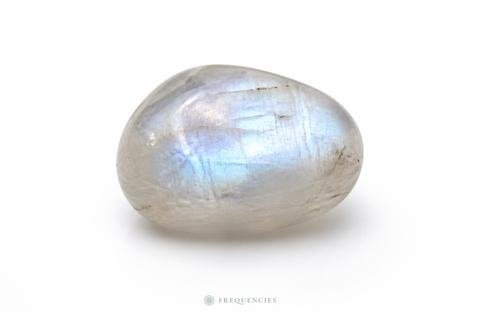 Moonstone