
Before the gua sha stone made its way to the bathroom shelf, in China, the skin was scraped with a spoon or copper coin dipped in water or oil. Modern facial tools are often made of stone, and many are sold as “jade,” although this word refers to two different minerals and not every green roller is made of either one.
Where Gua Sha Comes From
Gua sha (刮痧) is a traditional Chinese scraping practice. The word “guā” means “to scrape” [1], while one explanation for the origin of the word “shā” links it to the Chinese word “shā” (沙), meaning sand. In a 2023 study, Associate Professor Yue Liyuan of Beijing University of Science and Technology writes that gua sha lived on for centuries in rural areas as a folk custom. During the Song and Yuan dynasties, from the 10th to the 14th century, back scraping with a spoon was widespread, as was scraping with copper coins dipped in water or oil [2].
The first book dedicated solely to sha was written in 1675 during the Qing dynasty by Guo Zhisui, titled “Sha zhang yu heng.” Dozens of works on this topic were published during the Qing period, but in the 1990s, gua sha became popular again in China, with new tools and materials developed for it [2]. Ceramic spoons, coins, jade stones, and water buffalo horn were used for scraping [1].
Facial gua sha differs from body gua sha. Acupuncture specialist Tim Sobo explains in a Cleveland Clinic article that very light pressure is used on the face, as the face is more delicate and thinner than the rest of the body [3]. In the West, facial gua sha and face rollers became a mass trend in 2021, spreading through the TikTok network. This wave was accompanied by criticism of cultural appropriation, as most brands selling Chinese facial tools in the West were not of Chinese origin [4].
Did you know? In 2001, director Zheng Xiaolong released the film “Gua Sha” (in English, The Gua Sha Treatment). In it, a Chinese grandfather in the USA performs gua sha on his grandson, and the purple-red marks left on the skin are perceived by authorities as signs of abuse. Yue Liyuan cites the film as an example of how the same tradition is viewed very differently in China and the West [2].
Jade: Two Minerals, One Name
The face roller is often called a “jade roller” in English, but gemologists use the word “jade” to refer to two different minerals. Nephrite belongs to the amphibole group, while jadeite is a pyroxene [5]. French mineralogist Alexis Damour determined in 1863 that the stone called jade could be either one [6]. Both consist of tiny, tightly intergrown crystals, making them extremely resistant to breaking [7]. Nephrite is slightly softer than jadeite, but even more durable [6].
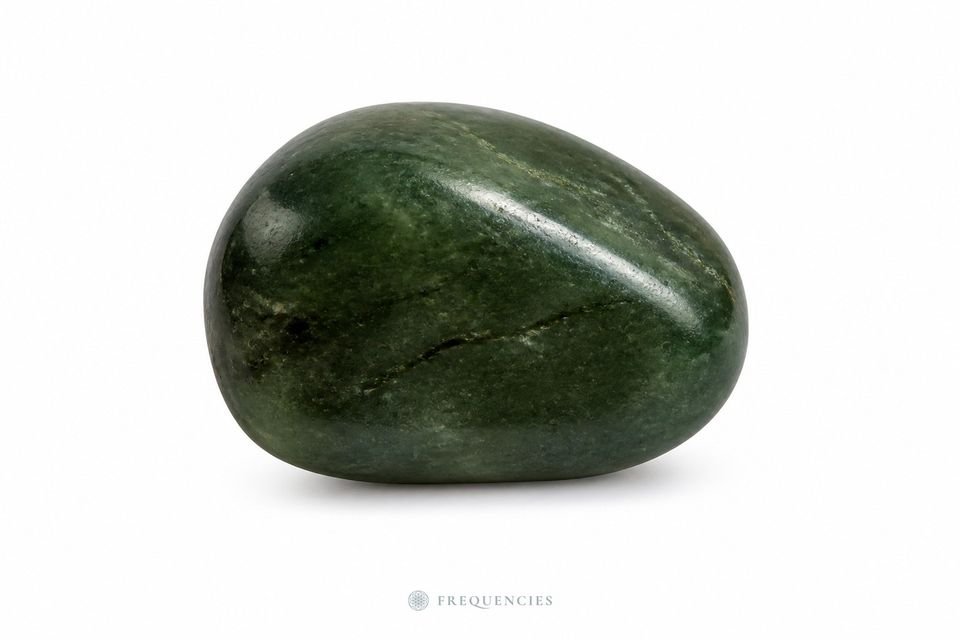
The word “jade” comes from the Spanish “piedra de ijada,” literally “loin stone,” first recorded in 1565, while “nephrite” comes from the Latin translation of this phrase, “lapis nephriticus” [6]. In China, the art of jade carving has developed for more than 3,000 years, and for thousands of years it was the art of nephrite: jadeite from Burma, now Myanmar, only reached China at the end of the 18th century [8]. In New Zealand, nephrite is called pounamu in the Maori language and is considered a Maori treasure [6].
The Swiss Gemmological Institute SSEF explains that in China, the concept is even broader: the Chinese word “yù” (玉), literally “the most beautiful stone,” referred to jade, which, in addition to nephrite, also includes minerals from the serpentine group and even marble. Therefore, SSEF emphasizes that the designation “jade” alone is not sufficient, as the composition remains too vague, and the mineral should also be specified, for example, nephrite jade or jadeite jade [9].
How to Distinguish Nephrite, Jadeite, and Serpentine
In hand, three green stones may look almost identical, so gemologists distinguish them by measurable properties. The table summarizes data from Geology.com, GIA, Minerals.net, and our encyclopedia [10] [7] [11] [12].
| Property | Nephrite | Jadeite | Serpentine |
|---|---|---|---|
| Mineral group | amphibole | pyroxene | serpentine group: antigorite, lizardite, chrysotile |
| Mohs hardness | 6 to 6.5 | 6.5 to 7 | 2.5 to 5.5 |
| Density | medium | highest of the three | lowest of the three |
| Luster | vitreous, greasy, silky, or waxy | vitreous | greasy, waxy, or silky |
| Everyday durability | very resistant to breaking | very resistant to breaking | soft and easily scratched |
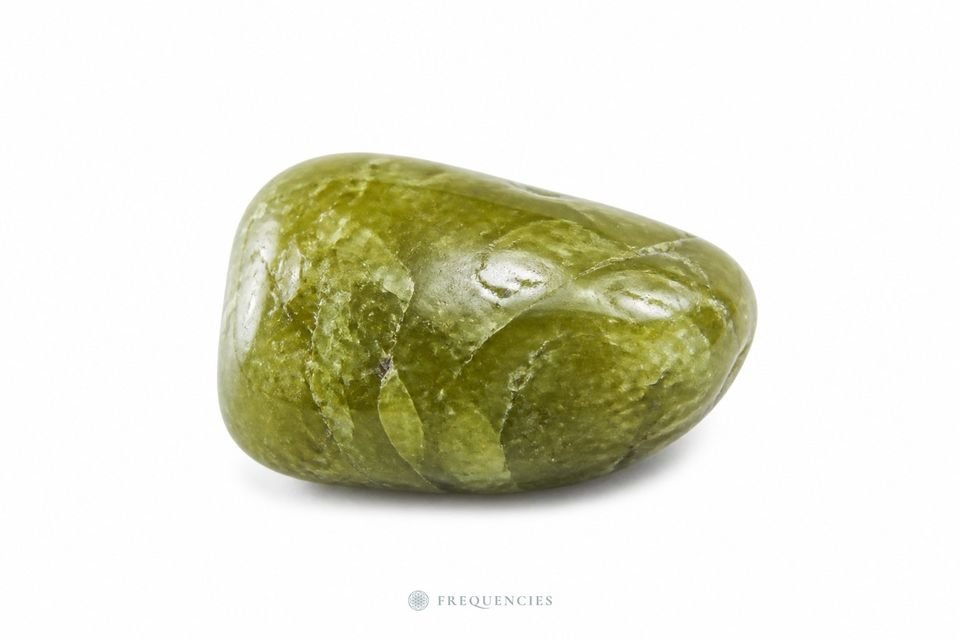
At home, the simplest signs are weight and wear. Serpentine is significantly softer than jade, and its density is much lower [10], so a tool of the same size feels lighter in the hand and scratches appear on it more quickly over time. Do not try to scratch the stone with a knife or polish it yourself: the fibrous variety of serpentine, chrysotile, is a type of asbestos [12]. Serpentine is not only green; there is also yellow serpentine. Cheaper serpentine is sometimes dyed to resemble nephrite [13].
Jadeite is often bleached with acid and impregnated with polymer (Type B), sometimes also dyed (Type C) [5]. Geology.com writes that Type B treatment can often only be determined in a gemological laboratory, and for expensive items, laboratory testing is recommended [10]. Serpentine, dyed calcite, aventurine sold as “Indian jade,” glass, and plastic are also sometimes sold as jade [5] [10]. If a face roller description only says “jade,” ask the seller whether it is nephrite, jadeite, or serpentine.
Rose Quartz, Amethyst, Rock Crystal, and Green Aventurine
There is no jade in our store’s Massage category. Gua sha stones, rollers, and wands there are made from quartz group stones, which have a Mohs hardness of 7, while green aventurine is 6.5 to 7. They are harder than nephrite and much harder than serpentine, and gua sha stones and wands can be briefly rinsed in water [14].
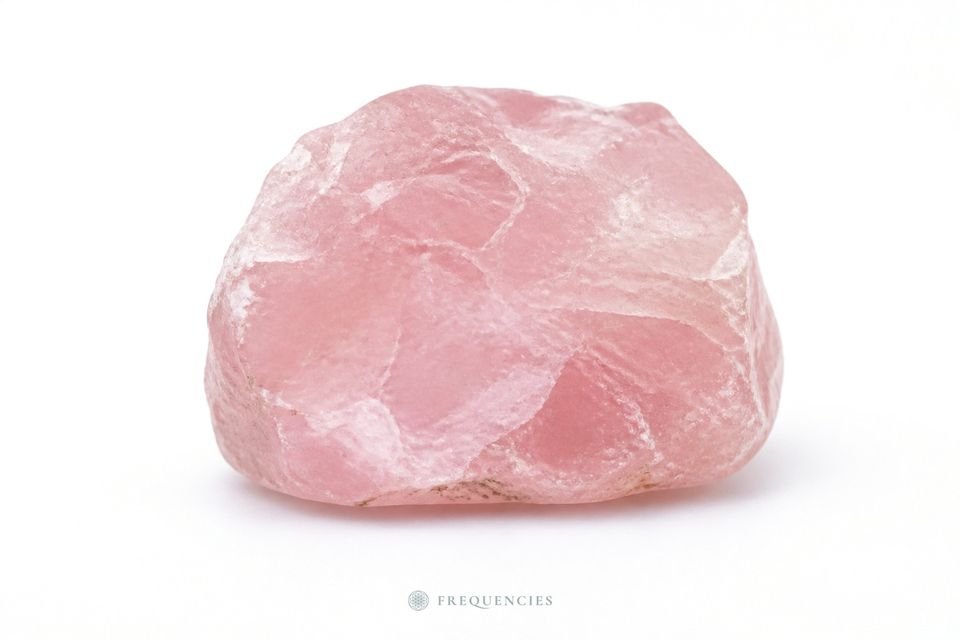
Rose quartz is usually milky translucent, and its gentle tone is best seen in pieces at least a centimeter thick. Prolonged sunlight can make the pink tone paler. A very bright “neon” pink tone or color accumulated in cracks indicates dyeing [15]. In the crystal community, rose quartz symbolizes gentleness and love.
Amethyst is purple quartz, and its color can also fade in prolonged sunlight. Natural amethyst often shows angular lighter and darker color zones, while a completely uniform appearance with round bubbles indicates glass [16]. Rock crystal is clear quartz. Its most common imitations are glass and material pressed from quartz powder with resin; in the hand, quartz stays cool longer, while glass warms up faster [17].
Green aventurine is quartz or quartzite with tiny fuchsite plates. Fuchsite is a chromium-containing mica that gives the stone its green color and fine shimmer. Very bright, evenly scattered copper-colored sparkles indicate goldstone, which is glass with metal particles [18]. The category also includes a selenite massage wand. Selenite is gypsum with a hardness of 2 and does not tolerate moisture, so it should be cleaned only with a dry, soft cloth and stored separately in a soft pouch [19].
Shapes and Sizes: Heart, Comb, Wand, and Roller
A gua sha stone is usually a flat, smoothly polished plate with edges of varying curvature. The heart shape has both a convex and a concave edge, the comb shape has one serrated edge, and an elongated wand with rounded ends can be held like a pencil. The face roller has one or two stone heads on a metal frame, often a larger and a smaller one.
In our store, rock crystal and rose quartz gua sha stones are about 8 cm long, the green aventurine gua sha stone weighs about 45 g, rock crystal massage wands are 12 and 13 cm long, while amethyst and rose quartz rollers are 14 cm long, with two heads of different sizes. On October 20, 2026, a rock crystal gua sha stone cost €14, rose quartz and green aventurine gua sha stones €15, a rose quartz roller €19, and an amethyst roller €24 [14].
Hygiene and Care
Bacteria live on the skin, and cosmetic residues accumulate on the tool, so dermatologist Shilpi Khetarpala recommends in a Cleveland Clinic article to clean the face roller with alcohol after each use [20]. WebMD writes that the gua sha stone or roller should be cleaned with mild soap after each use [21]. Quartz and nephrite stones can be briefly rinsed in lukewarm water and then dried [5] [14].
The roller has a metal frame and axle, so it should not be soaked or rinsed under running water. Our amethyst roller care instructions recommend cleaning it after use with a soft, slightly damp cloth and drying it [22]. Do not boil stone tools or place them in hot water: the care instructions for the rock crystal gua sha stone state that it should be protected from sudden temperature changes [23].
Hardness does not mean resistance to impact. Durability is the ability to resist breaking, and in this respect, jade is excellent [10], but our quartz tool care instructions recommend protecting them from drops and impacts [14]. Use the tool over a towel, not over a tiled floor. Cleveland Clinic recommends not using a chipped or broken tool [3].
Store each tool separately in a soft pouch or box so that harder stones do not scratch softer ones, and do not share your tool with others. Keep rose quartz and amethyst away from direct sunlight, and selenite in a dry place. All stone care rules are summarized in the care table.
How to Choose a Gua Sha Stone or Face Roller
- Make sure the description includes the mineral name, such as rose quartz, amethyst, or nephrite, not just “jade” or “natural stone.”
- Check the edges and surface: there should be no chips or cracks.
- Check that the roller frame is firm and the heads rotate smoothly.
- If you want to wash the tool with soap and water, choose quartz or nephrite, not selenite.
- Compare the length or weight indicated on the product pages and choose a tool that is comfortable for you to hold in your hand.
You will find gua sha stones, rollers, and wands in the Massage category, and other rose quartz items in the rose quartz category. If you are looking for a gift, also check out gift ideas. Each stone is natural, so color and pattern may differ slightly from what is shown in the image. Orders over €30 to parcel machines in the Baltics are delivered free of charge.
Frequently Asked Questions
What is a gua sha stone?
It is a flat, smoothly polished stone plate used in gua sha, the traditional Chinese scraping practice. Historically, scraping was also done with a spoon or coin, but nowadays stone tools with very light pressure are used for the face.
Is a jade roller made of real jade?
Not always. Gemologically, jade is nephrite or jadeite, but serpentine, dyed calcite, aventurine, and glass are also sometimes sold as jade. Ask the seller for the exact mineral name.
How to distinguish nephrite from serpentine?
Serpentine is softer, with a hardness of 2.5 to 5.5, and is lighter. Nephrite has a hardness of 6 to 6.5 and is very resistant to breaking. Both can be reliably distinguished in a gemological laboratory.
How to clean a gua sha stone?
After each use, wash the quartz or nephrite stone with mild soap, briefly rinse in lukewarm water, and dry. Clean selenite only with a dry cloth.
Can a face roller be rinsed under running water?
It is better not to. The roller has a metal frame, so clean it with a soft, slightly damp cloth and dry it.
Sources
- Wikipedia, Gua sha: en.wikipedia.org/wiki/Gua_sha
- Yue Liyuan, Cultures of Science, 6(3), “Understandings and misunderstandings of gua sha”, 2023: journals.sagepub.com/doi/full/10.1177/20966083231200044
- Cleveland Clinic, “Gua Sha: What It Is and How To Do It”, 2025: health.clevelandclinic.org/why-gua-sha-might-be-good-for-you
- Wikipedia, C-beauty: en.wikipedia.org/wiki/C-beauty
- FREQUENCIES Stone Encyclopedia, Nephrite: frequencies.lv/enciklopedija/nefrits
- Wikipedia, Jade: en.wikipedia.org/wiki/Jade
- GIA Gem Encyclopedia, Jade Description: gia.edu/jade-description
- GIA Gem Encyclopedia, Jade History and Lore: gia.edu/jade-history-lore
- M. S. Krzemnicki, SSEF Swiss Gemmological Institute, “Jade, Stone of Gods: Terms, Concepts & Certification”: ssef.ch/jade-stone-of-gods-terms-concepts-certification
- Geology.com, Jade: geology.com/gemstones/jade
- Minerals.net, Serpentine: minerals.net/mineral/serpentine.aspx
- FREQUENCIES Stone Encyclopedia, Serpentine: frequencies.lv/enciklopedija/serpentins
- FREQUENCIES Stone Encyclopedia, Yellow Serpentine: frequencies.lv/enciklopedija/dzeltenais-serpentins
- frequencies.lv, Massage category and its product pages, 20.10.2026: frequencies.lv/produkta-kategorija/kristali/masazai
- FREQUENCIES Stone Encyclopedia, Rose Quartz: frequencies.lv/enciklopedija/roza-kvarcs
- FREQUENCIES Stone Encyclopedia, Amethyst: frequencies.lv/enciklopedija/ametists
- FREQUENCIES Stone Encyclopedia, Rock Crystal: frequencies.lv/enciklopedija/kalnu-kristals
- FREQUENCIES Stone Encyclopedia, Green Aventurine: frequencies.lv/enciklopedija/zalais-aventurins
- frequencies.lv, Selenite massage wand ~14-15 cm: frequencies.lv/products/selenita-masazas-smaile-14-15-cm
- Cleveland Clinic, “Face Rolling: How To Do It and Its Many Benefits”, 2021: health.clevelandclinic.org/face-roller-benefits
- WebMD, “Gua Sha: Benefits, Risks and Techniques”, 2026: webmd.com/balance/what-is-gua-sha
- frequencies.lv, Amethyst massage roller 14 cm: frequencies.lv/products/ametista-masazas-rullitis-14-cm
- frequencies.lv, Rock crystal gua sha massage stone 8 cm: frequencies.lv/products/kalnu-kristala-gua-sha-masazas-akmens-8-cm