
There are no volcanoes in Latvia, and the solid crystalline rocks that form the foundation for everything else begin only at depths of 300 to 1900 metres [1]. Even so, granite, gneiss and quartzite can be found in almost every field: the ice sheet carried these stones from Scandinavia, the bed of the Baltic Sea and Estonia, and every spring the frost slowly pushes them up to the surface [2]. Geologists divide all rocks into three major groups, and you can see each of them with your own eyes in Latvia.
Rock and Mineral: What Is the Difference?
The National Encyclopedia of Latvia defines a rock as a mineral aggregate of a definite composition and structure that has formed through geological processes and makes up an independent body [3]. A mineral is a single chemical substance with its own crystal lattice, such as quartz or feldspar, whereas granite consists mainly of quartz and feldspar with small amounts of mica and amphibole [4]. Why lapis lazuli is a rock but obsidian is glass is explained in the article Mineral, Rock or Crystal.
By origin, rocks are divided into three groups [3]:
- Igneous rocks form when molten silicate material, or magma, crystallises;
- Sedimentary rocks form on the Earth’s surface from the breakdown products of other rocks;
- Metamorphic rocks form when existing rocks in the Earth’s crust recrystallise, for example under the pressure and temperature deep underground [5].
There are also transitional rock types between the groups [3]. Ģirts Stinkulis, Associate Professor at the University of Latvia, notes that the stones found in Latvia can be divided further into at least 200 types [2].
Igneous Rocks: Granite, Gabbro, Basalt and Obsidian
Igneous rocks are first classified by where the magma solidified. Plutonic or intrusive rocks cool slowly beneath the Earth’s surface, so large crystals grow in them: examples are granite, diorite, gabbro and peridotite. Volcanic or extrusive rocks solidify quickly at the surface, and their crystals are tiny or do not form at all. This is how basalt, rhyolite, pumice and obsidian form [6, 7].
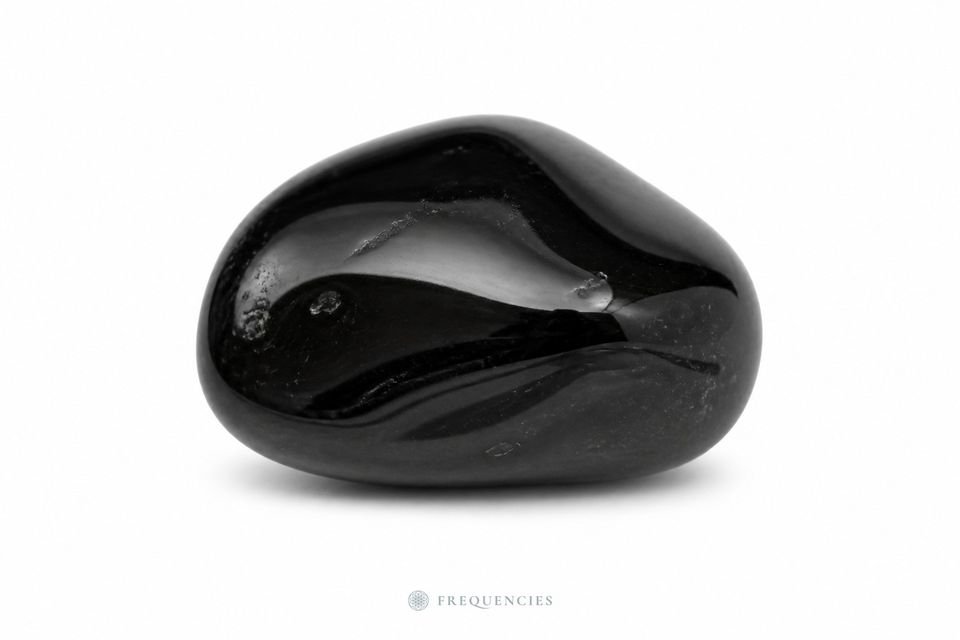
The second distinguishing feature is colour. The University of Latvia rock identification guide states that in acid, or light-coloured, plutonic rocks such as granite, dark minerals make up 0 to 15%, while in basic rocks they make up 46 to 85% [7]. When a school assignment asks about a dark, coarse-grained rock, the answer is usually gabbro. It is a dark plutonic rock made of plagioclase and pyroxene, similar in composition to basalt but with larger grains, because it cooled more slowly [8].
Granites, especially rapakivi granites with large, round feldspar crystals, are among the most common field boulders in Latvia. Dainis Ozols’s book “Minerals and Rocks of Latvia” states that the ice sheet brought them 12 to 15 thousand years ago: the red ones from the Åland Islands, the brownish ones from the Wiborg rapakivi massif in south-eastern Finland and the neighbouring border area of Russia [23], and the pinkish ones from the coast of western Finland [5]. The name labradorite is also used for a rock: Ozols applies it to a black labradorite anorthosite with patches of bluish iridescence, a popular facing stone [5]. The mineral labradorite, by contrast, is a plagioclase feldspar [9].
Obsidian is usually a volcanic rock that cooled so rapidly that its atoms had no time to arrange themselves into a crystal lattice, which makes it volcanic glass. Obsidian older than a few million years is rare, because weathering, heat and other processes destroy or alter glass relatively quickly [10]. Dalmatian jasper, too, is actually an igneous rock (a microgranite, aplite or rhyolite with black amphibole spots), not a jasper [9].
Sedimentary Rocks: Sandstone, Dolomite, Limestone and Gypsum
Sedimentary rocks are divided into three types. Clastic rocks form from fragments and grains of other rocks: these include sandstone, siltstone, conglomerate and breccia. Chemical sedimentary rocks, such as rock salt, flint and some limestones and dolomites, precipitate from solution. Organic sedimentary rocks form from the remains of plants and animals: chalk, coal, peat and some limestones [7, 11].
Across Latvia, above the crystalline basement, there is a sedimentary cover ranging in age from the Ediacaran to the Quaternary [1]. Many riverbank outcrops reveal Middle and Upper Devonian rocks. At the Ērgļu Cliffs (also called the Ērģeļu Cliffs) on the River Gauja, about 5 km north of Cēsis, a continuous 1.3 km stretch exposes Middle Devonian sandstone of the Gauja Formation, laid down by fast-flowing streams on a delta plain [1]. The Upper Devonian dolomites first precipitated in shallow seas as calcium carbonate and were later converted into dolomite by magnesium-bearing solutions. In 2015, dolomite was extracted from 27 deposits [12].
The Upper Devonian Salaspils Formation contains rock gypsum. It formed in a hot, dry climate, when water evaporated from shallow marine lagoons and calcium sulfate was deposited [12]. The same mineral, gypsum, also makes up selenite [9]. Limestone is mainly composed of the mineral calcite. Latvia also has postglacial calcareous spring deposits, and their dense variety is called tufa (šūnakmens) [5, 12]. The Riga Brothers’ Cemetery memorial ensemble is built from Allaži tufa [5].
Gypsum can be scratched with a fingernail, while flint is so hard it scratches glass [7]. For Devonian fish in Latvian sandstones, read the article Fossils in Latvia.
Metamorphic Rocks: Gneiss, Marble, Serpentinite and Lapis Lazuli
By appearance, metamorphic rocks are divided into two groups. Foliated metamorphic rocks, such as gneiss, phyllite and schist, look banded or layered. Massive (non-foliated) metamorphic rocks have no layers: examples are marble, quartzite and hornfels [7, 13].
A rock can be transformed in several stages: in regional metamorphism, shale gradually turns into slate, then phyllite, schist and finally gneiss, while granite exposed to heat and pressure can become granite gneiss [14]. Marble forms from limestone when its calcite recrystallises into interlocking crystals [15]. Picasso jasper, too, is metamorphosed limestone, in other words marble, and not a jasper [9].
In Latvia, metamorphic rocks lie both deep beneath your feet and in the fields. The basement is dominated by gneisses, migmatites and amphibolites [1], and Ozols writes that gneisses and granite gneisses make up most of Latvia’s field boulders. The ice sheet carried these rocks from Fennoscandia; they formed about 2 to 3 billion years ago deep inside ancient mountains, at depths of up to 15 km. Gneiss can be told apart from granite by its uneven structure: it has layers or bands [5].
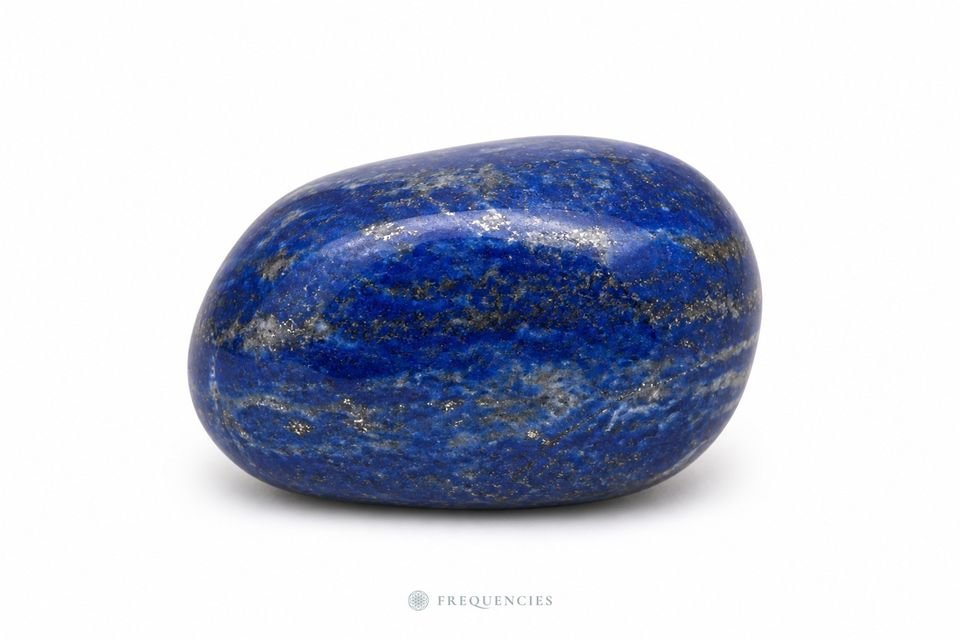
Lapis lazuli, which shops call lazurite, is also a metamorphic rock [13]. Britannica states that it usually occurs in crystalline limestones and forms through contact metamorphism, and that the most important mines are in Badakhshan, north-eastern Afghanistan [16]. Serpentinite is a greenish rock made up of minerals of the serpentine group [7]. The fibrous variety of serpentine, chrysotile, is a type of asbestos, so do not saw or grind such a stone at home [9].
Quartzite: Sandstone That Has Become One of the Most Durable Rocks
Quartzite is a metamorphic rock that consists almost entirely of quartz. It forms when quartz-rich sandstone is transformed by heat and pressure: the sand grains and the cement binding them recrystallise into a tightly interlocking mass of quartz. It is one of the most durable rocks on the Earth’s surface [17]. Ozols writes that quartzitic sandstone forms first, with grains that are still only slightly altered; as metamorphism intensifies, the pores almost disappear and dense quartzite forms [5].
Quartzite should not be confused with quartz: quartz is a mineral, while quartzite is a rock made of quartz grains. What sets it apart from sandstone is the way it breaks. Quartzite is so durable that it breaks through the grains rather than along their boundaries, and its hardness on the Mohs scale is about 7. It is usually white or grey, but iron colours it pink, red or violet [17]. Dense quartzite is massive, hard and brittle, and when split it breaks into sharp fragments with a conchoidal fracture [5].
In Latvia, you will find quartzite among field boulders and pebbles. Ozols mentions the Jotnian sandstones and quartzites, which are widespread in Scandinavia and Karelia and on the bed of the Baltic Sea; they reached Latvia with the ice sheet. The quartzite sample in his book comes from the Dīriķi quarry in Ramata Parish. Stone heaps in coastal areas, for example at Kaltene and near Ainaži, contain only durable rocks: gneisses, granite gneisses, granites and quartzites [5]. Whether quartzite and other quartz-bearing rocks belong in a sauna stove is discussed in the article Sauna Stones.
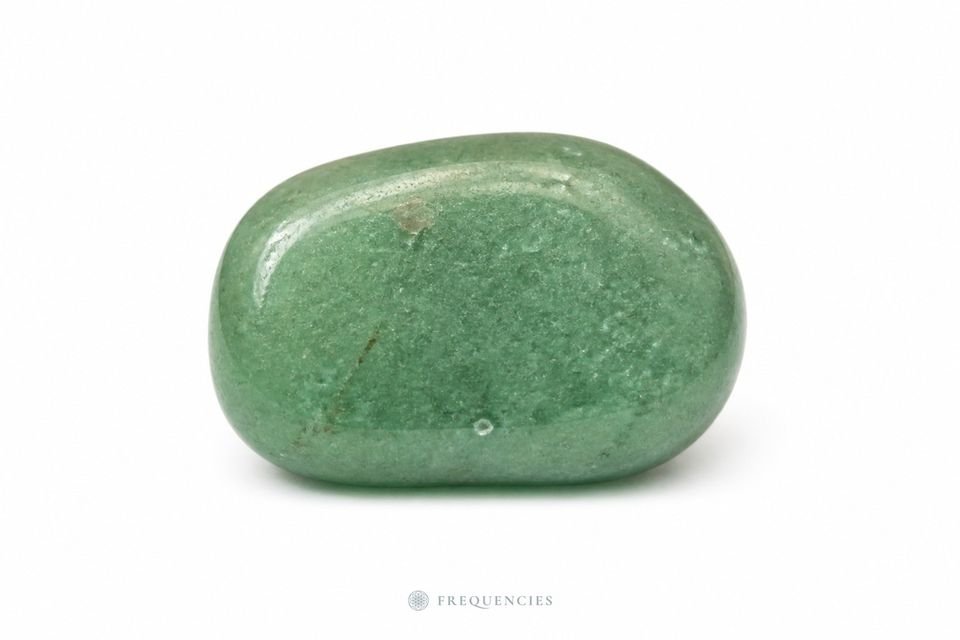
Many of the stones sold as aventurine are actually quartzite [17]. Green aventurine owes its colour to flakes of fuchsite, a chromium-bearing mica, while red aventurine gets its reddish-brown hue from inclusions of hematite or goethite [9]. See all varieties in the aventurine category.
Did you know? Napoleon’s sarcophagus in Paris, in the Dome Church of Les Invalides, is carved from red Shoksha quartzite, which was quarried on the shore of Lake Onega in Karelia. The first samples reached Paris under the name “antique red porphyry”, but the geologist Pierre Louis Antoine Cordier established that the stone was not porphyry but metamorphosed sandstone [18].
Where to See Rocks in Latvia
Latvia’s current Cabinet of Ministers Regulation No. 461 of 2022 lists 173 protected geological and geomorphological natural monuments, and all large boulders are also protected separately [19].
- Sandstone: the Ērgļu Cliffs on the River Gauja near Cēsis, and the Dauda Waterfall in Sigulda Municipality, which has formed over Upper Devonian sandstones of the Amata Formation with calcite and dolomite cement. At the Ežurgu Cliffs on the Vidzeme coast, Middle Devonian sedimentary rocks of the Burtnieki Formation are exposed [1, 19].
- Dolomite: the Jaunžagatu bluff in Vireši Parish, where a block of Devonian dolomite of the Daugava Formation is tilted at an angle of 58 to 60 degrees [1, 19].
- Igneous and metamorphic rocks: boulders. Latvia’s largest concentration of boulders lies on the western coast of the Gulf of Riga between Kaltene and Roja [12], and the Kaltene coastal formations are a protected natural monument [19]. The largest boulder in Latvia is the Nīcgale Boulder, with an above-ground volume of 170 cubic metres [2].
- All groups in one place: the “Geology of Latvia” exhibition at the Latvian National Museum of Natural History shows rocks from different Latvian strata, and the “Dynamic Geology and Rocks” exhibition displays the most characteristic samples of rocks and meteorites [20, 21].
Any activity that damages or destroys a natural monument is prohibited on its territory. You may not write, draw or carve on a geological natural monument, nor move it [22]. Large boulders with an above-ground volume of 10 cubic metres or more are protected together with a 10-metre-wide strip around them [19]. Collect samples for your collection only outside protected sites, for example pebbles at the edge of a field with the landowner’s permission, or choose raw stones that show their natural surface.
Did you know? Latvia also has the Dobele astrobleme, which the National Encyclopedia of Latvia describes as a bolide impact crater. The structure is 3.5 to 4 km across, and in its central part Middle Devonian rocks have been uplifted by 450 metres, but the data on its age are still contradictory [1].
How to Identify a Rock by Appearance
In V. Segliņš’s identification guide, the first step is to work out which rock group a sample belongs to, judging by its layering and grain size. The table shows simplified features from this guide [7].
| What you see | Most likely rock group |
|---|---|
| Even, thin layers with flat surfaces; grains of sand, clay or gravel | Sedimentary rock |
| Whole imprints of shells, leaves or bones | Sedimentary rock |
| Crystals can be easily scratched or broken | Sedimentary rock |
| Randomly oriented crystals in a hard rock | Igneous rock |
| Glassy appearance, dense and hard like window glass | Igneous rock |
| Vesicular, porous, as if foamed | Igneous rock |
| Broken, deformed or folded layers | Metamorphic rock |
| Flat, parallel crystals, such as mica, or many garnets | Metamorphic rock |
Small red specks in a boulder may be almandine garnet: Ozols’s book notes that pegmatitic granite is almost always dotted with red almandine specks [5]. It is handy to compare your finds with polished stones, as the grain pattern shows up better on a smooth surface. Stones are not toys: if you have small children at home, keep small stones out of their reach, as children under 3 years old may swallow them.
Frequently Asked Questions
What are the types of rocks?
By origin, rocks are divided into three groups: igneous rocks (granite, basalt, obsidian), sedimentary rocks (sandstone, limestone, dolomite) and metamorphic rocks (gneiss, marble, quartzite).
What are metamorphic rocks and how do they form?
They are rocks that have been transformed deep inside the Earth by pressure and temperature. This is how limestone becomes marble, quartz sandstone becomes quartzite and shale gradually turns into gneiss.
What is quartzite?
Quartzite is a metamorphic rock that consists almost entirely of quartz and forms from quartz sandstone. It is hard and durable, breaks through the grains, and its hardness is about 7. In Latvia, it is found among the field boulders brought by the ice sheet.
Which rock is dark and coarse-grained?
In school assignments, the answer is usually gabbro. It is a plutonic rock made of plagioclase and pyroxene. The fine-grained volcanic rock of the same composition is basalt.
What rocks are found in Latvia?
The bedrock exposed at the surface in Latvia consists of sedimentary rocks: sandstone, siltstone, clay, dolomite, limestone and rock gypsum. The granite, gneiss and quartzite boulders were brought by the ice sheet, while the crystalline basement lies at a depth of 300 to 1900 metres.
Sources
- Ģ. Stinkulis, “Latvia’s Geological Structure”, National Encyclopedia (updated 28.08.2025): enciklopedija.lv/skirklis/26128
- LSM.lv, 10.05.2021, “Why New Boulders Appear in Fields Every Spring” (Ģ. Stinkulis, Associate Professor at the University of Latvia): www.lsm.lv/raksts/dzive–stils/vide-un-dzivnieki/kapec-pavasari-tir…
- A. Zabele, “Petrology”, National Encyclopedia (updated 30.12.2024): enciklopedija.lv/skirklis/5089
- Geology.com, H. M. King, “Granite”: geology.com/rocks/granite.shtml
- D. Ozols, “Minerals and Rocks of Latvia”, Latvian Petroglyph Centre, 2008 (on the Nature Conservation Agency website): www.daba.gov.lv/lv/media/1745/download
- Geology.com, “Igneous Rocks”: geology.com/rocks/igneous-rocks.shtml
- V. Segliņš, “Rock Identification”, University of Latvia material for children and students: www.lu.lv/fileadmin/user_upload/lu_portal/projekti/vpp/mali_latvija…
- Geology.com, H. M. King, “Gabbro”: geology.com/rocks/gabbro.shtml
- FREQUENCIES stone encyclopedia: labradorite, obsidian, Dalmatian jasper, selenite, Picasso jasper, serpentine, green and red aventurine (data from GIA, Mindat, geology.com): frequencies.lv/enciklopedija/
- Geology.com, H. M. King, “Obsidian”: geology.com/rocks/obsidian.shtml
- Geology.com, “Sedimentary Rocks”: geology.com/rocks/sedimentary-rocks.shtml
- Ģ. Stinkulis, “Mineral Resources in Latvia”, National Encyclopedia (updated 03.02.2025): enciklopedija.lv/skirklis/26079
- Geology.com, “Metamorphic Rocks”: geology.com/rocks/metamorphic-rocks.shtml
- Geology.com, “Gneiss”: geology.com/rocks/gneiss.shtml
- Geology.com, “Marble”: geology.com/rocks/marble.shtml
- Encyclopaedia Britannica, “lapis lazuli”: www.britannica.com/topic/lapis-lazuli
- Geology.com, “Quartzite”: geology.com/rocks/quartzite.shtml
- J. Touret, A. Bulakh, “From Russia with rocks: the tombstone of Napoleon”, 2017: annales.org/archives/x/touret/20-Bulakh-2017.pdf
- Cabinet of Ministers Regulations No. 461 (14.07.2022) “Regulations on Protected Geological and Geomorphological Natural Monuments”: likumi.lv/ta/id/334009
- Latvian National Museum of Natural History, exhibition “Geology of Latvia”: dabasmuzejs.gov.lv/lv/ekspozicijas/latvijas-geologija
- Latvian National Museum of Natural History, exhibition “Dynamic Geology and Rocks”: dabasmuzejs.gov.lv/lv/ekspozicijas/dinamiska-geologija-un-iezi
- Cabinet of Ministers Regulations No. 264 (16.03.2010) “General Protection and Use Regulations for Specially Protected Nature Territories”, points 40 and 42: likumi.lv/ta/id/207283
- P. Härmä, O. Selonen, “Natural stone production in the Wiborg rapakivi granite batholith in southeastern Finland”, Finnish Natural Stone Association, Geotechnical report 10, 2018: kivi.info/wp-content/uploads/2019/10/Natural-stone-production-in-the-Wib…