
In the dictionary of the Latvian language amber is a semi-precious stone [1], but the Latvian law “On State Assay Supervision” classes it as a precious stone, alongside diamonds and natural pearls [2]. There is no contradiction here, because the line between precious and semi-precious stones was drawn by tradition and the market, not by mineralogy. A review published in “Gems & Gemology”, the journal of the Gemological Institute of America (GIA), called both terms outdated [3].
Where Is the Line Between Precious and Semi-Precious Stones
In the dictionary, precious stones are minerals that are rare in nature, with outstanding colour, clarity and great hardness, and four are named as the most valuable: diamond, ruby, sapphire and emerald [4]. Semi-precious stones are colourful, translucent minerals used for jewellery and works of art, such as amber, lapis lazuli, malachite, garnet, zircon and topaz [5]. This list alone shows how arbitrary the line is: amber is not a mineral at all, while topaz, with a hardness of 8, is as hard as emerald or even harder [22].
Britannica defines a gemstone as a mineral highly prized for its beauty, durability and rarity, and adds that a few materials of organic origin are also regarded as gemstones: pearl, red coral and amber. Fewer than a hundred minerals are used as gemstones, and only 16 of them are important. Some of them give several gemstones: corundum is both ruby and sapphire, and beryl is both emerald and aquamarine [6].
The Five Cardinal Gems and the Fall of Amethyst
Historically, the group of the most precious stones was known as the cardinal gems: diamond, ruby, sapphire, emerald and amethyst. The Gemmological Association of Great Britain (Gem-A) explains that these stones were especially important in the cultures of ancient Rome, Greece, Egypt and Mesopotamia, and that stones of exceptional quality were even rarer 1,500 years ago than they are now. In the Roman Republic and Empire purple was a sign of high rank, and in the Middle Ages amethyst was set in the rings of Catholic bishops [7].
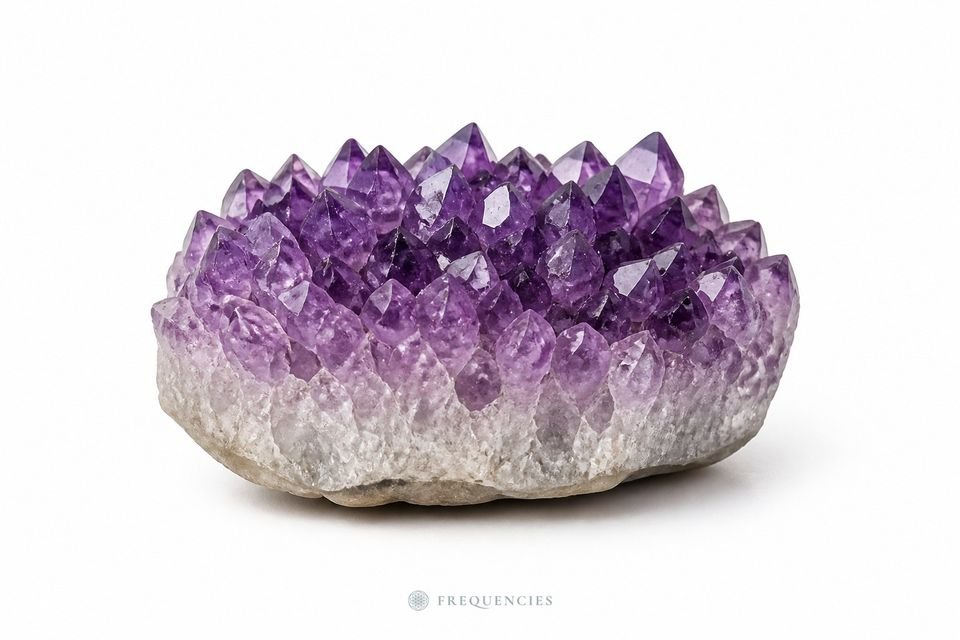
Did you know? Amethyst was as costly as ruby and emerald until the 19th century, when large deposits were discovered in Brazil [8]. GIA writes that today even amethyst of exceptional quality is modestly priced and that large stones also stay affordable, because the price per carat does not rise steeply with size [8]. That is why you can buy an amethyst cluster today for a few tens of euros, and the shop’s amethyst category has clusters, points and heart-shaped stones.
Why Jewellers No Longer Recommend the Word “Semi-Precious”
The code of ethics of the American Gem Trade Association (AGTA) advises its members not to use the word “semiprecious”. The association’s head, Doug Hucker, explains it like this: the word makes a stone sound “semi-desirable” [9]. In the same JCK article, Stuart Robertson, vice-president of Gemworld International, says that the prices of ruby, sapphire and emerald are rising fast, so red garnets and tourmalines, which look like ruby but are more affordable, are in demand [9]. In a 2014 review in the journal, the GIA gemmologist Michael T. Evans called the words “precious” and “semi-precious” outdated and asked why the negative overtone should apply to alexandrite or red spinel, which often cost at least as much as the traditional precious stones [3]. Gem-A, too, describes the idea of cardinal gems as little used today [7].
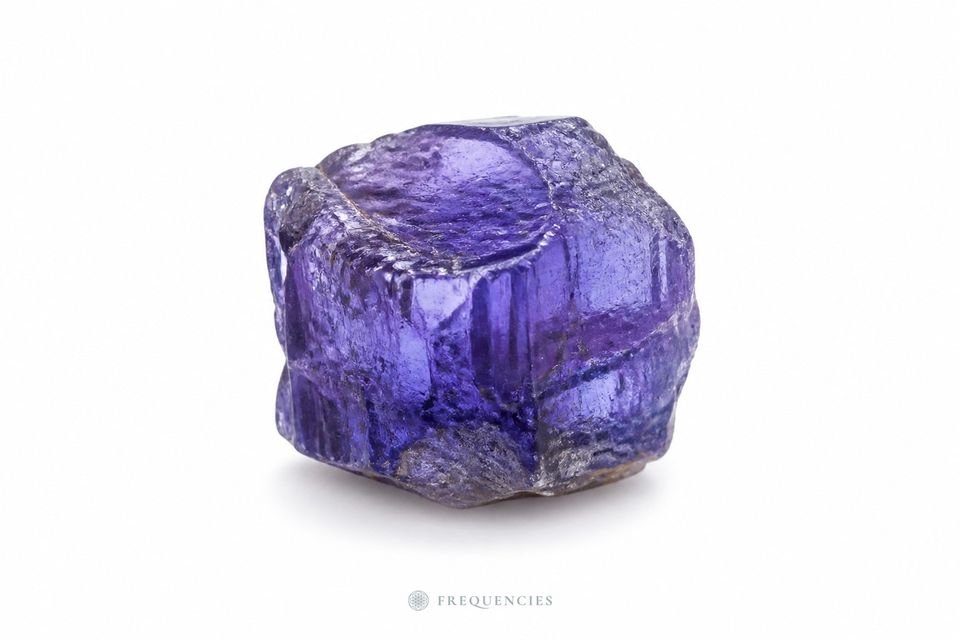
Latvian has a neutral alternative, the word “rotakmens” (ornamental stone): a beautiful, colourful mineral or rock used for jewellery and decorative objects [4]. Rarity does not match the old division either. Tanzanite is mined commercially in only one place in the world, the Merelani Hills in Tanzania [10], yet it has never been one of the “big four”. In the dictionary garnet is a semi-precious stone [5], although its green varieties tsavorite and demantoid are rare and expensive [22].
Names of Precious and Semi-Precious Stones by Colour
If you are looking for a stone by colour, the division into precious and semi-precious stones means little: the same colour includes both expensive and affordable stones, and one mineral can come in several colours. The four stones that the dictionary names as the most valuable precious stones are shown in bold in the table [4]. The links lead to the pages of our stone encyclopedia, which give each stone’s hardness, care tips and the features by which to recognise a genuine stone.
| Colour | Stones | What causes the colour |
|---|---|---|
| Red | ruby, garnet, ruby in fuchsite, red jasper | Ruby owes its red colour to chromium: the more chromium, the more saturated the colour [24]. Red jasper gets its tone from tiny grains of hematite [27]. |
| Pink | rose quartz, rhodonite, rhodochrosite, morganite, kunzite, manganese calcite | The pink colour of rhodonite comes from manganese, while morganite is the pink variety of beryl, which makes it a relative of emerald and aquamarine [27]. |
| Orange and Yellow | citrine, carnelian, sunstone, orange calcite, yellow jasper, Libyan desert glass | Most citrine on the market is heat-treated amethyst, while yellow jasper gets its tone from goethite [27]. |
| Green | emerald, peridot, nephrite, malachite, chrysoprase, green aventurine, amazonite, moldavite, dioptase | Emerald is coloured by chromium, vanadium and iron, malachite by copper and chrysoprase by nickel [27]. |
| Blue | sapphire, aquamarine, tanzanite, topaz, lapis lazuli, sodalite, kyanite, larimar, turquoise | Blue sapphire is coloured by iron and titanium, and a few hundredths of a per cent are enough [25]. Aquamarine owes its blue tone to iron [27]. |
| Violet | amethyst, lepidolite, charoite, fluorite | The violet colour of amethyst comes from an iron impurity that has been irradiated by natural gamma radiation from the surrounding rocks [27]. |
| Colourless and white | diamond, rock crystal, milky quartz, selenite, howlite | Diamond is the only gemstone made of a single element, usually about 99.95% carbon [26]. The white tone of milky quartz comes from tiny inclusions of gas or liquid [27]. |
| Black | black tourmaline, black onyx, obsidian, shungite, hematite | The colour of black tourmaline comes from the iron in the mineral itself, while most black onyx is dyed chalcedony [27]. |
| With optical effects | opal, labradorite, moonstone, tiger’s eye | The play of colour in opal is caused by the diffraction of light in tiny, regularly stacked spheres of silica, while the flashes in labradorite are caused by light reflected from thin internal layers [27]. |
Of the blue stones, only sapphire is among the dictionary’s four, although sapphire is not only blue: GIA points out that sapphires come in every colour except red, because red corundum is ruby [25]. A blue colour can also be the result of treatment: almost all blue topaz is colourless topaz that has been irradiated and heated, and lapis lazuli is often dyed to even out its colour [27]. Of the green stones, emerald is among the four. Garnet can be green too, for example demantoid, which shows strong fire when well cut, while peridot and dioptase used to be mistaken for emerald [27].
Is Amber a Precious Stone
The answer depends on who is asking. In the Latvian law “On State Assay Supervision”, precious stones are “diamonds, coloured gemstones and natural pearls, corals and amber” [2]. The dictionary defines amber as the fossilised resin of Tertiary conifers and adds “semi-precious stone” in brackets [1]. In gemmology amber is an organic gem, because it comes from an organism that was once alive [11]. In 2014 the National History Museum of Latvia called it the gemstone of the Baltic Sea in the title of its amber exhibition [17].
Amber is not a mineral. The Earth Sciences Museum at the University of Waterloo in Canada explains that its organic origin and the lack of an ordered arrangement of atoms deny it the status of a mineral [12]. Nor is amber a rock, because a rock is an aggregate of minerals [23]. Mindat gives the hardness of amber as 2 to 2.5 on the Mohs scale [13], which is unusually soft for a gemstone: it scratches easily and is damaged by alcohol, perfume and solvents [15].
How Amber Forms
Amber is fossil tree resin that, once buried, has lost its volatile substances and changed chemically [14]. Mindat stresses that hardening alone is not enough: the resin molecules have to polymerise, which can take millions of years, or at least 100,000 years. Much of the “amber” from Colombia and Madagascar is in fact resin that is too young [13]. GIA calls younger fossil resins, often around 100,000 years old, copal [11].
The largest and most important amber deposits are on the shores of the Baltic Sea, in sands that are 40 to 60 million years old [14]. Baltic amber is also called succinite. It contains 3 to 8% succinic acid, and this variety of amber makes up about 80 to 90% of the amber mined in the world [12]. Amber is one of the lightest gemstones: it sinks in fresh water but can float in salt water, and the sea washes it ashore, especially after storms [15]. Mindat’s list of localities also includes Latvia: the South Kurzeme and Ventspils municipalities and the beach at Carnikava [13].
Did you know? The Greek name for amber, ēlektron, gave us the word electricity. In 1600 the English physician and natural philosopher William Gilbert introduced the Latin word electricus, “like amber”, in his treatise “De Magnete”. It described substances that, like amber, attract other objects after being rubbed [16].
Amber in Latvia: From the Stone Age to Liepāja
At the Zvejnieki burial ground by Lake Burtnieks, one of the most thoroughly studied Stone Age cemeteries in Europe, about 370 amber objects have been found in 19 burials. The richest is the double burial of a man and a woman, more than 6,000 years old, and the woman’s grave alone held more than 100 amber ornaments. In 1972, excavations at Kābeļi in Ikšķile uncovered a 12th-century hoard of raw amber weighing 25.68 kg, which in 2014 was described as the largest find of its kind from archaeological sites in Eastern Europe [17].
In South Kurzeme, for example in Rucava, Nīca and Bārta, amber brooches (saktas), small shirt brooches (kniepķeņi) and beads were worn with folk costume, while in the second half of the 20th century amber jewellery was made mainly in Liepāja, where amber working has a tradition going back centuries [17]. The Latvian Museum of Natural History also classifies amber by transparency and appearance: there is milky amber, bone amber, foamy amber and sugar amber. In the museum’s 2014 exhibition the largest piece of flow amber weighed 1.7 kg, and alongside Baltic amber, which formed from conifer resin, visitors could see blue amber from the Dominican Republic, which formed from the resin of broadleaved trees [18].
Are There Gemstones in Latvia
The National Encyclopedia of Latvia’s overview of the country’s mineral resources lists no gemstone deposits, and amber, which the law classes as a precious stone, is counted among the less common resources. What is more, the amber on the Latvian coast did not form there: 40 to 20 million years ago it built up in the deltas of large rivers in what is now the Kaliningrad Oblast, and later the currents of the Baltic Sea and its earlier stages carried it north to the Latvian coast [28].
Gem minerals do occur in Latvia, but only as small crystals. Red-violet crystals of almandine, a mineral of the garnet group, can often be seen in field boulders, and Dainis Ozols adds in his book “Minerals and Rocks of Latvia” that clear, transparent garnets are ornamental and precious stones [29]. Where to find calcite druses, pyrite concretions and flint in Latvia, and where collecting specimens is not allowed, is explained in the article Are There Crystals and Gemstones in Latvia.
Pearls and Corals: Precious Stones Without Crystals
The law also counts natural pearls and corals as precious stones [2], and they are not minerals either. A pearl forms in the mantle tissue of certain molluscs, usually around a microscopic foreign body. Cultured pearls are grown by placing a shell bead in the mollusc together with a piece of mantle tissue [19]. The coral used in jewellery is the hard calcium carbonate skeleton of sea corals, and in the Mediterranean it has been collected only by divers since trawl nets were banned in 1994 [20]. The shop’s bracelet category also includes a bamboo coral bracelet.
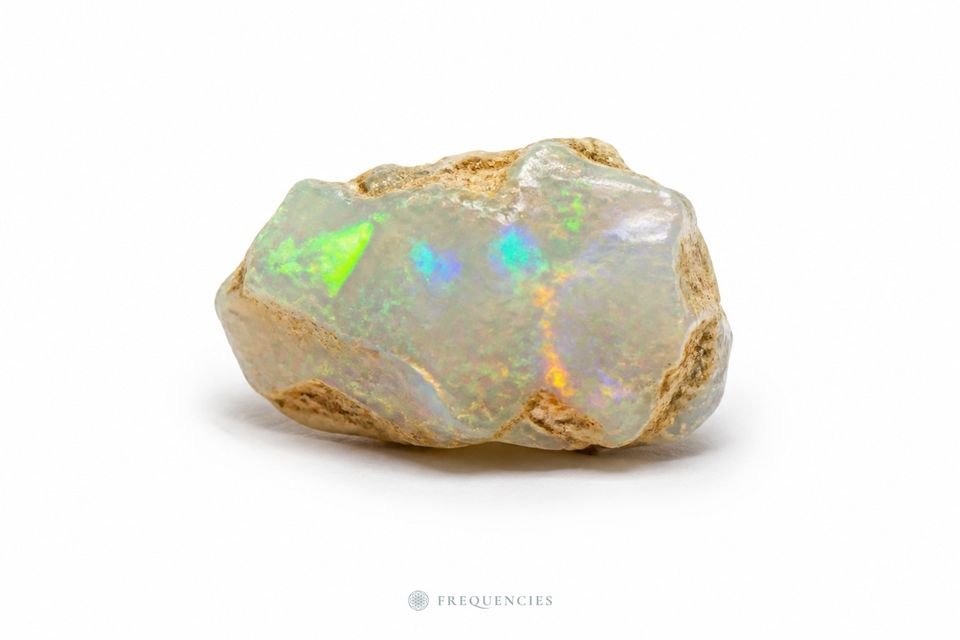
The dictionary also counts opal among precious stones, although it has no crystalline structure [4]. Opal is amorphous silica that contains water, so heat, dry air and bright direct light can cause a network of fine cracks in it [22].
What Really Determines the Value of a Stone
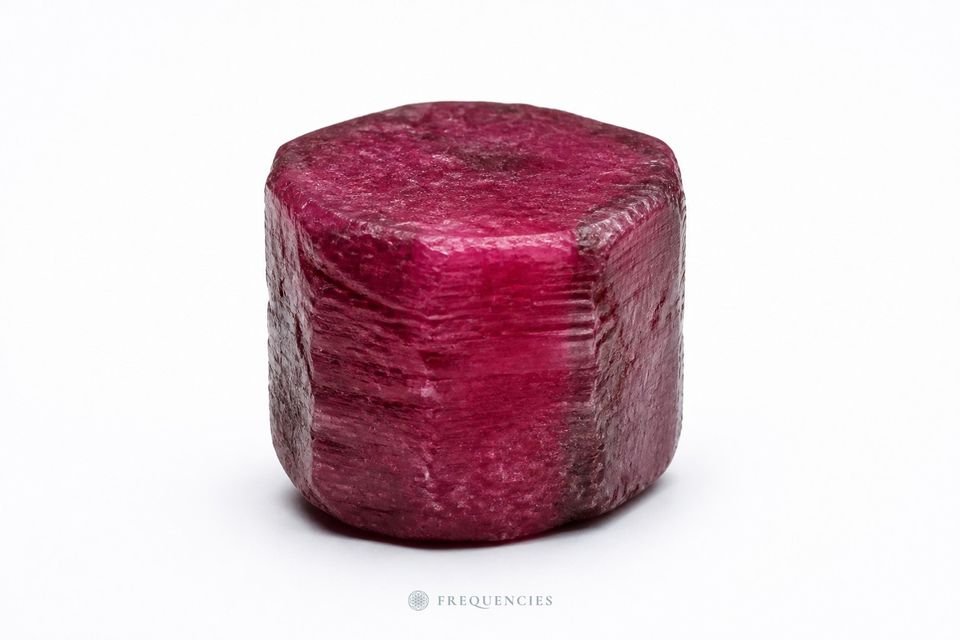
The name alone does not set the value. GIA writes of ruby that colour matters most, that value also depends on how visible the inclusions are, and that the price per carat rises considerably with the size of the stone [21]. Treatment matters a great deal too: most rubies are heated, the fractures in emeralds are usually filled with oil or resin, and bright blue agate is almost always dyed. Opaque rubies, including ruby in zoisite, are natural and affordable, but clean, vivid red stones are valued more highly [22].
In the FREQUENCIES stone encyclopedia, each stone has a specimen label with its mineral group, hardness and localities, as well as a note on the most common treatment. In the section “From Geology to Your Shelf” you will find how the stone forms, how to recognise a genuine one and how to choose. Before you buy, the tips on how to recognise a real crystal are also useful. You can browse natural stones in the shop’s crystal section and polished stones category, and delivery to parcel lockers in the Baltic States is free for orders from €30.
Frequently Asked Questions
What is the difference between precious and semi-precious stones?
The difference is set by tradition, not by science. Traditionally, diamond, ruby, sapphire and emerald are called precious stones, and the other stones used in jewellery semi-precious stones. A review in a GIA journal called these terms outdated because, for example, alexandrite and red spinel often cost at least as much as the traditional precious stones.
Is amber a precious stone?
The Latvian law “On State Assay Supervision” classes amber as a precious stone, the dictionary calls it a semi-precious stone, and in gemmology amber is called an organic gem.
Is amber a mineral or a rock?
Neither. Amber is fossil tree resin: it is organic in origin and has no ordered crystal lattice, so it is not a mineral, and it is not a rock either, because a rock is an aggregate of minerals.
How does amber form?
The resin of ancient trees ends up in the ground, loses its volatile substances and polymerises over millions of years. Younger resins that have not fully changed are called copal.
How do pearls form?
A natural pearl forms in the mantle tissue of certain molluscs, usually around a microscopic foreign body. For a cultured pearl, a shell bead is placed in the mollusc together with a piece of mantle tissue, and the mollusc coats it with nacre.
What are the cardinal gems?
Historically there were five: diamond, ruby, sapphire, emerald and amethyst. Amethyst lost its place among the most costly stones in the 19th century, when large deposits were discovered in Brazil.
Which gemstones are blue and which are green?
Blue stones include sapphire, aquamarine, tanzanite and topaz, and among the opaque stones lapis lazuli, sodalite, larimar and turquoise. Green stones include emerald, peridot and some garnets, as well as nephrite, malachite, chrysoprase, green aventurine and amazonite. Almost all blue topaz has been irradiated and heated.
Are there gemstones in Latvia?
The National Encyclopedia of Latvia’s overview of the country’s mineral resources lists no gemstone deposits. Amber, which the law classes as a precious stone, was carried to the Latvian coast by sea currents from the direction of today’s Kaliningrad Oblast, while small crystals of almandine, a mineral of the garnet group, can often be seen in field boulders.
Sources
- Tēzaurs.lv, dzintars (amber): tezaurs.lv
- Likumi.lv, law “On State Assay Supervision” (Par valsts proves uzraudzību), Section 1: likumi.lv
- GIA, Gems & Gemology, Spring 2014, Michael T. Evans, review “Smithsonian Nature Guide: Gems”: www.gia.edu
- Tēzaurs.lv, dārgakmeņi (precious stones): tezaurs.lv
- Tēzaurs.lv, pusdārgakmeņi (semi-precious stones): tezaurs.lv
- Encyclopaedia Britannica, gemstone: www.britannica.com
- Gem-A (Gemmological Association of Great Britain), Gem Knowledge: What Are the Cardinal Gems? (2026): gem-a.com
- GIA, Amethyst: www.gia.edu
- JCK, Tanya Dukes, “The S Word: How Gemstones Moved Beyond Semiprecious” (2019): www.jckonline.com
- GIA, Tanzanite Description: www.gia.edu
- GIA, Amber Description: www.gia.edu
- University of Waterloo, Earth Sciences Museum, Baltic Amber: uwaterloo.ca
- Mindat.org, Amber: www.mindat.org
- Encyclopaedia Britannica, amber: www.britannica.com
- Minerals.net, Amber: www.minerals.net
- Online Etymology Dictionary, electric: www.etymonline.com
- LSM.lv, article on the National History Museum of Latvia exhibition on amber as the gemstone of the Baltic Sea (15.10.2014): www.lsm.lv
- LSM.lv, “Rīgā būs skatāma plaša dzintara izstāde” [A large amber exhibition to open in Riga], Latvian Museum of Natural History (14.01.2014): www.lsm.lv
- GIA, Pearl Description: www.gia.edu
- GIA, Historical Reading List: Mediterranean Precious Coral: www.gia.edu
- GIA, Ruby Quality Factors: www.gia.edu
- FREQUENCIES stone encyclopedia: garnet, topaz, opal, ruby, emerald, agate (data from GIA, Mindat, geology.com): frequencies.lv
- Tēzaurs.lv, iezis (rock): tezaurs.lv
- GIA, Ruby Description: www.gia.edu
- GIA, Sapphire Description: www.gia.edu
- GIA, Diamond Description: www.gia.edu
- FREQUENCIES stone encyclopedia: colour, its cause and treatment (red and yellow jasper, rhodonite, morganite, citrine, emerald, malachite, chrysoprase, aquamarine, topaz, lapis lazuli, amethyst, milky quartz, black tourmaline, black onyx, opal, labradorite, garnet, peridot, dioptase; data from GIA, Mindat, geology.com): frequencies.lv
- Ģ. Stinkulis, “derīgie izrakteņi Latvijā” [mineral resources in Latvia], National Encyclopedia of Latvia (updated 03.02.2025): enciklopedija.lv
- D. Ozols, “Latvijas minerāli un ieži” [Minerals and Rocks of Latvia], Latvian Petroglyph Centre, 2008 (on the website of the Nature Conservation Agency), section “Granāti” [Garnets]: www.daba.gov.lv