
When Chris Stanley, a mineralogist at the Natural History Museum in London, entered the chemical name of a new Serbian mineral into an online search, the results showed him kryptonite [1]. In the film “Superman Returns,” exactly this name was written on the box containing kryptonite, only with the addition “with fluorine” [1]. The real mineral, jadarite, is not green and not radioactive [2], but its story shows how close to real geology films and games sometimes get.
Kryptonite: From Radio Show to Green Stone
Kryptonite is a fictional substance that can harm Superman, a hero who is otherwise almost invulnerable [3]. It was first introduced not in a comic, but in the radio series “Adventures of Superman” in 1943. Kryptonite appeared in comics only in 1949 in Superman #61, and then it was red. The familiar green color appeared in 1951 in Action Comics #161 [4].
The word also has a figurative meaning. In English, kryptonite refers to something that harms a person or thing that otherwise seems strong [3]. In Latvian, it could be called a weak spot.
Jadarite: The Serbian Mineral with Kryptonite’s Formula
Jadarite was discovered in 2004 in the Jadar Valley, Serbia, during exploratory drilling by geologists from the mining company Rio Tinto. It did not match any known mineral, so the sample was studied at the Natural History Museum in London and the National Research Council of Canada, and in 2006 the International Mineralogical Association approved it as a new mineral with the number IMA 2006-036 [5][6]. The scientific description was published in 2007 [6].
Jadarite’s formula is LiNaSiB3O7(OH), that is, sodium lithium boron silicate hydroxide [6]. In an NBC News article, Stanley joked that one should be careful with the mineral so that Earth does not lose its most famous superhero [2].
Why Jadarite Was Not Named Kryptonite
The reason is chemistry. Stanley explained that the mineral cannot be called kryptonite because it does not contain krypton [1], so it was named after its locality, the Jadar Basin in Serbia [6]. Krypton is a real chemical element, a noble gas discovered in 1898 by chemists William Ramsay and Morris Travers by evaporating liquid air. Its name comes from the Greek word kryptos, meaning “hidden” [7].
Only the formula connects jadarite with the movie prop. It is a white, dull mineral with a hardness of 4 to 5, and its crystals rarely exceed 5 to 10 micrometers [6]. Stanley described it as white, powdery, and “rather boring” [1]. Under ultraviolet light, jadarite glows faintly pink-orange [5][6]. The Natural History Museum explains that the green color of the movie kryptonite is due to fluorine, so jadarite, which lacks fluorine, is white [8].
For scientists, jadarite is important because of its lithium and boron content. Museum researchers concluded in 2025 that it was formed by a rare combination of volcanic activity and highly alkaline soda lakes that existed in the region more than 16 million years ago. So far, jadarite is known only from Serbia. Professor Richard Herrington estimates that the deposit contains almost 100 million tons of jadarite, which, if mining were allowed, could cover nine-tenths of the lithium needed for electric vehicles in Europe. Local residents strongly oppose the construction of mines and processing plants, and as of June 2025, the museum wrote that mining had not yet begun [9].
Did you know? A sample of jadarite can be seen in the Earth’s Treasury gallery at the Natural History Museum in London, and the museum has included it in its list of the strangest exhibits under the name “Kryptonite” [8]. The museum also holds part of the type material used to describe the mineral [6].
Minecraft Amethyst Geodes and Real Geodes in Brazil
Minecraft amethyst geodes appeared on June 8, 2021, in the Caves & Cliffs: Part I update [10]. In the game, a geode has three layers: the outer layer is smooth basalt, the middle is calcite, and the inner is amethyst. Amethyst clusters grow only on special amethyst blocks (budding amethyst) [11], and their shards can be used to craft, for example, spyglasses and tinted glass [12].
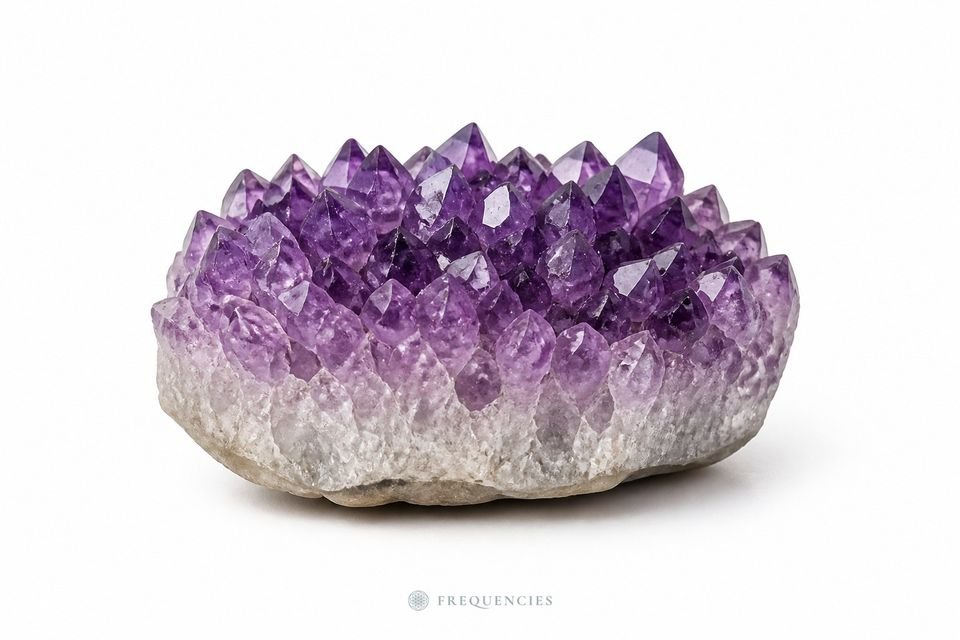
In nature, amethyst geodes also often form in volcanic rocks. The most significant amethyst deposits are usually found in cracks and cavities of igneous rocks, and in Brazil and Uruguay, much amethyst is found in cavities of basalt lava flows [13]. In the state of Rio Grande do Sul, Brazil, and neighboring Uruguay, the cavities were formed by gas bubbles and lava tunnels at the time when Africa and South America were drifting apart and the Atlantic Ocean was forming. The cavities were first lined with a layer of agate, then coarse quartz crystals, and initially these geodes were filled with rock crystal. Radiation from radioactive minerals in the surrounding basalt created color centers in the quartz and turned it into amethyst [14].
Calcite also often occurs in geodes in nature: in a geology.com image, an amethyst geode is shown with a calcite crystal growing inward from the wall [14]. You will find amethyst druses in the section Druses and Geodes, and the difference between a druse and a geode is explained in the article Crystal Forms.
Obsidian: One of the Strongest Blocks in the Game, Fragile Glass in Nature
In Minecraft, obsidian forms when flowing water touches a lava source block. It can be mined only with a diamond or netherite pickaxe, and its blast resistance is 1200, which is the highest possible value in survival mode [15]. Minecraft Wiki notes that in the game, obsidian is one of the hardest blocks to destroy, but in reality, it is as fragile as glass [15].
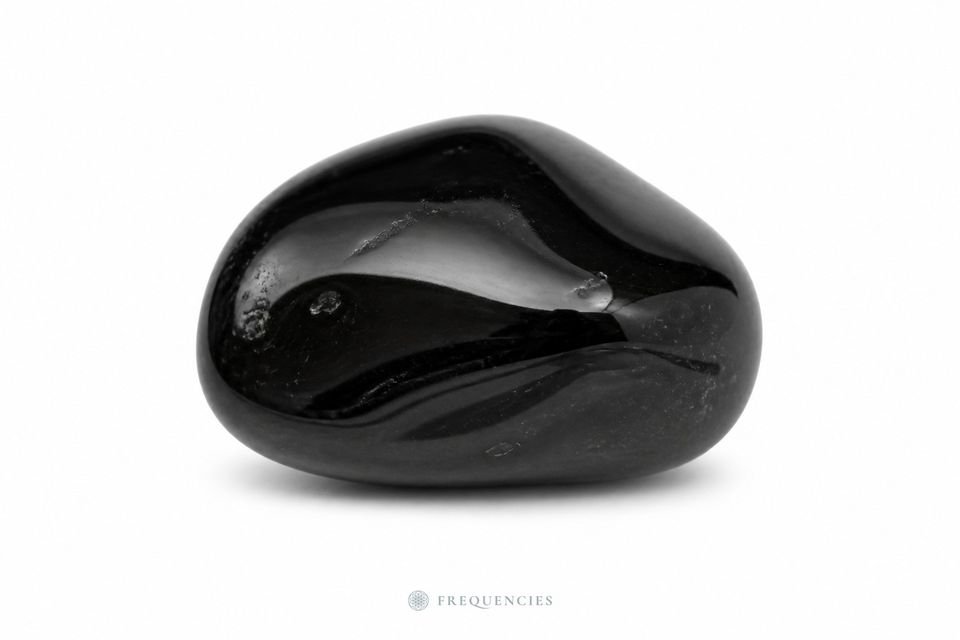
In nature, obsidian is volcanic glass. It forms when lava cools so quickly that atoms do not have time to arrange into a crystal lattice. Its hardness is about 5.5, so it is easily scratched, and the brittle glass easily chips on impact [16]. However, an obsidian edge can be thinner and sharper than the best surgical steel, and thin obsidian blades are used in some scalpels for the most precise operations [16]. In the Obsidian section, you will find a 4×4 cm obsidian pyramid from Mexico.
Diamonds, Emeralds, and Rubies: Where the Game and Nature Hide Them
In Minecraft, diamond ore forms from Y=16 to Y=-63, and is most commonly found at Y=-58 and Y=-59, that is, at the very bottom of the world [17]. In nature, diamonds form in the Earth’s mantle at a depth of about 150 kilometers or more, where the temperature is at least 1050 °C. They are brought to the surface by deep-source volcanic eruptions that form kimberlite and lamproite pipes. Such eruptions are extremely rare, and modern humans have not observed them. Coal rarely, if ever, participates in diamond formation [18].
Emerald ore in the game forms only in mountain and windswept hill biomes [19]. The real emerald is a green variety of beryl, and it almost always has visible inclusions, the so-called garden [20]. In 2012, Minecraft developers planned rubies for trading with villagers, but replaced them with emeralds [21]. The real ruby is a red variety of corundum with a hardness of 9 [20].
Stardew Valley and Star Wars: Real and Fictional Crystals
In Stardew Valley, geodes can be opened by the blacksmith Clint for 25 gold coins, but they can also be broken with a geode crusher [22]. The game features 53 minerals that can be donated to the museum [23], and many have real stone names, such as aquamarine, topaz, malachite, pyrite, opal, jasper, and tiger’s eye [23]. In nature, pyrite can be distinguished from gold by its streak on unglazed porcelain: pyrite’s streak is greenish-black, while gold’s is yellow. Also, pyrite is brittle, but gold is soft and bends [20].
Star Wars kyber crystals exist only in the stories of this fictional universe. The official Star Wars database states that they are found on several planets, especially in the caves of the icy planet Ilum, and that the crystal is colorless until it bonds with a Jedi, after which it glows blue or green, and in rare cases, another color [24].
A Gift for a Child Who Plays Minecraft
If a child knows where to find a geode in the game, they can be delighted with a real amethyst druse along with the story of how rock crystal in Brazilian basalt became amethyst. Our amethyst druses are from Brazil, and the smallest cost from €21. Amethyst has a hardness of 7, it can be briefly rinsed, but prolonged sunlight may fade its violet color [20]. Another idea is a 4×4 cm obsidian pyramid for €25: real volcanic glass that can be compared to the obsidian block in the game. Obsidian’s hardness is 5 to 5.5, so keep it separate from other stones and protect it from impacts [20].
Do not give small stones to children who might put them in their mouths. You will find more ideas in the Gift Ideas section, and for orders from €30, delivery to parcel machines in the Baltics is free.
Frequently Asked Questions
Does kryptonite exist?
The green stone from the planet Krypton is fictional. However, jadarite, recognized as a new mineral in 2006, has almost the same formula as kryptonite in the film Superman Returns, only without fluorine.
What does the word kryptonite mean?
In Superman stories, it is a fictional substance that harms him. Figuratively, it refers to something that harms a person or thing that otherwise seems strong, that is, a weak spot.
Why is jadarite not called kryptonite?
It does not contain the chemical element krypton, so the mineral was named after its locality, the Jadar Basin in Serbia.
How does obsidian form in nature?
Obsidian forms when lava cools so quickly that atoms do not have time to form a crystal lattice. It is volcanic glass with a hardness of about 5.5 and sharp fracture edges.
Are Minecraft amethyst geodes similar to real ones?
Partly. In the game, a geode has layers of basalt, calcite, and amethyst. In Brazil and Uruguay, real amethyst geodes are found in basalt lava cavities, where an agate layer formed first, then quartz, which became violet due to natural radiation.
Where do diamonds form in nature?
In the Earth’s mantle at a depth of about 150 km or more and at a temperature of at least 1050 °C. They are brought to the surface by deep-source volcanic eruptions, and coal almost never participates in this process.
Sources
- Holy Kryptonite: A Mineral Discovery in Serbia, NPR, April 25, 2007 (interview with mineralogist Chris Stanley)
- Scientists unearth Superman’s ‘kryptonite’, NBC News, April 24, 2007
- kryptonite, Cambridge Dictionary
- The Weird and Wonderful History of Kryptonite, DC, 2018
- J. Drmic. Jadarite: the real-life kryptonite with super potential, CSIRO, 2025
- Jadarite, Mindat.org (Hudson Institute of Mineralogy)
- Krypton, Periodic Table of Elements, Los Alamos National Laboratory
- 10 weird and unusual objects in the Museum: Kryptonite, Natural History Museum, London
- Kryptonite-like mineral could help Europe transition to greener future, Natural History Museum, London, 2025
- Java Edition 1.17 (Caves & Cliffs: Part I), Minecraft Wiki
- Minecraft Changelog 1.17.0.50: Amethysts and Geodes, Minecraft.net (Mojang Studios)
- Amethyst Shard, Minecraft Wiki
- H. M. King. Amethyst, Geology.com
- H. M. King. Geodes, Geology.com
- Obsidian, Minecraft Wiki
- H. M. King. Obsidian, Geology.com
- Diamond Ore, Minecraft Wiki
- H. M. King. How Do Diamonds Form? Geology.com
- Emerald Ore, Minecraft Wiki
- FREQUENCIES Stone Encyclopedia: emerald, ruby, pyrite, amethyst, obsidian (group, hardness, care, how to recognize)
- Ruby (removed content), Minecraft Wiki
- Geode, Stardew Valley Wiki
- Minerals, Stardew Valley Wiki
- Kyber Crystal (Lightsaber Crystal), Star Wars Databank, StarWars.com