
The most popular crystals, such as clear quartz, amethyst, and rose quartz, are quartz, or silicon dioxide SiO21, and they contain no heavy metals or arsenic. For children under 3 years old and pets, the main risk is that small stones are swallowed and cause choking. Some minerals contain copper, lead, mercury or arsenic, and a salt lamp can harm a cat that licks it repeatedly.
Why are small stones dangerous for children under 3 years old?
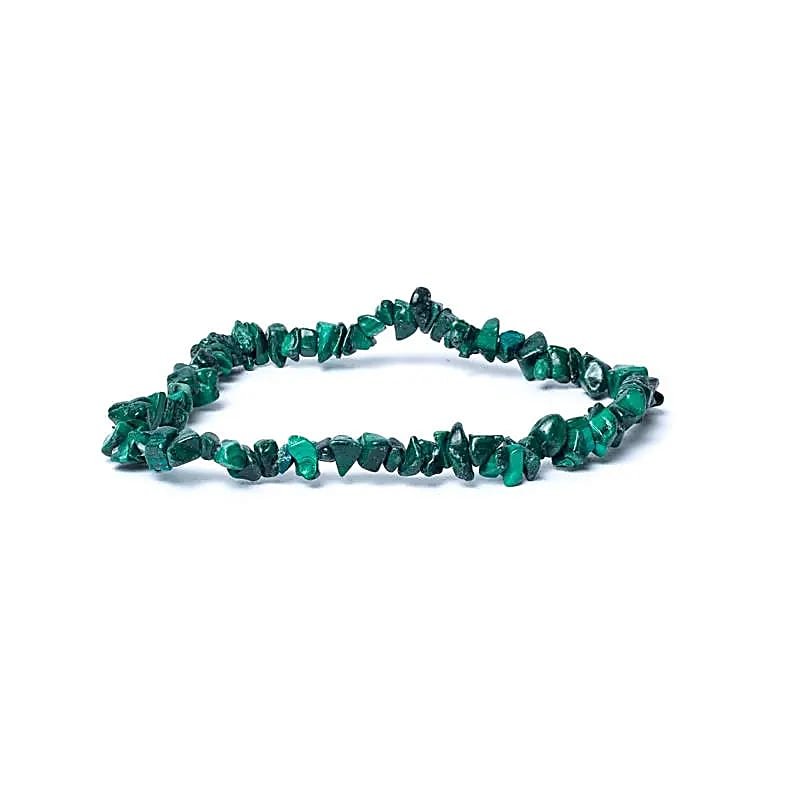
Under Latvian Cabinet Regulation No. 132 “Toy Safety Regulations”, a toy is a product intended for children under 14 years of age to play with2. Polished stones, chips and bracelets are not intended for this purpose, so the toy requirements for small parts do not apply to them. For toys intended for children up to 36 months, these regulations require the toys and their detachable parts to be too large to be swallowed or inhaled2. The U.S. Consumer Product Safety Commission (CPSC) tests a similar ban with a small parts cylinder, whose size roughly matches the fully expanded throat of a child under 3 years old3. Many polished stones in our shop are only 0.5 to 2.5 cm in size, and the malachite bracelet chips are about 0.4 cm. If a bracelet string breaks, the beads scatter across the floor and a crawling child or puppy may find them.
Special caution is needed with magnets. The CPSC warns that if two or more separate magnets are swallowed, or a magnet together with a metal object, they can attract each other through the intestinal walls, trap the intestine between them and cause perforations, blockages and infections4. Natural hematite usually does not attract a regular magnet, although some samples are attracted because of a magnetite admixture21. Beads sold as “magnetic hematite” are most often not hematite but a man-made material with a different chemical composition21. How to tell them apart is explained in the article Black Stones. If hematite beads are strongly attracted to a magnet or to each other, store them in the same way as magnets.
Keep small stones in a closed box on a high shelf. In a child’s room or wherever a dog walks, it is better to have items that cannot be swallowed: spheres and clusters with a flat base. Currently (20 November 2026), a rose quartz sphere of about 7 cm and 439 g costs €43.00, and an amethyst cluster with a flat base, 7×9 cm and 360 g, costs €70.00. Put a sphere on a stand so that it does not roll off the shelf.
Which minerals are toxic and which only require caution?
Some minerals contain heavy metals or arsenic according to their chemical formula. Malachite Cu2(CO3)(OH)2 and azurite Cu3(CO3)2(OH)2 are copper carbonates1. The University of Hertfordshire database states that basic copper carbonate occurs naturally as the minerals malachite and azurite, and that in the EU classification it is harmful if swallowed or inhaled and causes serious eye irritation6. Cinnabar is mercury sulfide HgS1, and PubChem notes that prolonged or repeated exposure damages organs7. Geology.com recommends treating cinnabar as a toxic substance and not handing it to schoolchildren8.
Galena is lead sulfide PbS1, which PubChem labels as harmful if swallowed or inhaled and as a substance that may harm an unborn child9. The U.S. Centers for Disease Control and Prevention (CDC) states that no safe level of lead in children’s blood has been identified and that children under 6 years old come into contact with lead more often because they tend to put their hands in their mouths10. Realgar and orpiment are arsenic sulfides1. PubChem notes that both can cause cancer, and that orpiment As2S3 is also toxic if swallowed11.
We do not sell cinnabar, galena, realgar or orpiment in our shop, but malachite and azurite can be found in bracelets. Do not lick or chew them, do not keep them in water and do not let children put them in their mouths. Our encyclopaedia also advises against inhaling malachite powder5.
| Mineral | What it contains | Main risk | Recommendation |
|---|---|---|---|
| Clear quartz, amethyst, rose quartz | silicon dioxide | small stones can be swallowed; dust if the stone is ground | keep small stones in a closed box; do not grind dry at home |
| Malachite, azurite | copper | harmful if swallowed or inhaled | do not lick, do not keep in water, do not give to children |
| Cinnabar | mercury | toxic | do not keep at home where there are children |
| Galena | lead | harmful if swallowed or inhaled; can harm an unborn child | do not keep within reach of children |
| Realgar, orpiment | arsenic | can cause cancer; realgar disintegrates into powder in light | only in a closed box in the dark, out of reach of children |
| Pyrite | iron sulfide | can oxidise in damp conditions | store dry |
| Selenite | gypsum | dissolves in water, splintery when broken | do not keep in water or in an animal’s water bowl |
| Halite (salt lamp) | sodium chloride | sodium poisoning if a cat licks it repeatedly | place in a room that animals cannot enter |
| Calcite | calcium carbonate | can increase water hardness and pH | do not put in an aquarium |
| Obsidian | volcanic glass | sharp edges where it breaks | do not give unprocessed pieces to children |
| “Magnetic hematite” | most often artificial material, not hematite | swallowing several magnets | store in the same way as magnets |
The data on pyrite and selenite come from our care table5.
Did you know? Realgar breaks down in light. The Handbook of Mineralogy states that in prolonged light it crumbles into a powder containing pararealgar or arsenolite and orpiment1. A powder containing arsenic is exactly what should not end up in a child’s hands.
Why is stone dust more dangerous than the stone itself?
Quartz is the most widespread form of crystalline silicon dioxide in nature. The U.S. National Institute for Occupational Safety and Health (NIOSH) states that cutting, grinding, polishing and drilling materials containing crystalline silicon dioxide produces dust that can be inhaled12. Inhaling too much of this dust causes silicosis (an irreversible lung disease) and can also cause lung cancer12. Malachite dust is basic copper carbonate, which is harmful if inhaled6.
If you drill or grind stones yourself, work away from the children’s room and the kitchen. Keep children and animals in another room while you do so. NIOSH names ventilation and wet cutting as ways of limiting dust12. A smooth, polished stone on a shelf does not produce such dust.
Can crystals be put in an aquarium or in an animal’s water bowl?
Some minerals dissolve in water or change its chemical composition. Selenite is gypsum CaSO4·2H2O1, and it can begin to dissolve in water5. The halite of a salt lamp dissolves in water much more readily1. A comparison of the two minerals can be found in the article Salt Lamp or Selenite Lamp. Calcite is calcium carbonate CaCO31. Specialists at the University of Florida write that calcite increases total water hardness and alkalinity and raises pH, and that limestone is spread in fish ponds with acidic soil for exactly this purpose13. A calcite stone in an aquarium can therefore alter the water parameters. Basic copper carbonate is especially toxic to fish, and in the EU classification it is marked as hazardous to aquatic life with long-lasting effects6, so do not put malachite or azurite in an aquarium.
It is also better not to put a stone in a dog’s or cat’s water bowl. Cornell University College of Veterinary Medicine lists stones among the most common foreign objects swallowed by dogs and writes that most stomach and intestinal obstructions require surgery14. Why stones should not be put in people’s drinking water either is explained in the article about crystal care and stones in drinking water.
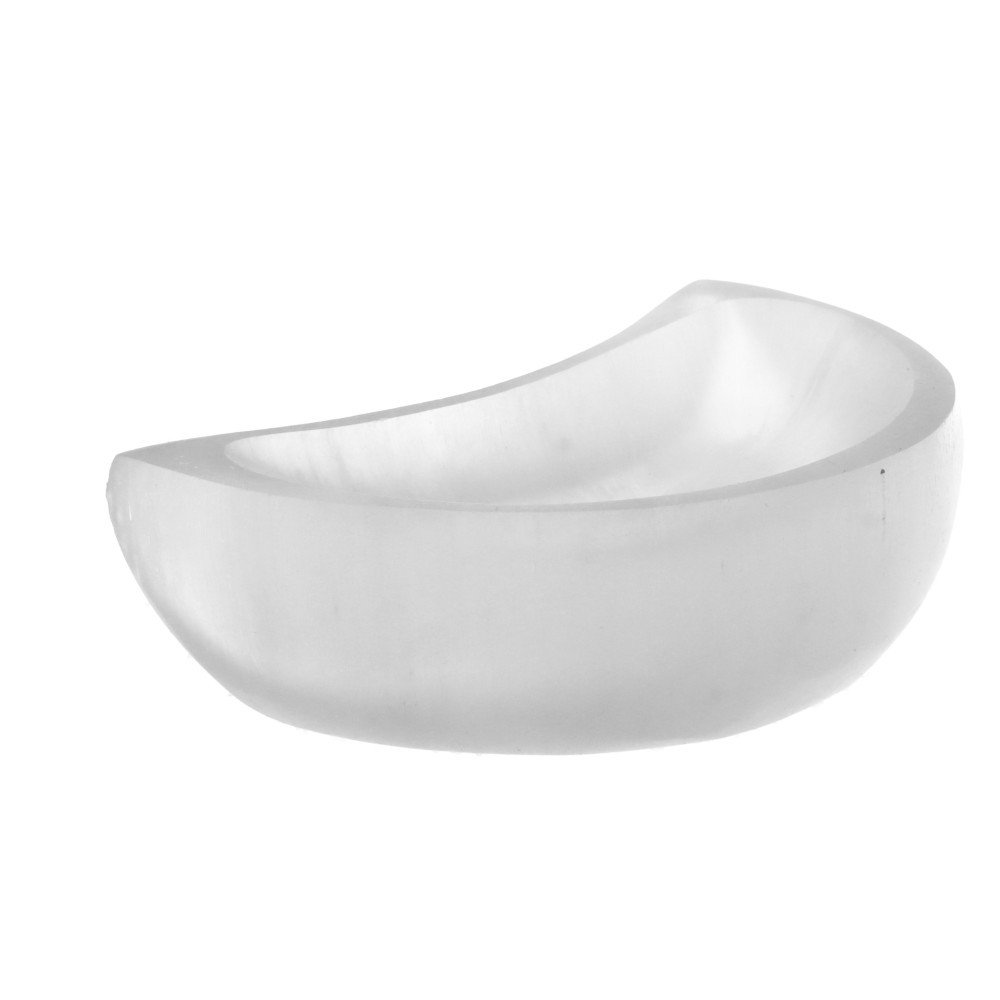
Selenite items are meant for a dry shelf. Currently (20 November 2026), a 6 cm selenite moon bowl costs €17.00 and an 8 cm selenite sphere costs €31.00. You will find other items in the selenite category.
Are salt lamps dangerous for cats and dogs?
A salt lamp is made of halite, or sodium chloride NaCl1. The ASPCA Animal Poison Control Center writes that excessive salt in animals can cause increased thirst and urination, and that signs of salt poisoning can include vomiting, diarrhoea, lethargy, tremors, seizures and even death15. The Pet Poison Helpline states that cats usually like the taste of salt and, once they have tried it, tend to return to it. Repeated licking can lead to sodium poisoning, which can end fatally for a cat16.
Cats can climb high, so a high shelf is not always a barrier16. If you have a cat at home, keep the salt lamp in a room it cannot get into. A selenite lamp is made of gypsum and contains no sodium chloride1, but it should not be licked either. For advice on choosing a selenite lamp, see the article Selenite Lamp.
Which stones are brittle or have sharp edges?
Obsidian is volcanic glass. It breaks with a conchoidal fracture, forming sharp edges, which is why obsidian was used in ancient times to make knives, arrowheads and scrapers17. A polished obsidian pyramid or sphere is smooth, but do not give raw pieces or broken chips to a child.
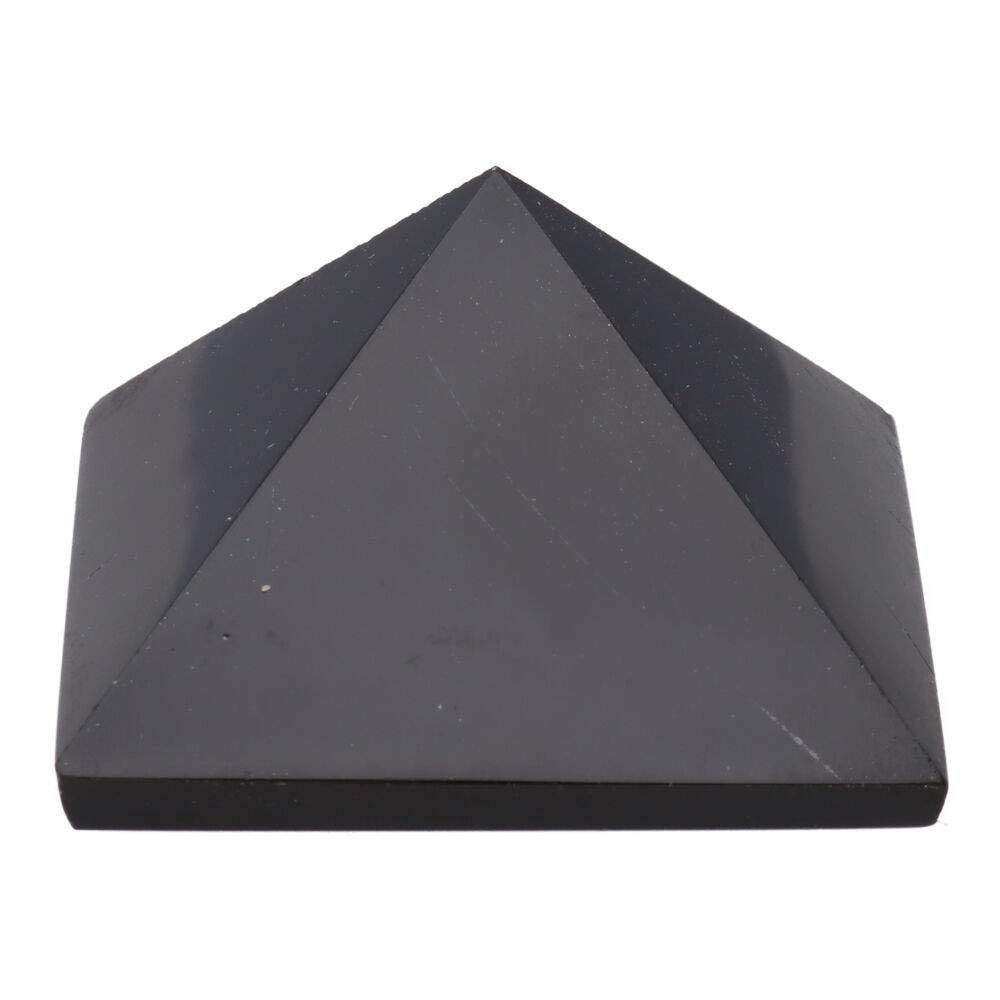
Did you know? A blade made of obsidian can be thinner and sharper than the best surgical steel. Geology.com writes that thin obsidian blades are still fitted into scalpels today for some of the most precise operations17.
Selenite is soft, with a hardness of 1.5 to 2, and splinters where it breaks1. A thin selenite wand can fall off the edge of a table and break, so do not hand the broken ends to a child. Quartz is also brittle1, and a cluster that has been dropped can lose its points. To find out how hardness relates to scratches, see the article Mohs Hardness Scale.
What to do if a child or animal has swallowed a stone?
If a child is choking but coughing loudly, encourage them to keep coughing and do not leave them alone. If the cough is silent or the child cannot breathe normally, shout for help immediately18 and call 113 (the emergency number in Latvia) for an ambulance19. Even if the object has come out, the child should be seen by a doctor, because part of the object may have stayed behind or the child may have been injured18.
If a child has swallowed a stone but is breathing and not choking, contact a doctor. If magnets have been swallowed, the CPSC advises seeking medical attention immediately4. In case of possible poisoning, for example if a child has licked or chewed malachite, you can ask the Poison and Drug Information line of the Toxicology and Sepsis Clinic at Riga East Clinical University Hospital in Latvia, (+371) 6704247320. When you call, have the product name ready and take a stone of the same kind to the doctor, so that it is clear which mineral is involved.
A dog with a stone stuck in its stomach or intestines may show vomiting, loss of appetite, abdominal pain, diarrhoea, dehydration and weakness14. In such cases, and after a dog or cat has licked a salt lamp, call your vet. If you have questions about caring for a particular stone, see our stone encyclopaedia, which states for each stone whether it tolerates water and sunlight.
Frequently asked questions
Are crystals poisonous to cats and dogs?
Stones of the quartz group, such as amethyst and rose quartz, are silicon dioxide and contain no heavy metals or arsenic. An animal can still swallow a small stone. Keep copper minerals such as malachite, and salt lamps, out of animals’ reach.
Can a child play with crystals?
Do not give small stones, chips or beads to children under 3 years old, because they can be swallowed or inhaled. Give older children crystals only when an adult is present, and do not give them toxic minerals such as malachite and cinnabar at all.
Can malachite be kept at home?
Polished malachite jewellery and figurines can be kept at home if they are not put in the mouth or in water and are not sawn or ground. Malachite is basic copper carbonate, which in the EU classification is harmful if swallowed or inhaled.
What to do if a dog has swallowed a stone?
Call your vet. Cornell University vets write that most stomach and intestinal obstructions require surgery, and the signs are vomiting, loss of appetite, abdominal pain, diarrhoea and weakness.
Can crystals be placed in an aquarium?
It is better not to. Calcite can increase water hardness, alkalinity, and pH, selenite can begin to dissolve in water, and copper minerals such as malachite and azurite are hazardous to aquatic organisms.
Whom should I call if a child has swallowed a stone?
If a child cannot breathe or cough, call 113 for an ambulance. If poisoning is suspected, call the Latvian Poison and Drug Information line, (+371) 67042473. If magnets have been swallowed, seek medical attention immediately.
Sources (21)
- ↩ Handbook of Mineralogy (Mineralogical Society of America): Quartz, Malachite, Azurite, Cinnabar, Galena, Realgar, Orpiment, Gypsum, Halite, Calcite
- ↩ Latvian Cabinet Regulation No. 132 “Toy Safety Regulations”, Section 1.7 and Annex 2, Subsection 4.3: likumi.lv/ta/id/226980
- ↩ U.S. Consumer Product Safety Commission, “Small Parts” (FAQ): www.cpsc.gov/FAQ/Small-Parts
- ↩ U.S. Consumer Product Safety Commission, “Small Magnets Are Injuring Children; CPSC Releases Stronger Warning to Parents”, 2007: www.cpsc.gov
- ↩ FREQUENCIES stone encyclopaedia: malachite, pyrite, selenite and care table
- ↩ University of Hertfordshire, Agriculture and Environment Research Unit, Bio-Pesticides DataBase (BPDB), “Dicopper carbonate dihydroxide” (EU CLP classification, toxicity): aeru.herts.ac.uk
- ↩ PubChem (NIH), “Cinnabar”, GHS classification: pubchem.ncbi.nlm.nih.gov/compound/62402
- ↩ Geology.com, H. M. King, “Cinnabar”: geology.com/minerals/cinnabar.shtml
- ↩ PubChem (NIH), “Lead sulfide (PbS)”, GHS classification: pubchem.ncbi.nlm.nih.gov/compound/9794739
- ↩ CDC, “About Childhood Lead Poisoning Prevention”: www.cdc.gov/lead-prevention
- ↩ PubChem (NIH), “Arsenic trisulfide” and “Tetraarsenic tetrasulfide”, GHS classification: compound/71586773, compound/139298
- ↩ CDC NIOSH, “About Silica”: www.cdc.gov/niosh/silica
- ↩ A. M. Lazur, C. E. Cichra, C. Watson, “The Use of Lime in Fish Ponds”, UF/IFAS Extension (University of Florida), 2021: edis.ifas.ufl.edu
- ↩ Cornell University College of Veterinary Medicine, “Gastrointestinal Foreign Body Obstruction in Dogs”: www.vet.cornell.edu
- ↩ ASPCA Animal Poison Control Center, “People Foods to Avoid Feeding Your Pets”: www.aspca.org
- ↩ Pet Poison Helpline, “Are Salt Lamps Bad for Cats?”: www.petpoisonhelpline.com
- ↩ Geology.com, H. M. King, “Obsidian”: geology.com/rocks/obsidian.shtml
- ↩ NHS, “How to stop a child from choking”: www.nhs.uk
- ↩ Latvian Emergency Medical Service, homepage (“Is a life in danger? Call 113”): www.nmpd.gov.lv
- ↩ Riga East Clinical University Hospital (Latvia), “Gaiļezers” hospital contacts (Poison and Drug Information line of the Toxicology and Sepsis Clinic): aslimnica.lv
- ↩ Geology.com, H. M. King, “Hematite”: geology.com/minerals/hematite.shtml