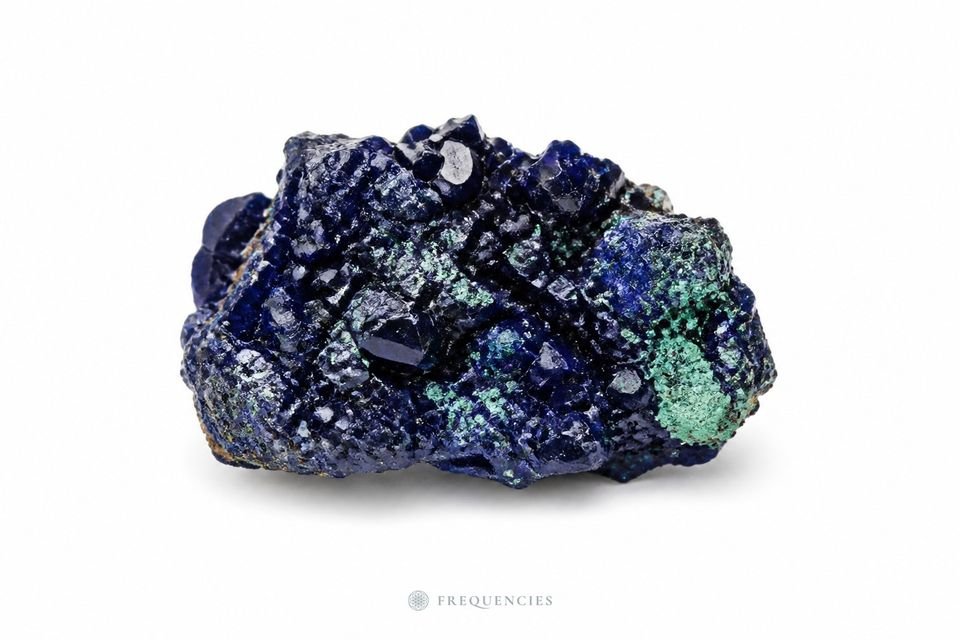
Azurite
A deep blue copper mineral, traditionally associated with intuition and spiritual clarity.
Azurite is a copper carbonate mineral (Cu3(CO3)2(OH)2) of a deep blue colour with a vitreous lustre and a hardness of 3.5 to 4 on the Mohs scale. In a damp environment it gradually turns into green malachite, so the two are often found together. In the crystal community, azurite is traditionally associated with intuition and spiritual clarity.
Azurite in our shop

Exhibit label
Mohs hardness scale
A soft stone: it can be scratched by glass and steel. Store it separately and clean it with a soft cloth.
Care
Water
Water can damage the surface or colour. Clean with a dry, soft cloth.
Sun
Heat and prolonged light can change the blue colour of azurite; store it in the dark
Storage
Avoid soaking in water and water elixirs, acids and household chemicals, heat and direct sunlight, ultrasonic and steam cleaning, and strong knocks.
Note. Azurite contains copper, so it is never used to make drinking-water elixirs and should not be put in drinking water. Stone dust must not be inhaled, and after handling untreated specimens it is advisable to wash your hands. Clean only with a dry or slightly damp cloth.
In the crystal community, the following are used for cleansing: the presence of selenite, sound vibrations, moonlight, sage or palo santo smoke.
Traditional meaning
This is crystal tradition and symbolism, not a scientific or medical claim. The chakras, signs and elements match our product pages.
Chakras
Azurite is traditionally associated with the third eye and crown chakras, which in crystal traditions symbolise intuition, insight and spiritual clarity.
Zodiac signs
In crystal astrology, azurite is often called the stone of Sagittarius, a sign associated with curiosity and the search for truth.
Element
The Air element traditionally symbolises clarity of thought, curiosity and the movement of ideas.
The traditional meaning of crystals has not been medically proven and does not replace the advice of a professional.
Interesting facts
- The name comes from the Persian word lazhward, which denotes the colour blue.
- Azurite is less stable than malachite: in a damp environment it gradually turns into green malachite, which is why the two minerals are often found together in nature.
- For centuries finely ground azurite was used as a blue pigment in painting.
How to use it
- Place it on a desk or a bookshelf as a deep blue accent
- Use it in meditation as a symbol of the third eye chakra
- Wear azurite and malachite jewellery on special occasions, protecting it from water
- Store it in a dark, dry place, separate from harder stones
Pairs well with
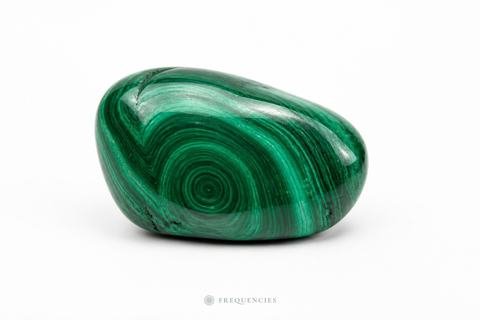 Malachite
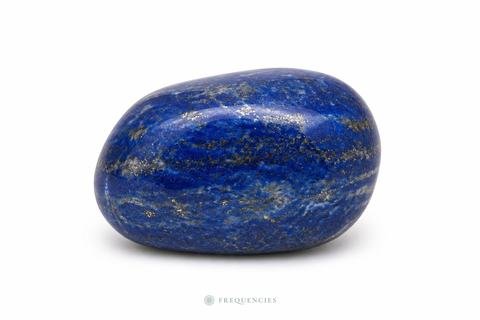 Lapis Lazuli
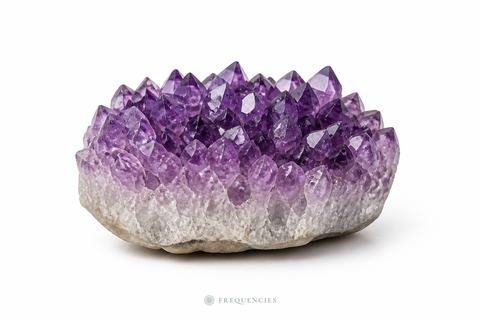 Amethyst
 Clear Quartz
Frequently asked questions
What is azurite?
Azurite is a copper carbonate mineral (Cu3(CO3)2(OH)2) with a deep blue colour and a glassy lustre. The name comes from the Persian word lazhward, which denotes the colour blue, and for centuries ground azurite was used as a blue pigment in painting.
Why is azurite often found together with malachite?
Azurite is less stable than malachite: in a damp environment it gradually turns into green malachite. That is why the two copper minerals are often found together in nature, and the blue-green specimens are called azurite with malachite.
What does azurite symbolise?
In the crystal community, azurite is associated with intuition and spiritual clarity. It is linked to the third eye and crown chakras, the Air element and the sign of Sagittarius.
Can azurite be put in water?
Soaking is not recommended. Clean azurite only with a dry or slightly damp cloth and without acidic agents. It contains copper, so do not put it in drinking water or use it for water elixirs, do not inhale the dust, and wash your hands after handling untreated specimens.
Does azurite fade in the sun?
Yes, it can fade. Light, heat and even air can affect the blue tone of azurite, so store it in a dark, cool place and do not keep it on a sunny windowsill.
How can you recognise genuine azurite?
Natural azurite is deep blue with a glassy lustre and is often intergrown with green malachite. Jewellery beads often use reconstructed, or stabilised, azurite, that is, crushed mineral that has been pressed and impregnated with plastic or resin, and imitations are also on the market.
How hard is azurite?
Azurite has a hardness of only 3.5 to 4 on the Mohs scale, so it is soft and easily scratched. Protect it from knocks and do not use ultrasonic or steam cleaning.