Obsidian
Volcanic glass

Obsidian

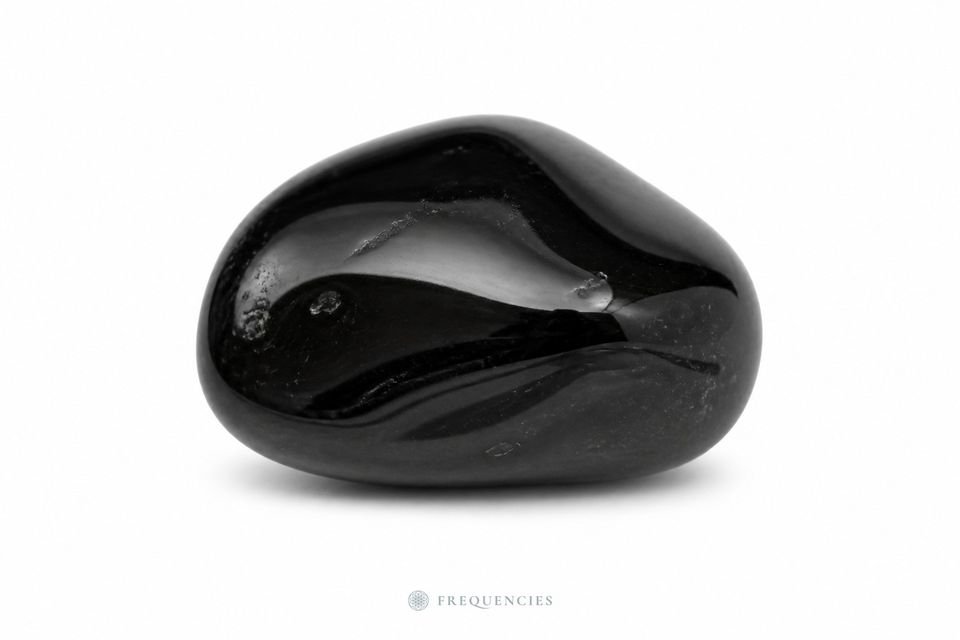
Obsidian is a volcanic glass, traditionally associated with truth, protection and deep clarity.

Hardness 5-5.5 May be rinsed in water Sunlight is not harmful Earth Fire
In brief

Obsidian is a natural volcanic glass that forms when lava cools so quickly that the atoms do not have time to arrange themselves into a crystal lattice, which is why geologists call it a mineraloid. Its hardness is 5 to 5.5 on the Mohs scale, and it is found in Mexico, the USA, Armenia and Turkey. In the crystal community, obsidian is seen as a symbol of truth.

Obsidian in our shop

Exhibit label

Name
Obsidian
Type
Natural glass
Mineral group
Volcanic glass
Hardness
5-5.5 on the Mohs scale
Colour
Black, or black with white snowflake patterns
Main locality
Mexico
Localities
Mexico, USA, Armenia, Turkey
Planet
Pluto (tradition)

Mohs hardness scale

5-5.5out of 10

Moderately hard but brittle: it can chip on impact, and harder stones can scratch it. Wear it gently and store it separately.

Care

Water

May be rinsed in water

A brief rinse in lukewarm water, then wipe dry.

Sun

Sunlight is not harmful

May be kept in a bright place.

Storage

Protect from knocks

Avoid: prolonged heat, harsh cleaning agents, strong knocks.

Note. Rough pieces may have sharp edges; handle with care.

In the crystal community, the following are used for cleansing: sage or palo santo smoke, the presence of selenite, sound vibrations, moonlight.

From geology to your shelf

  • How it forms. Obsidian is a volcanic glass that forms when lava cools so rapidly that the atoms have no time to arrange themselves in a crystal lattice. It occurs at the edges of lava flows and volcanic domes, and because glass begins to crystallise and weather over time, obsidian older than a few million years is rare.
  • Where the colour comes from. Obsidian is most often black, and the colours are produced by impurities or inclusions: the reddish-brown tone of mahogany obsidian is given by iron, the golden sheen is produced by tiny gas bubbles, the coloured bands of rainbow obsidian are formed by oriented hedenbergite nanocrystals, and the iridescent glow of fire obsidian is produced by magnetite nanoparticles. The white patches in snowflake obsidian are formed by clusters of cristobalite crystals.
  • History. Its sharp flakes made obsidian one of the first materials for Stone Age tools, and it was mined and traded over distances of up to about 1,600 km. In antiquity, polished obsidian was also used as a mirror.
  • How to recognise a genuine stone.
    • A characteristic conchoidal fracture with very sharp edges.
    • Under magnification, natural obsidian shows crystallites, straight bands or needles, which cast glass does not have.
    • A bright blue, green or red transparent "obsidian" is often artificial glass.
    • Many obsidians react moderately to strongly to a magnet, although this is not a reliable test.
  • Treatment and imitations. Obsidian is usually not treated, but coloured artificial glass is often sold as obsidian in a rare colour. Thin slices of obsidian are also used as the base for opal doublets and triplets.
  • How to choose. Look for an even, bright golden, silver or rainbow sheen and a clear pattern without chips. Because of its hardness (about 5.5) and brittleness, obsidian is better suited to pendants, earrings and interior objects than to rings.
  • Traditional meaning

    This is crystal tradition and symbolism, not a scientific or medical claim. The chakras, signs and elements match our product pages.

    Chakras

    Root Chakra

    Obsidian is traditionally associated with the root chakra and deep clarity.

    Zodiac signs

    ♏︎Scorpio♐︎Sagittarius♑︎Capricorn

    In traditional crystal astrology, obsidian is often associated with people who value deep clarity and inner balance.

    Element

    EarthFire

    The elements of fire and earth traditionally give this stone deep clarity and a balanced character.

  • Main symbolism: truth and protection
  • Traditionally associated with truth, protection and more conscious inner work
  • Traditionally associated with deep clarity and inner peace
  • In the crystal community, many people place black obsidian by the front door or on a desk and keep it nearby in moments of quiet and meditation. Polished obsidian mirrors are associated with looking within and reflection, and the Aztecs used them in rituals. Obsidian is traditionally associated with the root chakra, the elements of fire and earth, and the signs of Sagittarius and Scorpio.
  • The traditional meaning of crystals has not been medically proven and does not replace the advice of a professional.

    Stories and legends

    The name obsidian comes from Pliny the Elder's story of a Roman called Obsius.

    The Roman writer Pliny the Elder wrote in his Natural History in the 1st century that this volcanic glass was found in Ethiopia by a Roman called Obsius. The Latin name lapis obsidianus and the modern word obsidian come from his name. In ancient manuscripts the name is spelled differently (Obsius, Obsidius), so the exact form is uncertain.

    John Dee's "magic mirror" in the British Museum is made of Aztec obsidian.

    The 16th-century English scholar and occultist John Dee used a polished obsidian mirror, which is now kept in the British Museum in London. A geochemical analysis published in the journal Antiquity in 2021 showed that the mirror's obsidian comes from the Pachuca deposit in Mexico, which lay in Aztec territory. The Aztecs associated obsidian mirrors with the god Tezcatlipoca, whose name means "smoking mirror".

    The cutting edge of obsidian can be thinner and sharper than the best surgical steel.

    Obsidian breaks with smooth, curved surfaces (conchoidal fracture), so a very thin and sharp edge can be made from it. In the Stone Age, knives and arrow and spear points were made from obsidian, and it was traded over distances of more than a thousand miles (about 1,600 km). Today, X-ray fluorescence analysis can determine which deposit an ancient obsidian tool comes from.

    "Apache tears" are small obsidian nodules whose name comes from a legend.

    In the south-western USA, mainly in Arizona, Nevada and New Mexico, small, rounded nodules of black obsidian are found, usually no larger than 2.5 centimetres (one inch), enclosed in a shell of weathered material. The name "Apache tears" comes from an Apache legend associated with a battle in 1870. They are hard to polish, because obsidian chips easily.
    Interesting facts

    • The pale patterns in snowflake obsidian are formed by radial clusters of white or grey cristobalite crystals.

    How to use it

    • Wear it gently as jewellery traditionally associated with truth and protection

    Pairs well with

    Frequently asked questions

    Is obsidian a crystal or glass?

    Obsidian is a natural volcanic glass: lava cools so quickly that the atoms have no time to arrange themselves in a crystal lattice. Geologists therefore call it a mineraloid rather than a mineral, and in composition it usually resembles rhyolite and granite.

    What does obsidian symbolise?

    In the crystal community, obsidian is regarded as a symbol of truth and protection. It is associated with the root chakra, with Scorpio, Sagittarius and Capricorn, and with the elements of earth and fire. The Aztecs associated obsidian mirrors with the god Tezcatlipoca, whose name means "smoking mirror".

    How can you recognise genuine obsidian?

    A bright blue, green or red transparent "obsidian" is often artificial glass, because such colours are rare in natural obsidian. Natural obsidian often shows tiny crystallites, straight bands and needle-like inclusions under magnification, but a gemmological test gives a reliable answer.

    What types of obsidian are there?

    The most common is black obsidian. In snowflake obsidian the white patches are formed by clusters of cristobalite crystals, the reddish-brown tone of mahogany obsidian is given by iron compounds, the golden and silver sheen is produced by tiny gas bubbles, and the coloured bands of rainbow obsidian are formed by oriented hedenbergite nanocrystals.

    Can obsidian be put in water?

    Yes, it may be rinsed and cleaned briefly: obsidian is a volcanic glass, and the International Gem Society recommends cleaning it with warm water, mild soap and a soft brush. There is no need to soak it for long, and dry the stone after washing.

    Why is obsidian so sharp?

    Obsidian breaks with smooth, curved surfaces called a conchoidal fracture, so its edge can be thinner and sharper than a surgical steel blade. In the Stone Age, knives and arrow and spear points were made from it, and obsidian was traded over distances of about 1,600 km.

    Is obsidian suitable for a ring or a bracelet?

    It is, if you wear the jewellery gently. Obsidian has a hardness of about 5 to 5.5 on the Mohs scale and is brittle, so it chips easily in knocks and scratches in daily wear. Pendants, earrings and interior objects are a safer choice.

    Read more

    Obsidian: Properties, Meaning, and How to Use It Daily

    Sources. Mineralogical data: GIA Gem Encyclopedia, Mindat, Encyclopaedia Britannica (frequencies.lv crystal database v2).
    Further information: geology.com, gemsociety.org.
    Shopping Basket
    Scroll to Top



