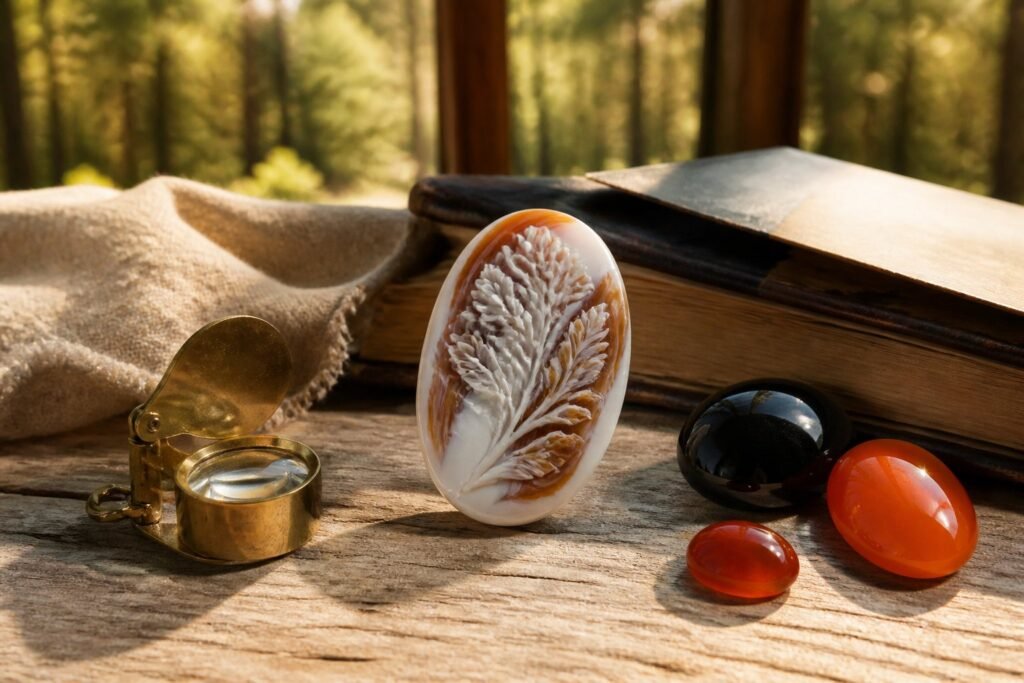
Have you seen the crossword clue “gemstone with a relief image”? That is a cameo, while a gemstone with an incised image is an intaglio, and together they are called gems [1]. Behind these three words lies an art form several thousand years old: portraits of Emperor Augustus carved in layered sardonyx, and carnelian signet rings used by Romans to seal wax.
Cameo, Intaglio, and Gem: What Is the Difference?
According to the Thesaurus, a gem is a precious or semi-precious stone with a miniature image in relief (cameo) or incised (intaglio), and in antiquity, gems were used as seals, property marks, amulets, and jewelry [1]. In a cameo, the image rises above the background because the artist carves away the stone around the figure. In an intaglio, the process is the opposite: the image is incised into the stone, but if pressed into a soft material, such as warmed wax, the impression becomes a relief [2][3].
The word intaglio comes from the Italian verb “intagliare,” meaning to engrave [3]. Since the main purpose of intaglios was to leave an impression, inscriptions and artists’ signatures were carved in mirror image so that they would appear correctly in wax [3].
| Cameo | Intaglio | |
|---|---|---|
| Image | raised above the background | incised into the stone |
| Ancient use | jewelry and portraits | seals and signet rings |
| Favored stones | sardonyx, onyx, agate | carnelian, sard, garnet |
From Seal to Portrait: The Origins of Gem Art
Intaglios came first. In Mesopotamia, stones were engraved with hand tools as early as 5000 BCE, and these stones were pressed into wax, clay, or other sealing materials [4]. The Metropolitan Museum of Art writes that until about the 5th century BCE, gems were carved only in intaglio, and around this time, the Greeks began to carve stones with raised images, the precursors to cameos [3]. The Getty Museum dates the emergence of cameos later, around 250 BCE, when artists began to carve away the stone around the figure and use the color bands of layered stones for multicolored images [4].
Greek cameos were decorative, while intaglios served as seals. Roman cameos were carved mainly from sardonyx, onyx, and glass paste, featuring portraits and mythological scenes, and artists often signed them [5]. The carving principle has not changed since antiquity [3]. The stone was not carved by the tool itself, but by an abrasive powder: drills, wheels, or cones were dipped in a mixture of powder and oil, with emery or corundum used in ancient times, and the tool was operated with a bow [4].
Why Layered Chalcedony Was Chosen for Cameos
Onyx, sardonyx, agate, and carnelian are chalcedony varieties, or microcrystalline quartz, with a hardness of 6.5 to 7 on the Mohs scale [18]. Onyx is a banded stone with white and black layers, and Britannica explains that it is used in cameos and intaglios precisely because the layers can be carved so that the image and background contrast in color. If white bands alternate with brown, the stone is called sardonyx; if with red, it is called carnelian onyx [6]. Cameos were most valued when the artist skillfully used the stone’s layers, often carving a light figure on a dark background [3].
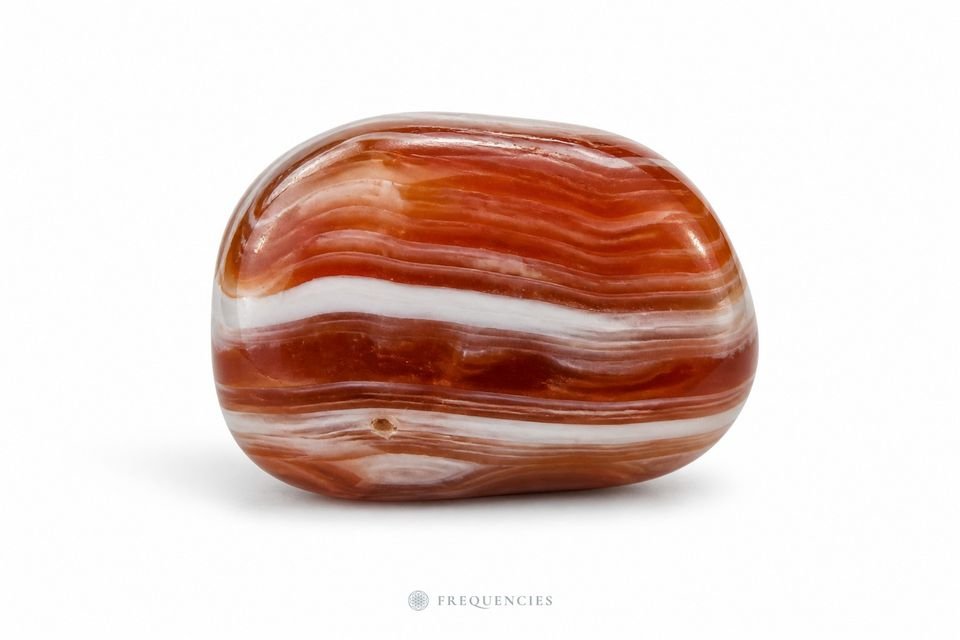
Other types of chalcedony were favored for seals. Carnelian was highly valued by Greeks and Romans for rings and seals, and some ancient carnelian intaglios have retained their polish better than many harder stones [7]. Its close relative is sard, named after Sardis, the ancient capital of Lydia [8]. GIA writes that in ancient Rome, sardonyx was also favored for seals and signet rings because hot wax does not stick to it [19]. Garnets with incised images were set in Roman signet rings [18].
Did you know? Dyeing black onyx is not a modern invention. Techniques for producing artificial onyx from ordinary chalcedony were described by Pliny the Elder in the 1st century. The widely used method of soaking or boiling chalcedony in a sugar solution and then treating it with acid, which carbonizes the sugar absorbed in the pores, was developed in Idar-Oberstein in the early 19th century [18]. Even today, most evenly black onyx sold is dyed chalcedony, while banded black-and-white onyx is usually natural [18].
Gemma Augustea and the Blacas Cameo: The Emperor in Stone
The Kunsthistorisches Museum in Vienna calls the Gemma Augustea the most important ancient cameo in its collection. It is 19 cm high and 23 cm wide, carved from two-layer Arabian sardonyx (museum data: two-layer onyx), and the museum dates it to 9 to 12 CE. In the upper band, Augustus sits on a throne dressed as Jupiter, holding a scepter and augur’s staff; to his right is Roma, the city’s guardian, and on the left, Tiberius climbs a chariot led by Victoria. In the lower band, gods possibly raise a victory sign and lead captives. The museum suggests the scene is related to the suppression of the Dalmatian revolt: on January 16, 10 CE, Tiberius entered Rome as victor. The cameo is first mentioned in 1246 in the inventory of the Saint-Sernin Abbey in Toulouse, and in the early 17th century it was purchased by Emperor Rudolf II [9]. Sources disagree on the dating: Britannica considers the cameo was likely carved later, during Caligula’s reign from 37 to 41 CE [10].
The Blacas Cameo is housed in the British Museum in London and is dated to 14 to 20 CE. It features Augustus’s profile with Minerva’s aegis and a sword belt, carved in three-layer sardonyx, and the cameo is 12.8 cm high. Originally, the emperor’s head was adorned with a laurel wreath, which was probably replaced in the Middle Ages with the current gemstone ornament. The first known record of the cameo is from 1731, when it was in the Strocci collection in Florence, and it entered the museum’s collection in 1867 from the Blacas Duke’s collection [11].
Cameo Fashion from the Medicis to Josephine
In the Middle Ages, ancient cameos were kept in church and monastery treasuries, often in ornate reliquaries. In the 15th century, collectors began to sort them and highlight those of greater artistic value. Lorenzo de’ Medici had his Latin initials engraved in his gems, and in the 1492 inventory of his collection, the best cameos were valued several times higher than his best Botticelli paintings [3]. In the 18th century, the popularity of cameos steadily increased, and the English company Wedgwood sold countless copies and imitations, while the art of gem carving reached its peak in the mid-19th century [3].
In Paris, Empress Josephine inspired the fashion for cameos. She saw that cameos and intaglios could be as fashionable as diamonds and pearls, took them out of collectors’ cabinets, and encouraged jewelers to set them in beautiful mounts. The fashion magazine Journal des Dames et des Modes wrote in 1805 that a fashionable lady wore cameos at her belt, in a necklace, on each bracelet, and in a diadem. In 1808, the court jeweler Nitot made a pearl jewelry set with 45 cameos and 36 intaglios, but it was so heavy that there is no record of Josephine ever wearing it [12]. In England, cameos were favored by Queen Victoria, and travelers brought home cameos carved from the lava of Pompeii’s ruins [13].
Shell Cameos: Beautiful, but Not Stone
Not every old cameo is made of stone. Shell cameos were cheaper and easier to carve, became fashionable in the 19th century, and many were bought by tourists as souvenirs [14]. The Metropolitan Museum of Art explains that shell is soft, so old shell cameos rarely survive. Only two layers can be used in a shell, and such cameos have never been as prestigious as stone cameos [15][3]. The most highly valued were shells from sea snails of the genus Cassis [15].
Interestingly, even shell names resemble stones. GIA writes that cameos are often made from the shell of Cassis rufa, called “cornelian” in English, almost the same as carnelian, and Cassis madagascariensis, or sardonyx shell, which after carving resembles banded agate [13]. The artist works from the surface inward with chisels, drills, and abrasives, and the color contrast is created by the natural layers of the shell [16].
How to Recognize a Stone Cameo
If you own your grandmother’s cameo, start with the back. Shell cameos have a concave back with a straight, fibrous structure visible [17]. Plastic imitations feel warm to the touch and usually show mold marks. If the material is transparent, you can see flow lines and gas bubbles in plastic as in glass [17]. In assembled cameos made from several parts, the carved image does not blend with the background, while in a cameo carved from a single piece, the figure merges into the background without a seam [17]. It is best not to try the hot needle test, as it can damage the cameo [17].
GIA lists material, setting, condition, fineness of carving, subject, and artist’s signature as cameo quality factors. A cameo can be in low relief, where the figure barely rises above the background, or in high relief, where it stands out distinctly [13]. The name “onyx” is also used in the market for banded calcite or onyx marble, which is much softer than chalcedony onyx [18]. For more signs to distinguish natural stone from glass or dyed material, see the article How to Recognize a Genuine Crystal.
Onyx or Carnelian Stone as a Gift
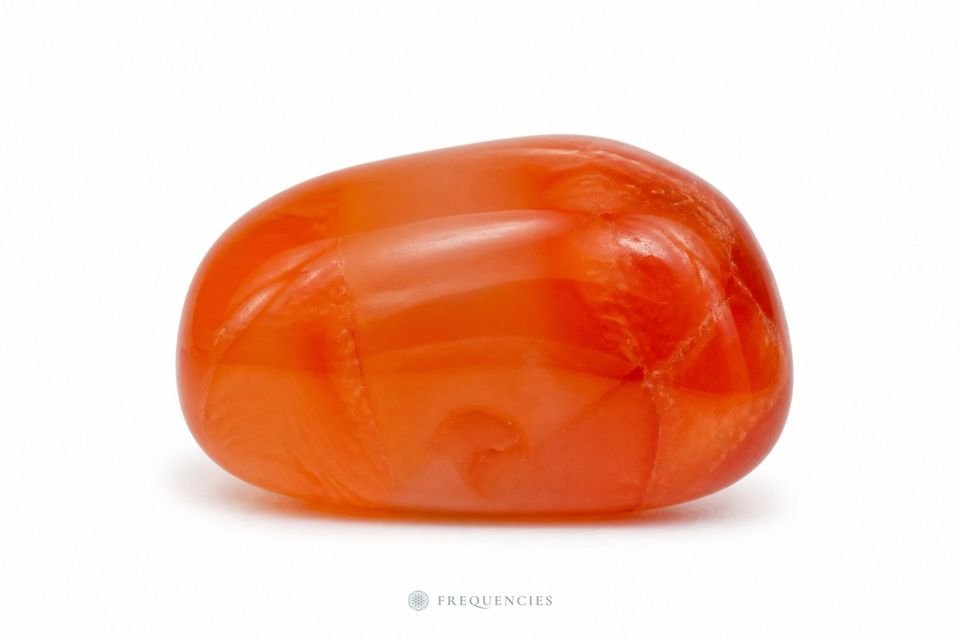
Antique cameos are kept in museums and antique shops, but the stones from which they were carved can still be given as gifts today. In our store, you will find black onyx chips from €4, polished black onyx stones (3 to 8 cm) for €16, and a carnelian heart-shaped polished stone (3 cm, €9), suitable for Valentine’s Day and Mother’s Day. Carnelian is valued for its transparent stone with a rich, even orange-red color [18]. Other heart-shaped stones can be found in the Heart Shapes category, and banded chalcedony relatives in the Agate category. Each stone is natural and unique, so you will receive a similar, hand-selected specimen.
Sardonyx is one of the three August birthstones, along with peridot and spinel, and GIA calls it the original August stone [19], so it can be chosen as a personal gift for those born in August. All monthly stones are summarized in the article Birth Month Stones, and for care instructions for chalcedony, see the care table. For orders over €30, delivery to parcel lockers in the Baltics is free.
Frequently Asked Questions
What is a cameo?
A cameo is a usually layered stone carved with a relief image that rises above the background. Most often, cameos were carved from sardonyx, onyx, or agate, so that a light figure stands out against a darker background.
What is the difference between a cameo and an intaglio?
In a cameo, the image is raised above the surface, while in an intaglio it is incised into the stone. In antiquity, intaglios were used as seals: when pressed into wax, the image appears in relief in the impression.
What is a gem?
A gem is a general term for a precious or semi-precious stone with a miniature image: in relief (cameo) or incised (intaglio). In antiquity, gems were used as seals, property marks, amulets, and jewelry.
What stone are cameos made from?
Classic stone cameos were carved from layered chalcedonies: sardonyx, onyx, and agate. In the 19th century, shell cameos became fashionable, which are not stone. Imitations can be made from glass or plastic.
How to distinguish a genuine cameo from plastic?
A plastic cameo feels warm to the touch and often shows mold marks, while in transparent plastic, bubbles and flow lines can be seen under magnification. Shell cameos usually have a concave back. Valuable cameos are best shown to a gemologist.
Where can the most famous cameos be seen?
The Gemma Augustea is kept at the Kunsthistorisches Museum in Vienna, while the Blacas Cameo with the portrait of Emperor Augustus can be seen at the British Museum in London.
Sources
- Thesaurus, University of Latvia Institute of Mathematics and Computer Science: entries gemma, cameo, intaglio, sardonyx, onyx
- Intaglio (sculpture). Encyclopaedia Britannica
- J. D. Draper. Cameo Appearances. Heilbrunn Timeline of Art History, The Metropolitan Museum of Art
- Gem Carving: Materials and Techniques. J. Paul Getty Museum
- Cameo. Encyclopaedia Britannica
- Onyx. Encyclopaedia Britannica
- Carnelian. Encyclopaedia Britannica
- Sard and sardonyx. Encyclopaedia Britannica
- Gemma Augustea, 9 to 12 CE. Kunsthistorisches Museum Wien, Antikensammlung
- Gemma Augustea. Encyclopaedia Britannica
- The Blacas Cameo. British Museum
- The Incomparable Josephine. Sotheby’s
- S. Bohannon. Cameos: Timeless, Miniature Carvings for Jewelry Lovers. GIA, 2017
- Portrait of an Unknown Gentleman, shell cameo, Giovanni Dies. Victoria and Albert Museum
- Bracelet (part of a set), Italian, probably Naples. The Metropolitan Museum of Art
- Cameo shell (c. 1850), Queen Helmet (Cassis madagascariensis), Naples. National Gallery of Victoria
- Shells and Sea Shells. International Gem Society
- FREQUENCIES Stone Encyclopedia: onyx, black onyx, carnelian, sardonyx, chalcedony, garnet, agate
- August Birthstones: Peridot, Spinel and Sardonyx. GIA