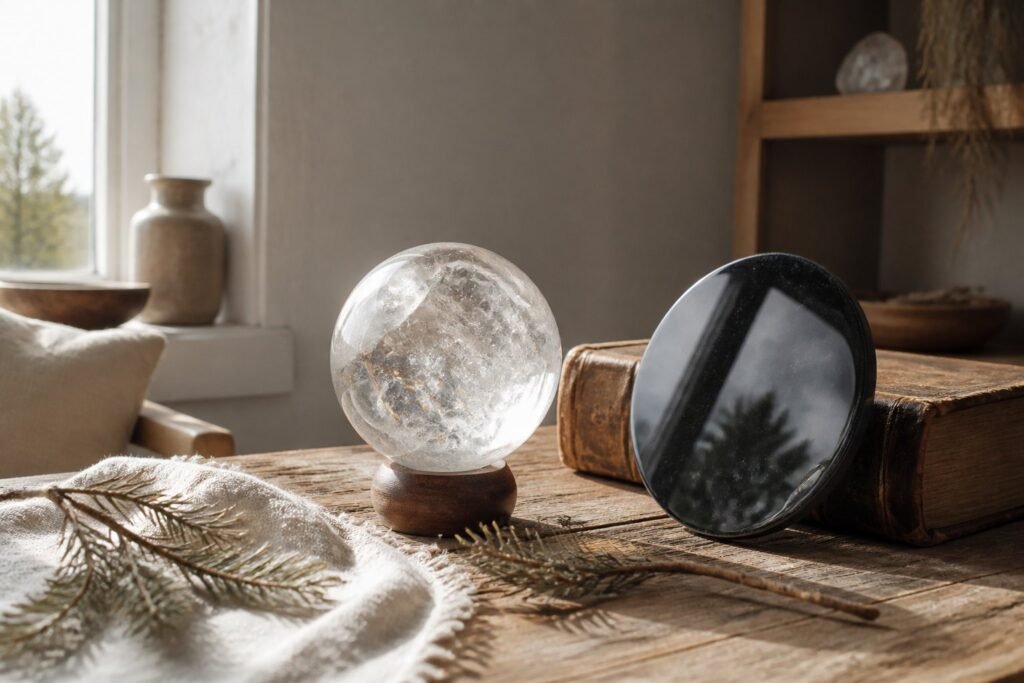
The British Museum in London houses a black, nearly round mirror, and on its case is a label handwritten by 18th-century collector Horace Walpole: “The black stone into which Dr. Dee used to call his spirits.” In 2021, chemical analysis showed that the mirror was made of obsidian sourced from Pachuca, Mexico, in the territory of the Aztec state [5]. This is common in the history of crystal balls and black mirrors: a legend is tested in the laboratory, and the true story turns out to be even more surprising.
Crystal Balls in Ancient Rome: Why Crystal Was Thought to Be Ice
The word “crystal” comes from the Greek word meaning ice. The Roman naturalist Pliny the Elder wrote in the 1st century AD in “Natural History” that rock crystal was found only where the winter snow froze most strongly, and that it was a type of ice, which is also the origin of its Greek name [1]. He valued Indian crystal most highly, but in Europe, Alpine crystal. Since crystal could not withstand heat, the Romans used crystal vessels only for cold drinks [1].
Pliny also recorded a note that today sounds like a safety warning: doctors considered the best means for cauterizing the body to be a crystal ball placed in sunlight [2]. So, nearly 2,000 years ago, it was already known that a transparent sphere gathers sunlight like a lens. The value of crystal is shown by the story of Emperor Nero: upon learning that all was lost, he angrily smashed two crystal cups, which was his final revenge on his contemporaries [2].
Anglo-Saxon Crystal Balls in Kent Women’s Graves
Some of the best-known early medieval crystal ball finds come from Kent in England. In rich women’s burials, archaeologists find quartz spheres set in silver bands with a wire ring at the top [3]. In the grave, the sphere usually lies between the thighs, so researchers conclude that it was worn hanging at the front of the dress, possibly from a belt. Next to it, there is often a silver spoon with a perforated bowl [3][4].
The purpose of these spheres is still unknown. Kent museum specialists suggest two versions: they were either magnifying glasses for fine metalwork or objects associated with divination and rituals [3][4]. The Maidstone Museum’s sphere was found in the Bifrons cemetery, dated to around 475 to 575 AD [4].
John Dee and Edward Kelley: Crystal Divination in the Time of Elizabeth I
John Dee (1527 to 1608/1609) was an English Renaissance polymath. He wrote about alchemy and astrology, advised English sailors on expeditions to the New World, and in 1558 became Queen Elizabeth I’s scientific advisor and astrologer [5]. In the 1580s, Dee became increasingly interested in the supernatural. He hired mediums who were to look into mirrors or crystals and relay messages from angels. The most famous of them was Edward Kelley [5].
This practice is called scrying in English, and in Latvian, zīlēšana kristālā or zīlēšana spogulī (divination in crystal or mirror). It is a historical practice, not a proven method, but Dee’s story illustrates well how science and magic intertwined in the late Renaissance [5]. The Science Museum in London holds a crystal associated with Dee, but it is not a sphere, rather a flat, 84 mm long piece of quartz in a metal frame [6]. According to the museum’s description, Dee claimed that this crystal was given to him by the angel Uriel in November 1582. Later, the stone came into the possession of physician and alchemist Nicholas Culpeper, who in 1651 was convinced that a demonic spirit had escaped from the crystal [6].
Aztec Obsidian: What the 2021 Study Revealed About Dee’s Mirror
The most famous object associated with Dee is the black mirror. It is nearly round, 195 × 185 mm in size, with a short, pierced handle, and both sides are finely ground and polished [5]. Before the mirror entered the British Museum in 1966, it was sold at auction at least four times. Historians long doubted whether it really belonged to Dee and whether it was not a copy made from European obsidian. The connection to Dee is strengthened by testimony from a 1624 court case: a witness stated that in a house where many of Dee’s belongings had ended up, he saw “a round, flat stone, like crystal,” which an angel had supposedly brought to Dr. Dee [5].
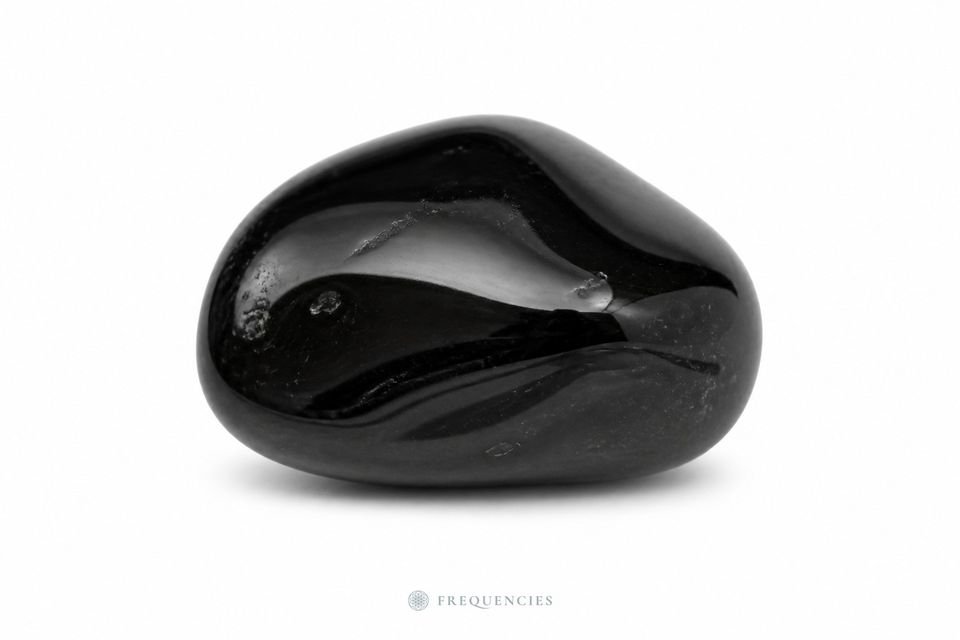
In 2021, archaeologist Stuart Campbell of the University of Manchester and colleagues published the results of chemical analysis in the journal Antiquity [5]. Using a portable X-ray fluorescence device, they measured the chemical composition of four obsidian objects from the British Museum and compared them with samples from Mexican deposits. The obsidian of Dee’s mirror matched the Pachuca deposit, which the Aztecs used most and which was located in their territory. The researchers conclude that the mirror is an Aztec creation, brought to Europe soon after the Spanish conquest in 1519 to 1521, but exactly how Dee acquired it remains unknown [5].
In the Aztec world, obsidian mirrors were associated with the god Tezcatlipoca, whose name means “smoking mirror.” In ancient manuscripts or codices, he is depicted with round obsidian mirrors on his head, chest, or back, and in place of a missing foot, he usually has a mirror. The Aztecs believed that the mirror’s surface was like a shield against evil spirits and could capture a person’s image and soul [5]. Obsidian itself is volcanic glass that forms when lava cools so quickly that atoms do not have time to arrange into a crystal lattice [7]. Its hardness is only 5 to 5.5, but its fracture edges are very sharp, so unworked pieces should be stored carefully [13].
Crystal Skulls: Myth Versus Microscope
In the film “Indiana Jones and the Kingdom of the Crystal Skull” (2008), the crystal skull is an ancient relic with supernatural powers, but museum research tells a different story. Smithsonian anthropologist Jane MacLaren Walsh writes that no crystal skull in museum collections has come from documented archaeological excavations [8].
The British Museum’s skull is just under 15 cm high and carved from transparent rock crystal. It first appeared in 1881 in the Paris shop of French antiquarian Eugène Boban. In 1885, Boban tried to sell it to the Mexican National Museum, but there the skull was recognized as a forgery [8][9]. At an auction in New York, it was bought for $950 by Tiffany & Co., and ten years later, in 1897, it was purchased by the British Museum for the same price [8][9].
In 2008, British Museum scientist Margaret Sax and Walsh published a study in the Journal of Archaeological Science [10]. The researchers made casts of tool marks and examined them under a scanning electron microscope. For comparison, they used a Mixtec rock crystal goblet and five Aztec crystal beads found in excavations. In the ancient objects, the marks are shallow and irregular, left by stone and wooden tools, but in both skulls, the grooves are deep and regular, made by rotating disks [9]. The quartz of the British Museum’s skull most likely comes from Brazil, Madagascar, or the Alps, far outside Aztec and Mixtec trade routes [9].
In 1992, the Smithsonian Institution received an anonymous package containing a hollow, nearly 25 cm high and about 14 kg heavy crystal skull and an unsigned letter stating that it was an Aztec creation, purchased in Mexico in 1960 [8]. Modern synthetic abrasive traces were found on it [9], and Walsh believes the skull was made in Mexico shortly before it was sold [8]. The Mitchell-Hedges skull, around which stories of Maya origin later arose, appears in documents only in the 20th century, around 1934, and in 1943 was bought at a Sotheby’s auction in London by traveler Frederick Mitchell-Hedges [8].
The Largest Crystal Balls and the “Empress Dowager” Legend
The world’s largest known rock crystal sphere is kept at the Smithsonian Institution’s National Museum of Natural History in Washington, D.C. Its diameter is 32.7 cm, weight about 48.4 kg, and it was polished in Shanghai from quartz sourced in Burma, now Myanmar [11]. It was purchased by telescope lens manufacturer Worcester Reed Warner, and his widow donated the sphere to the museum [11].
Did you know? The 25 cm crystal sphere of the Penn Museum in Philadelphia appeared in Wanamaker’s department store in 1924 under the name “Empress Dowager,” referring to the Chinese Empress Dowager Cixi and the story that it once belonged to the imperial collections in Beijing. In 2024, Steven Lang, keeper of the museum’s Asian section, debunked this legend: the sphere was most likely polished around 1923 from the same Burmese deposit as the Smithsonian sphere. In 1988, the sphere was stolen but later recovered [11].
Several other large museum spheres most likely come from Japan and stand on silver stands with wave and dragon motifs. As early as 1876, an approximately 18 cm Japanese crystal sphere was exhibited at the Centennial Exhibition in Philadelphia [11].
How a Stone Sphere Is Made Today
First, an irregular stone piece is sawn into a cube or a cylinder is drilled out with a core drill. Then the corners are cut off the blank to obtain an approximately round shape. With a stone saw and a 45-degree jig, this requires about 26 cuts and can take from a few hours to a whole day, but with a core drill, about 5 cuts and an hour of work suffice [12]. Even from a perfect cube, only π/6 or about 52% of the volume remains in the sphere, so a very large raw piece is needed for a large, clear sphere.
Next, the blank goes into a sphere grinding machine. Several rotating heads press the stone from different sides, and it spins in a random, unpredictable direction, so material is removed evenly from the entire surface. A little water prevents dust from rising [12]. Then the sphere is polished with increasingly fine abrasives, usually with grit sizes 220, 400, 800 to 1200, and finally 4000 to 8000. If a natural inclusion is deep, the craftsman often leaves it, as grinding it out would make the sphere much smaller [12].
How to Choose a Crystal Ball and Where to Place It
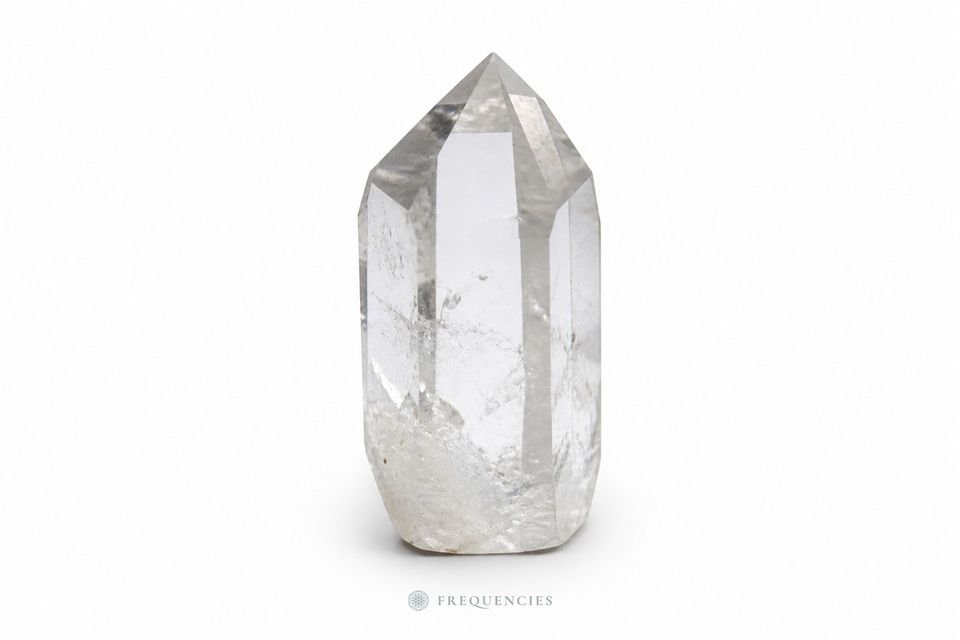
A natural rock crystal sphere stays cool in the hand longer, while glass warms up faster. Round air bubbles and a completely uniform interior indicate glass, whereas in natural quartz, inclusions are irregular. Quartz has a hardness of 7, so it scratches ordinary glass. A completely flawless and very cheap “crystal” may turn out to be glass [13]. You will find more testing methods in the article How to Recognize a Real Crystal.
When choosing a material, also consider care. A rose quartz sphere can become paler in prolonged sunlight. Porous lapis lazuli should not be exposed to water for long, and selenite is gypsum with a hardness of 2, which should be cleaned only with a dry cloth. Black tourmaline has a hardness of 7 to 7.5, but is brittle along the fibers [13]. All these spheres can be found in the Spheres category, and obsidian items in the Obsidian section.
A small sphere needs a stand so it does not roll. A 4 cm rock crystal sphere comes with a transparent plastic stand, and separate stands for 4 to 5 cm spheres are offered in the Accessories section.
Safety note. A transparent rock crystal sphere acts as a lens in sunlight, just as the Roman doctors’ spheres did in Pliny’s time. The focused rays can ignite curtains, paper, or wooden surfaces. In January 2024, Essex firefighters in England reported an incident in a bathroom: a glass crystal sphere was used as a doorstop, and sunlight reflected from it ignited a pile of towels [14]. Therefore, do not place transparent spheres on a sunny windowsill. Compare other shapes and their care in the article Crystal Shapes and in the care table.
Frequently Asked Questions
What is a real crystal ball made of?
The classic crystal ball is made of natural rock crystal, transparent quartz with a hardness of 7. Cheap decorative balls are often glass, which can be recognized by round air bubbles and a completely uniform interior.
What was John Dee’s black mirror?
It is a nearly round obsidian mirror in the British Museum. Chemical analysis in 2021 showed that the obsidian comes from Pachuca, Mexico, and the mirror is an Aztec creation brought to Europe soon after the Spanish conquest.
Are crystal skulls ancient?
The skulls of the British Museum and the Smithsonian Institution are not ancient. In a 2008 study, both showed traces of rotating disks, but such tools were not available to pre-Columbian American stoneworkers. The British Museum’s skull appeared in Paris in 1881, while the Smithsonian’s skull was most likely made shortly before 1960.
Can a crystal ball be kept in the sun?
Do not place a transparent sphere in direct sunlight, as it focuses rays like a lens and can ignite nearby objects. The color of rose quartz and amethyst can also fade in prolonged sunlight.
What is crystal ball divination called?
In English, it is called scrying, in Latvian zīlēšana kristālā or zīlēšana spogulī. It is a historical practice, not a proven method, and in the 16th century, it was practiced, for example, by John Dee with his medium Edward Kelley.
Sources
- Pliny the Elder, Natural History, Book 37, Chapter 9 (English translation by J. Bostock and H. T. Riley), Perseus Digital Library, Tufts University
- Pliny the Elder, Natural History, Book 37, Chapter 10, Perseus Digital Library, Tufts University
- Women in the Anglo Saxon Kingdom of Kent, Canterbury Museums & Galleries
- Staff Pick: Anglo Saxon Crystal Balls, Maidstone Museum
- S. Campbell, E. Healey, Y. Kuzmin, M. D. Glascock. The mirror, the magus and more: reflections on John Dee’s obsidian mirror. Antiquity 95 (384), 2021
- John Dee’s crystal, Europe, 1582, Science Museum Group Collection
- H. M. King. Obsidian, Geology.com
- J. M. Walsh. Legend of the Crystal Skulls, Archaeology 61 (3), 2008, Archaeological Institute of America
- B. Bower. They’re fake, Indy, Science News, 2008
- M. Sax, J. M. Walsh, I. C. Freestone, A. H. Rankin, N. D. Meeks. The origins of two purportedly pre-Columbian Mexican crystal skulls. Journal of Archaeological Science 35 (10), 2008
- S. Lang. Sphere and Now, Penn Museum, University of Pennsylvania, 2024
- How to Make a Stone Sphere: A Step-by-Step Guide, Highland Park Lapidary
- FREQUENCIES Stone Encyclopedia: rock crystal, rose quartz, lapis lazuli, selenite, black tourmaline, obsidian (hardness, care, how to recognize)
- Sunlight reflecting off ‘crystal ball’ causes fire, Essex County Fire and Rescue Service, 2024