
The selenite lamp is made from the same mineral used to produce drywall and plaster: gypsum. It is so soft that it can be scratched with a fingernail, but when the bulb is lit, the stone’s fibers shine like silk. It is also suitable as a Christmas gift, and the choice of size, bulb, and placement will determine how beautiful it looks in your home.
What exactly is selenite
Selenite is a variety of gypsum, and gypsum is a water-containing calcium sulfate with the formula CaSO4·2H2O. On the Mohs scale, its hardness is only 2, while a fingernail’s hardness is 2 to 2.5, so you can leave a scratch on the stone with your nail. Selenite cannot scratch glass or quartz. The name comes from the Greek “selenites lithos,” meaning “moon stone,” because in ancient times it was believed that the mineral grew and waned with the phases of the Moon. It does not contain the chemical element selenium. Meanwhile, the moonstone available in stores, which has a similar-sounding name, is a completely different mineral: feldspar with a hardness of 6 to 6.5.
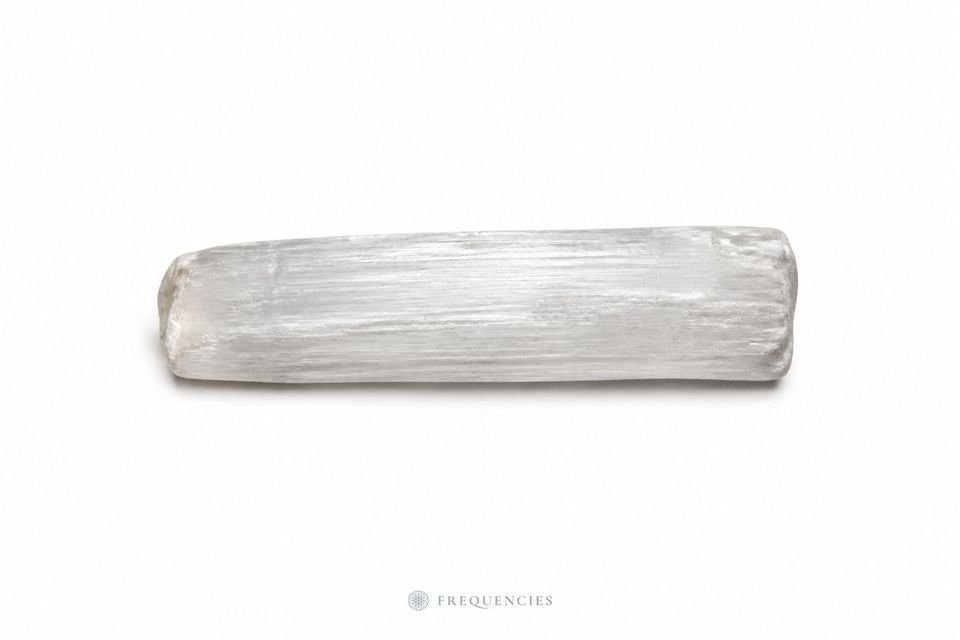
Strictly speaking, only clear, transparent gypsum crystals are called selenite. Most “selenite” sticks, towers, and lamps on the market are made from satin spar, which is the same mineral with the same composition, just in a fibrous form. Satin spar is recognized by its parallel fibers and silky sheen, and these vertical fibers are exactly what you see on selenite lamps. The name “satin spar” is sometimes also used for fibrous calcite, but calcite has a hardness of 3 and cannot be scratched with a fingernail.
All selenite lamps in our store come from Morocco. In the High Atlas of Morocco, including the area around Marrakesh, there are large deposits of rock salt and gypsum in Triassic period layers. These are evaporites, meaning minerals that crystallized as salty water evaporated. Read more about the origin, deposits, and symbolism of selenite on the selenite page in the stone encyclopedia.
Did you know? In 2000, miners in the Naica mines in Mexico broke into a cave about 300 meters deep containing the world’s largest known selenite crystals. The largest is about 11 meters long and is estimated to weigh around 12 tons. The air temperature in the cave reached 58 °C, and humidity was 90 to 99%, so without protective gear, a person could stay there for only about ten minutes. In 2011, researchers calculated that these crystals grow at about one nanometer, that is, one billionth of a meter, per day, and that a meter-thick crystal at 55 °C would have taken about 990,000 years to form. Since 2015, when mining operations ceased, the cave has flooded again. The Naica giants are clear selenite, not the fibrous satin spar from which lamps are usually made.
Why selenite light looks soft and silky
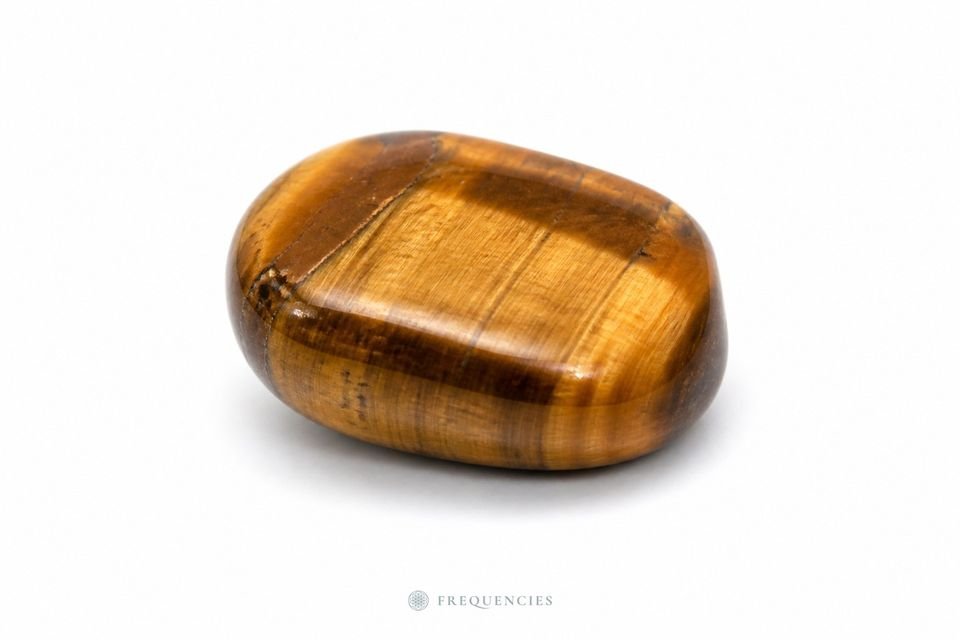
In satin spar, fine gypsum fibers stand parallel to each other. Light reflects off them and creates a glowing band that glides across the stone as you walk past the lamp. This optical effect is called chatoyance or the cat’s eye effect, and the Britannica encyclopedia lists it as characteristic of satin spar, cat’s eye, and tiger’s eye. In tiger’s eye, a similar golden band is created by parallel crocidolite fibers included in quartz.
The lamp’s stone is semi-translucent: light passes through it, but the bulb itself is not visible. Where the stone is thinner, it glows more brightly, while thicker areas remain milky white. Therefore, each lamp has its own light pattern, even two lamps of the same height. Touch the stone: gypsum has low thermal conductivity, so it does not feel as cold as quartz.
People have used gypsum’s ability to transmit light since ancient times. The Romans called clear gypsum “lapis specularis,” split it into thin plates, and used it in windows instead of glass. Pliny the Elder wrote that the best stone was obtained near Segobriga in modern Spain, and archaeologists have explored kilometers of underground passages there. The mines were most intensively used in the 1st and 2nd centuries.
How to choose the size and weight of a selenite lamp
Our store currently offers seven selenite lamps. They are 36 to 40 cm high, weigh 3.3 to 4.8 kg, and their prices range from €109 to €125.
| Height | Weight | Price (20.10.2026) |
|---|---|---|
| 36 cm | 3.3 kg | 109 € |
| 36 cm | 4.8 kg | 110 € |
| 37 cm | 3.5 kg | 110 € |
| 37 cm | 4.3 kg | 120 € |
| 38 cm | 4.2 kg | 110 € |
| 40 cm | 4 kg | 110 € |
| 40 cm | 4.6 kg | 125 € |
The table shows an important detail: height alone does not tell you much. The two 36 cm lamps differ by 1.5 kg, that is, almost half. For a narrow shelf or bedside table, choose a lighter and slimmer tower. On a wide dresser, bookshelf, or TV stand, a more massive lamp, which usually also has a wider and more stable base, looks more impressive.
Before ordering, measure the place where the lamp will stand and consider how far the power outlet is. Each lamp’s page lists its height and weight, and you can view it from several angles in the photos. Since the stone is natural, the shape and color nuances vary slightly from lamp to lamp. All available lamps can be found in the selenite lamp category.
The bulb and warm light
Each lamp comes with an E14 5 W LED bulb and a cord with a CE-certified plug for a 220 to 240 V network. The letter E in the socket designation means Edison screw, and the number is its diameter in millimeters. E14 and the wider E27 are the most common screw sockets in Europe, so finding a replacement bulb is not difficult.
If the bulb ever burns out, replace it with the same E14 5 W LED bulb and check the light tone on the packaging. This is indicated in kelvins (K): the lower the number, the warmer and more yellow the light, and the higher, the cooler and more bluish. On the ENERGY STAR scale, warm white light is 2200 to 3000 K, and this is exactly what highlights the milky glow of selenite. With a 5000 to 6500 K bulb, called a daylight bulb, the stone will look cool and bluish.
LED is also the best choice for the stone itself. An incandescent bulb converts 90% of consumed electricity into heat, but LED bulbs remain cool during use. This is important for gypsum: when heated to 120 to 180 °C, it loses about three-quarters of its crystal water and turns into building plaster or Paris plaster. A stronger incandescent bulb in the stone cavity is not a good choice, and the lamp’s instructions state that only the included bulb should be used.
Where to place a selenite lamp at home
Gypsum dissolves slowly in water, about 2 grams per liter, so the lamp needs a dry room. The living room, bedroom, hallway, or study are suitable. The bathroom, sauna, and places near the stove where steam rises are not suitable, and the lamp’s description also warns not to use it in damp rooms.
In winter, be careful with the windowsill. Condensation often accumulates on a cold window pane, and moisture can make the stone’s surface matte. The windowsill is also not suitable because of the sun, as selenite should be protected from prolonged direct sunlight and heat, for example, near a radiator. A better place is a shelf or dresser deeper in the room, where you can see the lamp from the sofa or bed.
The light looks best in the evening, when other lamps are off or dimmed and there is a light wall behind the selenite. It is recommended to stick felt pads under the base so the stone does not scratch the furniture surface. In the living room or bedroom, a selenite lamp is also often placed as a symbol of brightness and tranquility.
In the crystal community, many people place other stones next to selenite, such as amethyst or rose quartz, because it is believed that selenite cleanses and charges them. If you do this, keep hardness in mind. Amethyst, rose quartz, and rock crystal have a hardness of 7, so they can scratch the lamp. Place them next to it on a soft cloth and do not lean them against the stone.
Care and safe use
Wipe off dust with a dry, soft cloth or a soft brush. Never wash the lamp, do not soak it, and do not wipe it with a damp cloth or cleaning agents, as water makes the gypsum surface matte and gradually dissolves it. If you will not need the lamp for a longer period, wrap it in a soft fabric and store it in a dry place, separately from harder stones. All stone care rules are summarized in one place in the care table.
Use only the included cord and bulb, and unplug the lamp before changing the bulb. Do not run the cord under a rug: it can wear unnoticed there, and it is easy to trip over. From time to time, check the cord for abrasions, and keep the lamp away from curtains and other fabrics. Our lamps weigh 3.3 to 4.8 kg, so place the lamp on a stable surface where it cannot be knocked over by children or pets, and carry it with both hands, holding it by the base.
Why a selenite lamp is a good Christmas gift
A selenite lamp can be used every evening and is also suitable for someone who does not collect crystals. When switched off, it looks like a natural stone in the interior, but when switched on, it becomes a gentle evening light. Selenite is traditionally associated with moonlight and clarity, in crystal astrology with Taurus and Cancer, and in chakra tradition with the third eye and crown chakras. Thus, the lamp can also be a gift with personal meaning, for example, for a friend born under the sign of Taurus or Cancer.
Lamps that are in stock arrive in 1 to 3 business days, and since each costs more than €30, delivery to parcel machines in the Baltics is free. The consumer has 14 days from receipt to withdraw from the purchase, and you can read more about this in the delivery and return policy. For a smaller gift, selenite candle holders from €11.77 are suitable, and you can find other selenite items in the selenite category and gift ideas. If you are not sure which lamp will be liked, a gift card leaves the choice to the recipient.
Frequently Asked Questions
Is the selenite lamp made from real selenite?
The lamp is made from natural gypsum, the same mineral CaSO4·2H2O that clear selenite consists of. Lamps are most often made from the fibrous variety called satin spar, and it is the fibers that create the silky glow.
Can a selenite lamp be wiped with a damp cloth?
No. Gypsum dissolves slowly in water, about 2 grams per liter, and its surface becomes matte in humidity. Clean the lamp only with a dry, soft cloth or brush.
What bulb should be used in a selenite lamp?
Use the same bulb as included: 5 W LED with an E14 socket. For warm light, choose a bulb whose packaging indicates 2200 to 3000 K.
Where should a selenite lamp not be placed?
Do not place it in the bathroom, sauna, on a windowsill where condensation accumulates, in direct sunlight, near a radiator, or next to curtains. The best place is a dry living room or bedroom.
Why do lamps of the same height weigh differently?
Each lamp is made from a different stone, so their thickness and shape vary. In our store, two 36 cm lamps weigh 3.3 and 4.8 kg, and the heavier one is more massive.
How quickly will the selenite lamp arrive?
If the lamp is in stock, delivery in the Baltics takes 1 to 3 business days. For orders over €30 to parcel machines in the Baltics, delivery is free.
Sources
- FREQUENCIES Stone Encyclopedia: Selenite (akmenu-fakti.json: gypsum CaSO4·2H2O, hardness 2, satin spar in trade, dissolves in water about 2 g/l, low thermal conductivity, care, name origin, lapis specularis)
- FREQUENCIES Stone Encyclopedia: Moonstone (feldspar, hardness 6-6.5)
- FREQUENCIES Stone Encyclopedia: Tiger’s Eye (quartz with crocidolite fibers)
- FREQUENCIES Stone Encyclopedia: Calcite (hardness 3)
- FREQUENCIES Stone Encyclopedia: Rock Crystal (, https://frequencies.lv/enciklopedija/ametists/ , https://frequencies.lv/enciklopedija/roza-kvarcs/ (hardness 7))
- geology.com/minerals/gypsum.shtml (hardness 2, satin spar as fibrous gypsum, drywall and plaster)
- geology.com/minerals/mohs-hardness-scale.shtml (nail 2-2.5, calcite 3, quartz 7)
- minerals.net/mineral/gypsum.aspx (gypsum properties, hardness 2)
- en.wikipedia.org/wiki/Selenite_(mineral) (selenites lithos, Moon phases, does not contain selenium, satin spar name also for fibrous calcite)
- britannica.com/science/chatoyance (chatoyance: parallel fibers; cat’s eye, tiger’s eye, satin spar)
- britannica.com/science/calcium-sulfate (gypsum 120-180 °C becomes Paris plaster)
- depositsmag.com/2016/11/17/triassic-salt-in-the-high-atlas-morocco/ (Chellai, Ghanmi, Doblas: Triassic rock salt and gypsum in the High Atlas near Marrakesh)
- en.wikipedia.org/wiki/Cave_of_the_Crystals (2000, ~300 m, 11.4 m, ~12 t, 58 °C, 90-99% humidity, ~10 min, flooded October 2015)
- phys.org/news/2011-09-slowest-crystal-growth.html (growth ~1 nm per day; 1 m diameter at 55 °C ~990,000 years)
- doi.org/10.1073/pnas.1105233108 (Van Driessche, García-Ruiz et al., PNAS 2011, 108(38):15721-15726)
- the-past.com/feature/transparent-desires-delving-into-the-roman-lapis… (lapis specularis for windows, Segobriga, intensive mining 1st-2nd c., ~20 km explored passages)
- segobriga.org/en/ (Pliny the Elder on lapis specularis from Segobriga)
- en.wikipedia.org/wiki/Edison_screw (E14/E27, number = diameter mm, most common in Europe)
- energystar.gov/sites/default/files/asset/document/Light%20Bulb%20Purcha… (K scale: lower K warmer; Soft/Warm White 2200-3000K; daylight 5000-6500K)
- energystar.gov/products/learn-about-led-lighting (incandescent bulbs 90% of energy as heat)
- dsfire.gov.uk/safety/home/electricals (LEDs stay cool; cords under rugs; check cords; lamps away from curtains; correct bulb)
- frequencies.lv/produkta-kategorija/selenits/lampas/ (and 7 product pages /products/selenita-lampa-*/ (height, weight, price, Morocco, E14 5 W LED, CE plug 220-240 V, felt pads, safety note, in stock, 1-3 business days))
- frequencies.lv/produkta-kategorija/selenits/selenits-svecturi/ (candle holders from €11.77)
- frequencies.lv/piegade-un-atgriesana/ (free delivery in the Baltics from €30, 1-3 business days, 14-day right of withdrawal)