Meteorite
An extraterrestrial rock: stony and iron meteorites

Meteorite

An extraterrestrial stone traditionally associated with change and a link to the Universe.

Hardness 4-6.5 (Mohs scale, depending on type) Protect from water Sunlight is not harmful Earth
In brief

A meteorite is an extraterrestrial rock that has fallen to Earth: an iron-nickel alloy, silicate minerals or a mixture of both. Its hardness is 4 to 6.5 on the Mohs scale, depending on the type. Four meteorite falls are known in Latvia, the oldest being the Līksna meteorite in 1820. In the crystal community, it is traditionally regarded as a link to space and the stars.

Exhibit label

Name
Meteorite
Type
Meteorite
Mineral group
An extraterrestrial rock: an iron-nickel alloy (iron meteorites), silicate minerals (stony meteorites) or a mixture of the two (stony-iron meteorites)
Hardness
4-6.5 on the Mohs scale (depending on type)
Colour
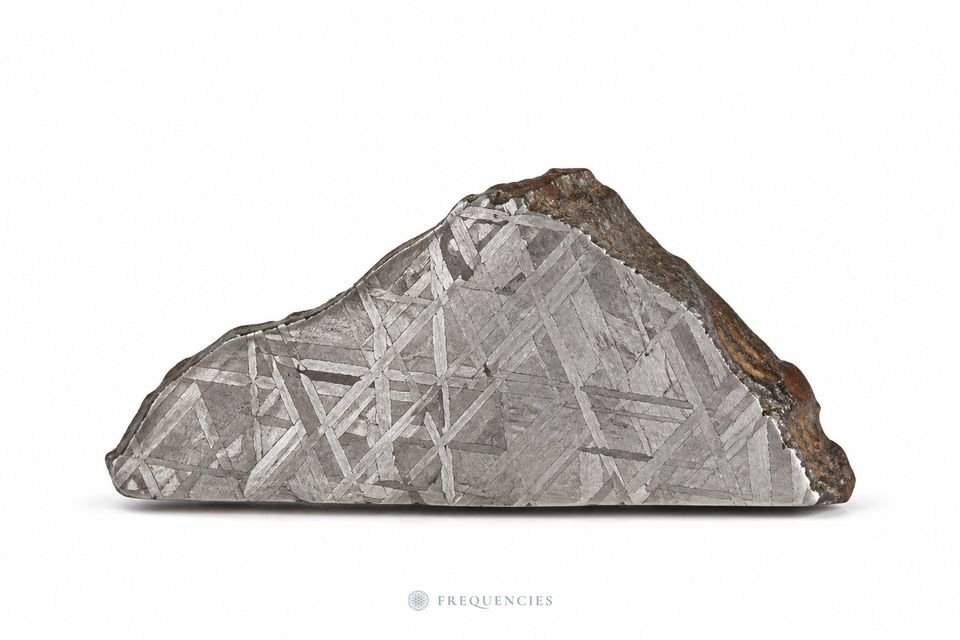
Iron meteorites are silvery grey, with a geometric line pattern after etching; stony meteorites range from grey to brownish black
Main locality
Found all over the world
Localities
Namibia, Sweden, Argentina, USA, Australia
Planet
Uranus (tradition)
Slices of iron meteorite are usually polished and etched with acid to reveal the Widmanstätten pattern, and are often coated with oil, wax or lacquer to prevent rust. When buying, it is advisable to ask for the meteorite's name and classification.

Mohs hardness scale

4-6.5 (Mohs scale, depending on type)out of 10

Moderately hard: durable in everyday wear, but it can be scratched by harder stones. Store it separately.

Care

Water

Protect from water

Water can damage the surface or colour. Clean with a dry, soft cloth.

Sun

Sunlight is not harmful

May be kept in a bright place.

Storage

Durable in everyday wear

Avoid: water and damp environments, chlorine, salt water and acids, lotions and cosmetics on the surface.

Note. Iron meteorites can rust. Store them dry, if possible with a moisture absorber, and wipe them with a dry cloth after handling; if rust appears, consult a specialist.

In the crystal community, the following are used for cleansing: a soft, dry cloth or brush, the presence of selenite, sound vibrations, moonlight.

From geology to your shelf

  • How it forms. Meteorites are fragments of large asteroids or planets, most of which come from the asteroid belt between Mars and Jupiter; iron meteorites are pieces of the cores of broken-up planetesimals. When a meteorite enters the atmosphere, its surface briefly melts and forms a fusion crust. Chondrites preserve chondrules, which formed in the solar nebula about 4.56 billion years ago.
  • Where the colour comes from. A freshly fallen meteorite has a black fusion crust, which weathers over time and turns brownish or rusty. A slice of iron meteorite etched with weak nitric acid shows the Widmanstätten pattern, formed by two iron-nickel alloys, kamacite and taenite.
  • History. The Sikhote-Alin meteorite shower in the Russian Far East in February 1947 is the largest meteorite fall ever observed. The Widmanstätten pattern is named after Count Alois von Beckh-Widmanstätten, who observed it in 1808.
  • How to recognise a genuine stone.
    • Almost all meteorites contain iron and nickel, so a strong magnet attracts them; this is a good first test, but not a conclusive one.
    • A fresh meteorite has a thin, black fusion crust and shallow pits known as regmaglypts.
    • Meteorites contain no quartz and usually no gas-bubble cavities; a porous, magnetic piece is most often metallurgical slag.
    • A slice of etched iron meteorite shows the Widmanstätten pattern.
  • Treatment and imitations. Slices of iron meteorite are polished and etched with a weak nitric acid solution to reveal the Widmanstätten pattern. Metallurgical slag, magnetite, hematite or basalt is often passed off as meteorite.
  • How to choose. Choose a specimen with a known, officially classified meteorite name, because meteorites are named after the nearest settlement or geographical feature to where they were found. Collectors place a high value on complete specimens with fusion crust and regmaglypts, as well as carefully etched slices.
  • Traditional meaning

    This is crystal tradition and symbolism, not a scientific or medical claim. The chakras, signs and elements match our product pages.

    Chakras

    Root ChakraCrown Chakra

    In crystal traditions, meteorite is associated with the root and crown chakras, that is, with being grounded and a link to the vast Universe. It is regarded as a symbol of change and of cosmic origin.

    Zodiac signs

    ♒︎Aquarius

    In traditional crystal astrology, meteorite is associated with Aquarius, whose symbolism includes the future, unusual ideas and an interest in space.

    Element

    Earth

    The element of earth traditionally symbolises stability and being grounded. In a meteorite it takes on special meaning, because this stone from space has become part of the Earth.

  • Main symbolism: change and a cosmic connection
  • In crystal traditions it symbolises the link between the Earth and the Universe
  • Traditionally associated with resilience and the ability to adapt to new conditions
  • In the crystal community, many people traditionally regard meteorite as a link to space and the stars, because it is one of the few materials that has reached the Earth from the far reaches of the Solar System. It is often placed in a meditation space or on a desk as a reminder of the history of the Universe, and a piece of meteorite is often given on special occasions to people who are passionate about astronomy.
  • The traditional meaning of crystals has not been medically proven and does not replace the advice of a professional.

    Stories and legends

    The blade of Tutankhamun's dagger was forged from meteoritic iron.

    The dagger was found in the wrappings of the pharaoh's mummy in 1925. In 2016, researchers used X-ray fluorescence analysis to determine that the blade contains about 10.8% nickel and 0.58% cobalt, and this composition matches iron meteorites. In Egypt, iron weapons became common only much later, around 800 to 700 BCE.

    The largest known meteorite, Hoba, still lies in Namibia, where it was found.

    The Hoba meteorite was found in 1920 by a farmer ploughing a field near Grootfontein. It is an iron meteorite made up of roughly 84% iron and 16% nickel, and its mass is estimated at around 60 to 66 tonnes. The Namibian government declared the meteorite and its find site a national monument.

    Four meteorite falls are known in Latvia, and the oldest is the Līksna meteorite of 1820.

    The Līksna meteorite fell on 12 July 1820 in the Vārkava area, breaking up into at least three pieces above Lake Kalupe, two of which fell into the water and have not been found. Later meteorites fell at Birži near Jēkabpils in 1863, at Nereta in 1864 and at Misa near Baldone in 1890, and all four are stony meteorites. In 2025 the Latvian National Museum of Natural History acquired a fragment of the Birži meteorite for its collection.

    The Widmanstätten pattern in iron meteorites forms over millions of years of cooling.

    When a section of iron meteorite is polished and etched, a pattern of crossing bands of two iron-nickel alloys appears on it. It forms when the metal cools extremely slowly inside an asteroid or another large body, over millions of years, which is why it cannot be reproduced in a laboratory. The pattern is named after Count Alois von Widmanstätten, who observed it in 1808, although the Englishman William Thomson had described it as early as 1804.
    Interesting facts

    • Meteorites are divided into three main groups: stony, iron and stony-iron meteorites; most finds are stony meteorites.
    • A section of iron meteorite shows the Widmanstätten pattern after etching: bands of kamacite and taenite that formed as the metal in an asteroid's core cooled extremely slowly, over millions of years.
    • The most primitive meteorites, the chondrites, are more than 4.5 billion years old, which makes them some of the oldest rocks a person can hold in their hands.

    How to use it

    • Keep it in a dry display case or box as the centrepiece of a collection
    • Use it as a conversation starter about the history of the Solar System
    • Hold it in meditation as a symbol of being grounded and of vastness
    • Give it to an astronomy enthusiast together with information on the meteorite's name and find site

    Pairs well with

    Frequently asked questions

    How can you tell a genuine meteorite?

    Most meteorites contain metallic iron and nickel, so they are heavy and attract a magnet. A fresh meteorite has a thin, black fusion crust. Meteorites contain no quartz and usually no gas-bubble cavities: a porous, magnetic piece is most often slag. A specialist can give a reliable answer.

    What is the difference between a meteor and a meteorite?

    A meteor is a streak of light in the sky, whereas a meteorite is a stone that has fallen to the Earth. In space this body is called a meteoroid: when it enters the atmosphere and burns up, a meteor is seen in the sky, and the part that does not burn up and reaches the Earth's surface is a meteorite.

    Have meteorites fallen in Latvia?

    Yes, four meteorite falls are known in Latvia, and all of them are stony meteorites. The oldest is the Līksna meteorite of 1820; later meteorites fell at Birži near Jēkabpils (1863), at Nereta (1864) and at Misa near Baldone (1890).

    How old is a meteorite?

    Many meteorites are more than 4.5 billion years old, almost as old as the Solar System. The most primitive ones, the chondrites, preserve chondrules, which formed in the solar nebula about 4.56 billion years ago.

    What types of meteorite are there?

    Meteorites are divided into stony, iron and stony-iron types. Stony meteorites fall most often, but iron meteorites are disproportionately common in collections, because they are more resistant to weathering and easier to tell apart from Earth rocks.

    Why does a slice of meteorite show a pattern of lines?

    This is the Widmanstätten pattern, made of two iron-nickel alloys, kamacite and taenite. It forms as the metal in an asteroid's core cools very slowly over millions of years, and it appears when the slice is polished and etched with weak nitric acid.

    Can a meteorite be washed in water?

    No. Moisture, air and chlorides, including salts from sweat, encourage iron meteorites to rust. Store the meteorite dry, if possible with a moisture absorber, wipe it with a dry cloth after handling, and if rust appears, consult a specialist.

    What does meteorite symbolise?

    In crystal traditions, meteorite symbolises the link between the Earth and the Universe, change and the ability to adapt. It is traditionally associated with the root and crown chakras, the element of earth and the sign of Aquarius.

    Read more

    Meteorite: Properties, Significance, and How to Use It in Daily Life

    Sources. Mineralogical data: GIA Gem Encyclopedia, Mindat, Encyclopaedia Britannica (frequencies.lv crystal database v2), nhm.ac.uk, britannica.com, en.wikipedia.org, en.wikipedia.org, jewelrybyjohan.com, sagabands.com, healingcrystals.com, frequencies.lv.
    Further information: geology.com, geology.com, geology.com, en.wikipedia.org.
    Shopping Basket
    Scroll to Top