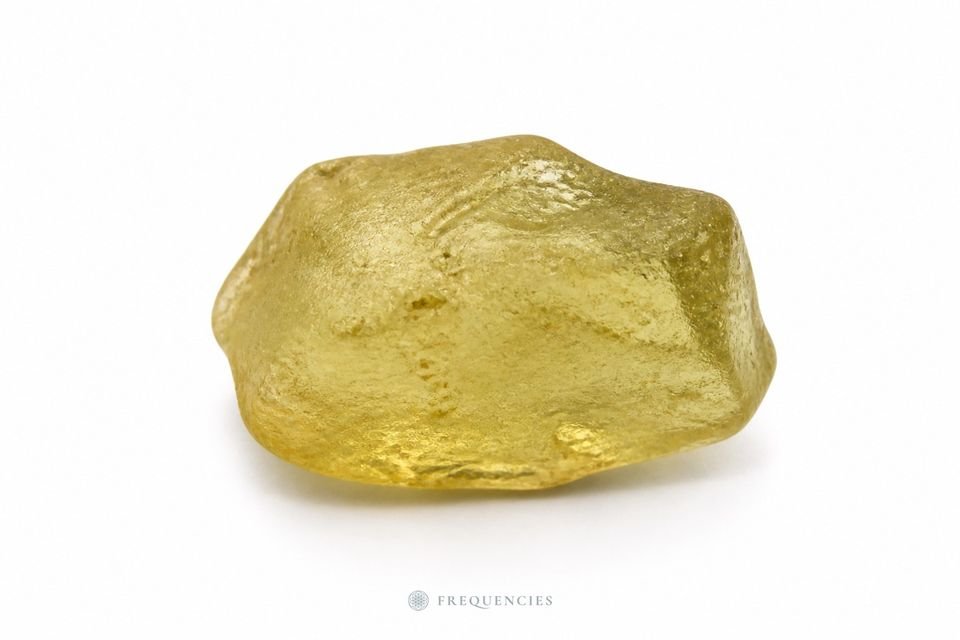
At the centre of Tutankhamun's pectoral is a scarab of Libyan Desert Glass.
In 1922 Howard Carter found in Tutankhamun's tomb a pectoral with a yellow-green, transparent scarab at its centre. The stone was long thought to be chalcedony, until in 1996 the Italian mineralogist Vincenzo de Michele noticed at the Egyptian Museum in Cairo that it was carved from natural Libyan Desert Glass. He published his analysis in 1998.
Scientists described the glass field after a 1932 expedition to the Great Sand Sea.
The Desert Survey of Egypt expedition led by Patrick Clayton found pieces of the glass on 29 December 1932 in a dune corridor near the Egyptian-Libyan border. Some pieces were the size of a human head, and the largest weighed more than 7 kilograms. Clayton, together with the British Museum mineralogist L. J. Spencer, published the first scientific description in the Mineralogical Magazine in 1934.
Prehistoric desert dwellers made cutting tools from this glass.
Archaeologists have found in the desert sharp flakes struck from this glass, which prehistoric people used for cutting, and they link them with the Aterian culture of the Stone Age. In 1971 a large block of glass bearing percussion marks was also found, so researchers suggest that it may have been used as a striking tool.
Tiny zircon grains helped to solve the riddle of the glass's origin.
The glass formed roughly 29 million years ago, when almost pure quartz sand melted at a temperature above 1600 °C. In 2019 researchers at Curtin University found in the glass zircon grains that had once been reidite, a mineral that forms only under the immense pressure of a meteorite impact. This points to a meteorite impact, not merely an explosion in the atmosphere, although the crater itself has not yet been found.
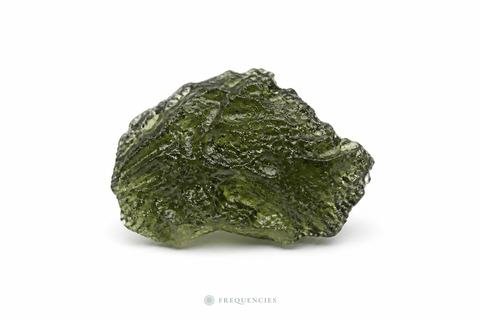 Moldavite
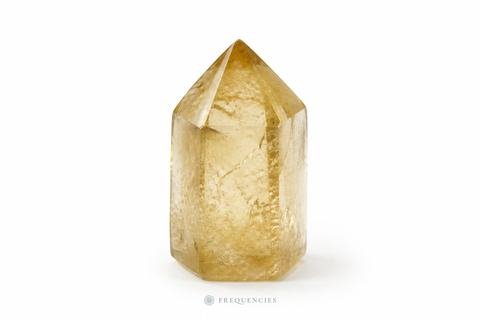 Citrine
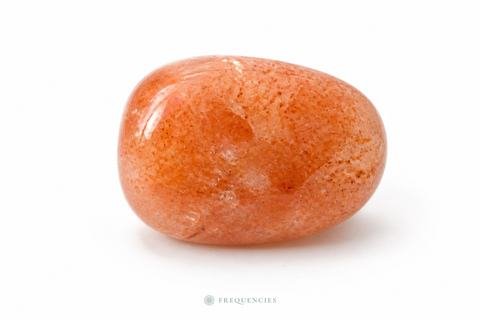 Sunstone
 Clear Quartz