Sunstone
Feldspar group

Sunstone

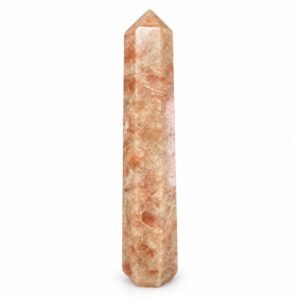
An orange to reddish feldspar with glittering platelets, traditionally associated with joy, vitality and optimism.

Hardness 6-6.5 May be rinsed in water Sunlight is not harmful Fire
In brief

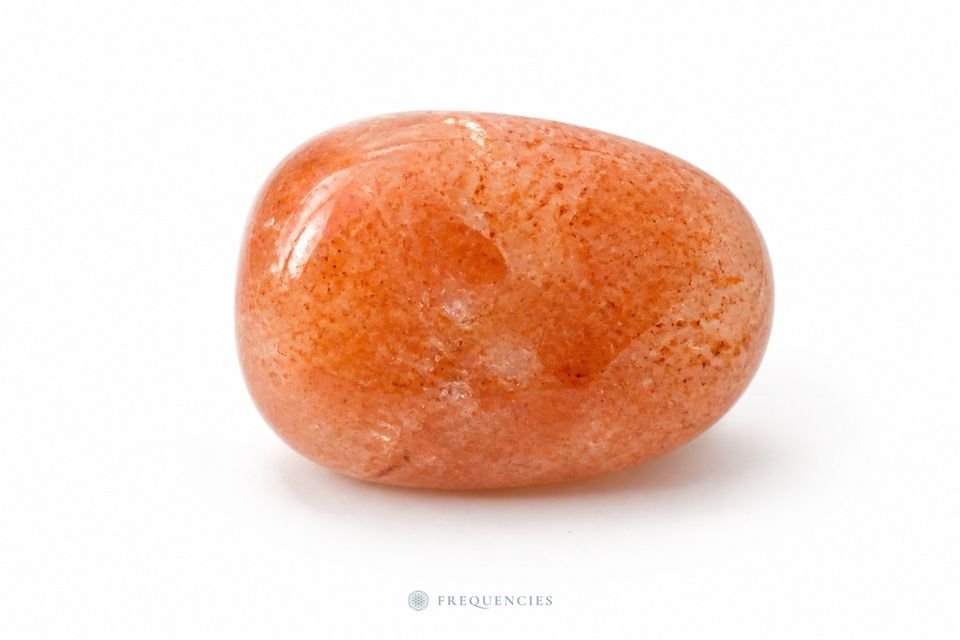
Sunstone is a feldspar, usually oligoclase, with a hardness of 6 to 6.5 on the Mohs scale, inside which tiny platelets of hematite or copper glitter in the light. This sparkle is called aventurescence. In Latvian, amber is also poetically called the sun stone, but it is a different material. In the crystal community, sunstone is seen as a symbol of joy, zest for life and optimism.

Sunstone in our shop

Exhibit label

Name
Sunstone
Type
Mineral
Mineral group
Feldspar group
Hardness
6-6.5 on the Mohs scale
Colour
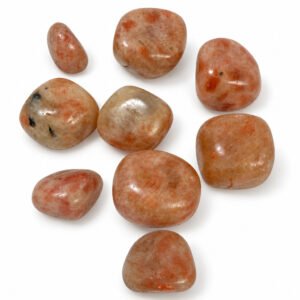
Peach, orange or reddish with glittering inclusions
Main locality
India
Localities
India, Tanzania, Norway, USA
Planet
Sun (tradition)
Some of the red feldspar sold as "Tibetan sunstone" (andesine) is most probably pale andesine treated with copper.

Mohs hardness scale

6-6.5out of 10

Moderately hard but brittle: it can chip on impact, and harder stones can scratch it. Wear it gently and store it separately.

Care

Water

May be rinsed in water

A brief rinse in lukewarm water, then wipe dry.

Sun

Sunlight is not harmful

May be kept in a bright place.

Storage

Protect from knocks

Avoid: prolonged heat, harsh cleaning agents, strong knocks.

Note. If the stone is porous, dyed or has a softer surface, it is safer to choose dry cleansing methods.

In the crystal community, the following are used for cleansing: a brief rinse under running water, the presence of selenite, sound vibrations, moonlight.

From geology to your shelf

  • How it forms. Sunstone is a feldspar, usually oligoclase and more rarely labradorite or orthoclase, with tiny platelet-shaped inclusions all aligned in one direction. In Oregon, USA, it formed as crystals in basalt lava flows, and it is mined from the basalt and its weathered layer; other deposits are in India, Norway, Tanzania and several other countries.
  • History. At the start of the 19th century sunstone was rare and expensive, until deposits in Norway, Siberia and elsewhere made it more available. The sunstones of Oregon's Warner Valley were possibly first collected by Native Americans.
  • How to recognise a genuine stone.
    • Under a 10x loupe, thin platelets aligned in a single plane are visible; in Indian stones they are hematite, in Oregon stones copper.
    • Goldstone is man-made glass with tiny triangular copper crystals throughout, not natural sunstone.
    • The so-called Tibetan sunstone, or andesine, was, according to laboratory studies, most probably pale andesine from Inner Mongolia (China) treated by copper diffusion.
    • The similarly glittering aventurine is quartz and usually green, whereas sunstone is an orange to red feldspar.
  • Treatment and imitations. The colour of Oregon sunstone is natural, whereas the colour of some of the red andesine offered on the market is produced by copper diffusion. Goldstone glass with a similar glitter is also found on the market.
  • How to choose. Colourless and yellow stones are usually the cheapest, value rises from pink and orange to red, and bright red, green and bicoloured stones are valued most highly. Transparent stones with clear aventurescence cost more.
  • Traditional meaning

    This is crystal tradition and symbolism, not a scientific or medical claim. The chakras, signs and elements match our product pages.

    Chakras

    Sacral ChakraSolar Plexus Chakra

    Sunstone is traditionally associated with the solar plexus and sacral chakras, and it symbolises optimism.

    Zodiac signs

    ♌︎Leo♎︎Libra

    In traditional crystal astrology sunstone is associated with Leo and Libra, as well as with people who value optimism and inner balance.

    Element

    Fire

    The fire element in crystal traditions symbolises warmth and optimism, which the orange tones and sparkle of sunstone recall.

  • Main symbolism: joy and vitality
  • In crystal traditions it symbolises joy, vitality and conscious work on oneself
  • Traditionally associated with optimism and inner calm
  • In the crystal community sunstone is traditionally associated with the sacral and solar plexus chakras, the fire element and the signs of Leo and Libra, as well as with the sun, warmth and a zest for life. Many choose it as a symbol of brightness for a meditation corner or desk, and its sparkling platelets make it a popular pendant stone and a sunny gift.
  • The traditional meaning of crystals has not been medically proven and does not replace the advice of a professional.

    Stories and legends

    The name sunstone describes its glitter, not its chemical composition.

    Sunstone is a gemstone of the feldspar group, and its varieties are found in both orthoclase and plagioclase feldspars. The characteristic metallic sparkle, or aventurescence, is produced by flat, reflective inclusions of hematite, copper or other minerals.

    Since 1987 Oregon sunstone has been the official gemstone of the US state of Oregon.

    It is a natural, copper-bearing labradorite feldspar whose sparkle comes from tiny platelets of pure copper. The stones are mined in eastern Oregon, in Harney and Lake counties, where they formed in ancient lava flows.

    A Native American legend tells that the red colour of Oregon sunstones was produced by the blood of a mighty warrior.

    According to the legend, the blood of a warrior wounded by an arrow dripped onto pieces of sunstone, brought his spirit into them and coloured them in shades of red. GIA notes that the first collectors of Warner Valley sunstones were possibly Native Americans, and in the museum in Jacksonville, Oregon, sunstones are on display in the exhibition of Native American artefacts.

    At the start of the 19th century sunstone was a rare, little-known and expensive gemstone.

    Only later finds in Norway, Siberia and elsewhere in the world made it better known, more available and cheaper. Today Oregon sunstone is valued as a natural and untreated American gemstone.
    Interesting facts

    • Sunstone is a feldspar with tiny platelets of hematite or copper that glimmer in the light; this effect is called aventurescence.
    • Oregon sunstone from the USA is a natural, untreated feldspar with copper inclusions.
    • The legendary navigational "sunstone" of the Vikings was most probably Iceland spar (calcite), not this feldspar.

    How to use it

    • Wear it gently as a symbol of joy and optimism
    • Keep it close during meditation or quiet moments
    • Place it in your work or relaxation area
    • Choose it as a gift with symbolic meaning

    Pairs well with

    Frequently asked questions

    What is sunstone?

    Sunstone is a feldspar, usually oligoclase, with tiny platelets of hematite or copper inside it that glimmer in the light. This sparkle is called aventurescence, which is why sunstone is also called aventurine feldspar. In Oregon sunstone the sparkle is formed by platelets of pure copper.

    Is sunstone amber?

    No. In Latvian, amber is also poetically called the "sun stone", but the mineral sunstone is something else entirely: a feldspar with glittering platelets. Amber is the fossilised resin of ancient trees, not a mineral.

    What does sunstone symbolise?

    In the crystal community sunstone is regarded as a symbol of joy, vitality and optimism. It is associated with the sacral and solar plexus chakras, the zodiac signs of Leo and Libra and the fire element.

    How can you recognise genuine sunstone?

    Under a 10x loupe, genuine sunstone shows thin platelets aligned in a single plane. Goldstone is man-made glass with tiny triangular copper crystals throughout. Beware of "Tibetan sunstone" too: studies suggest that it was most probably pale andesine treated with copper.

    Is sunstone the same as the stone the Vikings used for navigation?

    No. Researchers link the sunstone mentioned in the Viking sagas with Iceland spar, a transparent variety of calcite that polarises light and makes it possible to determine the direction of the sun in cloudy weather. Whether it was widely used in Viking times has not been proved.

    May sunstone be washed in water?

    Yes, GIA notes that warm soapy water is always a safe way to clean it. Ultrasonic and steam cleaners, heat and harsh agents should, however, be avoided, because feldspar is sensitive to knocks and acids.

    Does sunstone fade in the sun?

    No, GIA notes that the colour of sunstone is stable in light and does not fade. Heat is not recommended, however, so the stone should not be kept near a heat source for long.

    Is sunstone suitable for an engagement ring?

    With caution. The hardness of sunstone is about 6 to 6.5 on the Mohs scale, and because of the cleavage of feldspar its resistance to knocks is poor. It is therefore better suited to pendants and earrings, and a ring should be worn gently.

    Sources. Mineralogical data: GIA Gem Encyclopedia, Mindat, Encyclopaedia Britannica (frequencies.lv crystal database v2).
    Further information: gia.edu, gia.edu, gia.edu, geology.com.
    Shopping Basket
    Scroll to Top