
In 1592, an Elizabethan English warship sank off Alderney in the English Channel, and centuries later, a small crystal was found in its wreck next to a navigation divider [1][2]. Analysis showed that it was Iceland spar, a transparent calcite, which many researchers consider a possible material for the legendary Viking sunstone [2][3]. This is the first such crystal found with a ship, but it does not prove anything about the Vikings themselves [1].
What the Saga Says About the Sunstone
The sunstone is mentioned in an Old Norse saga written down in the 13th century, telling the story of King Olaf the Holy [1][2][4]. This story about Raudulf (Rauðúlfs þáttr) is also preserved in the Flateyjarbók [5].
King Olaf visits the farmer Raudulf, and the host’s son Sigurd talks about his skill: he knows the course of the Sun and Moon and can tell the hours of day and night even when the celestial bodies are not visible [5]. In the evening, the sky is completely clear, but Sigurd predicts that it will snow the next day, which the king finds unlikely. In the morning, the weather is cloudy and snowy, just as Sigurd said. The king asks someone to look outside, but there is no clear spot in the sky. Then he asks Sigurd to say where the Sun is, and Sigurd points it out. The king asks for the sunstone to be brought, lifts it up, sees where the light shines from the stone, and thus confirms that Sigurd is correct [1][5].
Equally important is what is not in this story. The action takes place at a farm, not at sea, the stone is used to test Sigurd’s skill, and the text does not describe the appearance of the stone or exactly how to use it [5][6]. In other medieval sources, sunstones are mentioned only in treasure lists, indicating that they were highly valued [6].
How Iceland Spar Shows the Direction of the Sun
Iceland spar is a large, transparent, colorless or slightly colored variety of calcite with a rhombohedral shape [7]. This variety was originally described from samples from the old Helgustaðir mines on Iceland’s east coast, known since the 17th century [7]. Calcite itself is calcium carbonate with a hardness of only 3. It cleaves along smooth, slanted planes and fizzes in diluted hydrochloric acid [8].
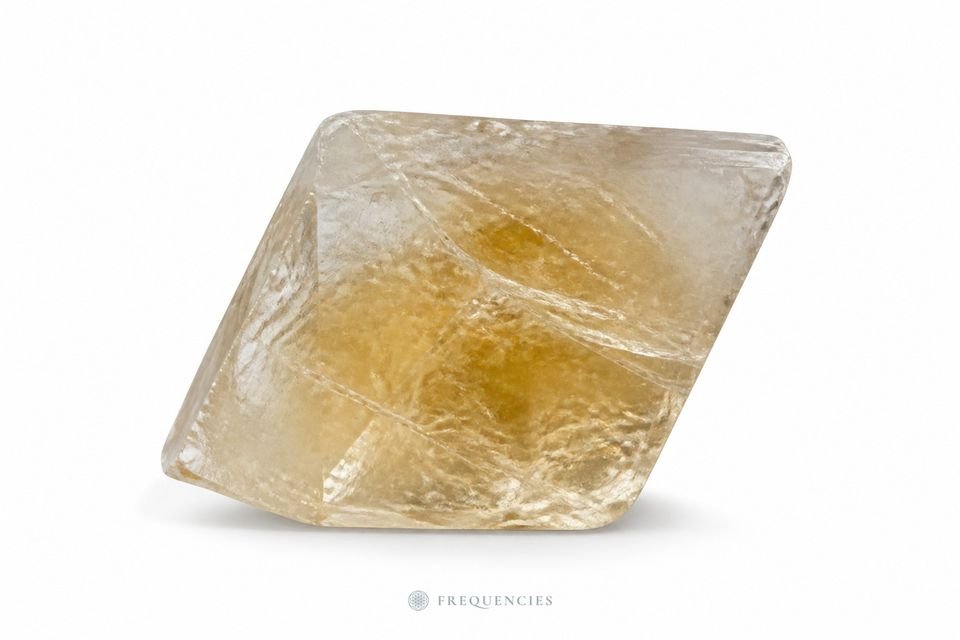
In 1669, Rasmus Bartholin, professor of mathematics and medicine at the University of Copenhagen, published the book “Experimenta crystalli Islandici,” the first published study in crystal optics [9]. He described that when looking through Iceland spar, every object appears doubled. This property is called double refraction [9].
Sunlight, as it passes through the atmosphere, becomes partially polarized, and by the polarization of the sky it is theoretically possible to determine the direction of the Sun even when it is hidden by clouds or fog or when it is below the horizon [1][10].
Did you know? Some insects determine the direction of the Sun by the polarization of skylight. In 1967, a Danish archaeologist hypothesized that Viking navigators could do the same in fog or clouds using a crystal [1][4].
How to do this with Iceland spar was demonstrated in a study published in November 2011 by researchers at the University of Rennes led by Guy Ropars [1][10]. Through the crystal, two images are visible, and by rotating the crystal, one can find a position where both are equally bright. This position indicates the direction of the Sun, and the researchers reported that the accuracy can be within a few degrees even in dark twilight [10].
The Alderney Crystal: What Was Found in the 1592 Wreck
The ship’s remains were found in the 1970s in a sandy bay off Alderney, buried in the sand [1]. The crystal was found in the wreck by Steve Wright of the Alderney Maritime Trust less than a meter from the navigation divider, so researchers suggest it was kept with other ship’s navigation tools [1][2]. In 2013, a group led by researchers from the University of Rennes confirmed in the journal Proceedings of the Royal Society A that it was Iceland spar [1][3].
In four centuries at sea, the crystal changed [1]. The exchange of calcium and magnesium ions with seawater reduced its solubility and made it mechanically stronger, but sand scratched its surface, and both processes caused the crystal to lose its clarity [3]. The Alderney crystal itself could no longer be used for navigation [2], but with a similar crystal, an observer could follow the direction of the Sun even when it is far below the horizon, with an accuracy of up to ±1 degree [3].
Researchers also offer an explanation for why the crystal might have been on a 16th-century ship. The large errors of the magnetic compass were not yet understood by 1600, and an optical compass could provide sailors with a reliable reference direction [3]. Journalist Jo Marchant adds that the compass needle could also be deflected by the ship’s heavy cannons [1]. She also emphasizes the main point: the fact that such a crystal could be used for navigation does not mean it actually was, and the Alderney crystal says nothing about the Vikings [1].
What Is Proven and What Is Hypothesis: What Experiments Show
It is widely accepted that Vikings sailed across the North Atlantic along a chosen latitude using a simple sun compass. This conclusion is based on a fragment of an 11th-century wooden disc found in Uunartoq, Greenland [6][11]. The sunstone in this scheme would be needed when the Sun is hidden by clouds or thick fog [12].
The group of Hungarian researcher Gábor Horváth at ELTE University in Budapest has been testing this hypothesis for years. In 2011, they compiled measurements of sky polarization in Tunisia, Finland, Hungary, and the Arctic [4]. Without aids, people’s guesses about the location of the hidden Sun in photographs of cloudy skies were inaccurate: the average maximum deviation of guesses was 70.7 degrees [4]. In partly cloudy weather, the conditions for polarimetric navigation are usually met, but in completely overcast skies, the researchers consider such navigation unlikely because the polarization is too weak [4].
Laboratory experiments in 2016 showed that real calcite crystals with scratches, impurities, and defects are not as ideal sunstones as previously thought, and cordierite and tourmaline can be at least as good [6]. Calculations showed that under clear skies, with any of these three crystals, the north direction could be determined with an error of up to 3 degrees [6].
In 2018, the same group simulated 1,000 three-week voyages from Bergen, Norway, to Greenland under varying cloudiness. If the navigator determined north at least once every three hours, the voyages were surprisingly often successful regardless of the type of crystal, but if with calcite this was done only once every six hours, during the spring equinox only 0.9% of voyages reached Greenland [12]. The authors themselves admit that the success rates may be slightly overestimated, as the model did not include storms and night drift [12].
The most important fact is this: no sunstone has been found at Viking-age archaeological sites [2]. The authors of the Alderney study do mention a calcite fragment found at a Viking settlement [2], and hope that similar crystals will be identified in Viking shipwrecks, burials, or settlements [3]. In 2016, the Horváth group called this theory old but still unproven [6].
The Latvian View: Grobiņa and the Curonian Seafarers
Scandinavians also settled in Kurzeme. In Grobiņa, there is an archaeological ensemble consisting of pre-Viking era monuments of Scandinavian settlers and local Curonians: a hillfort with an ancient town and several burial grounds [13]. Excavations have found more than 2,000 items, including a 6th to 7th-century Gotland-type stone stele, and most finds are from the 7th to 9th centuries [13]. Grobiņa is often associated with Seeburg, mentioned in the life of Saint Ansgar, which tells of a Swedish king Olof’s campaign against the Curonians [13].
The Curonians themselves were skilled seafarers: historical sources indicate that they conducted raids across the Baltic Sea [13]. The first extensive excavations in Grobiņa in 1929 and 1930 were led by Swedish archaeologist Birger Nerman, and since 2011, the Grobiņa archaeological ensemble has been included in Latvia’s national UNESCO World Heritage list [13]. The Grobiņa hillfort, also known as Skābaržkalns, and several burial grounds are freely accessible, and since 2019, the hillfort has been connected to one of the burial grounds by the Ālande River Park nature trail [13].
Sunstone, Calcite, and Iolite: Why the Names Get Confused
If you look for sunstone in a crystal shop, you will find a completely different mineral. The modern gemstone sunstone belongs to the feldspar group, and its shimmer is caused by thin, plate-like inclusions arranged in one plane: in Indian stones these are hematite, in Oregon stones copper [8][14]. GIA notes that the name “sunstone” describes the appearance of the stone, not its chemical composition [14]. The feldspar group also includes labradorite, moonstone, and amazonite [14]. In studies on Viking navigation, calcite, cordierite, tourmaline, and andalusite are mentioned as possible sunstones [6][12].
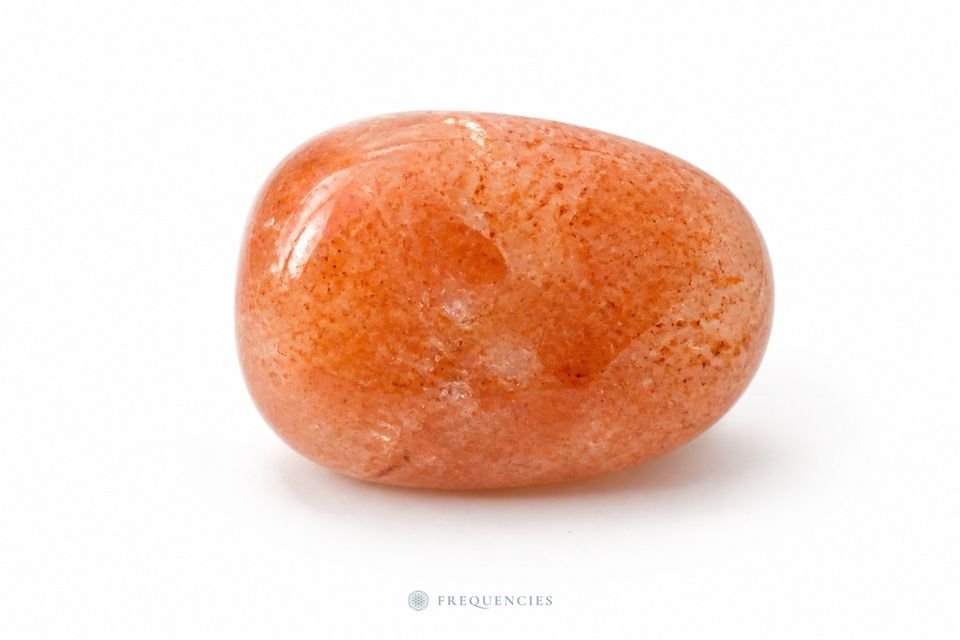
In our shop, you will find polished sunstones 1.5 to 2.5 cm, priced from €2. To make sure the stone is natural, use a 10x loupe: in natural sunstone, thin plates arranged in one plane are visible, while goldstone is man-made glass with tiny triangular copper crystals throughout the mass [8]. Other features are summarized in the article How to Recognize a Real Crystal. You can view the color play of labradorite in the labradorite category.
Iolite is the trade name for cordierite, derived from the Greek word “ios,” meaning violet [15]. It has strong, visible pleochroism: bluish iolite appears bluish-gray or dark violet from some angles, but completely colorless or yellow from others [15]. As a dichroic crystal, cordierite can act as a polarization filter, so it is mentioned among possible sunstones, and in the Horváth group’s experiments it was about twice as reliable as tourmaline [6]. Tourmaline also has pronounced pleochroism: when viewed along the length of the crystal, its color is often much darker [8]. In the tourmaline category you will find both black tourmaline and raw pink and green tourmaline.
The calcite category includes colored varieties of calcite, such as polished honey calcite 2 to 3 cm for €9.80 and orange calcite chips. Chemically, these are the same calcium carbonate as Iceland spar, with the same hardness of 3, and you can read more about them on the encyclopedia page about honey calcite [8].
How to Care for Calcite, Sunstone, and Iolite
Calcite is soft and sensitive to acids and scratches. Protect it from water and direct sunlight [8]. Due to its cleavage planes, corners can break off if dropped, so store honey calcite separately and clean it with a dry, soft cloth [8]. Sunstone is more durable, with a hardness of 6 to 6.5: it can be briefly rinsed, and sunlight does not harm it [8]. Protect iolite from impacts, high heat, and rapid temperature changes, and clean it with lukewarm soapy water, without ultrasound or steam [8]. Care recommendations for all stones are summarized in the care table.
Frequently Asked Questions
What is the Viking sunstone?
This is the name for a crystal mentioned in a 13th-century Old Norse story about Raudulf: King Olaf used it on a snowy, cloudy day to check where the Sun was. Researchers assume it could have been a polarizing crystal, such as Iceland spar or calcite, cordierite, or tourmaline.
Did the Vikings really use the sunstone?
This is not proven. The sunstone is mentioned in the saga, and experiments show that with Iceland spar the direction of the Sun can be determined with a precision of a few degrees, but no sunstone has been found at Viking-age archaeological sites.
How does the sunstone work?
Sunlight in the atmosphere becomes partially polarized. Through Iceland spar, two images are visible, and by rotating the crystal, one can find a position where both are equally bright. This allows the direction of the Sun to be determined even when it is hidden by clouds or below the horizon, but in completely overcast skies the polarization is too weak.
Is the sunstone sold in shops the Viking sunstone?
No. The modern gemstone sunstone is feldspar with hematite or copper plates, and its name refers to its shimmer. Studies on Viking navigation mention calcite, cordierite or iolite, tourmaline, and andalusite.
Where was the Iceland spar crystal associated with navigation found?
It was found in the wreck of an Elizabethan English ship that sank off Alderney in 1592, less than a meter from the navigation divider. In 2013, researchers confirmed that it is Iceland spar.
What is Iceland spar?
It is a large, transparent variety of calcite with a rhombohedral shape. Through it, every object appears doubled, and this double refraction was described in 1669 by Danish scientist Rasmus Bartholin.
Sources
- J. Marchant. The mythical sunstone, 2013
- M. Gannon. First Evidence of Viking-Like ‘Sunstone’ Found, Live Science, 2013
- A. Le Floch, G. Ropars, J. Lucas, S. Wright et al. The sixteenth century Alderney crystal: a calcite as an efficient reference optical compass? Proceedings of the Royal Society A 469 (2153), 2013
- G. Horváth, A. Barta, I. Pomozi et al. On the trail of Vikings with polarized skylight. Philosophical Transactions of the Royal Society B 366 (1565), 2011
- Rauðúlfs þáttr, Flateyjarbók text (G. Vigfússon and C. R. Unger edition), heimskringla.no
- D. Száz, A. Farkas, M. Blahó et al. Adjustment errors of sunstones in the first step of sky-polarimetric Viking navigation. Royal Society Open Science 3, 2016
- Calcite, Minerals.net
- FREQUENCIES Stone Encyclopedia: calcite, honey calcite, orange calcite, sunstone, iolite, tourmaline (hardness, care, how to recognize)
- Bartholin, Erasmus. Schuh’s Annotated Bio-Bibliography, The Mineralogical Record
- G. Ropars, G. Gorre, A. Le Floch, J. Enoch, V. Lakshminarayanan. A depolarizer as a possible precise sunstone for Viking navigation by polarized skylight. Proceedings of the Royal Society A 468 (2139), 2012
- B. Bernáth, A. Farkas, D. Száz et al. How could the Viking Sun compass be used with sunstones before and after sunset? Proceedings of the Royal Society A 470 (2166), 2014
- D. Száz, G. Horváth. Success of sky-polarimetric Viking navigation: revealing the chance Viking sailors could reach Greenland from Norway. Royal Society Open Science 5, 2018
- Grobiņa Archaeological Ensemble, Dienvidkurzeme Tourism Information (dienvidkurzeme.travel)
- Sunstone Description, GIA (Gemological Institute of America)
- Iolite Description, GIA (Gemological Institute of America)