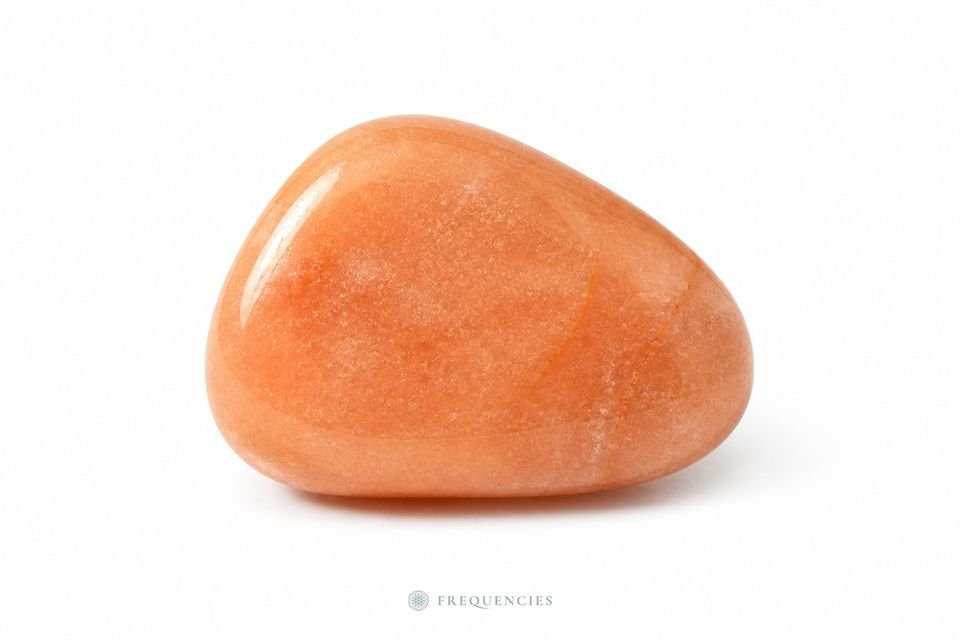
Peach Aventurine
A soft orange aventurine, traditionally associated with creativity and zest for life.
Peach Aventurine is a quartz or quartzite in a soft peach, salmon or pale orange shade, with a hardness of 6.5 to 7 on the Mohs scale. The colour is usually linked to iron oxides, while the fine shimmer is produced by tiny mica platelets. It is found in India, Brazil and Russia. In the crystal community, it is seen as a symbol of creativity and joie de vivre.
Peach Aventurine in our shop
Exhibit label
Mohs hardness scale
Moderately hard: durable in everyday wear, but it can be scratched by harder stones. Store it separately.
Care
Water
A brief rinse in lukewarm water, then wipe dry.
Sun
May be kept in a bright place.
Storage
Avoid: prolonged soaking and hot water, harsh cleaning agents, strong knocks.
In the crystal community, the following are used for cleansing: a brief rinse under running water, the presence of selenite, sound vibrations, moonlight.
Traditional meaning
This is crystal tradition and symbolism, not a scientific or medical claim. The chakras, signs and elements match our product pages.
Chakras
In crystal traditions, Peach Aventurine is associated with the sacral chakra, whose symbolic colour is orange. It is regarded as a symbol of creativity, zest for life and self-expression.
Zodiac signs
In crystal traditions, orange aventurines are often recommended to Taurus, whose symbolism is linked with a sense of beauty, patience and delight in everyday things.
Element
The element of earth traditionally symbolises stability, patience and tangible growth. In Peach Aventurine it is linked with gentle, calm creativity.
The traditional meaning of crystals has not been medically proven and does not replace the advice of a professional.
Interesting facts
- The orange and peach tones in aventurine are usually linked with iron oxides, hematite or goethite; some sources also mention inclusions of pyrite.
- The shimmer of aventurine, known as aventurescence, is created by tiny, flat mineral platelets that reflect light like small mirrors.
- Mineralogically, aventurine is quartz or quartzite with many inclusions, so some sources call it not a mineral but a rock.
How to use it
- Place it in a creative workspace as a warm colour accent
- Include it in a row of chakra stones between the red and the yellow stone
- Carry it in your pocket on days when you want a reminder of zest for life
- Choose it as a gentle gift for a friend who is into art or crafts
Pairs well with
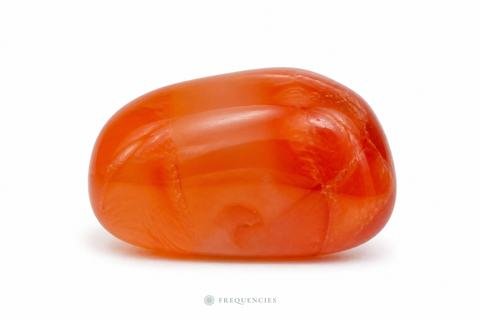 Carnelian
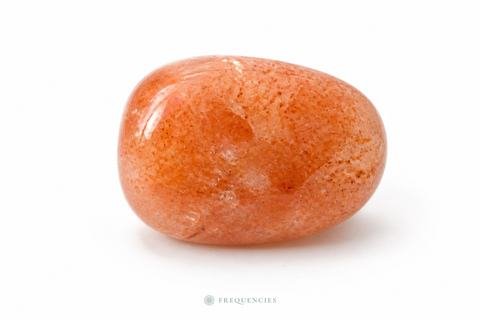 Sunstone
 Rose Quartz
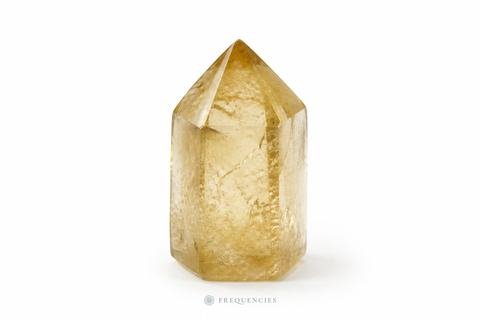 Citrine
Frequently asked questions
What is Peach Aventurine?
It is quartz or quartzite in a soft peach, salmon or pale orange tone. The colour is usually linked with iron oxides, and the fine shimmer, or aventurescence, is created by tiny, flat platelets of mica and other minerals that reflect light like small mirrors.
What does Peach Aventurine symbolise?
In the crystal community, Peach Aventurine is regarded as a symbol of creativity and zest for life, which is why it is often included in chakra stone sets. It is associated with the sacral and heart chakras, the zodiac sign Taurus and the element of earth.
How does Peach Aventurine differ from sunstone?
Both have a similar shimmer, but Peach Aventurine is an opaque quartz with a hardness of 6.5 to 7, whereas sunstone is a feldspar with a hardness of 6 to 6.5 on the Mohs scale. Sunstone is usually more transparent, and its sparkles are produced by platelets of hematite or copper.
How can you recognise genuine Peach Aventurine?
In the natural stone, the shimmer is fine and uneven. Goldstone is artificial glass with evenly scattered copper sparkles, and in dyed quartzite the colour tends to collect in cracks and around drill holes. If the tone seems unnaturally vivid, ask the seller about the origin.
Can Peach Aventurine be put in water?
Yes, a brief rinse in lukewarm water is safe, because it is a hard quartz. Prolonged soaking and washing in hot water is not recommended, however, especially for dyed specimens, and dry the stone after rinsing.
Does Peach Aventurine fade in the sun?
Usually not: the natural tone is stable, and the stone tolerates sunlight. Prolonged sun is not recommended for dyed specimens, so if the origin is not known, store the stone in the shade.