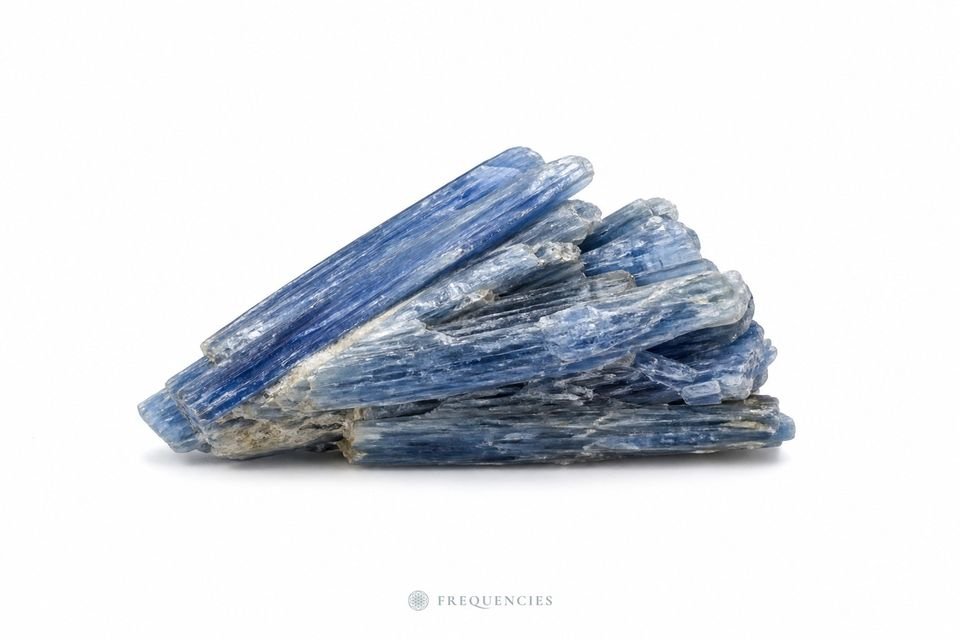
Kyanite
Kyanite is a blue bladed mineral traditionally associated with clear communication and intuition.
Kyanite is an aluminium silicate mineral (Al2SiO5) that forms under high pressure, usually blue, with bladed, plate-like crystals. Its hardness depends strongly on direction: 4.5 to 5 along the length of the crystal and 6.5 to 7 across it on the Mohs scale. The name comes from the Greek word kyanos, blue. In the crystal community, it is traditionally associated with clear communication and intuition.
Exhibit label
Mohs hardness scale
A soft stone: it can be scratched by glass and steel. Store it separately and clean it with a soft cloth.
Care
Water
A brief rinse in lukewarm water, then wipe dry.
Sun
May be kept in a bright place.
Storage
Avoid: strong knocks and pressure, ultrasonic and steam cleaning, sudden temperature changes.
Note. Kyanite has perfect cleavage, and bladed crystals easily split or break; store them in a soft pouch and dry them immediately after rinsing.
In the crystal community, the following are used for cleansing: a brief rinse under running water, sound vibrations, moonlight, the presence of selenite.
Traditional meaning
This is crystal tradition and symbolism, not a scientific or medical claim. The chakras, signs and elements match our product pages.
Chakras
Kyanite is traditionally associated with the Throat and Third Eye Chakras, which in crystal traditions symbolise clear communication and intuition.
Zodiac signs
In crystal traditions, kyanite is attributed to Taurus, Libra and Aries.
Element
The Air element traditionally symbolises clarity of thought, communication and lightness, reflected in the blue blades of kyanite.
The traditional meaning of crystals has not been medically proven and does not replace the advice of a professional.
Interesting facts
- The hardness of kyanite depends on direction: along the crystal it can be scratched with a knife, but across it is almost as hard as quartz; for this reason it used to be called disthene, meaning "two strengths".
- The name comes from the Greek word kyanos, meaning blue.
- Kyanite is a high-pressure aluminium silicate, and it is used in refractory materials and high-strength porcelain, for example in spark plug insulators.
How to use it
- Place it on a desk as a symbol of clear communication
- Use it in meditation as a symbol of the Throat and Third Eye Chakras
- Place a blade of kyanite in an arrangement together with other blue crystals
- Choose it as a gift for those born under Taurus, Libra or Aries
Pairs well with
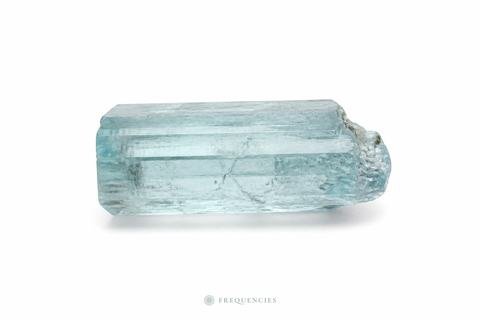 Aquamarine
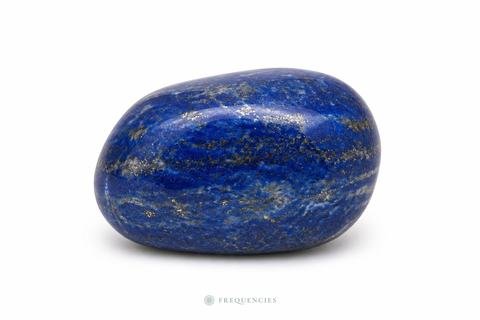 Lapis Lazuli
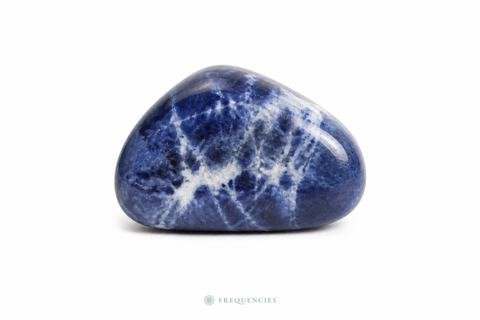 Sodalite
 Clear Quartz
Frequently asked questions
What is kyanite?
Kyanite is an aluminium silicate (Al2SiO5) mineral that forms under high pressure. It has tabular, bladed crystals, usually blue, and the name comes from the Greek word kyanos (blue). In industry, kyanite is used in refractory materials and durable porcelain.
How hard is kyanite?
The hardness of kyanite depends markedly on direction: along the crystal it is 4.5 to 5, whereas across it is 6.5 to 7, almost like quartz. Along its length kyanite can be scratched with a knife, and because of this property it used to be called disthene, meaning "two strengths".
Is kyanite brittle?
Yes. Kyanite has perfect cleavage, and the thin bladed crystals easily split or break from knocks and pressure. Store them in a soft pouch or box, separately from other stones.
May kyanite be put in water?
Yes, a brief rinse is fine, but dry the stone immediately afterwards. Do not use ultrasonic or steam cleaning, and avoid sudden temperature changes, because the brittle crystals can crack.
May kyanite be kept in the sun?
Yes, the sun does not usually harm kyanite. Just do not put a cold stone in hot sun or next to a heater, because sudden temperature changes are not recommended for the brittle crystals.
What colours does kyanite come in?
Most often kyanite is blue to dark blue, often with uneven colour zones and a vitreous to pearly lustre. White, grey, green, yellow or black kyanite is encountered less often.
What does kyanite symbolise?
In crystal traditions, kyanite symbolises clear communication, balance and a link between mind and intuition. Traditionally it corresponds to the Throat and Third Eye Chakras, the Air element, and the signs of Taurus, Libra and Aries.
Where is kyanite mined?
Kyanite is mined in Brazil, Nepal, Kenya, Tanzania, the USA, Switzerland, Austria and Russia. It forms in metamorphic rocks under high pressure, so it is most often found in crystalline schists and gneiss.
Read more
Kyanite: Properties, Meaning, and How to Use It in Daily Life