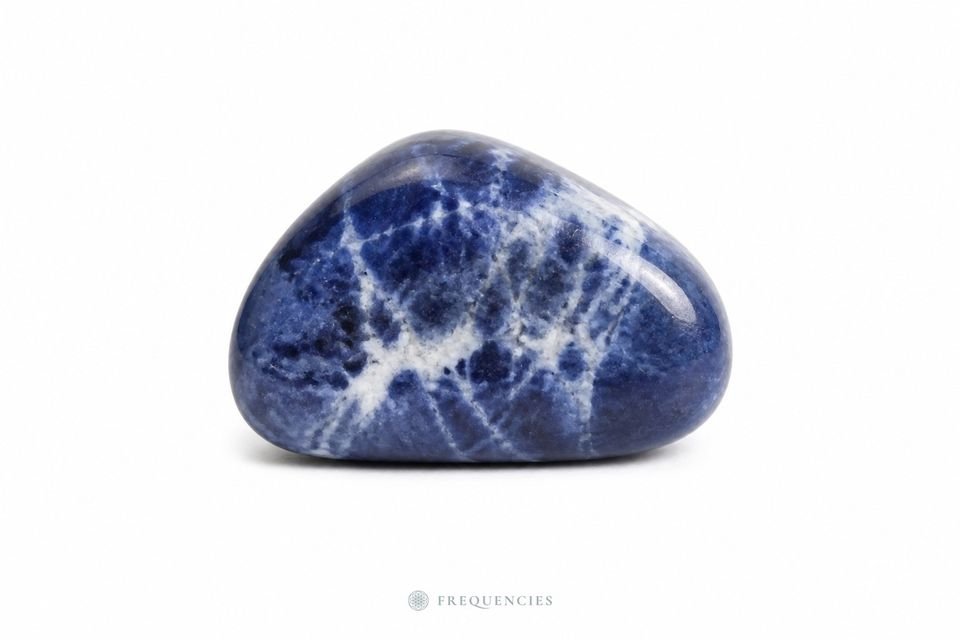
Sodalite is named after its sodium content.
The mineral was named by Thomas Thomson, a professor of chemistry in Glasgow, and was first described in 1811 from specimens from Greenland. The name refers to sodium, because sodalite forms in igneous rocks that crystallised from sodium-rich magma.
Sodalite from Bancroft, Canada, once decorated Marlborough House in London.
The Princess of Wales was so delighted with a gift of Bancroft sodalite that she decided to obtain enough of the stone to decorate her London residence, Marlborough House. In 1906, 130 tonnes of rock were shipped to England, and the deposit is still known as the Princess Sodalite mine, 4 km east of Bancroft in the province of Ontario.
The sodalite variety hackmanite changes colour in light.
The sulphur-rich hackmanite has tenebrescence: specimens from Canada and Greenland are at first pink to violet and fade in the sun, whereas specimens from Afghanistan and Myanmar are at first white and darken in the sun. In the dark, the original colour is restored in both cases.
Sodalite is used both for small sculptures and for interior finishing.
Sodalite is a popular decorative stone for small sculptures and jewellery. Sodalite granite is sawn into slabs and used as a facing stone indoors. Canada also produces a lot of gem-quality material.


 Clear Quartz
 Selenite
 Rose Quartz
 Black Tourmaline