The name aquamarine means sea water in Latin.
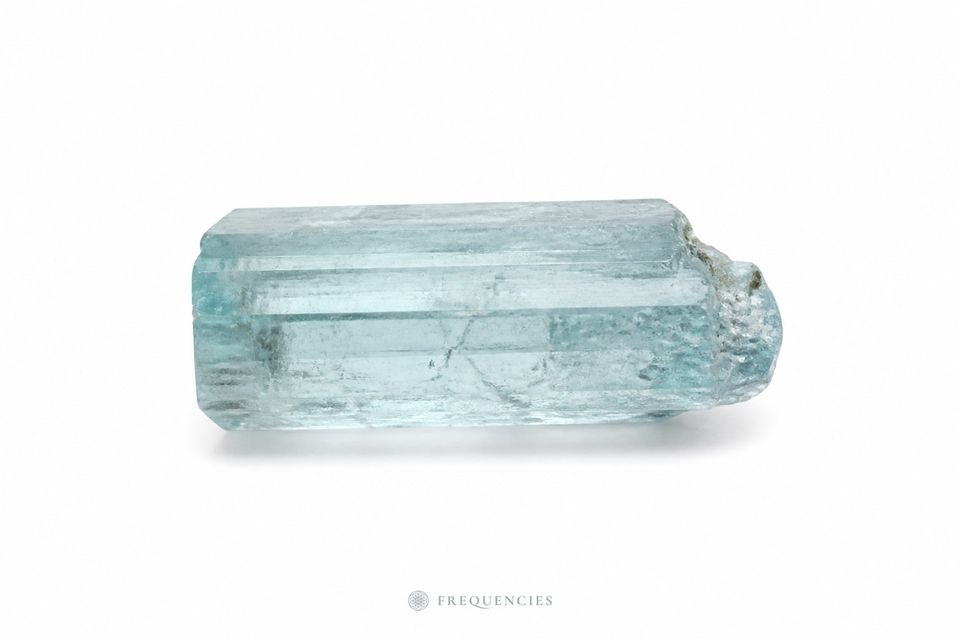
The name is formed from two Latin words: aqua, or water, and marina, or of the sea. It reflects the stone's pale blue to greenish blue tone, which recalls sea water. Aquamarine is a variety of the mineral beryl, like emerald.
The largest cut aquamarine in the world, the Dom Pedro, is kept at the Smithsonian Institution in Washington.
The obelisk was created by the German gem artist Bernd Münsteiner from a crystal obtained from a Brazilian pegmatite in the late 1980s. It weighs 10,363 carats, or about 2.1 kg, and is about 36 cm tall. The stone is named after the first two emperors of Brazil, Pedro I and Pedro II. Since December 2012 it has been on display at the National Museum of Natural History.
In 1936 the President of Brazil gave Eleanor Roosevelt a 1,298-carat aquamarine.
President Getúlio Vargas and his wife presented the gift to Franklin Roosevelt during his visit to Rio de Janeiro on 27 November 1936, for him to pass on to Eleanor Roosevelt. The stone had been found in a mine in the state of Minas Gerais. Eleanor Roosevelt later donated it to the Roosevelt Presidential Library.
 Clear Quartz
 Selenite
 Rose Quartz
 Black Tourmaline