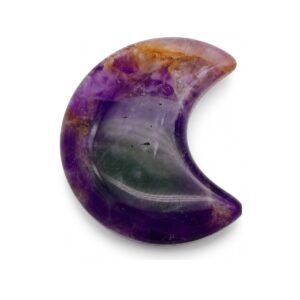
The name amethyst means "not intoxicated".
The word comes from the ancient Greek "amethystos", which is translated as "not intoxicated". In ancient Greece and Rome it was believed that amethyst jewellery and vessels prevented intoxication from wine. The well-known legend of the maiden Amethyst and the god of wine Bacchus is not found in classical sources: it was composed in the 16th century by the French poet Rémy Belleau.
Amethyst was once as valuable as ruby and emerald.
For a long time amethyst was valued on a par with ruby, emerald and sapphire. When huge deposits were discovered in Brazil in the 19th century, the stone became widely available and its price fell sharply. Today large quantities of amethyst are mined in the cavities of basalt rock in Brazil and Uruguay.
Amethyst adorns royal regalia and bishops' rings.
In the Middle Ages amethyst was regarded as a symbol of royalty, and it is found in the British coronation regalia. In church tradition bishops wore amethyst rings, and the stone is one of the emblems of the twelve apostles. Today amethyst is the February birthstone.
The world's largest amethyst geode is the "Empress of Uruguay".
The geode was found in 2007 in a mine near the town of Artigas in northern Uruguay. It is 3.27 metres tall and weighs about 2.5 tonnes. The geode can now be seen at the museum The Crystal Caves in Atherton, Australia.


 Rose Quartz
 Clear Quartz
 Selenite
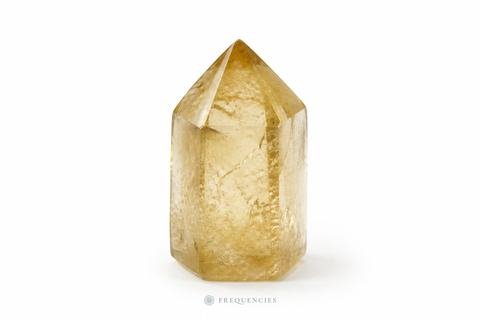 Citrine