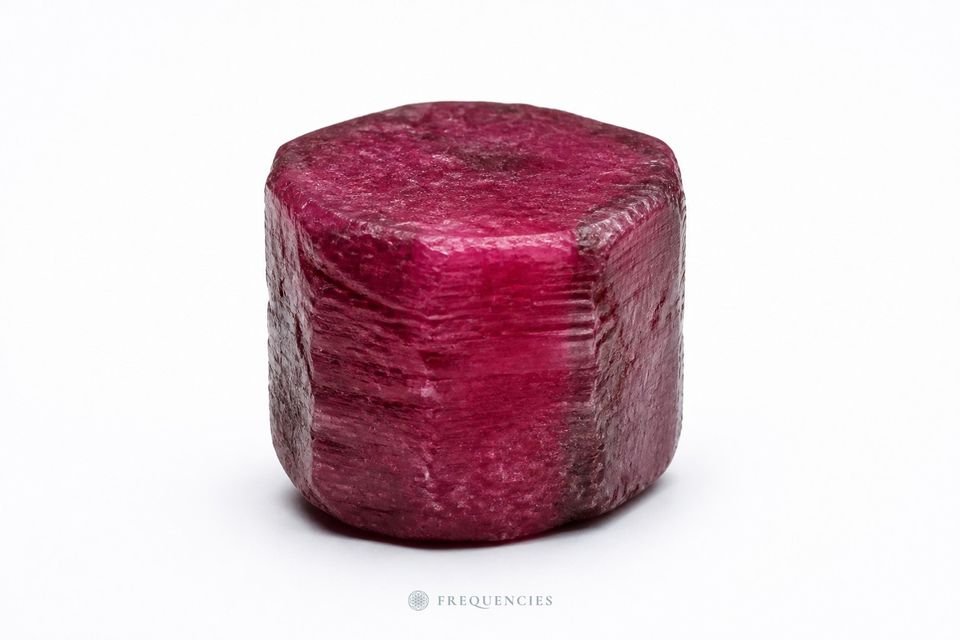
The name ruby comes from the Latin word ruber, meaning "red".
The Latin word ruber means "red", and the name ruby comes from it. In ancient Sanskrit, ruby was called ratnaraj, the king of gems, and in ancient India it was highly valued for its rarity and hardness, because only diamond surpasses it in hardness.
The Mogok area of Myanmar has been producing rubies for more than five centuries.
The GIA notes that Burma has been a source of rubies since at least the year 600, and that the Mogok area has produced some of the most coveted rubies for more than 500 years. Burmese warriors regarded ruby as a talisman of invincibility in battle, and the most highly valued tone is still called pigeon's blood red.
The famous Black Prince's Ruby in the British crown is in fact a red spinel.
This stone of about 170 carats adorns the front cross of the Imperial State Crown and can be seen at the Tower of London. Tradition says that it was acquired in 1367 by Edward, the Black Prince, and because red spinel was confused with ruby for centuries, several famous historical rubies are in fact spinels.
The Carmen Lúcia Ruby is the largest cut ruby in the US National Gem Collection.
This 23.1-carat ruby was found in the Mogok area of Myanmar in the 1930s. In 2004, Dr Peter Buck donated it to the Smithsonian Institution in honour of his wife, Carmen Lúcia Buck, and it can now be seen at the National Museum of Natural History in Washington.
 Clear Quartz
 Selenite
 Rose Quartz
 Black Tourmaline