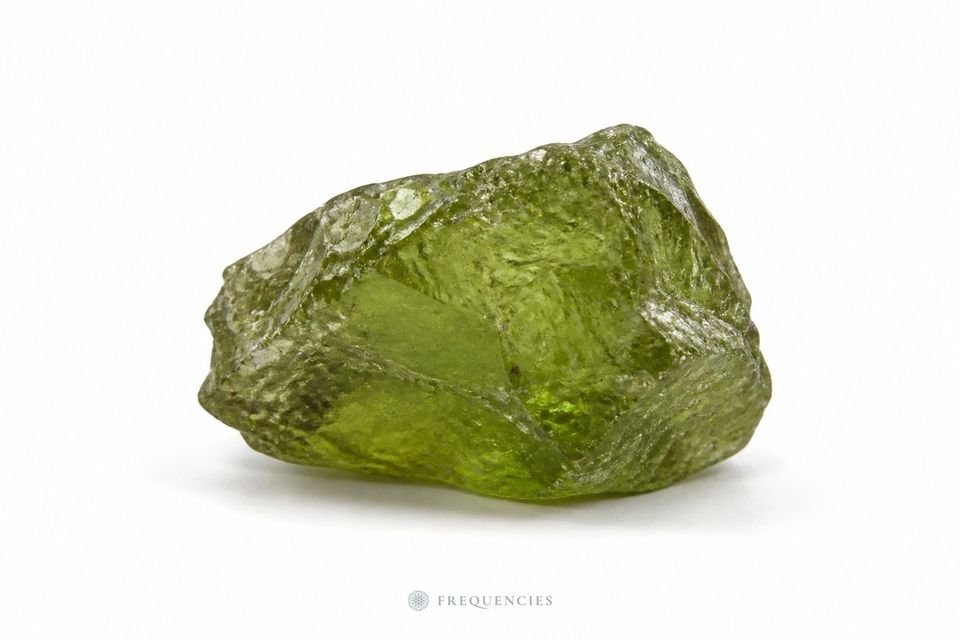
Peridot
A sunny green olivine, traditionally associated with joy, warmth and new beginnings.
Peridot is the gem variety of olivine, a magnesium and iron silicate with a hardness of 6.5 to 7 on the Mohs scale. The green colour comes from the iron in the mineral itself, and its amount determines whether the shade is yellowish green or olive green. It has strong double refraction. In the crystal community, peridot is seen as a symbol of light, joy and new beginnings.
Exhibit label
Mohs hardness scale
Moderately hard: it can get scratched in daily wear and is sensitive to acids. Wear it gently and store it separately.
Care
Water
A brief rinse in lukewarm water, then wipe dry.
Sun
May be kept in a bright place.
Storage
Avoid: acids, including prolonged contact with sweat, ultrasonic and steam cleaning, sudden temperature changes, strong knocks.
Note. The GIA recommends cleaning peridot with a soft brush in lukewarm water with mild soap. Acids damage peridot. Store it apart from harder stones and wear it gently, rather than in an everyday ring.
In the crystal community, the following are used for cleansing: a brief rinse in lukewarm water, sound vibrations, moonlight, placing it next to selenite.
Traditional meaning
This is crystal tradition and symbolism, not a scientific or medical claim. The chakras, signs and elements match our product pages.
Chakras
Peridot is traditionally associated with the heart and solar plexus chakras, which in crystal traditions symbolise warmth, joy and personal power.
Zodiac signs
In crystal astrology, peridot is most often assigned to Leo, as well as to Virgo, Scorpio and Sagittarius; it is one of the birthstones for August.
Element
The element of earth traditionally symbolises growth and vitality, which is reflected in peridot's fresh green colour.
The traditional meaning of crystals has not been medically proven and does not replace the advice of a professional.
Interesting facts
- The ancient Egyptians mined peridot on Zabargad island in the Red Sea and called it the gem of the sun.
- In Cologne Cathedral, the Shrine of the Three Kings is adorned with gemstones of about 200 carats that were regarded as emeralds for centuries, but turned out to be peridots.
- Peridot forms in the Earth's mantle and reaches the surface with volcanic rocks; in very rare cases it has also been found in meteorites.
How to use it
- Wear it in jewellery as a bright, summery accent
- Choose it as a gift for people born in August
- Place it on your desk as a symbol of joy and a new beginning
- Use it in meditation as a symbol of the heart chakra
Pairs well with
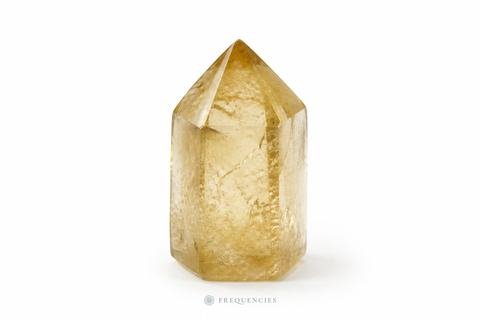 Citrine
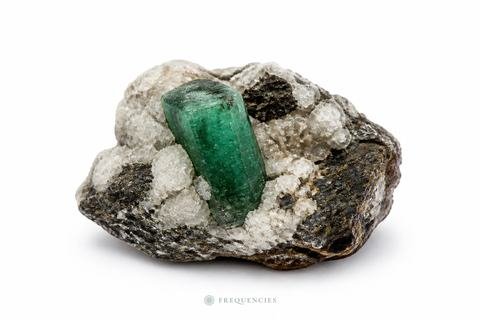 Emerald
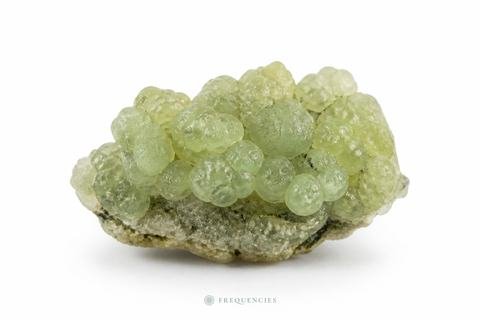 Prehnite
 Clear Quartz
Frequently asked questions
What is peridot?
Peridot is the gem variety of olivine, a magnesium iron silicate, and not a quartz. The green colour comes from the mineral's own iron, and its quantity determines whether the tone is yellowish green or olive green. Peridot forms in the Earth's mantle, and in very rare cases it is even found in meteorites.
What does peridot symbolise?
In the crystal community, peridot is regarded as a symbol of light, joy and a new beginning. It is associated with the heart and solar plexus chakras, with Leo, Virgo, Scorpio and Sagittarius, and with the element of earth. The ancient Egyptians called it the gem of the sun, and it is the birthstone for August.
How can you recognise genuine peridot?
Peridot has very strong double refraction, so when you look through the stone the back facets appear doubled. Under a loupe it often shows disc-shaped inclusions known as lily pads. The most common imitation is green glass, which lacks these features.
Is peridot suitable for an engagement ring?
With caution. Peridot has a hardness of 6.5 to 7 on the Mohs scale, so it can be scratched in daily wear, and it is sensitive to acids, including sweat. For a ring choose a setting that protects the stone, but pendants and earrings are safer for everyday wear.
Can peridot be washed in water?
Yes. The GIA recommends cleaning peridot in lukewarm water with mild soap and a soft brush. Do not use ultrasonic or steam cleaners, and protect the stone from sudden temperature changes, which can cause cracks.
Is peridot treated?
Usually not. Most peridots are untreated, and only rarely are the cracks in some stones filled. Synthetic peridot is seldom found in jewellery, so it is more often necessary to beware of green glass and other green stones passed off as peridot.
What determines the price of peridot?
Mainly colour and size. The most highly valued stones are pure green, with no yellow or brownish tone. Small stones are cheap, but the price rises noticeably for stones larger than 10 × 8 mm, and the finest large peridots come from Myanmar and Pakistan.
Where is peridot found?
The oldest known deposit is Zabargad island in the Red Sea, where the ancient Egyptians were already mining peridot. Today it is mined in the USA (in Arizona), Myanmar, China, Pakistan and Vietnam.