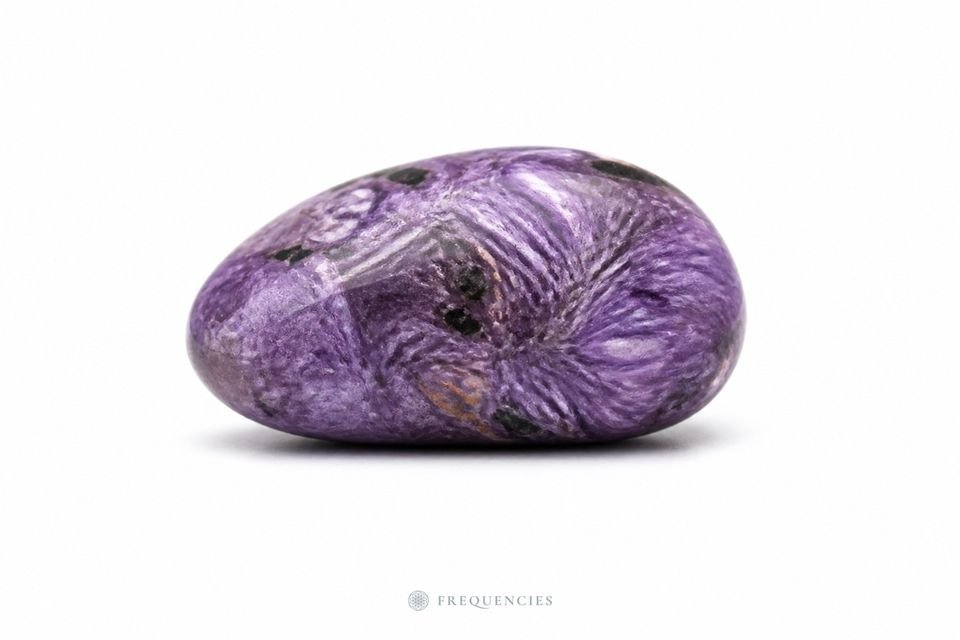
Charoite
A rare violet mineral from Siberia, traditionally associated with spiritual transformation and intuition.
Charoite is a rare violet silicate mineral with a swirling, silky fibrous pattern and a hardness of 5 to 6 on the Mohs scale. It was officially described in 1978 and is mined only in the Murun massif in the Sakha Republic in Siberia. In the crystal community, charoite is traditionally associated with spiritual transformation and intuition.
Exhibit label
Mohs hardness scale
Moderately hard: durable in everyday wear, but it can be scratched by harder stones. Store it separately.
Care
Water
A brief rinse in lukewarm water, then wipe dry.
Sun
Prolonged direct sun can fade the violet colour
Storage
Avoid prolonged direct sun, heat, ultrasonic and steam cleaning and harsh chemicals.
Note. Charoite is sensitive to heat and easily scratched; clean it with a soft, slightly damp cloth or in warm soapy water and store it separately from harder stones.
In the crystal community, the following are used for cleansing: a brief rinse in lukewarm water, sound vibrations, moonlight, the presence of selenite.
Traditional meaning
This is crystal tradition and symbolism, not a scientific or medical claim. The chakras, signs and elements match our product pages.
Chakras
Charoite is traditionally associated with the heart, third eye and crown chakras, which in crystal traditions symbolise compassion, intuition and spiritual transformation.
Zodiac signs
In crystal traditions charoite is attributed to Sagittarius and Scorpio.
Element
The Air element traditionally symbolises freedom of thought and spiritual search, reflected in the swirling pattern of charoite.
The traditional meaning of crystals has not been medically proven and does not replace the advice of a professional.
Interesting facts
- Charoite is known in only one place in the world: the Murun massif in the Sakha Republic (Yakutia), Siberia.
- The mineral was officially described only in 1978. The name is usually linked to the Chara River, which flows about 70 km from the deposit, but some sources explain it by the Russian word "chary" (magic, enchantment).
- When charoite was discovered, its colour seemed so unusual that at first it was thought to be a stone artificially dyed violet.
How to use it
- Place it in a meditation space as a symbol of spiritual transformation
- Wear it in jewellery as an unusual violet accent, protecting it from scratches
- Place it next to amethyst for a composition in violet tones
- Choose it as a rare gift for those born under the sign of Sagittarius or Scorpio
Pairs well with
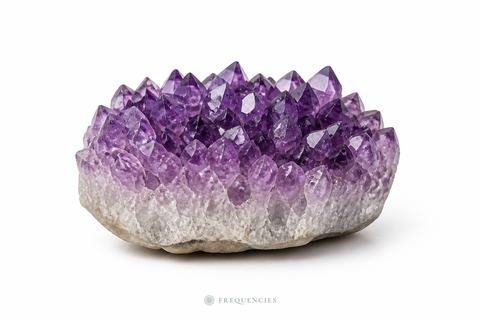 Amethyst
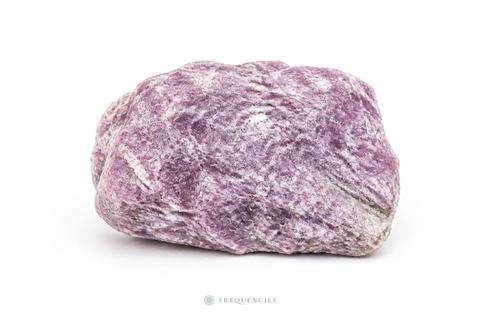 Lepidolite
 Black Tourmaline
 Clear Quartz
Frequently asked questions
What is charoite?
Charoite is a rare violet silicate mineral with a swirling, silky fibrous pattern. It was officially described only in 1978, and the name is most often linked to the Chara River, although the deposit lies about 70 km from it.
Where is charoite mined?
In only one place in the world: the Murun massif in the Sakha Republic (Yakutia), Siberia. That is why charoite is a rare and relatively expensive ornamental stone, used in jewellery and small items.
How can you recognise genuine charoite?
By its inclusions and pattern. Natural charoite usually shows black aegirine, orange tinaksite and white feldspar inclusions, and an unusually even colour without them is a reason to test the material. GIA has documented imitations made with plastic, and charoite is also imitated by dyed jasper or magnesite.
Is charoite dyed?
Usually not. The violet colour of charoite is natural, and when it was discovered it seemed so unusual that at first the stone was thought to be artificially dyed. Lower-quality stones, however, are sometimes dyed.
What does charoite symbolise?
Charoite symbolises spiritual transformation, intuition and the courage to accept change. In the crystal community it is associated with the heart, third eye and crown chakras, the Air element and the signs of Sagittarius and Scorpio.
Can charoite be put in water?
Yes, briefly. Charoite can be cleaned with a soft, slightly damp cloth or in warm soapy water and dried immediately, but do not use an ultrasonic or steam cleaner.
Does charoite fade in the sun?
It can fade. Prolonged direct sun can fade the violet colour of charoite, and it is also sensitive to heat, so keep it in the shade and away from heaters.
Read more
Charoite: Properties, Meaning, and How to Use It in Daily Life