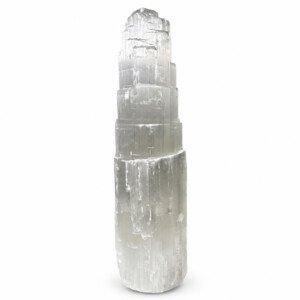
Selenite
Gypsum

Selenite

A white, silkily glimmering gypsum, traditionally associated with purity, lightness and calm.

Hardness 2 Protect from water Protect from heat Water Air
In brief

Selenite is a transparent, well-crystallised variety of gypsum, and gypsum is hydrated calcium sulphate (CaSO4·2H2O). It is a soft mineral with a hardness of 2 on the Mohs scale, and the main deposit is in Morocco. The fibrous variety satin spar is often sold in the trade. In the crystal community, selenite is traditionally associated with purity, lightness and peace.

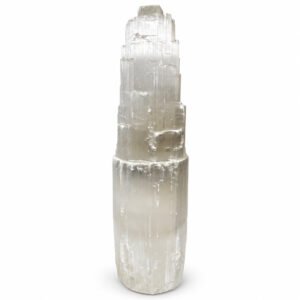
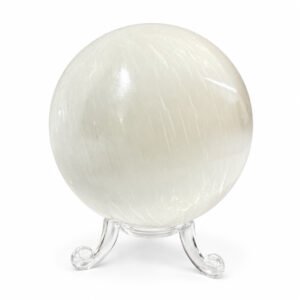
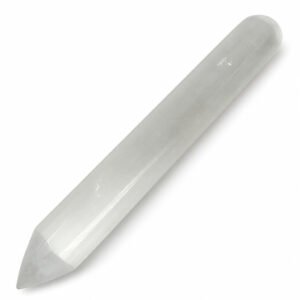
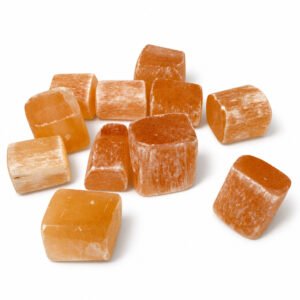
Selenite in our shop

Exhibit label

Name
Selenite · Selenite / Satin Spar Gypsum
Type
Mineral
Mineral group
Gypsum (CaSO4·2H2O); in the trade often the satin spar variety
Hardness
2 on the Mohs scale
Colour
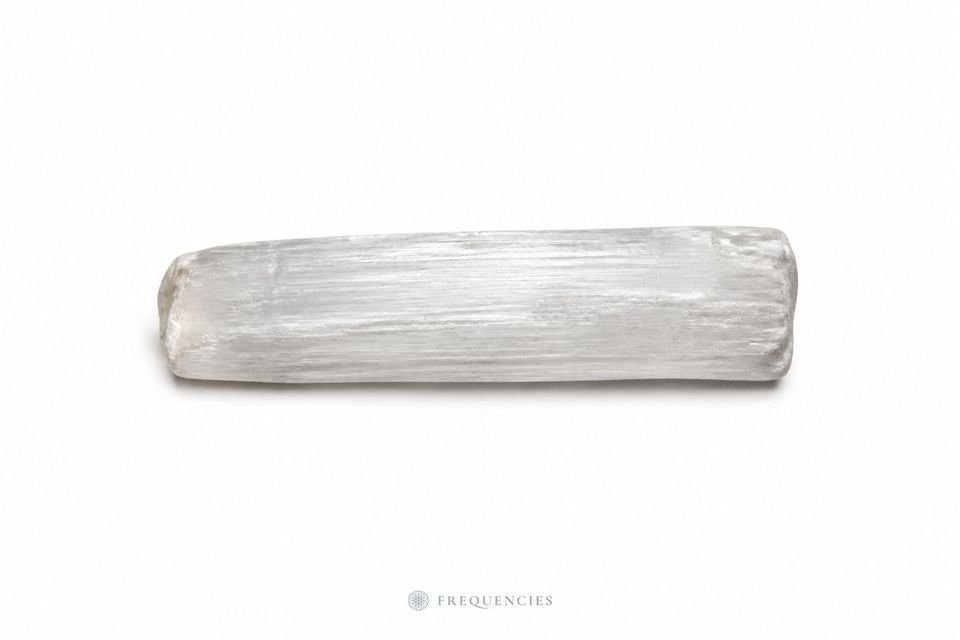
White, fibrous, silky-lustrous or transparent
Main locality
Morocco
Localities
Morocco, Mexico, Greece
Planet
Moon (tradition)

Mohs hardness scale

2out of 10

A soft stone: it can be scratched by glass and steel. Store it separately and clean it with a soft cloth.

Care

Water

Protect from water

Water can damage the surface or colour. Clean with a dry, soft cloth.

Sun

Protect from heat

Selenite is gypsum, which contains water of crystallisation. In strong heat it loses this water, so as a precaution do not keep it for long in hot sun or near a heater.

Storage

Soft, easily scratched

Avoid: prolonged direct sunlight, harsh cleaning agents, strong knocks.

Note. In the trade, "selenite" is often satin spar gypsum. Do not soak it or wash it under running water, because the surface can become matt or begin to dissolve.

In the crystal community, the following are used for cleansing: sage or palo santo smoke, the presence of selenite, sound vibrations, moonlight.

From geology to your shelf

  • How it forms. Selenite is a transparent, well-crystallised variety of gypsum (hydrous calcium sulphate). Gypsum forms as an evaporite when sea water or salt lake water evaporates, and also when anhydrite takes up water, and it is found in layered sedimentary rocks together with halite and anhydrite. In the caves of the Naica mine in Mexico, gypsum crystals up to 11 m long grew in very stable conditions.
  • Where the colour comes from. Pure selenite is colourless and transparent, but impurities can tint it brownish or yellowish. Fibrous gypsum, or satin spar, has a silky lustre with a sliding band of light (chatoyancy).
  • History. The name comes from a Greek word meaning "moon" and is explained by the gentle, moonlight-like glimmer of the transparent crystals. The word "gypsum" comes from the Greek gypsos (plaster), and the mineral was known as early as antiquity.
  • How to recognise a genuine stone.
    • Very soft (hardness 2): it can be scratched with a fingernail, whereas it does not scratch glass or quartz itself.
    • Transparent plates that split easily into thin layers; fibrous, silky-lustrous material is satin spar.
    • Gypsum conducts heat less readily than quartz, so it does not feel as cold to the touch.
  • Treatment and imitations. Most of the "selenite" wands, towers and bowls on the market are in fact made from satin spar, which is the same mineral, gypsum, only in fibrous form.
  • How to choose. Good-quality selenite is clear, with smooth, shiny surfaces free of matt patches, scratches and chips. Because gypsum dissolves slowly in water (about 2 g/l) and is very soft, store it dry and clean it only with a dry cloth.
  • Traditional meaning

    This is crystal tradition and symbolism, not a scientific or medical claim. The chakras, signs and elements match our product pages.

    Chakras

    Third Eye ChakraCrown Chakra

    Selenite is traditionally associated with the crown and third eye chakras, and it symbolises calm.

    Zodiac signs

    ♉︎Taurus♋︎Cancer

    In traditional crystal astrology selenite is associated with Taurus and Cancer, as well as with people who value calm and inner balance.

    Element

    WaterAir

    The water and air elements in crystal traditions symbolise calm and lightness, which the white, silky glimmer of selenite recalls.

  • Main symbolism: purity and lightness
  • In crystal traditions it symbolises purity, lightness and conscious work on oneself
  • Traditionally associated with calm and a serene mood
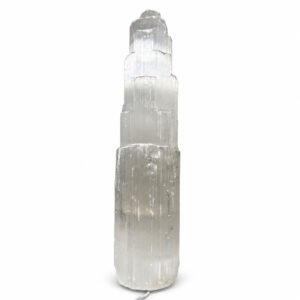
  • In the crystal community many people use selenite wands or plates to cleanse and recharge other crystals, placing stones on them or next to them. Selenite lamps and towers are traditionally placed in living rooms or bedrooms as a symbol of brightness and peace.
  • The traditional meaning of crystals has not been medically proven and does not replace the advice of a professional.

    Stories and legends

    The word selenite means "moon stone".

    The name comes from the Greek "selenites lithos", literally "moon stone", because the transparent crystals have a gentle, moonlight-like glimmer. Despite the similar word, selenite does not contain the chemical element selenium. Since the 15th century the word has been used for the transparent variety of gypsum.

    The world's largest selenite crystals grow in the Cave of the Crystals in Mexico.

    In the Naica mine in Mexico, at a depth of about 300 metres, miners discovered in 2000 a cave with giant selenite crystals, the largest of which is around 11 to 12 metres long. Researchers estimate that crystals this large grew over several hundred thousand years. The air temperature in the cave reaches about 58 °C and the humidity is 90 to 99 per cent, and since 2015 the cave has been flooded again and is not accessible.

    In ancient Rome, transparent gypsum was used instead of window glass.

    The Romans called transparent gypsum "lapis specularis" and cut it into thin sheets for windows. Pliny the Elder wrote that the best mines were around the city of Segobriga in present-day Spain. The mine network there stretches for tens of kilometres, and the industry flourished in the 1st and 2nd centuries.
    Interesting facts

    • In the trade, the name "selenite" is very often given to satin spar, the fibrous variety of gypsum, rather than to fully transparent selenite.
    • Both selenite and satin spar are varieties of gypsum with the same chemical composition.
    • This material is soft and sensitive to water, so it is usually cared for dry.

    How to use it

    • Choose a selenite lamp or tower as a symbol of peace in the bedroom
    • Keep it close during meditation or quiet moments
    • Place it in your work or relaxation area
    • Choose it as a gift with symbolic meaning

    Pairs well with

    Frequently asked questions

    What is selenite?

    Selenite is a transparent, well-crystallised variety of gypsum, and gypsum is hydrous calcium sulphate. It is a very soft mineral with a hardness of 2 on the Mohs scale. The name comes from a Greek word meaning "moon".

    Are selenite and satin spar the same thing?

    Yes, it is one mineral: both are gypsum. In mineralogy, transparent gypsum crystals are called selenite, whereas satin spar is a fibrous variety with a silky glimmer. In the trade, the name selenite is most often given to satin spar, for example for wands, towers and lamps.

    What does selenite symbolise?

    In crystal traditions selenite symbolises purity, lightness and calm. It is associated with the third eye and crown chakras, the water and air elements, the signs of Taurus and Cancer, and the Moon.

    May selenite be put in water?

    No. Selenite is gypsum, which dissolves slowly in water, so after washing its surface becomes matt and can begin to deteriorate. Clean it dry with a soft brush or a dry cloth.

    May selenite be kept in the sun?

    As a precaution, better not for long. Selenite is gypsum, which contains water of crystallisation. In strong heat it loses this water, so the surface can become cloudy and brittle. Do not keep it for long in hot sun or near a heater.

    How can you recognise genuine selenite?

    By its softness and lustre. Selenite has a hardness of 2 on the Mohs scale and can be scratched with a fingernail. How warm it feels to the touch is not a reliable test. Transparent selenite splits easily into thin layers, while fibrous satin spar has a silky lustre with a sliding band of light.

    Is selenite poisonous?

    No. Gypsum, or calcium sulphate, is not poisonous: it is the same compound that is used, in food grade, as the additive E516. Only avoid breathing in the dust if you saw or grind selenite.

    What are selenite plates and wands used for?

    In the crystal community they are used to cleanse and recharge other crystals: stones are placed on a selenite plate or next to a wand. Many people place selenite lamps and towers in the living room or bedroom as a symbol of brightness and peace.

    Selenite in our shop: more

    Read more

    Selenite: Properties, Meaning, and How to Use It Daily

    Sources. Mineralogical data: GIA Gem Encyclopedia, Mindat, Encyclopaedia Britannica (frequencies.lv crystal database v2).
    Further information: en.wikipedia.org, en.wikipedia.org, geology.com, minerals.net.
    Shopping Basket
    Scroll to Top